There’s a war going on for good talent, Charlotte CEOs say. How long can it last?
Charlotte’s rapid economic expansion is creating a war for talent among the region’s employers. But how long can that growth last?
The CEOs of five Charlotte-area companies addressed those issues and others at the Charlotte Regional Business Alliance’s annual economic forecast at The Westin hotel in uptown Charlotte Monday.
The airport, climate, proximity to UNC Charlotte and other factors are driving businesses to invest in the region, the CEOs said.
“It’s an easy area to sell,” said Lynn Good, CEO and president of Duke Energy. Good spoke on the panel with the leaders of Lowe’s, Bank of America, Honeywell and Premier.
Sustaining growth
A spate of recent announcements have brought thousands of new jobs to the Charlotte region this year, especially in the technology sector.
Honeywell moved its corporate headquarters to Charlotte from New Jersey this year, lured by more than $87 million in incentives from the state, county and city. The manufacturing technology giant has said it will relocate and bring 750 jobs to the county between 2020 and 2024, to be housed in a tower underway in uptown.
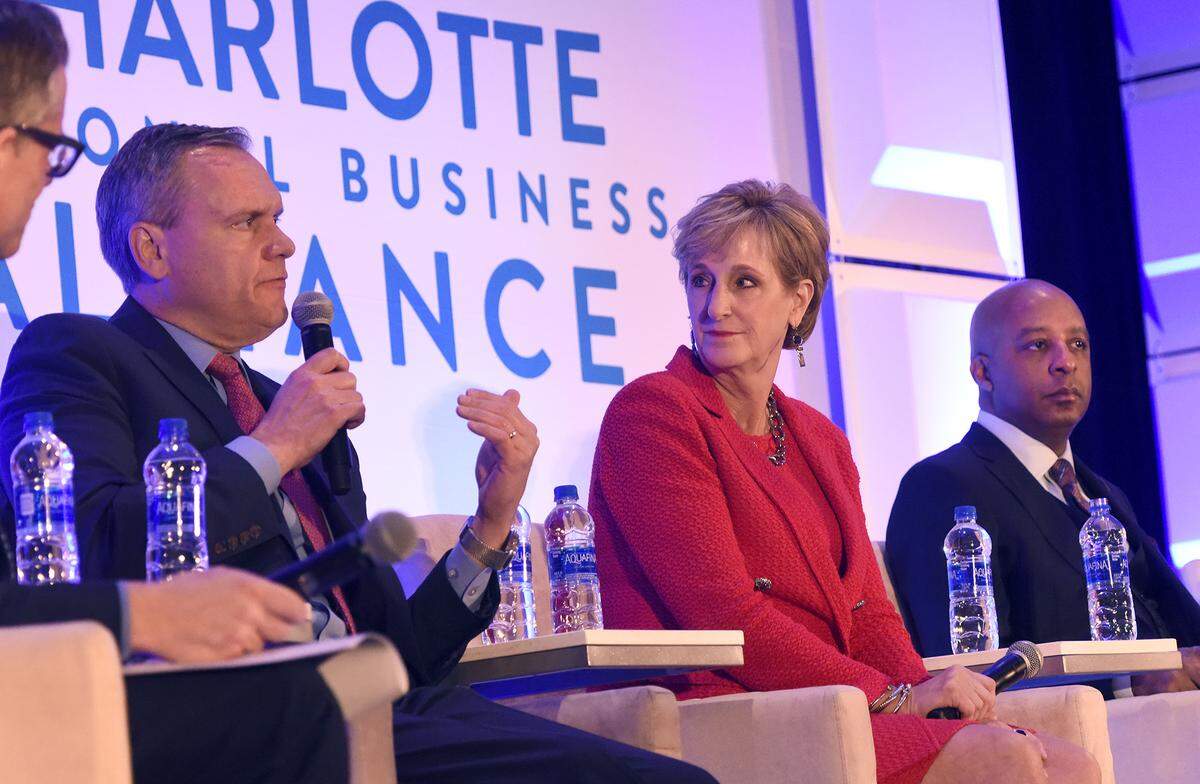
Darius Adamczyk, Honeywell’s CEO, said Charlotte has exceeded the company’s expectations. He noted the migration of people from high-cost cities in the Northeast and West Coast to the region.
“That speaks for itself in terms of the attractiveness of the area,” he said.
Still, the city added the smallest number of residents in over a decade from 2017 to 2018, according to an Observer analysis of census estimates.
“We’re trying to make sure we have the ability to sustain that,” said Bank of America CEO Brian Moynihan. “...We have to develop more assets, more resources, and import more people.”
Corporate responsibility
Businesses have a responsibility to help address economic mobility, affordable housing and other issues Charlotte faces, several executives said.
A 2014 study from researchers at Harvard University and UC Berkeley ranked Charlotte last among 50 large cities for economic mobility. Moynihan said that study was a “brand destroyer” for the region.
Though he praised the work local leaders have done to address the issue, he said there’s still more to do to turn that reputation around.
The business community also needs to find a way to permanently fund the arts and culture, Moynihan said. Voters rejected a referendum last month for a quarter-cent sales tax increase that would have channeled funds to the local arts sector.
“You need (arts and culture) to be a great city,” he said.