Pitfalls and payoffs: 3 fintech founders discuss launching a startup in Charlotte
Fintech in Charlotte has attracted some big-name expansions of late, including by Robinhood, Credit Karma and Microsoft.
Resources like Packard Place, QC Fintech and the Meta Lab, a new startup accelerator program, have cropped up. And AvidXchange, one of the city’s homegrown fintech firms, went public this fall in a $660 million offering and minted a handful of local millionaires.
But Charlotte entrepreneurs are navigating what is still a fairly new startup scene that can mean fewer resources and a smaller investor pool than in bigger markets.
The Observer talked to three founders with different business backgrounds at different stages of the startup cycle. Here’s what they said about finding funding, leaving behind their old jobs and building a fintech firm from the ground up in the city.
Working to secure funding
By the time Justin Adams founded Anduin last year, it was his second time launching a startup in Charlotte. In 2017, he launched Digitize.AI, a tech startup that was acquired a couple years later.
His new company, Anduin, makes accounts receivable software for accounting firms. He got the idea while working at PricewaterhouseCoopers several years ago and launched the company in Charlotte in the summer of 2020 — “Yep, at the height of the pandemic” he laughed.

It wasn’t such a bad move after all. The company already has clients in the double digits, including some of the top 10 accounting firms in the country, Adams said. Anduin raised $14 million in capital over the summer and got its first institutional investor, a venture capital firm based out of Washington, D.C.
“We’re growing exceptionally fast and well,” he said of Anduin. “Our plan is to build a big business that we can IPO down the road.”
When he started the company, Adams, 39, was able to recruit many of the same investors from his first venture to back his newest project. But he said that finding funding in the city isn’t always so easy.
“It tends to be a little more risk-adverse (here),” he said. “There aren’t people actively going out and looking to make early-stage bets.”
He describes the fintech scene in Charlotte as “small but tight-knit.” He’d love to see it become the next chapter of the financial services industry in the city.
“We’re (the) second or third largest banking center (in the U.S.), but we’re certainly not even in the top 10 in startups,” he said. “For 50 years, banking has helped drive the (growth of) the region. Hopefully startups and fintechs can pick up that mantle and drive it for the next 50 years.”
‘Not such a small fish’
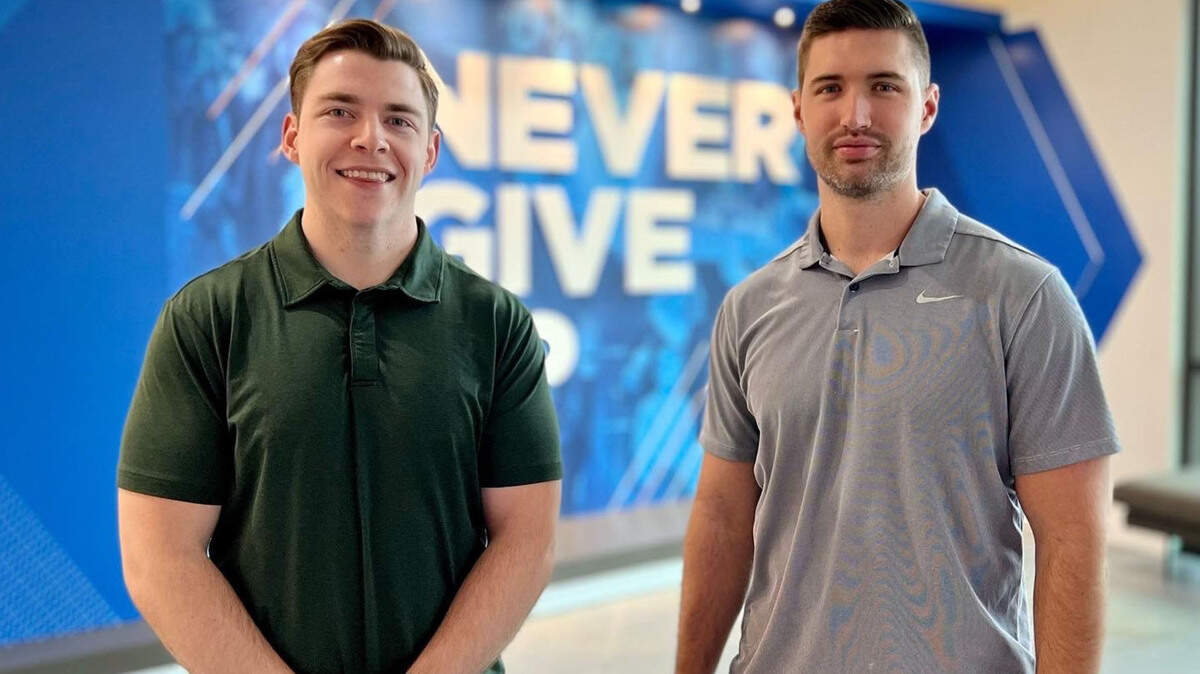
Blake Wood and Owen Brady got the idea to create Apay, an app that helps borrowers manage and pay off their student loans, while working together in data management at Bank of America.
Wood, 29, said the notion for the startup came in part from his experience trying to pay off his own student loans — a process he called “confusing, frustrating and unclear at times.”
The company started out as a “passion project,” he said.
“What started out as a little bit of a kind of tinkering on nights and weekends turned into us raising a little bit of outside capital, then turning it into a full-time business,” Wood said.
Apay officially launched in May 2019 with the help of a few angel investors, their own dollars and what Wood called a “family and friends” funding round.
Charlotte was a great place to build the company, he said, in part because it’s home — Wood grew up in the area — and in part because it’s such a prominent financial center.
“We were surrounded by that finance culture, and other fintech companies… You just naturally get to collaborate with and rub shoulders with,” he said.
“It does feel at times like the Charlotte startup community is very, very small right now,” Wood said. “My desire is to see the community really evolve. That’s going to take more successful startups, and then those startups giving back to the community with their time, money (and) resources.”
But Apay still found success in the city. The company was acquired by Ramsey Solutions, founded by personal finance expert Dave Ramsey, last month. Wood said he couldn’t disclose the price of the acquisition because of the terms of the deal.
Wood, along with Brady, moved to Nashville, Tennessee, to join the company just a few weeks ago. “It’s a company that we have a tremendous amount of respect for,” he said. “(The deal) was a no brainer.”
Right now, Wood said he’s focused on transitioning Apay to Ramsey Solutions. But if he did start another business down the line, he’d want to do it back home in Charlotte.
“If there was an opportunity for us somewhere down the road, Charlotte would definitely be at the top of our list,” Wood said. “You have the opportunity to not necessarily be such a small fish in a huge pond (here). When you look at other cities... you’re one out of a gazillion people that are trying to start a company.”
‘An idea on the back of a napkin’
Cor Hoekstra, 57, left his job at IBM to launch Amicus.io with his co-founders Walt Ruloff and Paul Welsh in 2016 — a career move that he said felt like “jumping off an airplane without a parachute.”
“When you go from a Fortune 50 company to an idea on the back of a napkin… every fiber of your DNA is being stretched,” he said. “You kind of have to be an optimist.”
.jpeg "Cor Hoekstra co-founder and CEO Amicus(2).jpeg")
The company provides a digital platform for banks to help their customers make charitable donations.
Amicus benefited from local resources like Packard Place, the uptown entrepreneurial hub — “that really launched us” — and the Wells Fargo Startup Accelerator, Hoekstra said.
Amicus has raised around $17.5 million from investors, The Raleigh News & Observer reported, and was named a startup to watch by the North Carolina Technology Association last month.
Charlotte may have a smaller pool of potential investors than some other markets, Hoekstra said, but the city has made “significant inroads” in growing those resources in recent years.
For example, Tabbris, a coworking space and incubator in South End for Charlotte tech startups, opened in 2019. And in October, the Carolina Fintech Hub launched a new initiative to connect early-stage startups with local support and funding.
“Those resources are available,” he said. “You have to be able to dial into them, and you also have to have the right mindset to be attractive to those funds from an investor perspective.”
Ultimately, Hoekstra said, the ingredients for startup success are the same in any city.
“I don’t care what you’re trying to do, you have to be all in,” he said. “You have to have the grit to be able to succeed.”
This story was originally published December 6, 2021 at 6:30 AM.