Charlotte airport noise plan to increase flight paths moves forward with council approval

Editor’s note: This story was updated on Dec. 9 at 11:15 p.m.
In front of a divided crowd, the Charlotte City Council approved the airport’s request to send the Federal Aviation Administration updated plans to mitigate noise concerns.
Charlotte Douglas International Airport proposes widening the range of flight paths, spreading routes across a bigger swath of the city, to minimize noise pollution. It’s part of the airport’s updated Part 150 Noise Compatibility Study. (“Part 150” refers to the federal regulation that governs airport noise studies.)

The proposal would decrease the sound burden on specific neighborhoods while improving flight operations.
But the proposal remains contentious. At Monday’s council meeting, about half of the 70 people in council chambers agreed with the proposal while others argued that the airport wasn’t being transparent with its plans.
The council voted 8-2 to submit the airport’s proposal to the FAA for final approval. Reneé Johnson and Tariq Bokhari voted against proceeding with the plan.
Economic growth versus community engagement
In an impromptu decision, City Council allowed for a public comment hearing on the vote. A mix of 13 community members, business leaders and aviation officials signed up to speak.
A majority of speakers favored pushing the proposal forward, including representatives from the Charlotte Business Alliance, American Airlines and CleanAire NC.

“This is the biggest safety improvement at the Charlotte airport that’s not technological in the past 40 years,” said Chris Riddle, with the National Air Traffic Controller Association. “It’s not a piece of technology, it’s just good old simple air traffic control.”
Mohammad Jenatian, president and CEO of The Greater Charlotte Hospitality & Tourism Alliance, said the airport “has been the absolute No. 1 economic engine” for the region. He added that city council members had a “duty as leaders to look at the big picture and decide what’s best for our entire city, not just a few.”
Some residents said, however, that CLT officials don’t communicate plans thoroughly with them, and the city and airport are choosing economic benefits over residents’ well-being.
“Your job is to protect and serve the people of the city, not the corporations,” said Dorne Pentes, an Eagle Lake resident. “The airport, to me, seems like it’s acting like a corporation.”

The city owns the airport, which is an American Airlines hub and one of the busiest in the world.
Why is the noise study needed?
While the airport was discussing construction plans for its fourth runway and general growth, the city of Charlotte committed to updating the Part 150 Study in 2022. Updating the study would allow the airport to update its Noise Compatibility Program and Noise Exposure Map.

The program recommends noise mitigation methods and determines compatible land uses for areas near the airport. The exposure map points out what areas are highly affected by noise.
“Noise incompatibilities,” according to the FAA, are homes and noise-sensitive public spaces such as schools, churches and hospitals where airport sounds can reach 65 decibels or higher. That sound level can be compared to the babble in an office space.
The last study was done in 1987.
The FAA has 180 days to review the new study, which includes more public engagement and environmental studies. It would take about two years to implement FAA recommendations, right on time for the proposed opening of the fourth runway.
More flight paths equals shared noise
The airport identified three new measures to abate noise during the two-year study period.
Late-night flights will use runways that go over industrial or transportation areas instead of residential communities and the airport will add new locations where pilots can perform engine checks.
The biggest change is the flight paths. The airport is proposing increasing possible paths from eight to 27 after simulating various ideas.
While each singular path covers a small area, together they spread to new areas of Charlotte that haven’t experienced planes flying overhead.

How do more routes lessen noise? That’s unclear. However, the airport said the change may decrease the concentration of noise in specific areas.
“The intent… was to disperse traffic in order to spread aircraft overflights over as wide of an area as possible and result in a “sharing” of impacts across the community,” airport officials said via email.
The change would also increase capacity and reduce delays, the airport added.
Although the paths would fly across more areas of Charlotte, the airport is not changing its Noise Disclosure Overlay District, a zoned area that tells residents they are most susceptible to hearing airport noise.
It’s unclear whether the neighborhoods under the proposed new flight paths are in the district. Residents can check if they are in the district here.
Transparency concerns
It’s also unclear exactly which neighborhoods would potentially be exposed to the new flight paths.
Last week, airport aviation director Haley Gentry presented the study to council members. The proposed map is broad and shows council districts but doesn’t go down to a neighborhood level.
That was a major issue for Johnson and Bokhari. Both questioned the airport’s community engagement procedure and whether it actually reached the community members who would be affected by the change.
Johnson added that the proposed map doesn’t make clear on a block-by-block level what would be affected, potentially leaving residents in the dark until the change is finalized.
Making a map that specific may be inaccurate, Gentry said, considering the paths are simulated proposals and need FAA approval.
But both Johnson and Bokhari continued to question the airport’s transparency and engagement efforts. It’s a sentiment that’s been shared by residents for years.
The latest example was last week’s council presentation, said Steele Creek resident Stephanie Lanse. She lives directly in the airport’s growth plans.
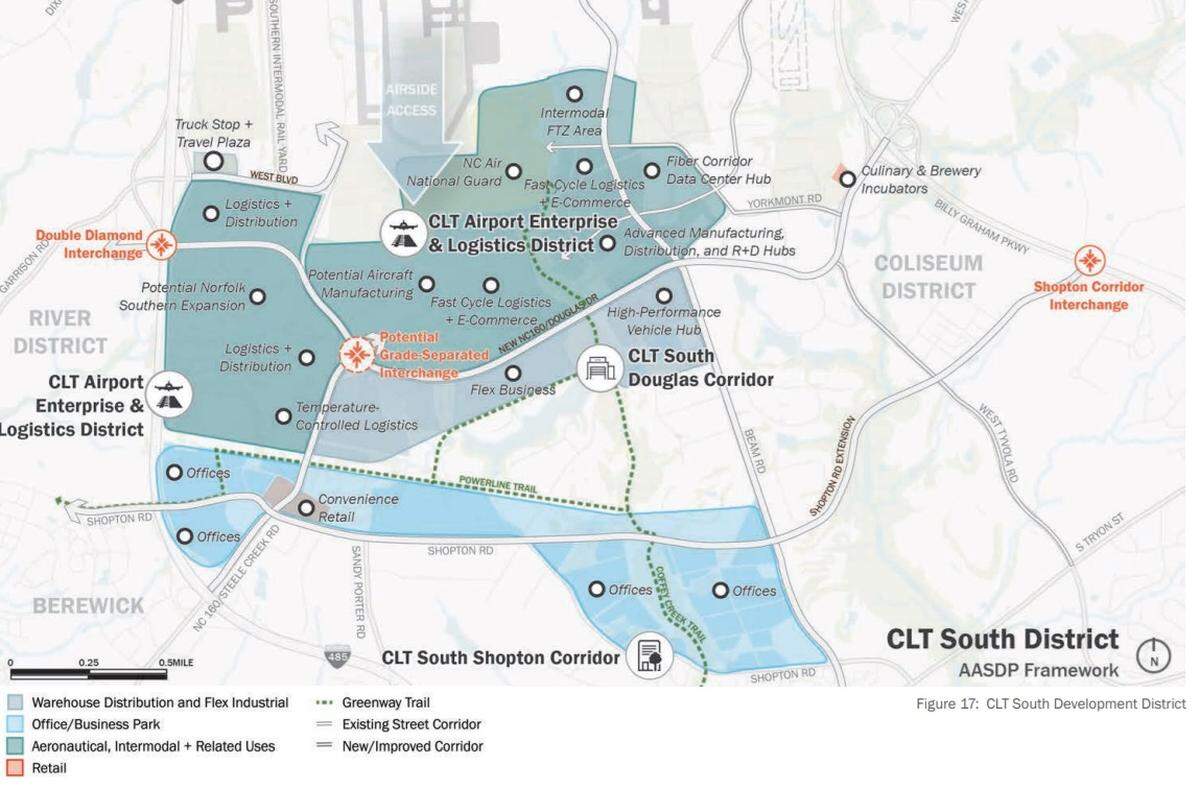
Lanse said community members weren’t aware that the airport would be presenting the study to council in preparation for Monday’s vote. The council agenda was released the day before Thanksgiving.
“It seems very dark-of-the-night kind of thing again,” Lanse said.
Community engagement
During last week’s council meeting, Gentry said the airport conducted a “high level of community engagement,” including social media posts, emails and meetings.
It has held three rounds of community meetings, two sessions each, surrounding the study since 2022. The last was in September. The first two rounds had little engagement, as shown in the proposed study draft. About 22 comments were received over the course of four sessions.
Comments from the September meetings are being reviewed and responded to, airport officials said, though Lanse and other community members said they have not heard back.
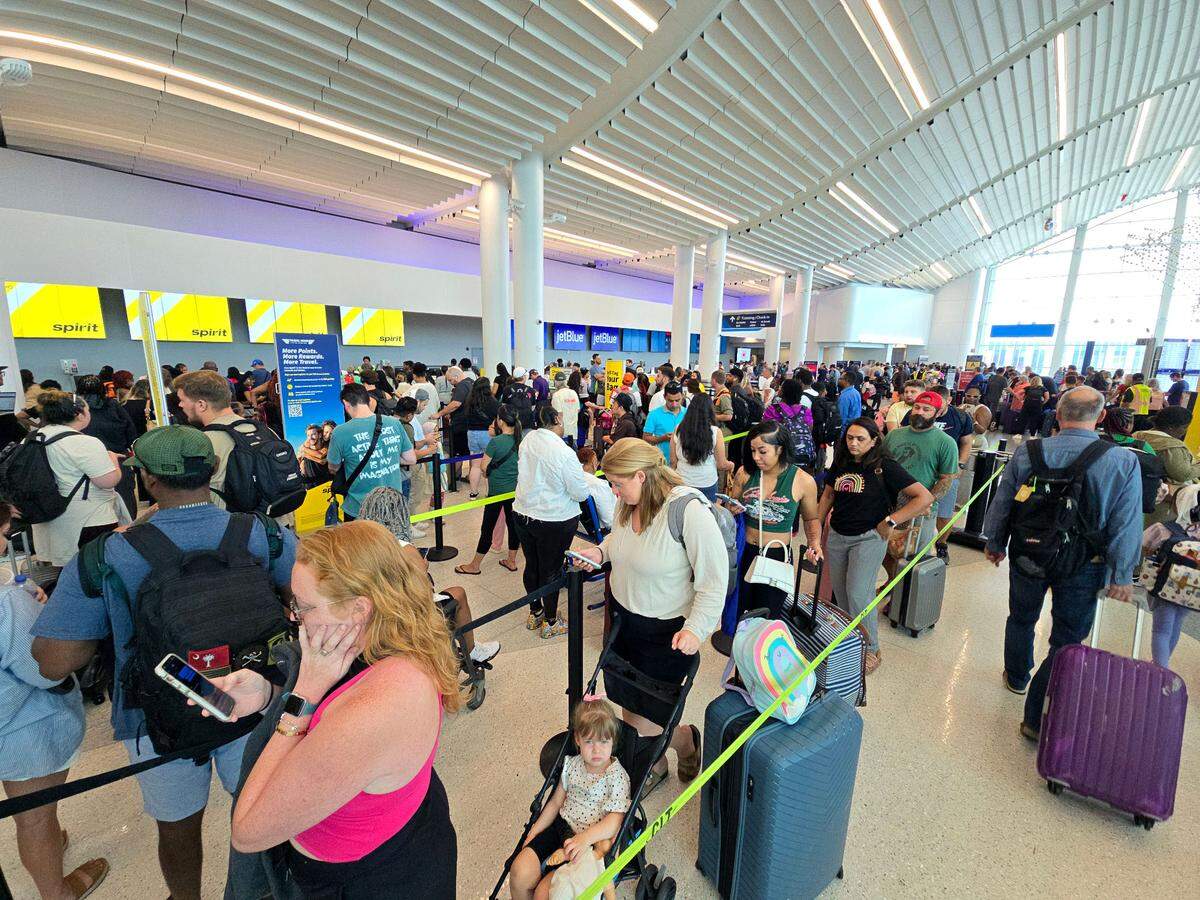
“My biggest gripe for years is that we’re given the opportunity to voice our concerns…But what impact does that actually have? I’ve never talked to any individual in all these years that has said I read your comments,” Lanse said. “It feels very much like they’re checking boxes.”
It’s also unclear whether the airport’s efforts expanded to residents in the proposed new flight paths, which Johnson and Bokhari reiterated.
To support or not to support
Gentry said the plan was supported by air traffic control, American Airlines and the Airport Community Roundtable. That group was created in 2017 to provide additional community input regarding noise, including sending recommendations to the FAA.
Gentry indicated that the roundtable was an extension of the community’s voice. It’s supposed to have 25 members across the city and surrounding areas, however there are 14 vacancies.
In the roundtable’s October meeting, one member said council would “rubberstamp” the approval because representatives aren’t receiving “enough complaints” about noise and because the airport “brings in revenue and jobs.”
In that same meeting, members said they would not take a stance on whether they approved or disapproved of the study’s findings. A roundtable official did not immediately respond to a comment request from The Charlotte Observer.

However, council member Ed Driggs said he spoke to the roundtable on Monday and they were supportive. He added that while many people won’t be happy with new planes flying overhead, the change is necessary.
“We’re going to have to accept the fact that some people may not like what we’re doing,” Driggs said. “We just have to do it. The airport is such a critical driver for us. Job creation, the economy. We need to modernize the way the airport operates and achieves greater efficiencies.”
Although Bokhari expressed concerns about engagement, he said the plan was a “no-brainer” for the airport’s success.
Lanse said that ideology is the problem. Residents understand that the airport needs to grow and that it’s beneficial to the city but what about residents?
“I want our city to thrive but at what cost?” Lanse said. “We’re not against growth…but it needs to have more community involvement… The burden of informing the public and explaining this very complicated process should be on the airport. If I can get out and go door to door, hold community meetings, why can’t (the airport)?”
Monday morning, there was a protest demanding that council members vote no on the proposal.
Workers United, UNITE HERE and the Housing Justice Coalition, along with 32BJ SEIU, the union representing airport contracted service workers who recently went on a one-day strike, organized the event at the Charlotte Government Center.
.png "image (90).png")
The organizers say the study allows the airport to further disrupt the city with more noise and that will allow the facility to expand the area where it can voluntarily purchase properties for expansion.
Part of the airport’s compatibility plan includes home buyouts and land rezoning, typically from residential use to commercial.
The buyouts and rezonings have been a concern for residents in nearby Steele Creek, like Lanse, who say the airport’s growth is encroaching on their community with little communication. CLT plans to turn the southern area into a manufacturing hub. Airport staff previously said mitigation efforts such as buyouts are voluntary.

This story was originally published December 9, 2024 at 6:00 AM.