Want a say in how Charlotte neighborhoods will grow in 20 years? Speak up soon.
Wondering how Charlotte will change and grow over the next 20 years? Well, the city of Charlotte has a plan. Several plans to be exact. And in the next few months, residents will have their final chance to weigh in on the guidelines.
The city of Charlotte’s Planning, Design & Development department released 14 community area plans that will guide growth for the next two decades. Think of them as roadmaps for the future.
Overall, the plans focus on land use, design, mobility and open space for the needs of its specific community.
“Each of the plans is about creating complete communities and complete communities are defined as places where you can live, work and play,” said Kathy Cornett, the long range planning division manager. “The plans were developed in the same way, but they are unique to that geography based on each geography’s needs and goals…They integrate all of the different elements that you need (such as) access to housing, jobs, goods and services.”
Charlotte’s 2040 Comprehensive Plan
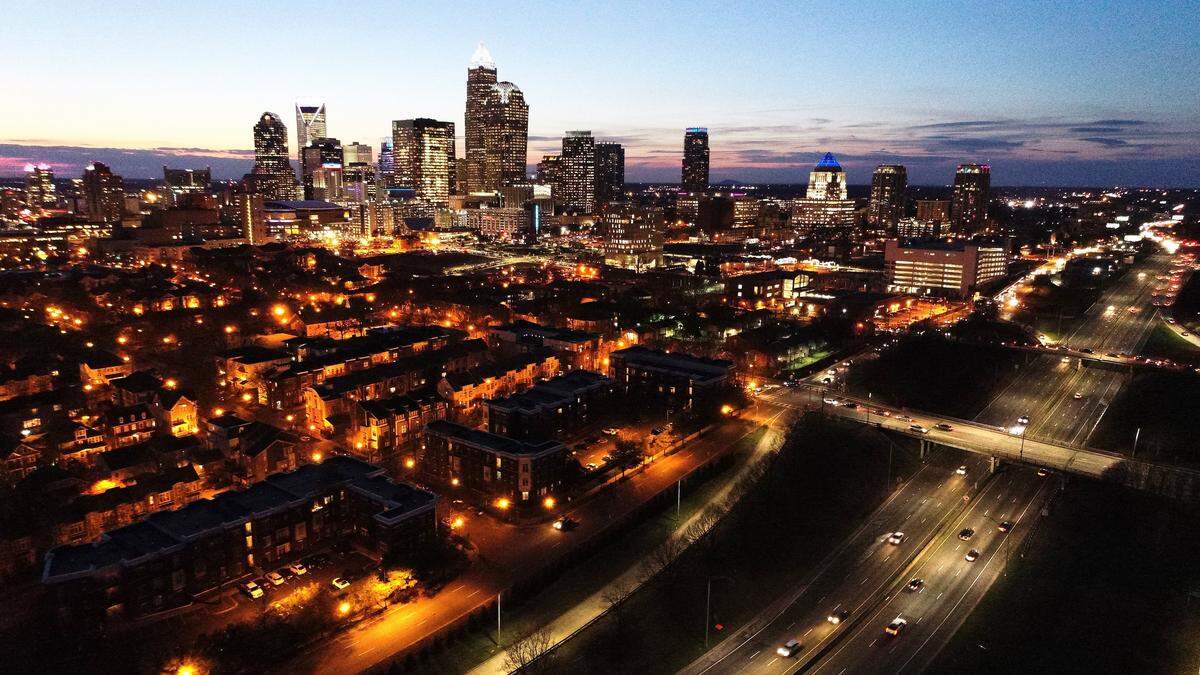
The creation of the 14 guidelines stems from the city’s 2040 Comprehensive Plan, which was approved by City Council in 2021. It’s a land-use document that guides growth and development at the city level.
It looks at zoning rules, housing, transportation and economic development with equity in mind. Some of those goals include creating 10-minute neighborhoods and outlining future development needs such as affordable and mixed-use projects.
The recently released plans focus on similar issues but on a smaller, community level.
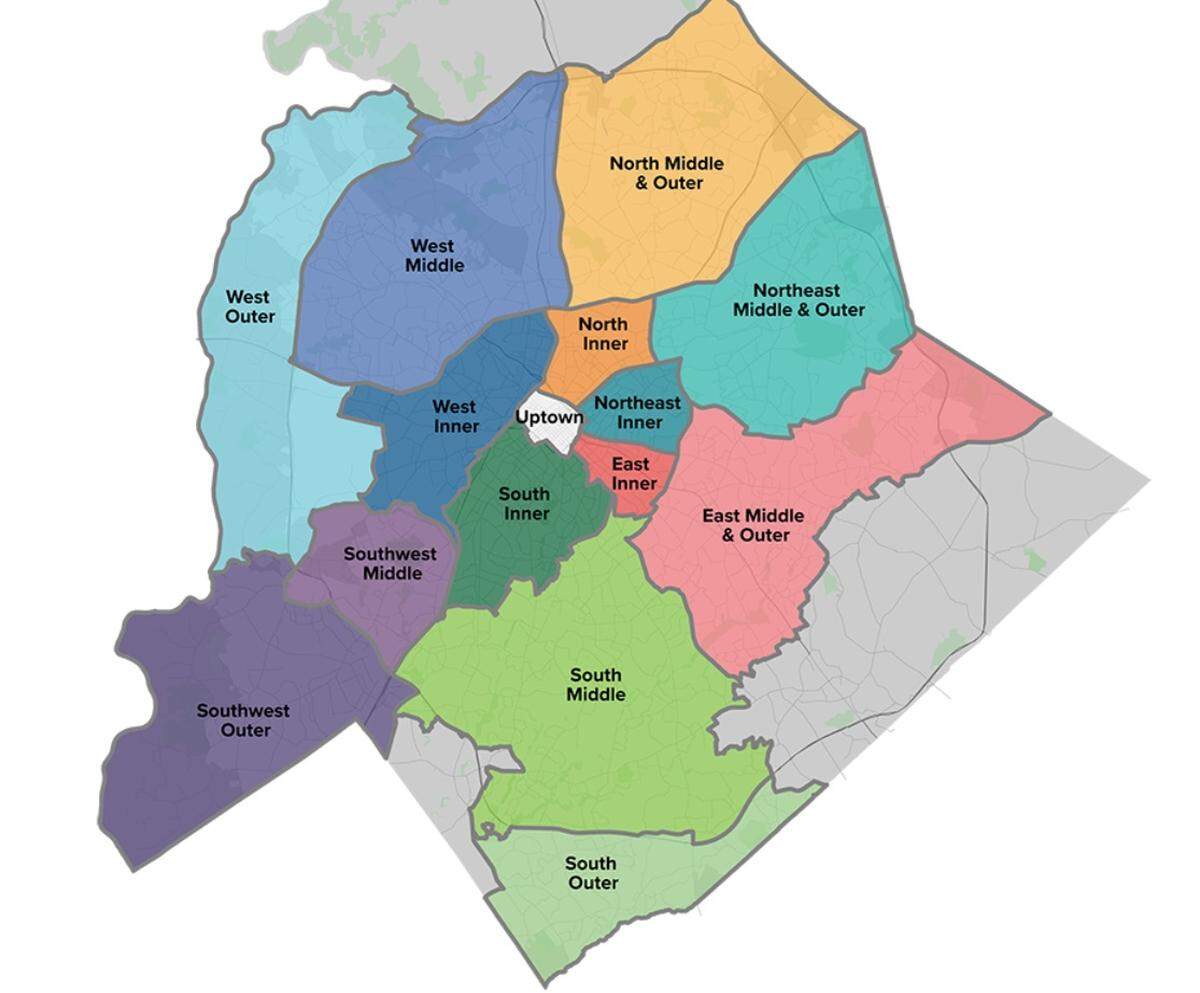
Two years ago, the city began developing those plans. Its first step was to carve the city into 14 areas:
- East Inner
- East Middle and Outer
- North Inner
- North Middle and Outer
- Northeast Inner
- Northeast Middle and Outer
- South Inner
- South Middle
- South Outer
- Southwest Middle
- Southwest Outer
- West Inner
- West Middle
- West Outer
From there, city officials began collecting goals from community members specific to their regions.
For example, the east inner region is bounded by Central Avenue, Eastway Drive, Wendover Road, Randolph Road and the John Belk and Brookshire freeways. Goals for that area include neighborhood diversity and inclusion; housing access for all; transit and trail oriented development; healthy, safe and active communities; and an integrated, naturally built environment
To achieve those goals, the plan looks at possibly changing some of the area’s land use from commercial to community and neighborhood active centers, and including more mixed-use developments. These changes allow for more housing and retail spaces.
The possible zoning changes can also increase walkability, access to transit and the preservation or creation of green space.
Community input for Charlotte plans
The city held about 50 workshops crafting the plans with about 700 participants and 5,000 interactions with the documents, Cornett said. Charlotte has a population of over 911,000 people, according to 2023 census data.
With the plans being released, the city will begin to announce future dates for engagement. A virtual open house is being planned that will guide participants through the plans where they can ask questions.
Office hours are open virtually on Tuesdays from 11 a.m. to 1 p.m. and on Thursdays from 3 p.m. to 5 p.m.
Physical copies of the plans will be distributed to local libraries and copies of the plans can be found online here. The online plans also allow participants to add comments. That comment period will close on May 9.
Before the plans become official, they have to go before city council. A public hearing is set for April 28. Planning officials are hoping for a council decision by the end of May.
The plans are living documents, meaning they can change as Charlotte continues to change. They are also guidelines with suggested implementation plans, so proposed zoning changes aren’t finalized
But they will be used as tools by city officials, developers and community members to shape Charlotte’s future.