
Hugh McColl at 90. The banker who built Charlotte still has more to do
Hugh McColl, the banking and civic icon who was Bank of America’s first CEO and helped transform Charlotte into the city it is today, has been getting his picture taken a lot lately.
Most recently, famed photographer Annie Leibovitz spent two days at McColl’s 1,000-acre Texas ranch taking photos of him. “She only gave me three instructions: don’t comb your hair, don’t shave and don’t smile.”
McColl spoke with The Charlotte Observer during a recent interview from his Eastover home, less than four miles from Bank of America’s 60-story tower in uptown that some call the “Taj McColl.”
The Leibovitz photo, commissioned by close friends to honor his upcoming 90th birthday, is part of an exhibit at the Mint Museum. McColl’s birthday is Wednesday, June 18. And the city he helped build is honoring him by renaming Thomas Polk Park in uptown in his honor on June 21.
“I’m appreciative, embarrassed to a certain degree,” McColl said. “I think I’m getting more credit than I deserve.”
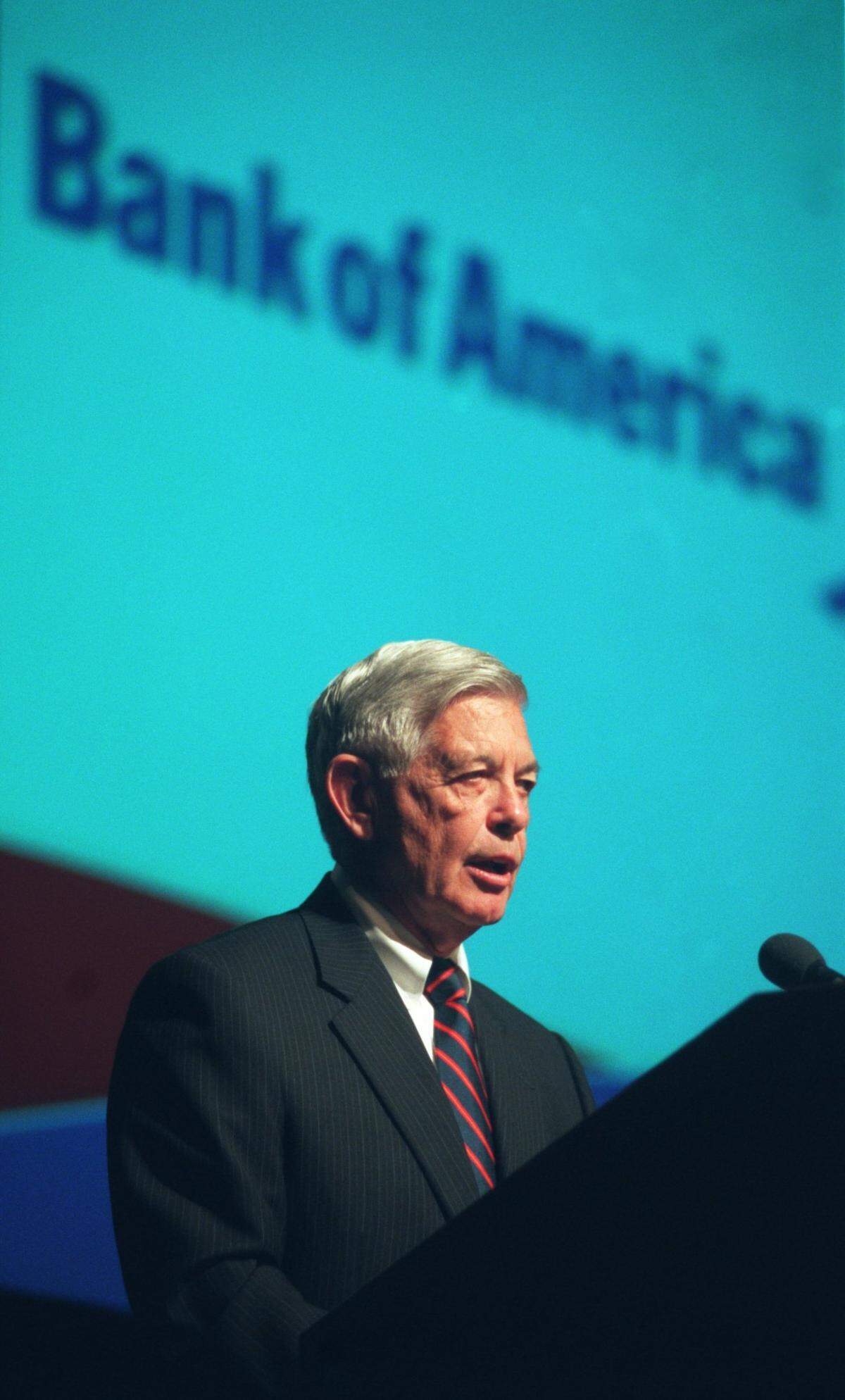
McColl was in the rooms where everything happened, such as bringing the NFL’s Carolina Panthers to Charlotte and revitalizing uptown. Through a series of mergers, McColl formed Bank of America in 1998, creating a national bank with its headquarters at 100 N. Tryon St. He retired from Bank of America about a quarter century ago.
His vision and leadership transformed Charlotte from a small town into a bustling city, said Andrea Smith, chairwoman of the Bank of America Alumni Network who worked for the bank for 30 years.
As CEO, McColl initiated minority-owned and women-owned business programs and pioneered initiatives such as on-site childcare. He’s on his third or fourth act, Smith said, adding, “Now he’s been working on economic mobility.”
Prominent real estate developer and Charlotte native Johnny Harris, who first met McColl in the 1960s at Covenant Presbyterian Church, put it this way: “He was always involved in everything good that was going on here in Charlotte.”
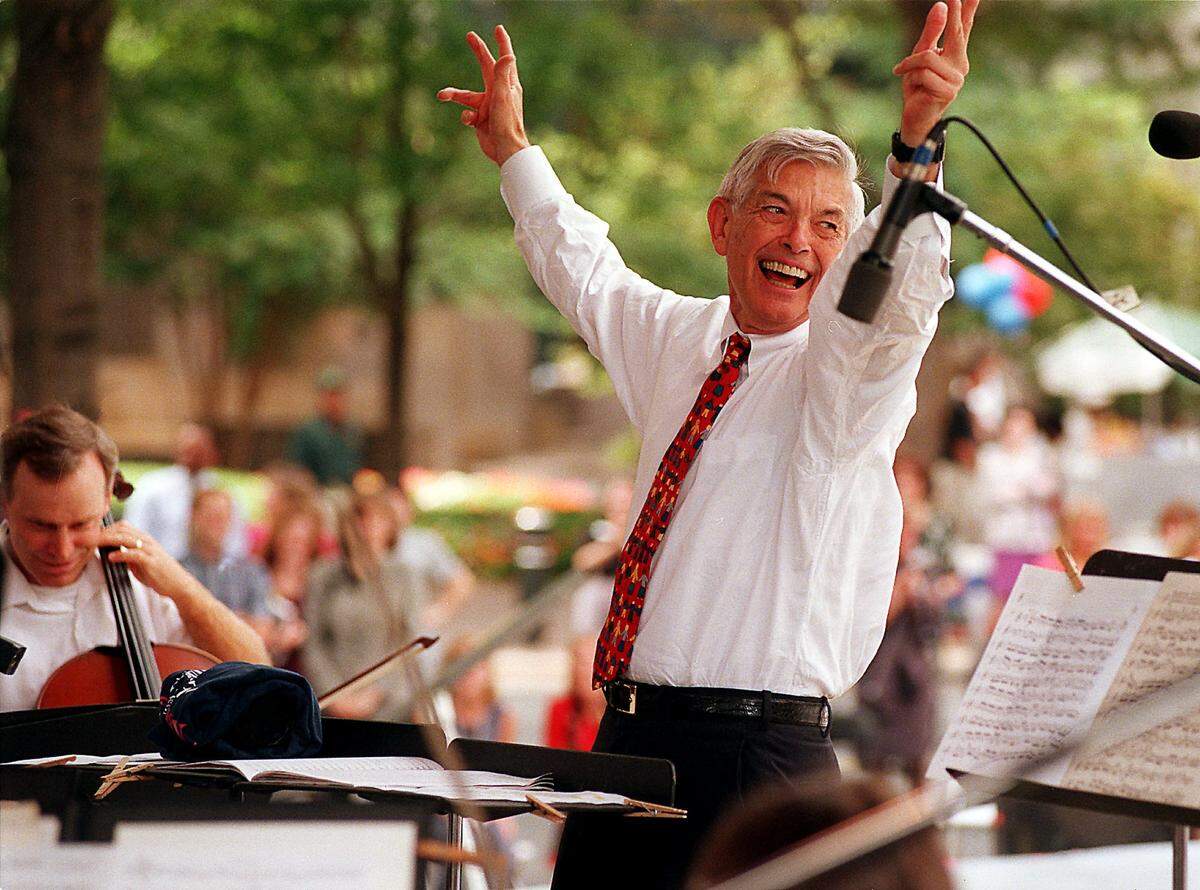
He’s still busy with civic engagement, including serving as honorary co-chair, along with Bank of America CEO Brian Moynihan, of the record $50 million fundraising drive that the Charlotte Symphony recently completed.
McColl said he plans to stay active for as long as he’s able — hopefully ‘til 100. “I’m not done. I’m doing something with young people or young businessmen and businesswomen. It keeps me going, keeps my mind working.”
The Observer spent over an hour talking with McColl about everything from banking to philanthropy and personal moments of pride and regrets. Our conversation has been lightly edited for brevity and clarity.
Q&A with Hugh McColl
You’ve played a large role in building community here in Charlotte. What are you most proud of with your civic work?
I think what I really feel the best about is how we developed Charlotte Center City. We were blessed with something we all curse, which is the very tight belt loop around the city. It gave us a clearly defined central business district two miles by two miles.
I had spent enough time in my banking career traveling to big cities like New York, Paris, London, Hong Kong, and saw the advantage of having people live over their places of work. So I had it in my head to build a city like that and it would be a more fun city.
And today, if you think about it, Charlotte, North Carolina, is the only city in America in which you can walk to the ballet, the opera, the symphony. And you can walk to pro football, pro basketball and baseball all without having to walk more than a mile.
There were a number of us. We had a plan we were executing, and everything we did should have synergy involved with other parts of the city.
I wanted to build a city that was vibrant. So, yeah, I’m proud of that. I think truthfully the bank pushed the city north of the square. It would never have grown there if we hadn’t built our tower and putting the Performance Arts Center there.
I think we did a good job of planning it, executing it. I had fun doing that. I consider that my greatest achievement.
What trends are you seeing in Charlotte now that give you hope or dread?
I do see a huge problem for us, which is I used to say it is a great place to raise a family. It’s become expensive, and we’ve left a large part of our population behind us in terms of economic advancement. If I worry about something, it’s about education, our school systems being good enough.
The other challenge is to bring people out of poverty. I think that’s where we should be putting our effort, in job training and providing jobs for people.
Is it good that Charlotte has diversified to the extent that it is no longer just “Banktown”?
I think it’s very helpful in terms of jobs creation. I don’t think there’s anything as exciting as the new Wake Forest Medical School. I think that’s going to revolutionize the city, bring a whole new crowd of people and a whole new crowd of businesses and scientific companies. It’s going to be huge economically, but intellectually as well. People will make a lot of money, and that’ll help philanthropy across the board.
But the main thing, the economic diversity we’ve achieved, is very important. We are still a big financial city as we still have huge numbers of people engaged in managing money or running private equity firms. It’s not just banking, it’s really about money. This a hugely successful capitalistic city.
Through a series of dozens of mergers and acquisitions over several years, you built Bank of America and its headquarters here in Charlotte. Why did you feel like Charlotte was the right place to keep its headquarters?
Well, it’s very simple. We were headquartered here. This is where we started. It was a great place to live and work. New Yorkers had to take the train into work. We could get downtown in 15 minutes. We could go see our child play basketball in the afternoon out at Latin school and be back at work (or) home for dinner. I saw no reason to go anywhere else.
The challenge for me early on in my career was to try to bring the best people in the world here. The town needed to grow. It needed all the things to make it interesting for people living in New York or London or San Francisco or Chicago. We needed a ballet. We needed pro football. We needed entertainment and we needed schools. When you’re trying to recruit people, they’re thinking about their family and what’s it going to be like to live here.
We’ve spent the last 60 years working on that.
Would you say that those are the biggest challenges that you faced growing the bank here that you still think about, or are there others?
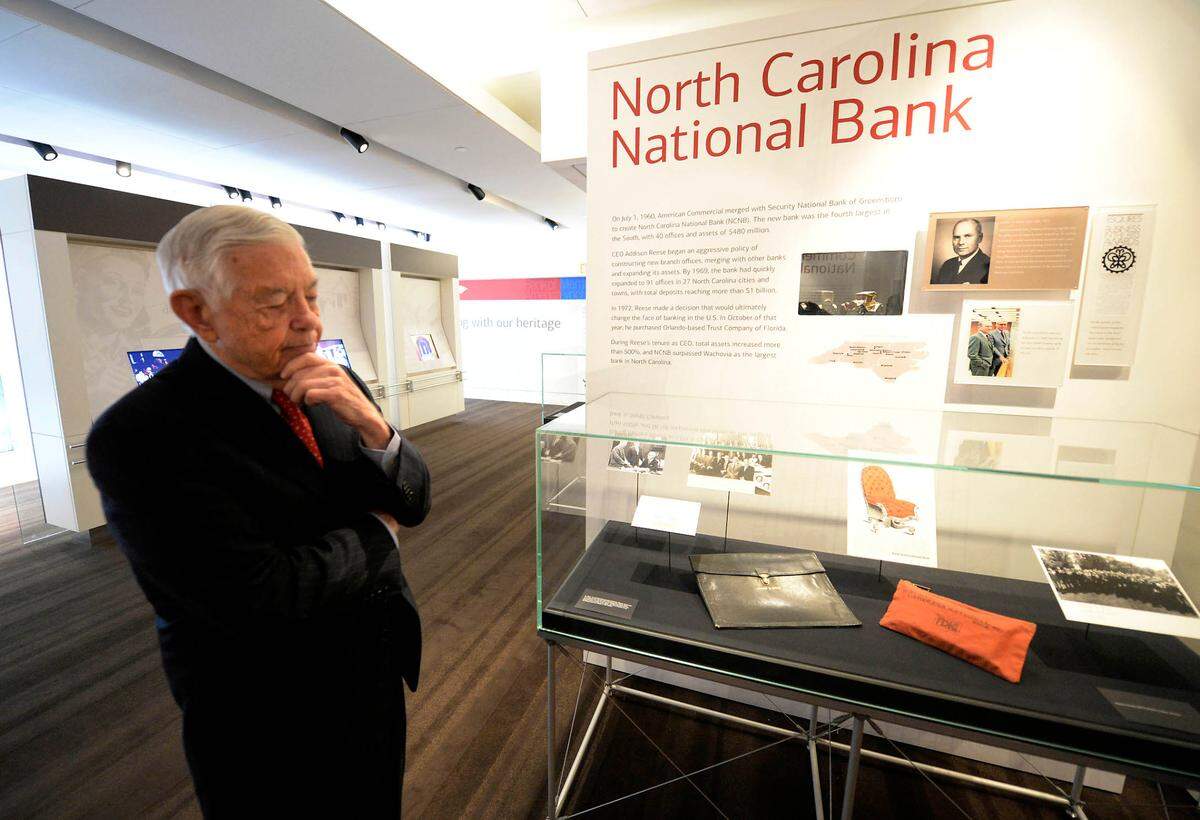
We were not willing to stay in our place when I came into the industry. The New York banks dominated the world. The big business went near New York. I didn’t like that, and we changed all that to where Charlotte became one of the most important financial centers in the world, not just in North Carolina, not just in America. That wasn’t an accident. That’s something we set out to do.
When I say we did it, I mean, we did it. We had a tremendous team of people. Talented, and let them do their thing. We brought a lot of very smart people here.
What did you learn in leadership to be able to find the right people?
If one wants to be a leader, one should ask the question: Why would anybody follow me?
And the answer to the question is simple: People will follow if you can take them somewhere they can’t go by themselves.
You gotta care about your people first and foremost, before customers before shareholders. I looked after my people. And they looked after the customer, and that looked after the shareholders. It’s a very simple formula for being successful in business, but it begins with and ends with looking after your own people.
What do you think of the bank you built now, its strengths, and where it needs to improve?
I try to avoid having any commentary about the bank. It’s a very powerful organization, very large, very profitable. And its challenge is to remain in touch with (its clients). Pay attention to what their needs are.
What are the biggest challenges facing the banking industry today?
I would say that being able to have the systems that protect your customers, maintaining security and safety.
Wells Fargo’s nearly $2 trillion asset cap was lifted this month. What do you think that could do for Wells Fargo and Bank of America’s rivalry?
I don’t see it affecting the Bank of America at all. I don’t know their company well. I wish that they were more interested in our city in terms of philanthropy. I hope that this new freedom will allow them to do that.
Do you have any opinions on President Trump’s on on-again off-again tariffs, and how that will affect Charlotte businesses?
Yes. I think they’re a bad idea. I have grown up, like the rest of the country, with the goal being free trade. So whoever could produce a product at the cheapest price got to sell it. China won’t pay the tax tariffs. That gets paid by the customer. It takes money out of people’s pockets. It’ll slow down sales.
Reflecting back on your life’s work, what advice would you give to your younger self?
Talk less to the press (he said, smiling). I talk too much, had too much to say.
I’m a very competitive person, but taken to its extreme I’m aggressively aggressive. There’s a balance that you should achieve in life. I guess I should have worked hard at achieving balance.
What do you wish you had done more of or less of, both professionally and personally?
I wish I’d spent more time with my family. There is a cost to building any big business, and one of them is time. Everybody has exactly the same amount of time. It’s what you do with it that matters. I’d try to ration my time slightly better.
Although truthfully, I’m fairly well satisfied with what I’ve accomplished. One of the advantages of being 90 is that it gives you a long look back at life. You can very calmly look at your own mistakes. And your company’s mistakes. And your country’s mistakes. And you can do it unemotionally.
I don’t really have a lot of regrets about my business life. You can always think you could have been a better husband and a better father. I think I should have been a better husband. Somehow, she (Jane Bratton Spratt McColl) has put up with me for 66 years. It’s astounding.
What are some things that you could have done differently?
I get that question all the time, and I know I disappoint people because I can’t think of things I should have done. When I tried a hostile tender offer, it didn’t work. So I learned not to try that again.
How would you describe yourself?
I feel like I’m a person who’s trying to make a difference in the city. I used to think that I could do anything, and I could fix anything. I know that’s not true now. I have just a limited amount of time left and I want to make the biggest impact I can.
I’ve always said what I would want written on my gravestones: That he made a damn.
I’ve been involved in trying to be of help to less advantaged people by helping with their businesses, help them build financial well-being. So that was a big change for me. I never really poured myself into it like I do now. That’s what’s been my biggest change, paying attention to what happens to other people.
And what are you most proud of and how do you want to be remembered?
I’m the proudest of what I’ve done in the city, help to build this city. And I want to be remembered as somebody that made a difference in this city. The people that he touched. That’s it.
How do you spend your days now?
When you live to be 90, you do a lot of different things. I went through a period of playing golf, I went through a period of playing tennis a lot. Then, I climbed mountains. I still hunt a lot. Quail. Hog. Big game.
What I do is mainly meet on business about two or three times a day with people. I love to read. I work jigsaw puzzles. I do Sudoku every morning and do crossword puzzles all the time. I try to keep my brain working.
Is there anything else you’d like to say?
I know I should say, but I never do say and it’s not because I don’t think about them, but I’m very proud of the fact that we raised three children. I’m very proud of my family. (The McColls have three children, eight grandchildren and one great-granddaughter.)
My wife’s been very supportive of me, and she did a really great job managing the family and let me do my thing, which was build a business. I couldn’t have done it without her.
Finally, here’s his biggest wish for his community:
“We need to figure out a way to interest more of our millionaires to invest in this city to make it a better place. And so that’s always a challenge. You have to have people who really are very interested in making a better place for everybody. That’s really what we need to do.”
Uniquely Charlotte: Uniquely Charlotte is an Observer subscriber collection of moments, landmarks and personalities that define the uniqueness (and pride) of why we live in the Charlotte region.
This story was originally published June 12, 2025 at 5:00 AM.