$700M Brooklyn Village project in limbo as Mecklenburg, developers keep clashing
The fate of the $700 million Brooklyn Village mixed-use redevelopment remains up in the air amid a heated impasse between developers and Mecklenburg County officials, as they go back-and-forth over potential project delays.
The latest concern involves a piece of the development that isn’t slated to be worked on until at least 2031. County officials have denied a request made by developer BK Partners, through Peebles Corp., to delay a demolition requirement of the vacant, county-owned Board of Education Building due to what developers called an unforeseen amount of asbestos.
The county’s independent attorney, Womble Bond Dickinson, called the excuse “meritless,” adding that developers knew the building contained asbestos almost seven years ago, according to a letter sent to the developer on April 30. The letter was first reported by WFAE.
“In reality, this is merely a continuation of (the developer’s) ongoing attempts to avoid performing the demolition and removal work it agreed to perform,” the letter read.
In response, Peebles Corp. said in statement to The Charlotte Observer it’s unclear why the county so urgently wants the site demolished, considering it’s not a part of Phase I of the development nor does it impact the developer’s current plan to build affordable housing across the street.
Peebles Corp. said the county is “leveraging” the construction and support of the affordable housing and “forcing” the developer to cover the clean-up costs of the education building in exchange for funding support.
If the county doesn’t agree to support the affordable housing and put aside the demolition dispute, the developer said it’ll build luxury units on the site as originally intended.
The exchanges between the county and the developer makes it unclear what comes next for their partnership and the long-awaited project in an area that’s historically bore the brunt of government interference.
Urban renewal and Brooklyn Village
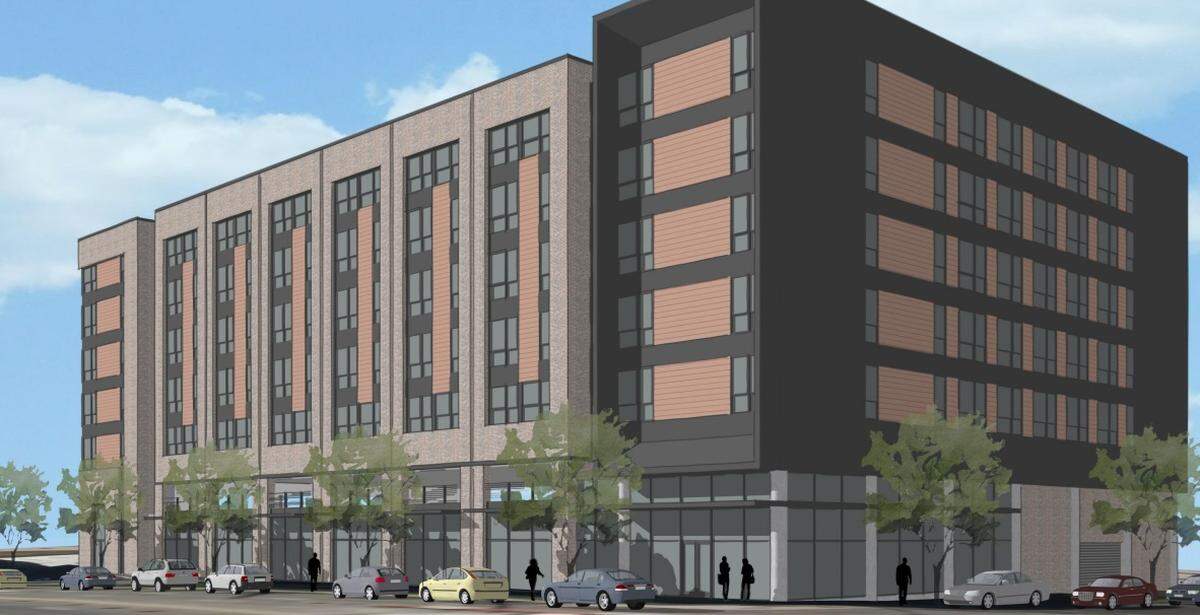
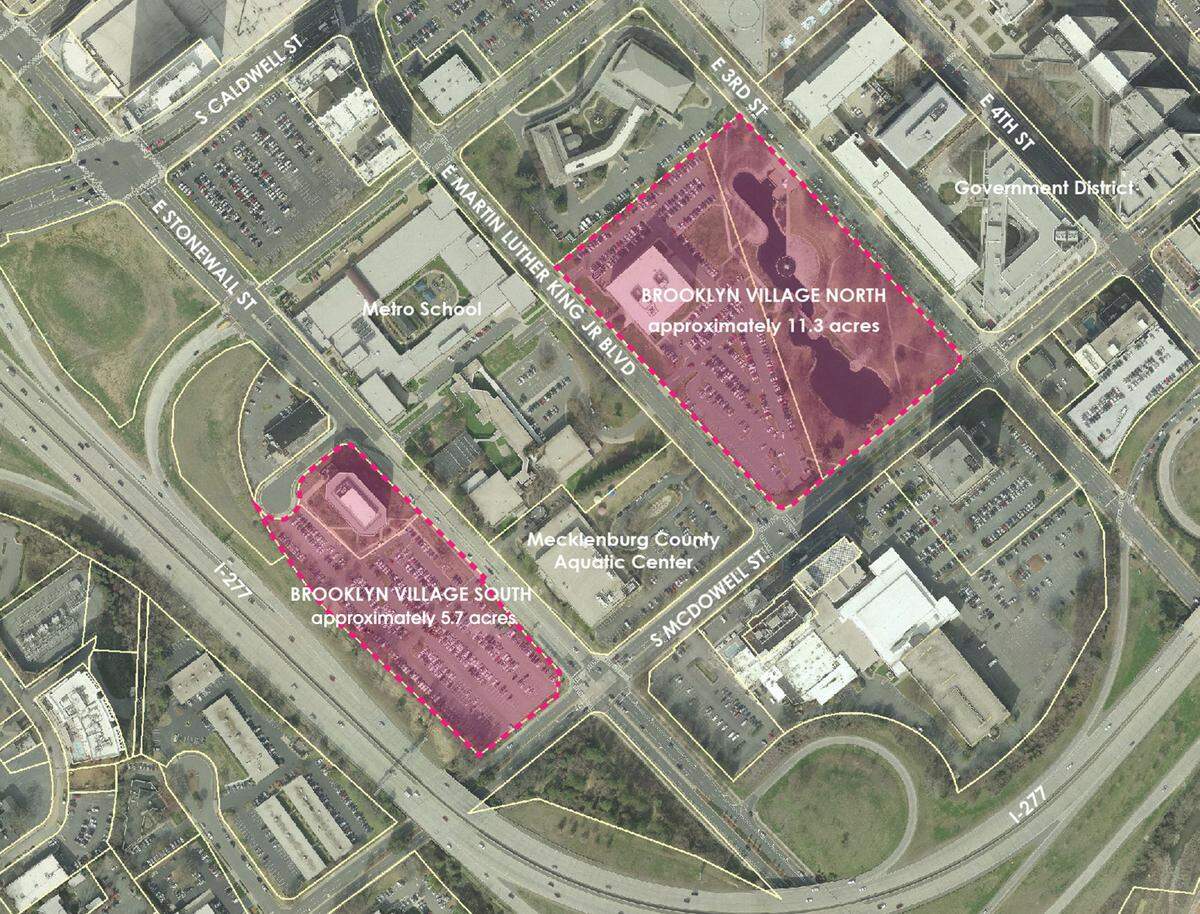
The 17-acre Brooklyn Village project would create over 1,200 residential apartments, a hotel, retail and commercial space. It would ultimately be an ode to the Brooklyn area with pieces of history, collected by the developers, spread throughout the property.
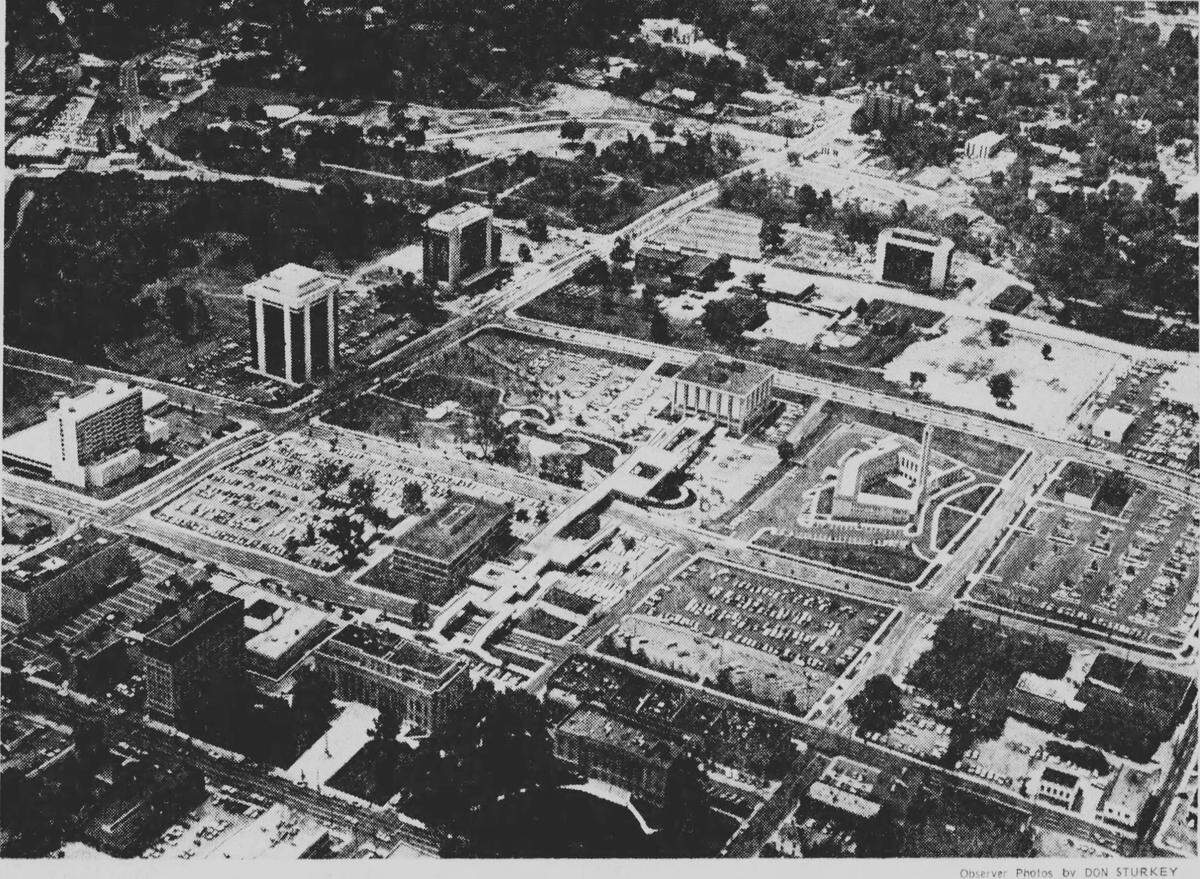
The Brooklyn Village redevelopment stemmed from the desire to rebuild the Brooklyn neighborhood, a once vibrant and thriving Black community that was destroyed in the name of urban renewal.
The area used to house Black businesses and families, but later became a place for parking lots, the long-shuttered Board of Education building, Marshall Park and Bob Walton Plaza.
Peebles Corp., in partnership with Conformity Corp. under the name BK Partners, were selected by the county in 2016 to be master developers of the new community.
But even in 2016, the partnership was contentious and the discontent has only grown.
Asbestos dispute at Brooklyn Village
Under the contract between the county and BK Partners, the developer has until July 28 to demolish the education building.
In an April letter to the county, the developer said finding over 150,000 square feet of asbestos-containing material in March constituted “a Force Majeure Event,” which is a legal term allowing a party to be excused from an agreement because of an unforeseen event.
The developers were seeking an extension of the demolition of the project through July 31, 2026.
The county disagreed.
Its letter said the developers inspected the site in August 2018 and noted an “asbestos caution sign” posted inside the building. An environmental site assessment also noted the “likely presence of asbestos,” the letter continued.
“(The developer’s) attempt to characterize the presence of asbestos, or its discovery thereof, as an “unforeseen” Force Majeure Event years later is meritless,” the letter read.
According to the county, this is not the first time the developer has sought an extension or an outright removal of the demolition requirement.
“Clearly, (the developer) did not proceed diligently because it has been hoping that it could evade its obligations,” the letter stated. “The county rejected these prior requests and consistently communicated to (the developer) the importance and priority of (the developer’s) obligation to complete all demolition work (including grassing of the site) on or before the outside demolition date.”
Peebles Corp. said the 2018 assessment “determined there may have been hazardous materials present” but when a new study was performed in late March or early April, the severity of the contamination was extensive and unforeseen.
Clearing up the asbestos increased demolition costs five-fold, Peebles Corp. said, and “added six to eight months of time to the demolition process.”
“BK Partners was unaware of the extensive environmental contamination of the building prior to this discovery,” the developer said in a statement to The Charlotte Observer. “Apparently, the county government knew of the contamination but did not disclose this information to us.”
The county declined to comment.
Affordable housing plans stalled at Brooklyn Village
The education building is part of the development’s Phase II plans, which aren’t set to start for six to eight years, Peebles Corp. said.
But given how Phase I is stalled again, that timeline remains unclear.
From a five-year closing process, which ended in 2023, to a changing real estate market, Phase I construction was delayed to the summer of 2026.
Peebles revamped the first phase plans in February, moving from a market-rate project with some affordable units to an all-affordable development.
But the changes are contingent on financing. Peebles Corp. asked the county for $2.5 million in gap financing, which the county has to vote on.
Peebles Corp. was also seeking funding assistance from the city of Charlotte through the Housing Trust Fund. Developers originally asked for $13.5 million, one of the highest requests the city has seen. City officials initially denied the request in April but said it could be revisited later.
Peebles added that it recently submitted six new options to the city that would “reduce its allocation.”
Part of those plans include a higher contribution from the county, which county officials refused, Peebles Corp. said.
What’s next for Brooklyn Village?
It remains to be seen whether the county will move forward with the project, given the tension over the extension request.
“...(The developer’s) decision to wait until the last minute to address asbestos issues it knew about nearly seven years ago, but did not act upon until recently, does not entitle (the developer) to any schedule extension,” the letter concluded.
With the rejection, the county’s letter stated that if the developers don’t demolish the site by the agreed upon date, the action would be considered a breach of contract.
That would mean the county could terminate its contract with BK Partners. It’s unclear if that decision would need to go before the commissioners for a vote.
Peebles Corp. said it owns the land in the Phase I development and the county cannot take back the land. The developer is also obligated to develop on the land its already acquired, creating even more uncertainty on what a potential legal battle would look like. Neither party has mentioned litigation.
Peebles previously said he’s still committed to the project. The developer added that they plan to meet with the county in the next few weeks to discuss the affordable housing plan.
“BK Partners has asked the county to allow us to proceed with the affordable housing buildings now and separately work out the issues involving the environmental clean-up,” the developer said. “If the county is genuinely committed to providing more affordable housing, it will approve our request. Otherwise, we will wait until market conditions improve in Charlotte and then proceed with our original plan.”