More than 300 affordable housing units coming to Charlotte area
Shovels have been put to work in Charlotte these past few weeks in preparation for several new affordable housing projects.
Construction began on nearly 300 income-restricted apartments or for-sale single-family and town homes across Charlotte since mid-May, with most set to be completed by next year. The units are a major need for the city, especially for extremely low-income residents and middle income residents such as teachers and first responders.
More than 32,200 apartments are needed for residents who make 80% of the area median income or higher, according to the city’s affordable housing gap dashboard from 2023. For a family of four, that’s an income of $89,750.
The second greatest need is for those making 30% AMI or less, which for a family of four is an income of $33,650. For that income level, there’s a shortage of more than 24,300 units.
And beyond Charlotte, housing for those in the 30% AMI bracket is even greater.
For the Charlotte-Concord-Gastonia metro area, more than 53,660 units are needed for the area’s most impoverished residents, according to the National Low Income Housing Coalition. The gaps are fueled by rising housing costs and the loss of naturally affordable housing, which are typically older properties with less amenities that rent or sell for lower prices.
Rent prices have increased by 43% in the last decade, according to data from CoStar, a real estate research firm.
In a recent blog post, United Way of Greater Charlotte noted that the city has lost about 74% of its affordable units and only about 8% of rentals are considered affordable.
“Every city has an affordable housing gap… a shortage of housing in general,” said Rusty Mills, deputy director of LISC Charlotte. LISC is a national nonprofit and Community Development Financial Institution that helps revitalize communities through financial assistance and education programs.
“Real estate is more expensive. The cost to build is more expensive and affordability is becoming more out of reach for people,” Mills said. “It’s like can you ever catch up?”
The city is doing what it can, Mills added, financing projects through the Housing Trust Fund or purchasing property for affordable housing developers. And the hope, Mills said, is that as more and more projects are created, both affordable and market-rate, the gap can be filled.
Nine for-sale houses in Wilson Heights
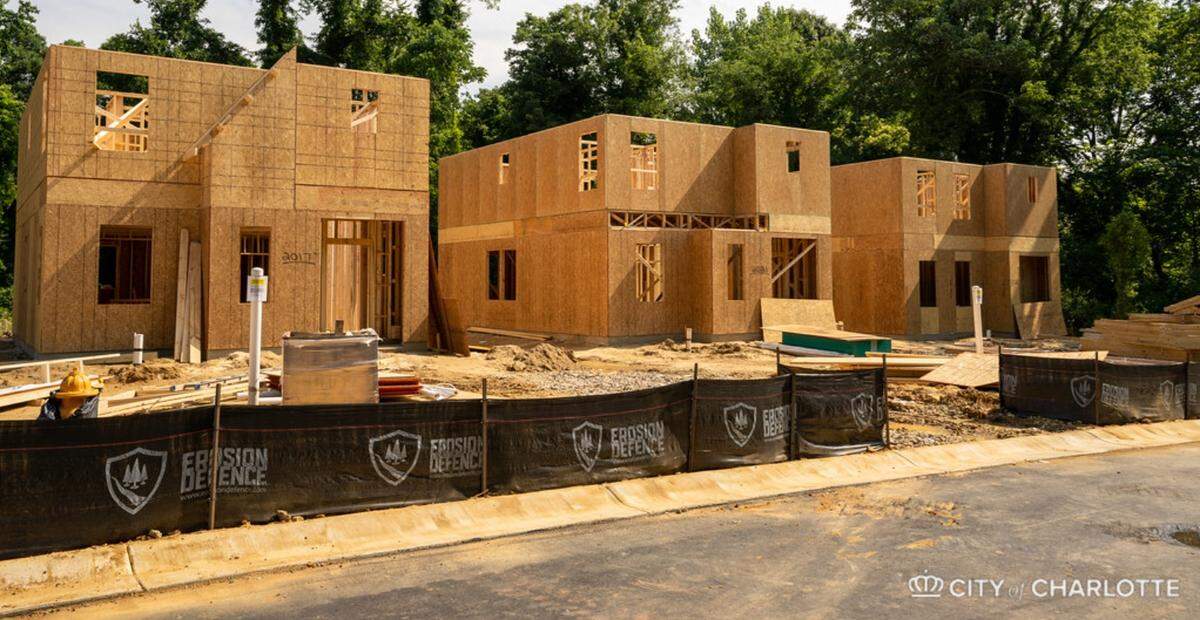
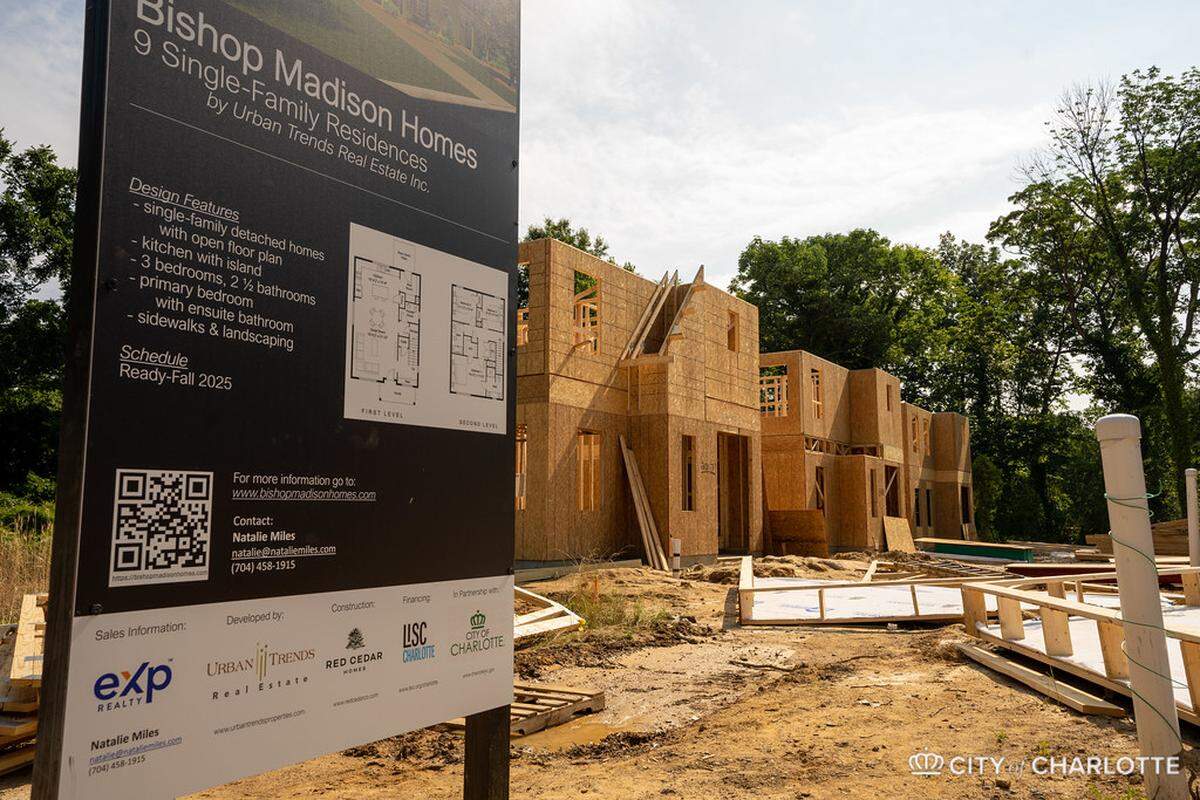
And filling that gap can start with something small but powerful, Mills said — like the Bishop Madison Homes project, which broke ground June 3.
The development in Wilson Heights will bring nine single-family homes to Bishop Madison Lane. The houses will start at $315,000 and will be set aside for those earning 80% AMI.
Down payment assistance will be offered to eligible applicants through programs including House Charlotte. Additional assistance will be offered to city of Charlotte employees and Charlotte-Mecklenburg School educators.
It’s a project that has been in the works for at least three years, helmed by the CEO of Urban Trends Real Estate, Chris Ogunrinde, who said the west side holds a special place in his heart.
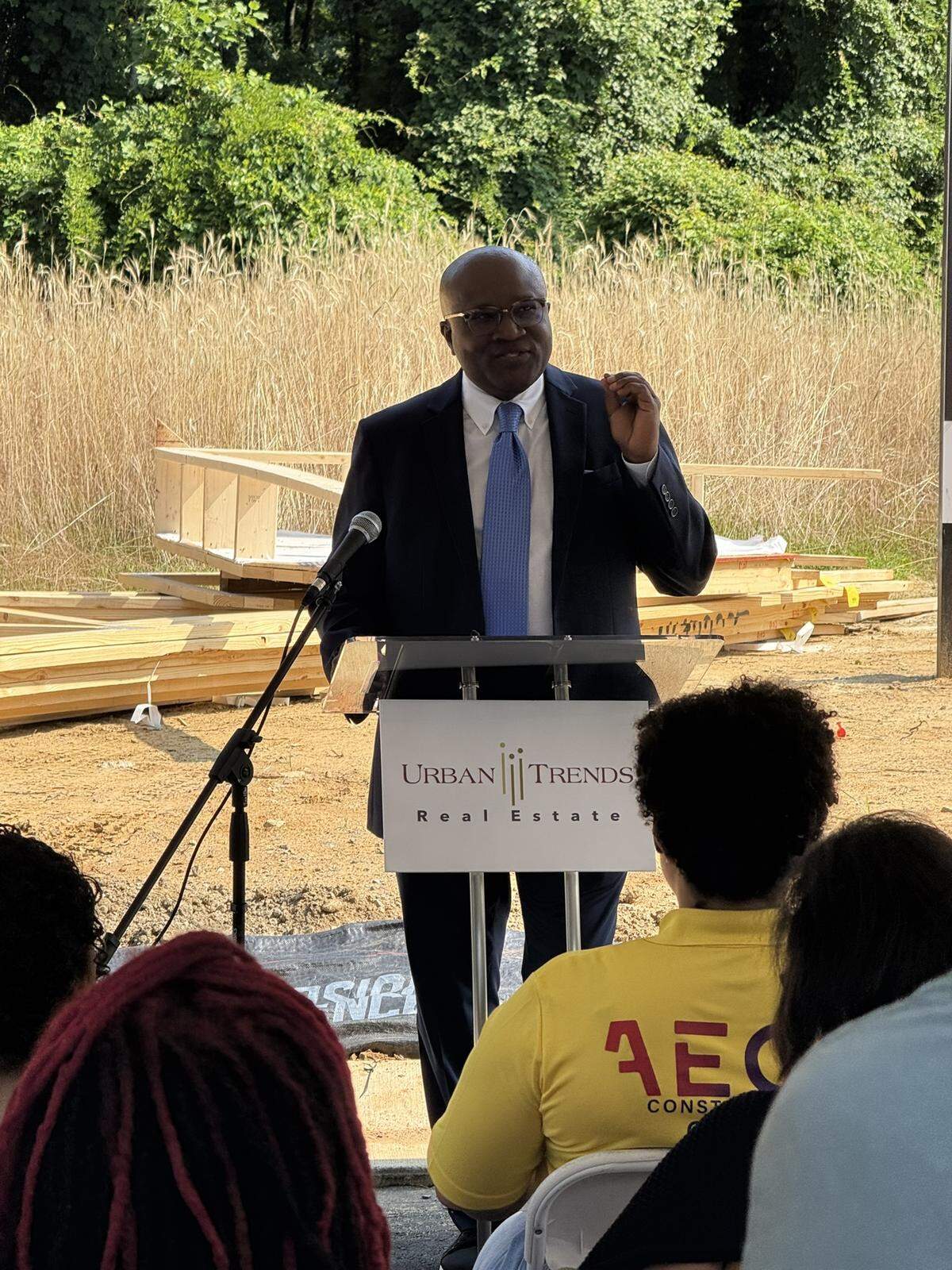
He reminisced about eating at McDonald’s Cafeteria during his time working for Neighboring Concepts, a local community planning and architecture firm. Ogunrinde said he would drive by the Bishop Madison site all the time on his way to Friendship Missionary Baptist Church
The site was originally the parking lot for the now-closed Dudley Beauty School. But Ogunrinde saw potential for the land to add density 10 minutes from uptown, near a planned stop on the Gold Line streetcar route and the Rosa Parks Transit Center.
With funding help from the city and in partnership with LISC Charlotte, Bishop Madison was able to get off the ground.
The city provided $570,000 in funding through the Housing Trust Fund and LISC provided $2 million. Currently, three homes are framed and sales have already opened up.
While nine houses may seem like a small nail in the affordable housing hole, Mills said even the smallest nail is needed to build a mansion.
“I think people have to understand that progress of any kind is progress when it comes to affordable housing and don’t discount it,” Mills said. “People might say nine units is not impactful. It’s impactful to those nine families… We have to deploy every means necessary to help move the number (of affordable homes) forward.”
Here’s some other affordable housing projects sprouting throughout Charlotte. If we’ve missed any or if you’re curious about project, send me an email at dmathurin@charlotteobserver.com
More apartments at Sycamore Station
In east Charlotte’s Oak Forest neighborhood, the Sycamore Station development continues with its second set of apartments.
Construction on Sycamore Station II began this month at 6010 Calle Lumina Way from affordable housing developers WNC & Associates, Winterwood Development, LLC, and Lumina Partners, LLC. It is expected to be completed by spring 2027.
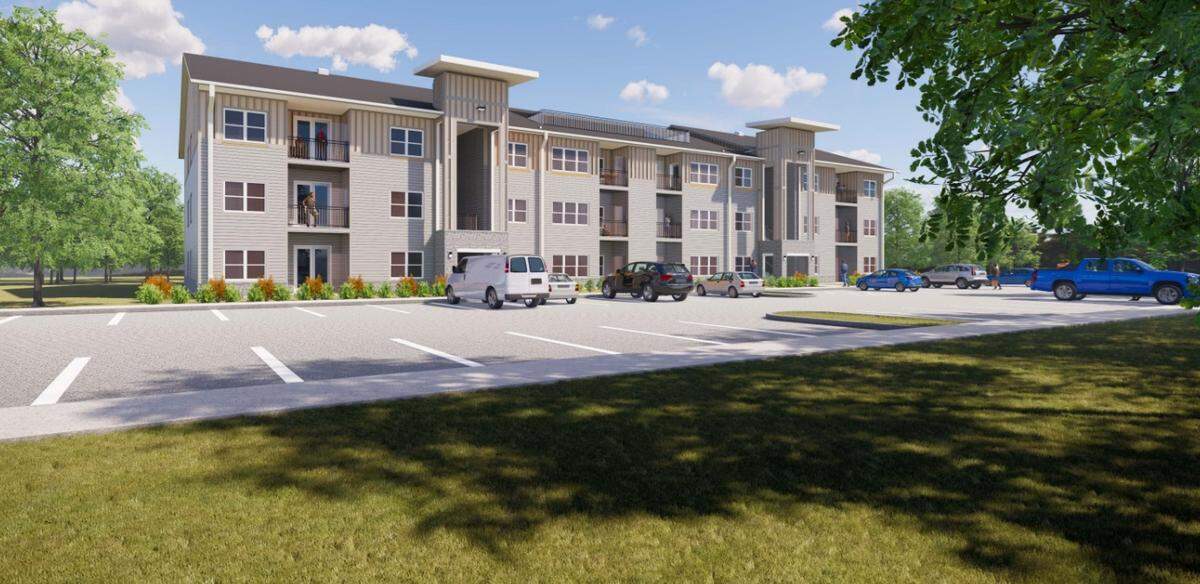
It’ll bring 168 units for those making 60% AMI or less. For a family of four, that’s an income level of $67,320. Rents are estimated to start at $1,100 for a one-bedroom, $1,400 for a two-bedroom, and $1,600 for a three-bedroom, according to a news release on the project.
The more than $83 million project is being financed through Low-Income Housing Tax Credits and loans from Citibank.
This is the second phase of the Sycamore Station project. Sycamore Station apartments opened in December 2022 and also had 168-units for those making 60% AMI. Developers said that the apartment complex has a six-month waiting period for an available unit.
Affordable housing in south Charlotte
Crosland Southeast is bringing another affordable housing complex to the city, this time in Ballantyne. Evoke Living at Ballantyne is a 60-unit complex spread across two buildings in the prime location at Providence Road West and Ballancroft Parkway.
And the project injects diverse income into the neighborhood that has an average annual household income of $166,511, according to Point2Homes.
The units will be available for those making 30% to 80% AMI. For a family of four, that’s an income range between $33,650 and $89,750.
The Evoke brand is part of Crosland’s affordable housing arm. It recently opened Evoke Living at Eastland Yards, which is a complex for seniors. The Ballantyne project is set to open in February 2026.
West Sugar Creek town homes
The Economy Inn near Sugar Creek Road and Interstate 85 in the Hidden Valley neighborhood used to be an eyesore and hot spot for crime, residents previously said.
In 2023, it was purchased by the city for $4.2 million as an investment in a historically disenfranchised corridor. Now, it’s going to be turned in to affordable for-sale town homes.
Hoover Townes broke ground in late May and will offer 39 affordable town homes for first-time homeowners. Each home will have three-bedrooms and two-and-a half baths.
Prices would start between $190,000 to $230,000 and the project is geared for families making 80% AMI, which is $89,750 for a family of four. Mortgages are estimated to cost between $1,000 to $1,400 a month.
Developer Prosperity Alliance and construction partner True Homes are working together on the project, in partnership with Pinnacle Financial Partners, which will provide down payment assistance through the House Charlotte Plus program.
The Plus program offers additional down payment assistance for projects in the city’s six Corridors of Opportunity. So eligible residents can receive up to $80,000 in assistance.
Construction should be completed by mid-2026.
Supportive housing in Elizabeth
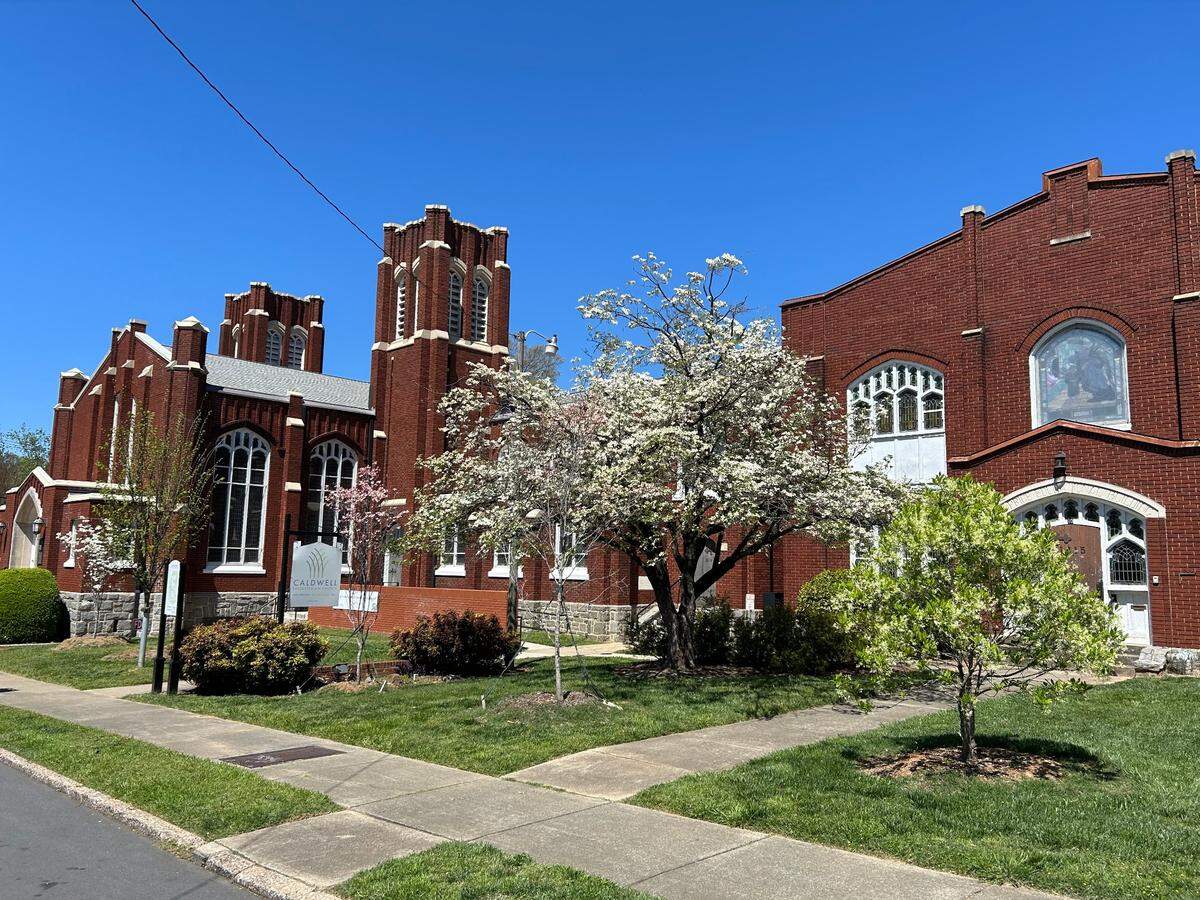
For over a century, a brick building at Caldwell Presbyterian Church on East 5th Street housed its Sunday School program.
Now, it’ll house Charlotte’s most vulnerable population. The church, alongside DreamKey Partners, is converting the building into Easter’s Home, permanent supportive housing for people experiencing chronic homelessness.
The $6 million project will create 21 studios, each about 400 square feet. The apartments are income-restricted for those making between 30% and 50% AMI. For a single person, that’s an income between $23,600 and $39,300.
Rent will cost 30% of residents’ income and the rest will be paid through federal housing assistance.
Chronic homelessness is when a person has a disability and has experienced either a continuous year of being homeless or four periods of homelessness that equate to a year. That population has increased by 6% from last year, according to Mecklenburg County data.
One of the ways to support the population is through supportive housing, which includes case management and health services. Roof Above, a nonprofit that provides shelter resources, will manage the property and provide the services.
The homes are set to open this summer, and the church is accepting donations to help out its new residents through this wishlist.
More housing in Charlotte, Matthews
And another 217 town homes will be built in the next few years in Charlotte and in Matthews.
Last week, Matthews approved a rezoning petition for 129 town homes at 4420 Margaret Wallace Road. It’s unclear what the AMI requirement will be but town officials told WCNC the project will help fill the need for affordable housing in the area.
“There’s a housing crisis,” Matthews Commissioner Ken McCool told WCNC. “What you are seeing is people who work in Matthews, work in Charlotte, can’t necessarily afford to live here, so they move to Union or Gaston County.”
McCool added that six of the homes will be given to Habitat for Humanity to sell.
The 12-acre site was purchased by CBS Holdings and LILLY Holdings last year for nearly $1.9 million, according to Mecklenburg County records.
No construction timeline was set.
In Charlotte, Kingdom Development Partners’ project on the westside received rezoning approval on Monday.
Charlotte City Council approved rezoning for the Legacy at Paw Creek development, an 89-unit subdivision with for-sale town homes. About 70% will be for sale at market-rate and the others will be for households earning 80% AMI.
Kingdom Development Partners is run by James Scruggs who recently opened The Enclave at Enderly Park, a 15-home subdivision in the historic Enderly Park neighborhood.
Also at Monday’s rezoning meeting, council held a public hearing for a Dreamkey Partners’ project along Beatties Ford Road across from the historic McCrorey YMCA. The rezoning request is to build 40 for-sale town homes.
Similar to the Legacy project, 30% of the units will be for those making 80% AMI.
During the hearing, nearby resident William Leisy spoke in opposition of the project citing a desire to keep the area zoned for single-family, along with safety and traffic concerns.
Dreamkey’s president Julie Porter said the project will enhance the area and provide affordable homeownership options.
A vote on the rezoning may occur in August.