Duke’s new power plan focuses on nuclear, gas, coal to power growing Carolinas
AI-generated summary reviewed by our newsroom.
- Duke projects energy demand will rise 8x faster over next 15 years in the Carolinas.
- To curb costs, Duke plans 2.1% average annual rate hike, below inflation levels.
- Growth strategy includes 5,600 MW battery storage and extended coal plant use.
With more residents and businesses flocking to the Carolinas, Duke Energy says it plans to rely heavily on its current portfolio of energy sources while keeping customer costs as low as possible.
Duke submitted its biennial resource plan Wednesday morning to the North Carolina Utilities Commission. It’s a proposed roadmap of how the utility will operate in the coming years.
One of the biggest issues the utility will face is supplying energy to the growing region.
According to Duke, customer needs over the next 15 years will grow at eight times the rate of the previous 15 years.
To put it in perspective, South Carolina uses about 80 terawatt hours per year, according to Glen Snider the managing director of integrated resource planning.
The expected growth “is equivalent to what South Carolina consumes today,” Snider said.
And that growth isn’t just from residents.
“We’re seeing continued growth in general manufacturing,” said Kendal Bowman. Duke’s North Carolina president. “We’re seeing a lot in biosciences…We’re also still seeing significant interest in potential growth of data centers and artificial intelligence. We are definitely seeing a strong pipeline of businesses and we think it will only continue.”
The second issue is customer cost.
The plan is to lean on existing energy sources to keep customer costs down. In the proposed plan, customers may see an average 2.1% annual increase over the coming decade. That’s lower than the current inflation rate of 2.9% and about half the yearly average of previous plans, Bowman said.
To put that into dollars, Bowman said a decade from now residents would see about a $30 increase as opposed to a $54.
“We’re doing everything we can to try to keep rates as low as possible for our customers, while we’re doing our part to make sure we keep jobs and investment coming to the Carolinas,” Bowman said. “We’re trying to keep those costs as low as possible by maximizing our existing generation. We’re trying to squeeze out every megawatt we can from our existing fleet of assets.”
With the plan submitted, the state’s utility commission in the coming months will schedule several public hearings on the plan. The commission will vote on the plan by the end of 2026.
And later this year, Duke will file a similar plan with the Public Service Commission of South Carolina.
Here’s a look at some of the resources, a bit more information on data centers and the Power Bill Reduction Act:
Increase in battery storage and nuclear
Duke plans to lean in on battery storage and nuclear, especially because there are tax credits available for utilities interested in both investments.
In Duke’s previous plan, the goal was to increase battery storage by 2,900 megawatts through 2031. That’s expanded to 5,600 megawatts by 2034.
In this plan, Duke wants 1,117 megawatts of new nuclear to come online by 2037.
“We’re the nation’s largest nuclear operator in the country,” Snider said. “Nuclear provides nearly half of the energy on the grid today and as load grows, we need to grow our nuclear fleet.”
Battery storage is what it sounds like. When demand is low or when prices are lowered, the utility will store energy for high use times, such as the middle of a summer day or an early winter morning.
Natural gas
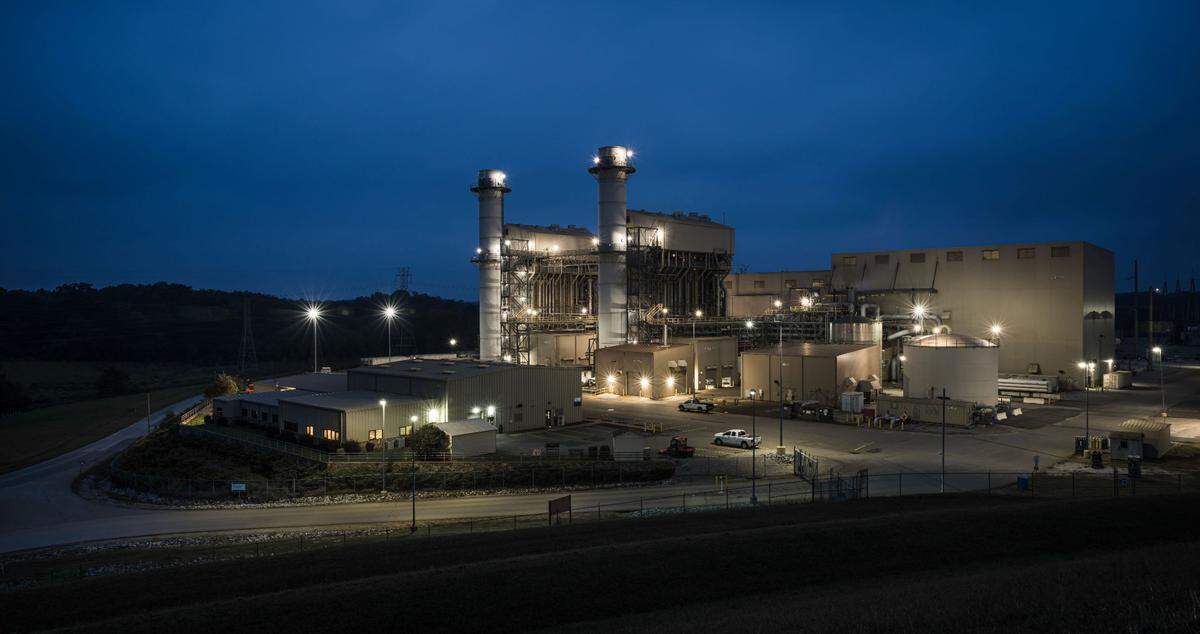
Duke would like to build two natural gas-powered generators combustion turbines in Rowan County. The additions would make up seven sites for increase natural gas creation. The utility requested permission to build the new turbines at the former Buck Steam Station site in July.
Solar, coal and wind
With the passage of the Power Bill Reduction Act, which Gov. Josh Stein vetoed and the general assembly overturned, Duke is no longer obligated to reduced its carbon emissions by 2030. However, the utility still has to reach net-zero emissions by 2050.
There’s also the passage of the One Big Beautiful Bill Act, which cut renewable tax credits for wind and solar energy.
Duke is no longer pursuing wind options in the immediate future, siting that the resource isn’t economically viable.
Solar is still a focus for the utility, especially with the upcoming ending of tax credits. Several solar centers are nearing construction completion.
The Power Reduction bill also gives the utility leeway to continue utilizing its existing coal plants. It will extend usage of the dual-fuel plants by two to four years, including the Belews Creek Steam Station in Stokes County.
In Duke’s previous plan, the goal was to convert that plant into a nuclear site. The retirement extension, Snider said, allows for a better and possibly cheaper conversion to nuclear in the future.
“We’ve been in the middle of transitioning away from coal for more than a decade,” Snider said. “We think an orderly transition out of coal still makes sense given the aging nature of our fleet. But having the flexibility to incrementally move some retirements by a couple of years really does help… We can respond to the growth we’re seeing, and it allows us to spread those retirement investments evenly over time to minimize bill impacts.”
Data centers in North and South Carolina
The plan doesn’t address data centers but Duke acknowledges that more data centers will possibly make their way to the Carolinas.
One of the major worries of residents is whether the utility will foot the bill for the additional energy usage that data centers are known to need.
Bowman said Duke puts together its rates by cost of service and with large load customers, such as data centers, its rates are different from residents.
But the utility and the commission is looking into protections for residents in regard to data centers and possible increases of energy bills.
This story was originally published October 1, 2025 at 8:46 AM.