Trella Uptown brings affordable housing to Charlotte, fulfilling a city need
Uptown Charlotte isn’t known to have affordable housing.
The average rent price for a one-bedroom apartment in uptown is about $1,800, according to Apartments.com.
So, a first-year teacher at Charlotte-Mecklenburg Schools who makes $48,600 annually could not afford to live in uptown.
But that’s changing.
Last week, city leaders celebrated the opening of Trella Uptown, a 353-unit mixed-income apartment complex in the middle of uptown at 426 N. Tryon St. It’s the site of the historic Barringer Hotel, which later became the senior-living Hall House.
A majority of the units, 70%, will be priced at market rate. But 106 units will be for those making 80% of the area median income or less. Including those in the 30% AMI or less bracket.
For a two-person household, that’s an income between $26,950 and $71,800.
The $137 million project stems from a partnership between Inlivian — Charlotte’s housing authority — and Urban Atlantic, a mixed-use housing developer based in Maryland.
And it symbolizes Inlivian’s move to create more mixed-income projects all around Charlotte.
“We’re de-concentrating poverty, bringing in people from all walks of life living, working and playing together,” said Fulton Meachem, president and CEO of Inlivian. “I think there were a lot of naysayers saying this is not the right location. … We have a bustling uptown dynamic. It’s close to rail, close to job centers, education. (Trella) has all the elements to create a community for our families to move up the economic ladder.
“When you have the opportunity to build more affordable housing in a high-opportunity area, you have to take advantage.”
From Barringer to Hall House
Trella’s location has a long history.
In 1940, a 12-story Art Deco style building rose up in uptown as the Barringer Hotel.
It was the only hotel of its style in the city’s center and “an elegant place to stay,” according to the Charlotte-Mecklenburg Historic Landmarks Commission. Guests including Judy Garland and Joan Crawford graced the hotel’s halls.
The hotel closed in 1975 and was purchased by the city of Charlotte in 1978. And in 1981 the building became Hall House, a low-income apartment building for seniors.
But in 2009, the building was decommissioned and later became a cold weather shelter periodically. It’s been vacant since 2014.
Affordable housing in uptown
While the goal was to keep affordable housing on the site, the plans were ever-changing over the last decade.
In 2016, Hall House was set to be part of the North Tryon Vision Plan, a revitalization guideline for the 60-acre uptown area between Church, 11th, Caldwell and Sixth streets.
The plan was to spur development in the North Tryon square that would match the growth seen on South Tryon.
In the plan, Hall House would become a 135-room boutique hotel with over 300 residential units, some of which would be affordable.
Those plans fell through in 2020 after Inlivian declined to sell the property to the then-master developer of the site, Metropolitan Partnership. (Ultimately, even the redevelopment plans fell through with Metropolitan in 2023).
At the time, Meachem said the housing authority wanted to keep ownership of the land to maintain its affordability.
One of the major reasons city leaders and developers say affordable housing can’t be built in uptown is because of the land costs. Without deed restrictions or agreements, properties can be converted to market rate.
Inlivia moved on with its own plan in 2020. It would build Trella.
About Trella Uptown
The historic building was torn down in 2023, to the dismay of some historic preservationists.
But Trella’s facade pays homage to the Art Deco style, with steepled concrete appliqués along where the original building stood.
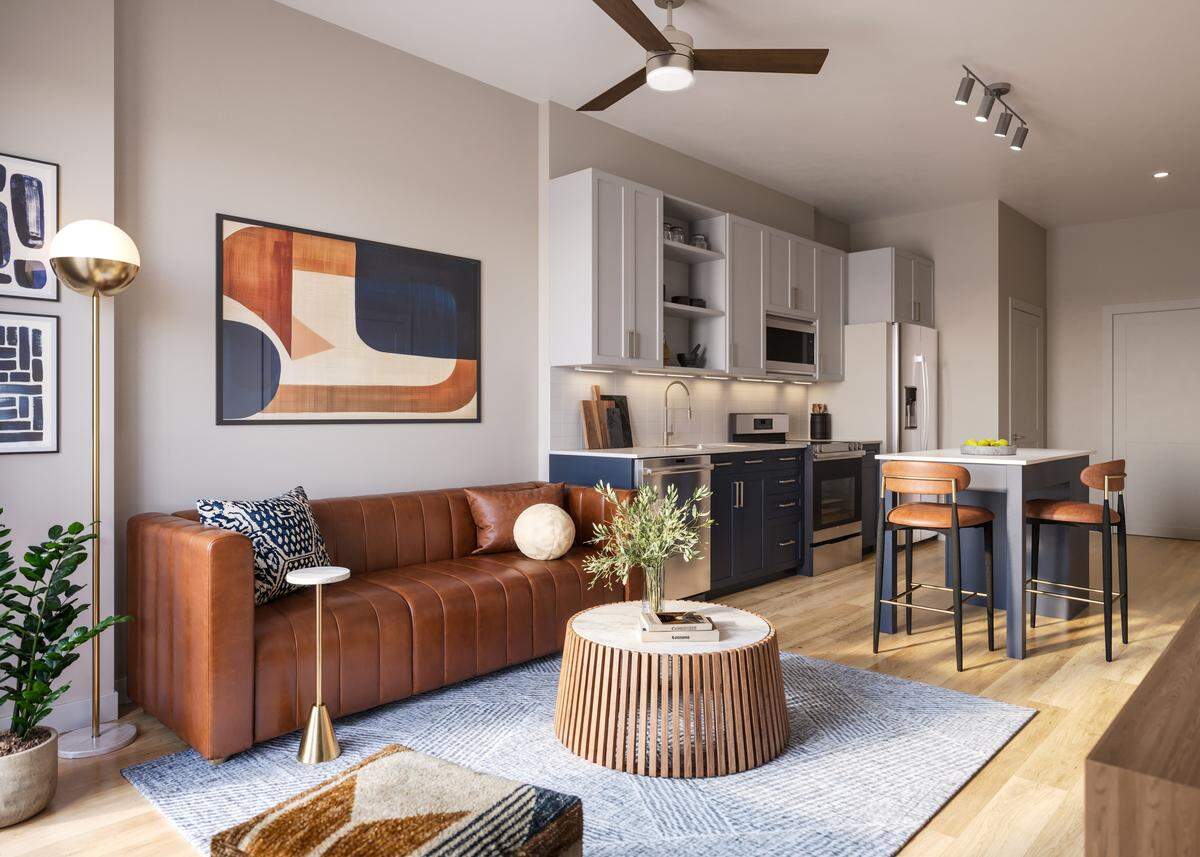
All residents have access to a pool, pickleball courts, a podcast room, a pet spa and a community room with accessible arts and crafts.
Supportive services, such as life coaching, will also be available to residents in the lower income brackets.
Mixed-income housing in Charlotte
While Trella boasts the amenities of a luxury building, the selling point is its mixed-income aspect.
The redevelopment was funded by public and private partnerships between the city, the county, Aetna, Barings, CVS Health and JP Morgan Chase.
It’s through those types of partnerships that more developments such as Trella can be built in other places, according to Meachem and Vicki Davis, the managing partner at Urban Atlantic.
“(Mixed-income projects) bring in people of different incomes and different backgrounds,” Davis said. “And it provides brighter futures for people who otherwise would have very limited housing choices.”
Like other housing authorities, Inlivian historically focused on building public housing. But that model creates income-segregated neighborhoods, concentrating poverty.
It also limits where people needing affordable housing can go.
Moving toward mixed-income developments allows for more funding opportunities and potentially better locations for residents to choose from, Davis said.
More than 35,000 rental units are needed for those making 50% of the area median income or lower, according to the city’s affordable housing gap dashboard from 2023. That’s just below the salary of some CMS teachers.
Other projects from Inlivian are on the way. The housing authority is working with Atrium Health on several projects. And Inlivian is working with The Fallon Co. to create affordable units at Centre South in Dilworth.
The goal, Meachem said, is to create Trellas all over Charlotte.
“When people hear change, and they’re hearing mixed income, somehow that means that doesn’t mean ‘me’ and that’s not what we do,” Meachem said. “It means the families that we serve today. It means those 30 percenters have focus and have preference in anything we build.”
This story was originally published January 26, 2026 at 5:31 AM.