Charlotte architects try to save historic facade from demolition for data center
The Charlotte branch of a national architect organization is opposing the pending demolition of a 100-year-old building’s historic facade in uptown.
But the developer, who is planning to expand an existing data center at the site, has already filed for a demolition permit with Mecklenburg County.
The Charlotte branch of the American Institute of Architects, or AIA, wants to save the facade of the Court Arcade building at 725 Trade St.
The building was constructed in the mid-1920s by architect William Peeps, according to the Charlotte-Mecklenburg Historic Landmarks Commissions.
Texas-based Digital Realty Trust, a major data center builder with over 300 centers in more than 25 countries, owns the building and already operates a data center at the site. It also operates several other data centers in the area at 731 E. Trade St.; 113 North Myers St.; and 125 North Myers St.
But Digital Realty wants to expand its operations in Charlotte.
In October, Digital Realty filed a demolition permit for the site. While the group planned to demolish most of the building, Digital Realty at that point intended to preserve the facade, which includes the arched entryway and covered setback. Those features are what makes the building a part of arcade architecture.
The company had worked with the Historic Landmarks Commissions for a few months this year to save the facade, commission director Stewart Gray previously said. But that’s no longer the case.
On July 7, Digital Realty filed for a new permit to demolish the entire building.
Charlotte demolition ‘a concerning precedent’
Now, Charlotte AIA is looking to stop the demolition.
The group, which represents the 12 counties centered around Charlotte, put out a statement recently asking for the city’s support to stop the proposed demolition.
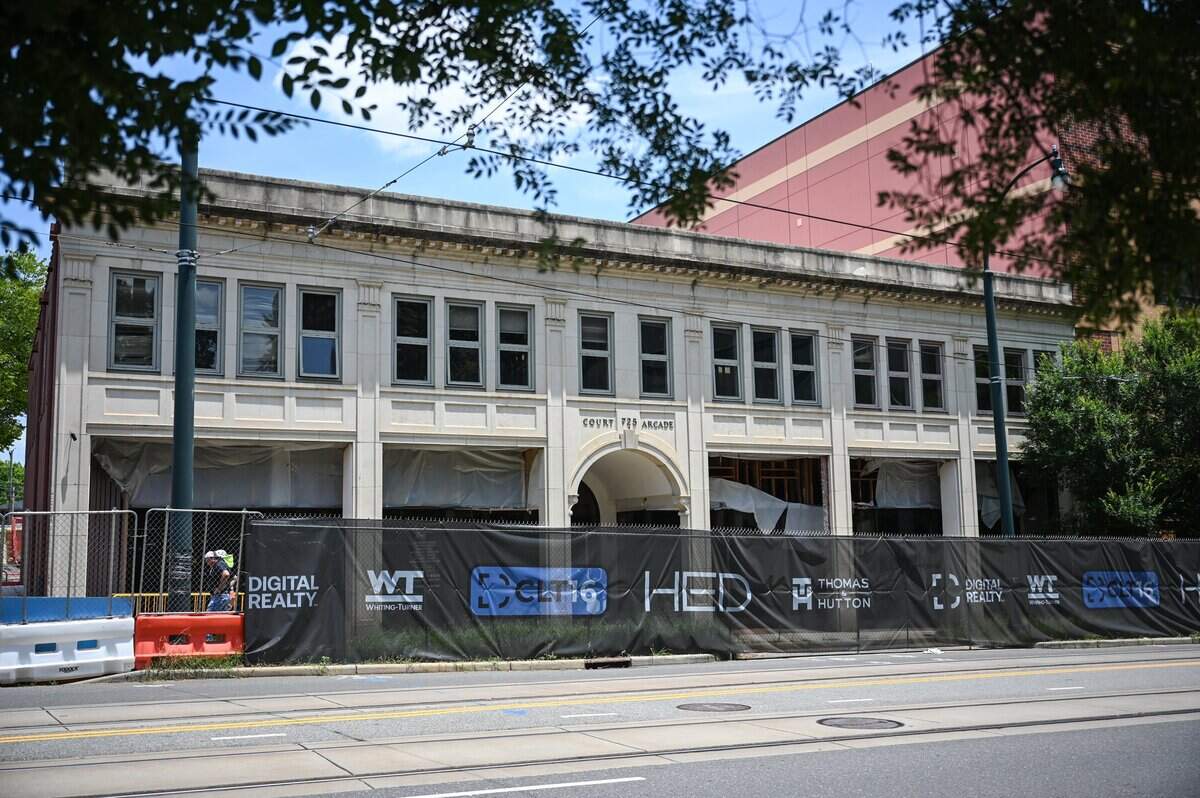
“The façade in question represents more than a remnant of the past; it is a visible marker of Charlotte’s architectural evolution,” AIA Charlotte said in its statement. “Its removal would set a concerning precedent for future development in areas where historic identity and urban fabric are essential to Charlotte’s sense of place.”
The permit hasn’t been approved yet, according to Mecklenburg County representatives. And if the building had been designated a historic landmark by the county commission or another entity, the permit would have to go through a historic review.
But the Court Arcade was never designated as a landmark.
Digital Realty previously said saving the facade wasn’t feasible. It is still going through the permitting process, a spokesman for the data center developer said. So, a demolition date hasn’t been set.
Digital Realty didn’t immediately respond to a request for comment Friday on AIA Charlotte’s stance.
But AIA Charlotte is hoping Digital Realty works with the group to help save the facade, said Kate Shelton, AIA Charlotte’s executive director.
“That’s been a long thing going on in the Charlotte community, buildings getting torn down and built back up with something more modern,” Shelton said. “We can help come up with solutions that are feasible. Not everything can be saved, but that doesn’t seem to be the case here…
“You have to question, is this all about profit or are you really invested in the community and doing what’s best for the community in all ways.”
About Digital Realty and data centers
Digital Realty has owned and operated data centers in uptown Charlotte for about 20 years.
And the data center developer is expanding its operations in Charlotte. Even amid resident opposition and Charlotte’s June moratorium on data center development and rezoning.
In 2005, Digital Realty purchased three parcels around the Court Arcade for about $17.3 million, according to county property records.
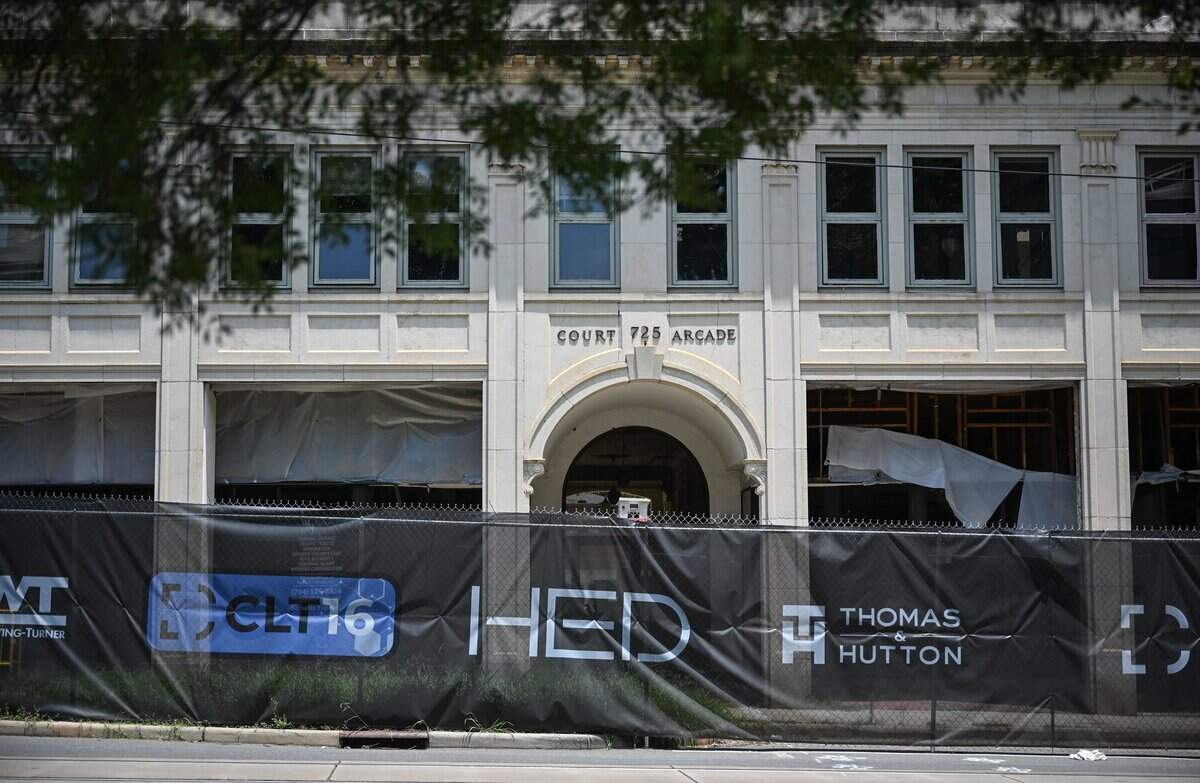
In October, Digital Realty filed a land development construction plan for the Court Arcade that called for a new four-story data center building with a mechanical yard for supporting electrical equipment and a truck delivery driveway off East Fifth Street.
Digital Realty is also building one of the biggest data center in North Carolina, in west Charlotte, after receiving rezoning approval last year.
A 3-million-square-foot data center will go up on 156 acres at 12899 Moores Chapel Road, near the Catawba River. The site will house two buildings that could support up to 400 megawatts of IT capacity. Digital Realty purchased the property two years ago for $160 million.
It’s unclear if Digital Realty will revisit saving the facade.
AIA Charlotte is looking to residents and city council members to help change Digital Realty’s mind on the facade. Especially as more and more of Charlotte’s historic buildings are being torn down.
About Court Arcade, historic places in Charlotte
A century ago, the Court Arcade was an office building for attorneys who needed to visit the Mecklenburg County Courthouse along East Trade Street.
The building is split into two. The front-portion is two floors and the back is one level.
The back portion is where the arcade architecture shines. The ceiling is arched and lined with skylights to allow for light in walkway. And each office door mimics a storefront similar to shopping arcade structures.
The design is part of the “arcade” architecture, which is where the building gets its name. Peeps designed two arcade buildings in Charlotte: the Court Arcade and Latta Arcade.
The Latta Arcade was designated a historic landmark in 1994. The building was recently renovated, but the historic aspects were preserved.
That’s not always the case in Charlotte.
For example, the 94-year-old Midwood Elementary School at 1817 Central Ave. in Plaza Midwood is being torn down for apartment buildings. And several properties in Steele Creek near Charlotte Douglas International Airport have been demolished for airport expansion.
“It’s a pivotal time in Charlotte,” Shelton said. “We’re going to continue losing our history, our story and our fabric if this is the road that we continue down and if this is the precedent that new development brings in.”