Charlotte economy is a ‘shining light,’ regional Fed president says. He tells us why.
The past year has been a confusing one for the economy.
The price of essentials — like gas, rent or a dozen eggs — spiked, but consumers kept spending. The mortgage industry crumbled, but a slower housing market didn’t make it much easier to buy a house in Charlotte.
Just a few months ago, businesses struggled to find enough staff. Now some of the country’s largest firms are announcing mass layoffs.
At the center of it all is the Federal Reserve, the country’s central bank, which uses monetary policy — primarily, lifting and lowering interest rates — to control the flow of money throughout the economy and slow inflation when it surges.
As president and CEO of the Federal Reserve Bank of Richmond, Virginia, Tom Barkin helps determine those policies and oversees operations for the central bank’s branch covering South Carolina, North Carolina, Virginia, Washington D.C., West Virginia and Maryland.
Barkin sat down with The Charlotte Observer on Friday to talk about tech sector layoffs, the post-COVID economy and whether we’ll see price increases retreat in 2023. The interview has been edited for brevity and clarity.
How would you describe the economic moment we’re in now?
Barkin: We’re still in the post-COVID economy. During COVID, there was a severe rotation from services to goods. There was fraying of many supply chains. There was a lot of stimulus put into the economy... and it led to inflation significantly higher than our target. In response to that, the Fed has started to make the moves that you would hope we would make. Inflation is starting to come down. Demand is softening. But what you’re seeing in the economy is still heavily influenced by what happened during COVID. We’re in a transition back toward normalization. But we’re not there yet.
How much longer can we expect the cost of everyday goods to keep increasing at this pace?
Barkin: Inflation started as a combination of the reopening from the pandemic and supply chain issues. It then broadened and became persistent, and we started to take action. The last few months have been encouraging… but it’s too early to declare victory. We’re going to continue to do what we need to do to make sure we get inflation back in line. How long it takes, I think, is a question of some debate.
Can we expect any prices to fall back to what they were pre-pandemic?
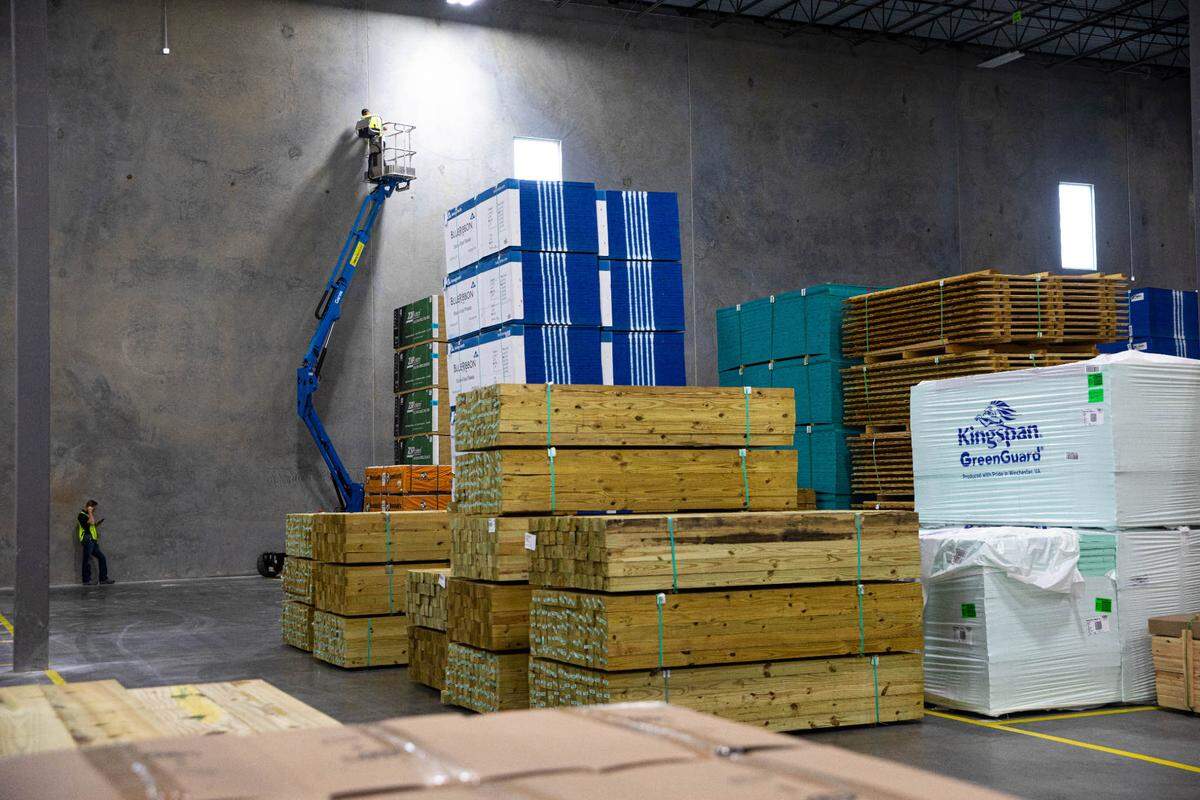
Barkin: The question of whether things come back to where they were depends very much on the (type of) goods. Behaviors have changed as a result of COVID. Think about housing: people spent 24 hours a day in their house, and that convinced them that they needed a better one. So with more net demand for housing, that probably means a high price. Lumber is another example — there was a big boom in lumber. The industry had trouble with capacity. Lumber prices escalated significantly. Then they fixed the capacity issues… and the price of lumber came back to basically where it was. It very much depends on the item.
Some argue that the Fed has been too aggressive in its pursuit of inflation, and this will lead to a hard landing (with the Fed raising interest rates enough to tip the economy into a recession). How would you respond to that?
Barkin: People hate inflation because it feels unfair. If you get a pay increase, it’s because your boss acknowledged what you’re bringing to the table. But if you then go to the gas pump, and the prices are up, it feels arbitrarily taken away.
Congress has mandated that we take care of inflation. And if we (at the Fed) don’t take care of it, I don’t know who will. That’s what I’m focused on. Monetary policy is an imprecise instrument. It doesn’t work perfectly or quickly… so it is a judgment call. But the higher purpose here is to take care of inflation, and to do it convincingly, compellingly and definitively.
In 2021, we had our foot on the gas. We thought the economy needed support. In 2022, we took our foot off the gas, and that’s all we were doing. We did that as quickly as I thought we could, without inadvertently breaking something. I’ve been pleased that the economy has held together. (Now), we have our foot on the brakes. And when you have your foot on the brakes, you just steer a little more deliberately.
We’ve seen discouraging signs for the economy lately — specifically when it comes to corporate layoffs. Do those kind of job cuts spell trouble?
Barkin: I think the word for 2023 is ‘normalization.’ There are a lot of sectors and economic variables that have gotten out of balance, that are going to get closer to being in balance. A lot of tech companies expanded significantly during COVID. If I’m reading their reports (of mass layoffs) appropriately, a lot of them are now scaling back not to where they were before (the pandemic), but to a new, higher plane that’s more in line with what has actually happened to demand… It’s taking us some time to get this economy back to a normal footing.
Every company has a recession playbook. They know we’re raising rates. A lot of economists predict recessions. So people have pulled that playbook out, and some of them have gone to Page 1, which is a set of changes that are not that disruptive to your company. They would include, perhaps, a hiring freeze or a headcount freeze. But with the exception of those sectors most significantly affected like mortgages, most people aren’t moving to the other pages of the playbook.
What would you say to the Charlottean who feels uneasy with the state of the economy right now?
Barkin: The U.S. economy is significantly stronger and in significantly better shape than almost any other economy in the world. Inflation is an issue globally, but it looks like it’s under more control here than in a lot of other places… And I’d say that the North Carolina economy and the Charlotte economy has been a shining light, even within the context of the U.S. economy… Companies are moving here, the business community is working together with the political community in a way that seems productive. I think there’s a lot to celebrate. And if you’re going to be in this economy, you probably want to be in Charlotte.
This story was originally published January 23, 2023 at 5:50 AM.