From Disney resorts to Charlotte towers, prominent developer talks about what’s next
As a kid growing up on the Florida coast, Brian Natwick didn’t go too far for his first venture into building and real estate.
With his construction management degree from University of Florida in hand, Natwick landed an entry level project manager job for a company that built resorts for The Walt Disney Co.
His job? Head of the $30 million wood division for the Animal Kingdom Lodge, a several-hundred room hotel in Orlando built around a wildlife preserve with safari animals. Years later, Natwick came back to stay there with his family.
Today, Natwick’s work is more in his backyard.
In October, he was named CEO of Crescent Communities, one of the oldest and most prominent developers in Charlotte, where he’s lived with his wife and three kids for the past 20 years. He replaced Todd Mansfield who led the company since 2011.
“That experience for me working for Disney as a client led me to where I am today,” Natwick said at his company’s offices on the eighth floor of the new Ally Charlotte Center tower in uptown. “It planted the seed with me. I like construction management but I really love what the folks are doing on the other side of the table. The development side.”
‘A legacy aspect’
In the early 2000s, Natwick pursued an MBA in leadership, first in Florida, but eventually completed it at Queens University of Charlotte. Around the same time, he ended up moving to Charlotte with Centex Construction Company, now Balfour Beatty, that helped build Disney resorts.
A few years later, in 2006, Natwick’s next-door neighbor worked for what was then called Crescent Resources. The two got to talking and the neighbor said Crescent was looking for someone to work on their multifamily business.
Natwick has been there ever since. Over the past 15 years, he was named president of multifamily and most recently served as the company’s president and chief operating officer.
The company was a former Duke Energy subsidiary that dates to the 1960s, and has been rebranded as Crescent Communities. It’s owned by Sumitomo Forestry America, a subsidiary of a Japanese firm, which allowed Crescent to increase its reach and eliminate its debt.
Over the past decade, Crescent expanded from its headquarters in Charlotte to 15 markets around the U.S. including Nashville, Tennessee, Atlanta, Phoenix, Denver and Austin, Texas.
The company has $6 billion of multifamily and commercial investments and developments currently underway. And it employs 150 people, 100 of which are in Charlotte.
For Natwick, the role of CEO gets him excited to lead an idea from concept to reality.
“There’s a legacy aspect where you’re creating shelter, you’re creating a home, you’re creating a workplace,” Natwick said.
Crescent’s big projects
In Charlotte, Crescent is working on a number of high-profile projects.
At the top of the list: the River District, a 1,400-acre development that aims to transform a largely vacant tract along the Catawba River into a mixed-use residential and commercial community.
Plenty of green space will be incorporated across the area, along with nearly 20 miles of bike and pedestrian trails. Restaurants, office spaces, apartment buildings and homes will be built through the development.
“It’s an opportunity to create a city within a city,” Natwick said.
Construction is expected to break ground this year and Natwick said work has started on infrastructure like roads, water and sewer.
Another project underway is NOVEL University Place, a development of 311 apartments in University City. The apartments will be a central part of the Waters Edge project that seeks to create a town center around a 15-acre man-made lake near J.W. Clay and W.T. Harris boulevards.
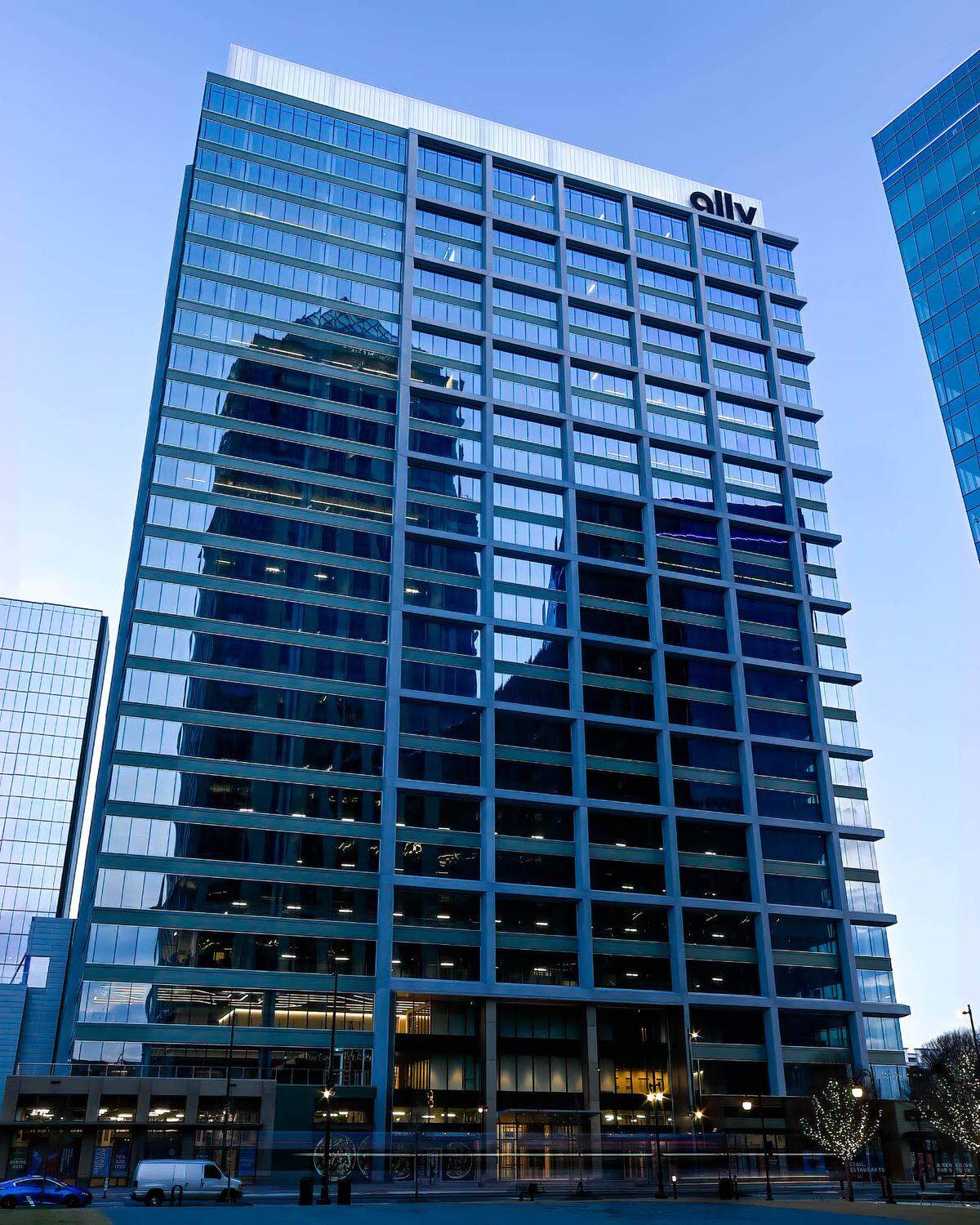
Crescent was also behind the Ally Charlotte Center, a 26-story office building anchored by lender Ally Financial.
On Charlotte’s future growth
Crescent has been paying close attention to the first draft of the Unified Development Ordinance as well as the 2040 Comprehensive Plan, which will guide growth and development in Charlotte.
The UDO charts a path to implement the goals of the 2040 Comprehensive Plan, which calls for equitable growth and development for Charlotte over the next two decades. City Council members narrowly passed the 2040 plan in June after months of fierce debate.
City officials said the draft released in October is a step toward updating ordinances that were written over the past 30 years and aims to provide better predictability in the development process.
The update is needed, Natwick said. But, he said, city officials and others must be careful over “unintended consequences.”
If the document is too complex — it clocks in at just over 600 pages — it could result in unpredictability that counters progress, Natwick said.
As long as the road map is clearly defined, Natwick said, and there aren’t 20 different groups to get approval from, the plan can serve Charlotte well.
He hopes the development community can be involved in the process and have their thoughts integrated into future drafts. After all, he said, the plan only gets finalized once.
This story was originally published December 20, 2021 at 6:00 AM.