One part of Charlotte sees office space growth that rivals anything in the country
South End isn’t just making headlines in Charlotte. It’s getting national recognition for its growth.
The booming neighborhood was just one of two submarkets in the country to double inventory of top-tier office space in the past five years. That’s according to research firm CoStar Group, which defines “submarket” as a neighborhood in a larger city that has a similar office market.
The only other neighborhood to cross that line? Fulton Market, just outside of downtown Chicago.
That fact was among the many highlights of the annual Charlotte Center City Partners State of the Center City report, released Thursday evening. In it, the group breaks down the numbers of growing office workers and office space in uptown and South End along with new development and hospitality.
Last year, for example, Charlotte was first in the nation for delivery of office space, according to brokerage firm JLL, the report said.
Some prominent buildings Charlotte Center City Partners cited were the Honeywell headquarters on South Mint Street and the nearby Ally Charlotte Center. In all, there’s more than $4 billion of already-planned development for this year.
All this comes despite the ongoing challenges of the global coronavirus pandemic, which has rocked the way companies are thinking about employees returning to the office. The pandemic has also heavily impacted small businesses in Charlotte and beyond.
“In spite of real challenging macro economic headwinds and two unprecedented years, we’ve been able to set a foundation for another strong decade,” Michael Smith, president and CEO of Charlotte Center City Partners, told the Observer.
LendingTree, Lowe’s favor South End
In 2017, South End had 1.5 million square feet of top-tier office space, according to CoStar. By the beginning of this year, that number had shot up to 4 million square feet — a 168% increase.
You can credit that to a number of factors, including the flurry of development that’s taken place along the light rail line that runs through the neighborhood.
South End has emerged as a “top pick” for new office leases, including from Lowe’s, LendingTree and Dimensional Fund Advisors, previous reports from Charlotte Center Partners have highlighted. In 2019, for example, 3,500 new jobs were announced for the area.
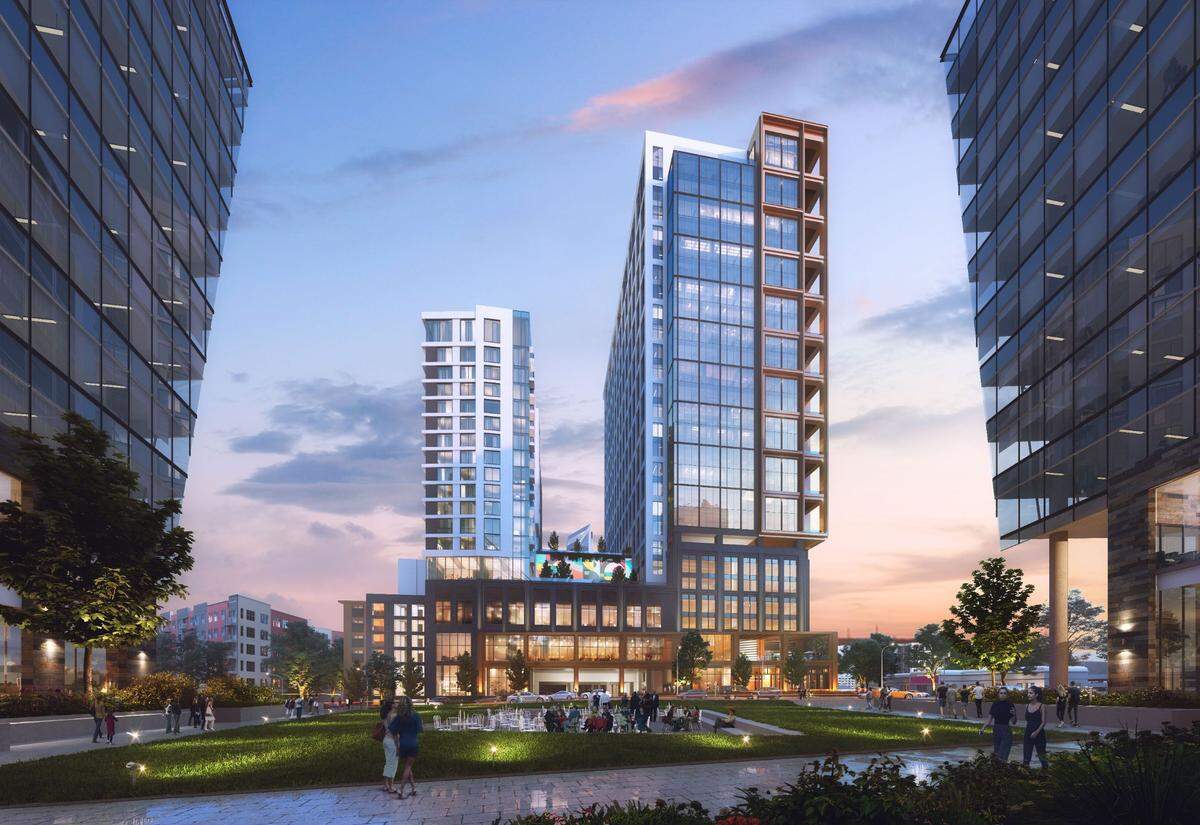
That trend has shown no indication of slowing down. Developers in recent weeks and months have announced several high-rise towers in South End, some office and some residential.
Population growth has also kept pace, growing by close to 200% in the past decade.
Most South End residents have come from other cities, with the vast majority citing the ability to walk to things like shops and restaurants as a reason they moved there.
Chicago and Charlotte similarities
Chicago’s Fulton Market shares more in common with South End than just surges in office space inventory.
Both neighborhoods were long ago known for low-rise warehouses close to the center business districts of their respective cities.
Both have also benefited from the early arrival of tech and creative firms, and easy access to public transportation. This growth also has meant that while some of the historic properties have been saved, others have been demolished to make way for new, shiny office buildings.
“We’re fortunate to have such a vital and complete submarket in our center city,” Smith said. He pointed to other recent announcements on the edge of uptown and South End that are serving to knit the central business district together.
Some of those announcements include a Chicago developer’s $750 million project to bring three buildings to the site where Midnight Diner is located.
Other highlights from the report
- Seven of the top 10 best nights for hotel rooms sold in Mecklenburg County history have happened since May 2021. The best night came on Sept. 4 for the 2021 Duke’s Mayor Classic, which had a $49 million economic impact.
- Some 21,729 people live in uptown, with a median age of 29 and average household income of $114,682.
- And 11,323 people live in South End, where the median age is 28 and the average household income is $88,711.
- In the third quarter of last year, more than $1.4 billion in buildings traded hands. That represents the highest quarterly total in Charlotte dating back to 2000. It includes the Lowe’s Global Technology Center in South End, which sold for a record-breaking $318 million, or $889 per square foot.