‘Soul of this city.’ What’s lost when new construction means the end of older buildings?
READ MORE
The Landmarks We’ve Lost
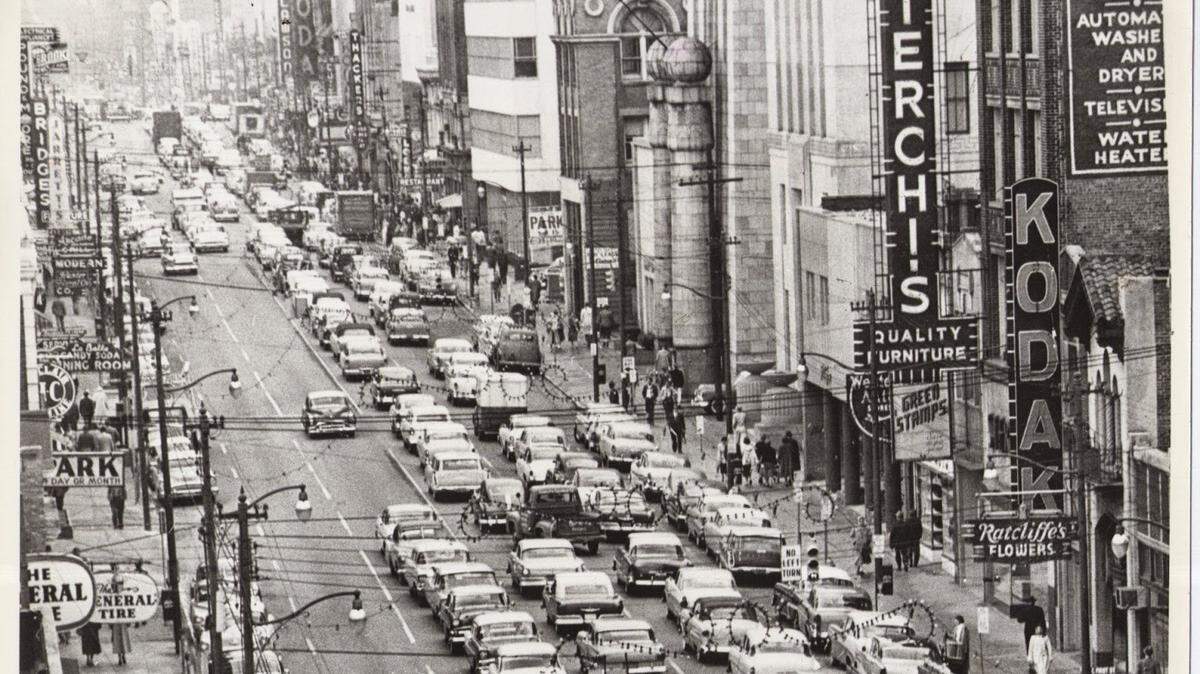
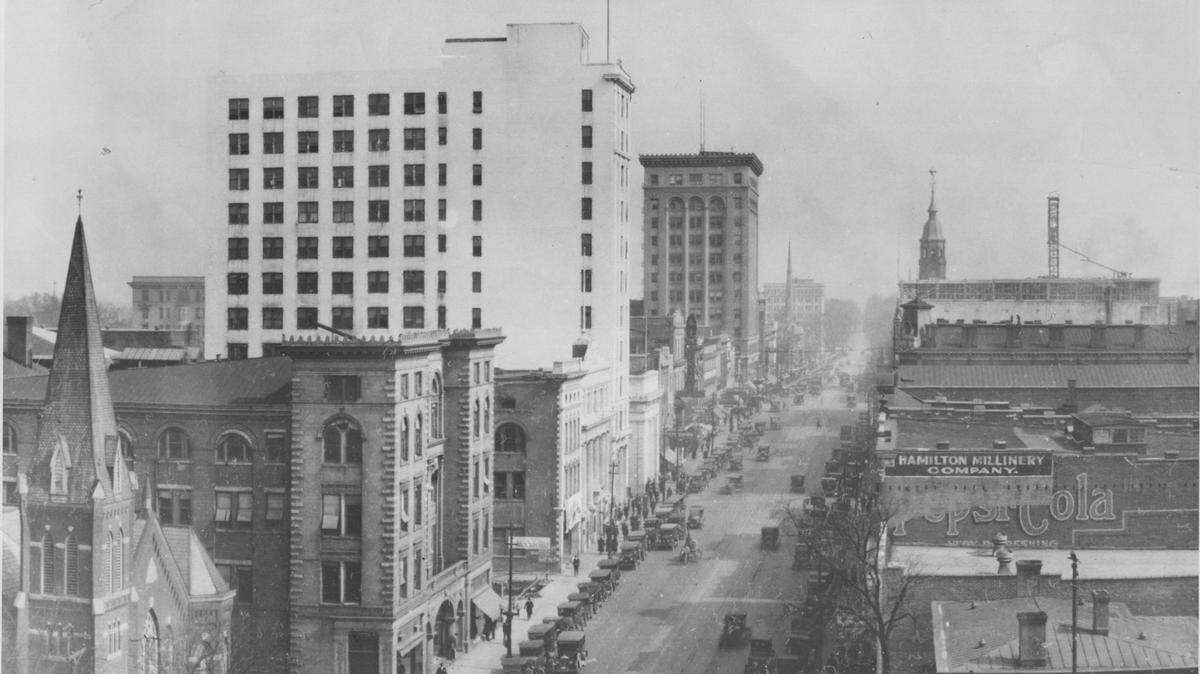
Charlotte is a booming city. With its allure for business, fiercely local sports scene and attractions for families, development has pushed for an increasingly urban landscape. But what’s lost when new construction means the end of older buildings?
Expand All
Any time Randy Franklin rode by the century-old building at 500 Providence Road in Myers Park, he would think of his late parents.
His dad, who died in 2018, worked for years as a photographer for the Observer. Franklin’s mom, who died two years earlier, went back to school to be a medical assistant after raising her four kids.
Both had their funeral services at 500 Providence, a Colonial Revival-style home from the early 1900s. Known as the Wohlford House, it served for decades as the Harry & Bryant Funeral Home.
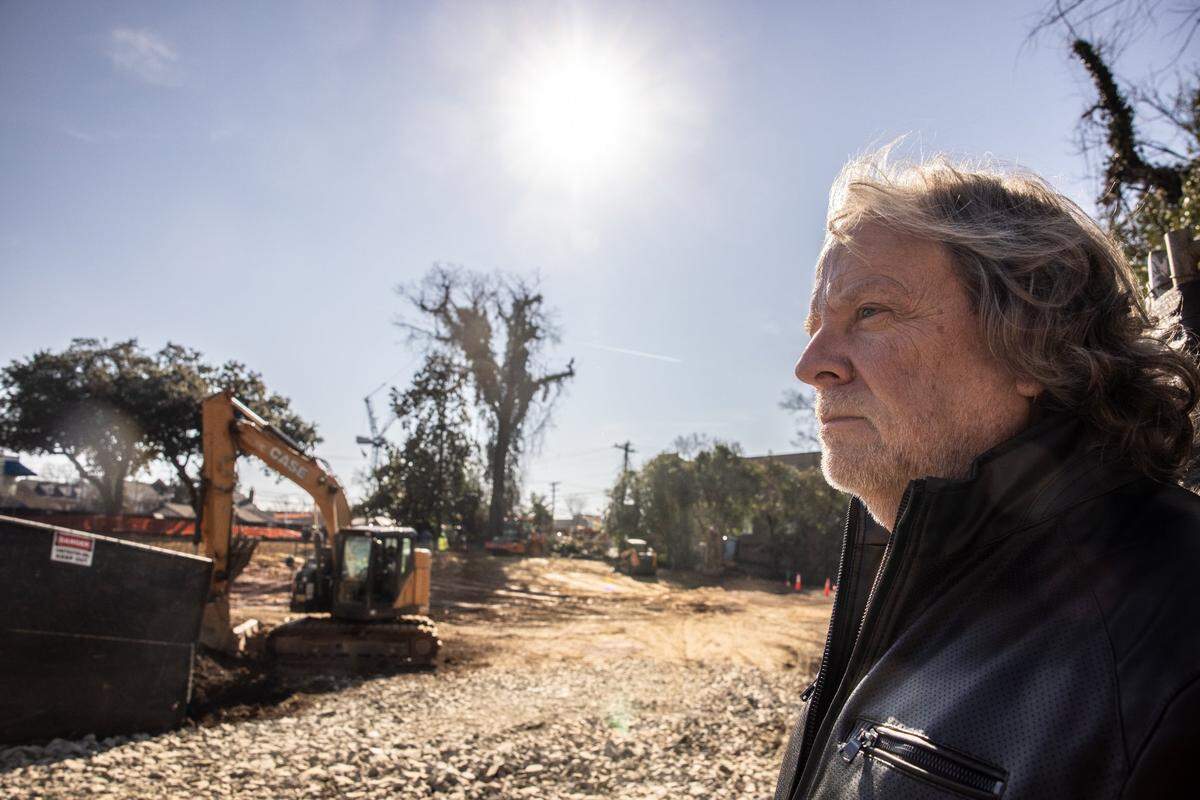
Franklin, a local real estate agent who grew up down the road, always thought he’d have his funeral service there, too. But in early January, he was driving by the building when he spotted a bulldozer out front. The oldest home in Myers Park was being demolished.
A few miles away in Dilworth, another historic property may face a similar fate.
The Leeper & Wyatt Store dates back to about 1903 and sits on a prominent corner on the border of South End, one of Charlotte’s hottest neighborhoods. A Tennessee developer proposed to build a mixed-use, luxury high-rise there after the property owner filed a demolition application.
The Wohlford House and Leeper & Wyatt Store are fresh reminders of a persistent dilemma in a fast-growing city like Charlotte: how to preserve the old while building the new.
The two examples follow years of destruction, from iconic landmarks in uptown to the razing of entire neighborhoods, like Brooklyn, a predominantly Black community upended in the name of “urban renewal” in the 1960s and ‘70s.
The pair of buildings also point to how even properties that are noted for their contributions to the community’s historic character or are approved local landmarks can still face destruction.
“They lose part of the soul of this city,” Franklin said, when such structures disappear. “We’re not just a city, we’re a community. These establishments that have been here for so long, they carry memories for people. It’s part of the fabric of this city.”
‘Bigger and brighter and taller and shinier’
The two buildings highlight the challenges — and economics — of balancing new growth and protecting our oldest buildings.
A city can’t save every building, said Jack Thomson, executive director of the Charlotte-Mecklenburg Historic Landmarks Commission. He’s not interested in eliminating development. But he does want to find a balance between growth and preserving important structures.
“For generations, the city of Charlotte has been a city in love with the future,” Thomson said. “It has a love affair with the future and bigger and brighter and taller and shinier.
“To a large degree it’s willing to sacrifice the tangible connections to its past to feed this passion it has with its future.”
The question becomes, Thomson said, to what degree should we better understand our past to help guide the future. Without physical connections like buildings, he said, that understanding becomes a lot harder.
The demolition data
It’s no secret that demolition has been happening in neighborhoods across Charlotte for decades as the city experienced intense growth.
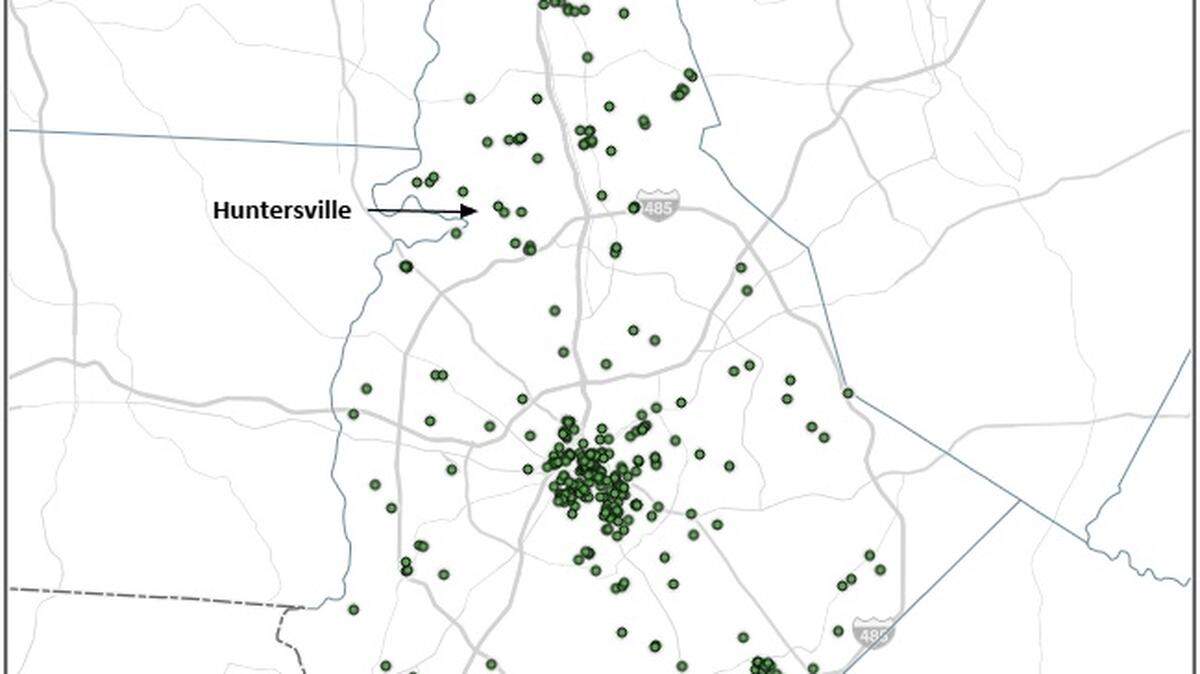
Crews in Mecklenburg County demolished more than 4,700 structures from 2017 through last year, according to county building permit data. Most — about 77% — were single-family residences.
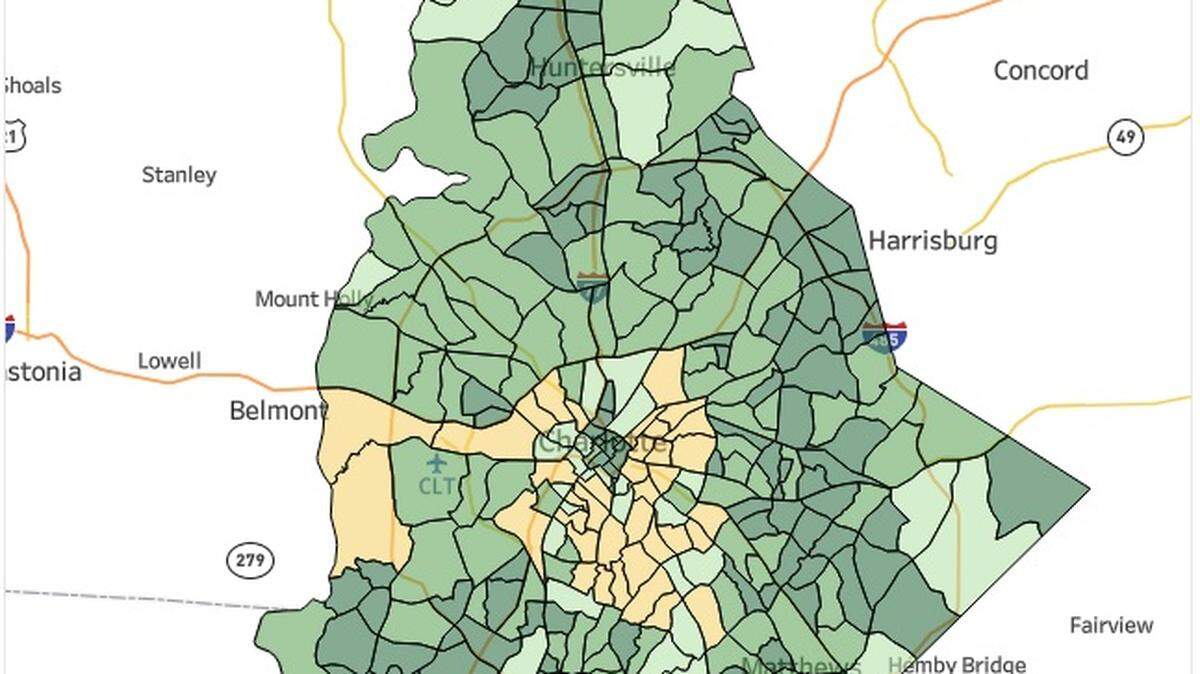
Neighborhoods around uptown, particularly south of center city, saw the most demolitions, an Observer analysis found.
Parts of Myers Park and Dilworth, for example, logged some of the largest amounts of demolitions in that four-year time period, with more than 100 in some places. About 30 neighborhoods had at least 50 demolitions.
Contractors started more than 1,000 demolition projects in the county last year — more than any other year since at least 2017.
In general, the decision to preserve an older building on a development site comes down to economics, said Greg Pappanastos, president of Argos Real Estate Advisors in Charlotte. The company represents the Leeper & Wyatt property owner and the company that plans to develop it.
“If there’s no restriction on what you can do with the property, you’re going to look for the highest and best value as developed,” Pappanastos said. Argos focuses on adaptive reuse of older structures. “We’ve got to cherish what we can,” he said.
Not a ‘magic shield’ against demolition
Local historian Tom Hanchett literally wrote the book on Myers Park, including a 109-page report about its past in 1987.
The research was done on behalf of the Charlotte Mecklenburg Historic Properties Commission and the N.C. Division of Archives and History.
The report, approved by the North Carolina State Historic Preservation Office, named Myers Park a historic district on the National Register of Historic Places. The Wohlford House is listed as a contributing property to the district’s historic character, an important distinction because some homes are listed as non-contributing.
Those designations, however, do not prevent a property owner from tearing down a building. The National Register is a limited protection tool, said Myrick Howard, president of the statewide nonprofit Preservation North Carolina.
A property owner can tear down a building that’s on the National Register or part of a historic district without asking anybody’s permission — unless the property is involved in a project that receives federal assistance.
If federal monies are involved, any property changes have to go before the Advisory Council on Historic Preservation for comment, according to the National Park Service.
Local designations are important because they signal to people that it’s not just another old building, Hanchett said. It shows the building has a proud history, making developers and the community think differently about it and the calculations that go into investing in it.
Still, in a hot real estate market, the designation is not powerful enough to overcome the possibility of making huge sums of money. “Historic designation is not a magic shield,” Hanchett said.
What’s more, the local Landmarks Commission cannot, under North Carolina law, deny any demolition permit. Its power rests with issuing a 365-day stay on the demolition certificate to give time to work through a solution to preserve the building.
History of the Wohlford House
Before it was a funeral home, 500 Providence Road was known to local historians as the Wohlford House.
William Trigg Wohlford moved with his family from Winston-Salem to Charlotte in 1908, according to local historian Dan Morrill. As a prominent businessman, Wohlford would have been attracted to the city’s energy, Morrill said.
Morrill served as consulting director at the Charlotte-Mecklenburg Historic Landmarks Commission for close to 50 years until his retirement in 2019. He now sits on the board of Preserve Mecklenburg, a nonprofit that preserves historic buildings in the region by buying them and then selling them with preservation easements so future owners cannot destroy the buildings.
The two-story Wohlford building was built in 1926, according to county property records. But Morrill’s research led him to conclude it went up between 1908 and 1911. And it was the oldest home in Myers Park until its demolition, Morrill said.

The Wohlford House was one of several large homes along the street, built just prior to when famed planners John Nolen and Earle Draper designed Myers Park.
Most people don’t realize Myers Park originally began because of the vision of Jack Myers, who owned a large cotton farm that used to straddle Providence Road in the late 1800s and early 1900s, Morrill said.
Myers Park was known as a streetcar suburb, meaning its residents commuted to town daily on the electric trolley car.
It was home to many of the textile, banking and utility leaders responsible for developing the Piedmont Carolinas into an American manufacturing hub in the early 20th century, according to another report Hanchett wrote on Myers Park found on the landmarks commission website.
By the middle of the 20th century, the Wohlford building housed the Harry & Bryant Funeral Home. The company has served Charlotte for more than 130 years and changed its name last year to McEwen Funeral Service and Cremation.
It also has several other branches around Charlotte. Prior to the Myers Park building’s demise, the business relocated to south Charlotte.
What’s next for the Wohlford site
A couple years ago, Brian Bucci bought the property where the Wohlford House sat and tried redeveloping it into an office space.
According to county records, he bought the property for just shy of $4 million. Bucci’s a local developer who happens to live less than a mile from the home, and noted that the funeral business was leaving the building.
The Wohlford building was not up to code, suffered from roof leaks and was in poor condition, according to Bucci. He decided to tear it down.
Bucci said he did his due diligence and from his perspective, he didn’t see anything historically significant with the home because of all the additions and modifications. Two brick wings were added onto the left and right side, and several other changes were made inside, like adding offices.
These additions, coupled with the building being in disrepair, led Bucci to knock it down. “The structure was functionally obsolete,” he said.
Now, JP Morgan Chase is planning to build a bank branch there, and said it is working with local architects and builders to design a branch that fits the area.
A bank is a less impactful development for the site, Bucci said, as it will be closed on weekends as opposed to another use like a gas station or convenience store.
The Leeper & Wyatt Store
Drive 3 miles across town from the demolished Wohlford site to the border of Dilworth and South End and another historic building could face a similar ending. And this one was deemed a local landmark.
The Leeper & Wyatt Store at 1923 South Blvd. was built around 1903 by New South entrepreneur D.A. Tompkins. It’s the oldest surviving retail brick commercial building in Dilworth’s first business district, according to the Charlotte-Mecklenburg Historic Landmarks Commission.
It served Charlotte as a grocery store for more than 50 years.
It’s also one of 358 local landmarks in the region, a designation approved by the City Council. Several designations include more than one historic resource, including some buildings that are associated with each other, Thomson said.
In North Carolina, this designation gives design review authority over the property to the landmarks commission, the Observer has reported. Any material alterations made to the property must first get approved by the landmarks commission.
In late December, property owner Sue Scott wrote to the landmarks commission, requesting a demolition certificate.
Scott wrote how in 2020 she worked with a developer to get a budget for “necessary renovations” to the building. They got pricing from a local construction company that was active in “adaptive reuse of such properties.”
But they ultimately decided renovation costs were too steep, given high land values and “limited control” over parking for a renovated project, Scott wrote in the letter.
Today, the Leeper & Wyatt Store sits vacant. Scott indicated that she, along with two adjacent property owners, were under contract to sell the store to another developer.
Plans for possible relocation
That developer, Nashville-based Southern Land Company, is proposing a mixed-use project with 300 luxury apartments on 1 acre.
The popular Tyber Creek Pub, a longtime staple near the constantly-evolving South End, will close but reopen to remain central to the overall development.
Southern Land does not yet own the Leeper & Wyatt property — the company is under contract to buy that parcel and two adjacent properties. Southern Land plans to break ground in early 2023 with construction wrapping up in 2025.
After the demolition application was filed, Southern Land representatives spoke at a Jan. 10 Historic Landmarks Commission meeting. The team explained it wasn’t feasible to keep the building on site given future city plans to widen South Boulevard.
Keeping the building would also create issues for drivers getting in and out of the property, Southern Land’s Michael McNally told commissioners.
At the meeting, Stewart Gray, the commission’s senior preservation planner, said the commission could block a road widening that would threaten the building.
“We’ve looked at ways for this building to remain and just kept hitting a dead end,” McNally said.
So they started looking at ways they could move it. That could include a site nearby, although McNally said at the meeting the company was still working with structural engineers and others, and couldn’t disclose the location yet.
“We are not a developer that seeks to tear down buildings,” McNally said.
Southern Land did not prefer to file the demolition application before knowing if the relocation was possible, company spokeswoman Jenna Lefever wrote in an email to the Observer. But she said it was necessary, given the project’s schedule and the fact that while the commission can’t deny the demolition under state law, it can delay it for up to a year.
At the January meeting, commissioners made no decision on that one-year delay. Instead, they deferred their decision for 180 days until they had more information about the relocation plan.
Southern Land remains hopeful a relocation is possible. If there’s an old or historic building on a site it is developing, Southern Land said it studies different approaches to figure out if it makes sense to keep it there and incorporate it into the project.
The company pointed to Bespoke Uptown, a mixed-use project in Denver, Colorado. The site was home to two early 20th century buildings. The company had approval to tear the buildings down, Lefever said in an email, but it ended up working with the community to find a way to save them.
Historic, even after modifications
Bucci had questioned the Wohlford House’s historical significance because it had been added onto and modified.
But even when historic buildings are changed, they can still retain their significance in the broader context of a neighborhood, Morrill and Howard said. They noted that the building was deemed as contributing to Myers Park’s historic character even after its brick wings were added.
“Buildings evolve,” Howard said. “There’s rarely a building that is so pristine, it’s exactly the way it was when it was constructed.”
Morrill understands that developers and preservationists simply look at buildings from different perspectives. “You have to find ways that an owner can get fair market price and still retain enough of the existing structure to have a sense of cultural continuity,” Morrill said.
When that doesn’t happen, a community loses more than just a building. Morrill said it loses the stories behind them. “You destroy the ability to be able to understand how that fit within the fabric and the evolution of the community,” Morrill said.
Competing interests
Most buildings that are designated historic landmarks had a supportive owner who initiated the process, said Morrill.
A couple things can stop a building from being demolished, including if a preservation easement is put on the home. The easement is a contract that the owner must agree to that protects the building from being torn down.
As a regional outfit that works in several counties, Morrill described Charlotte as Preserve Mecklenburg’s toughest place to preserve historic buildings. Part of it, he said, is the real estate is so hot and people can make good money. But another part is cultural.
“Everyone says we like (preservation) but if it competes with any other interests, it loses,” Morrill said.
Franklin, whose parents had their funerals held at the historic house on Providence Road, was not the only one upset to see it torn down. He shared the demolition news on his Facebook page and saw comments pour in from others who had family members’ funeral services there.
Over the past few weeks, crews have removed a large pile of rubble that sat at the site.
All that’s left for Franklin are the memories of his parents. And what might have been for him.
Charlotte Observer data editor Gavin Off contributed to this report.
This story was originally published February 20, 2022 at 6:00 AM.