Why a century-old willow oak tree had to go, as NoDa apartment construction began
Work has started on a 209-apartment project along NoDa’s E. 36th Street months after a petition to rezone the land to mixed use faced neighborhood opposition.
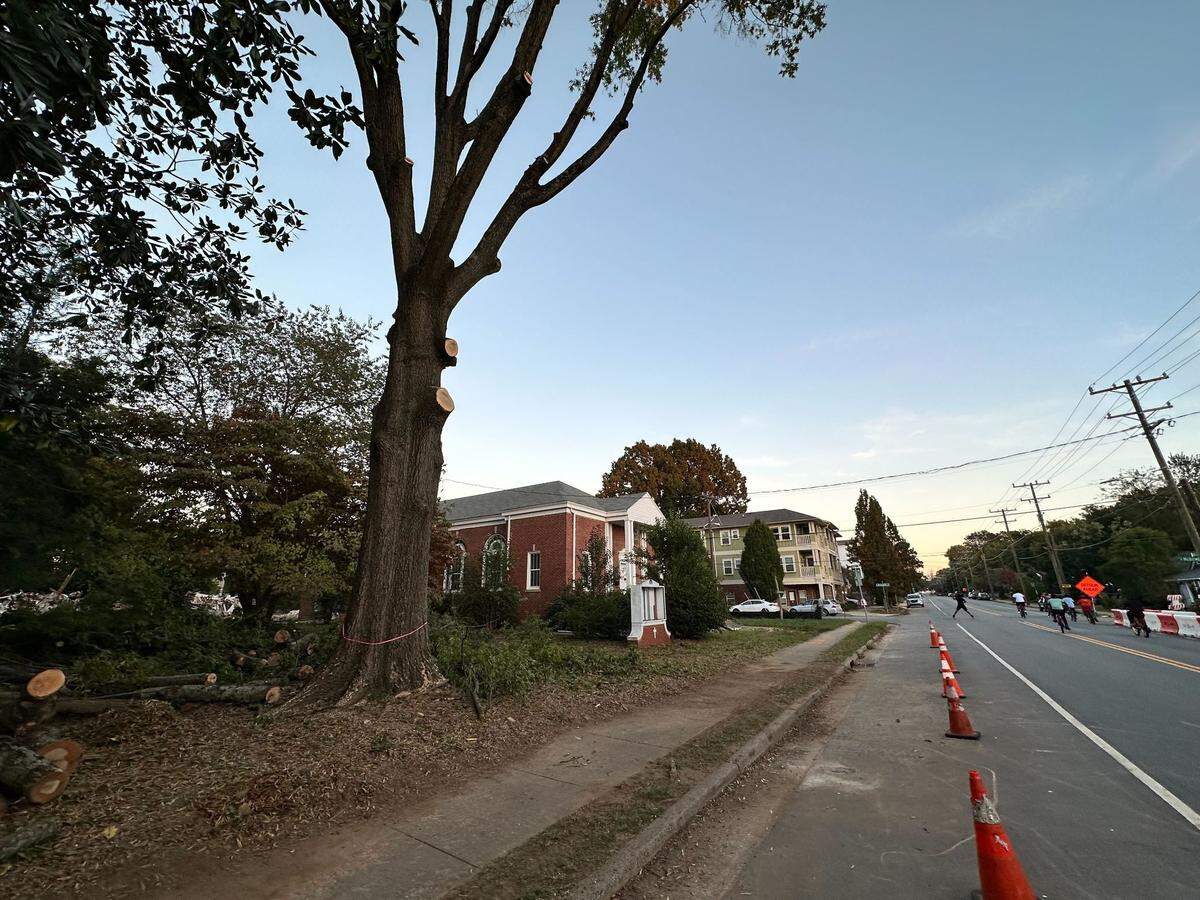
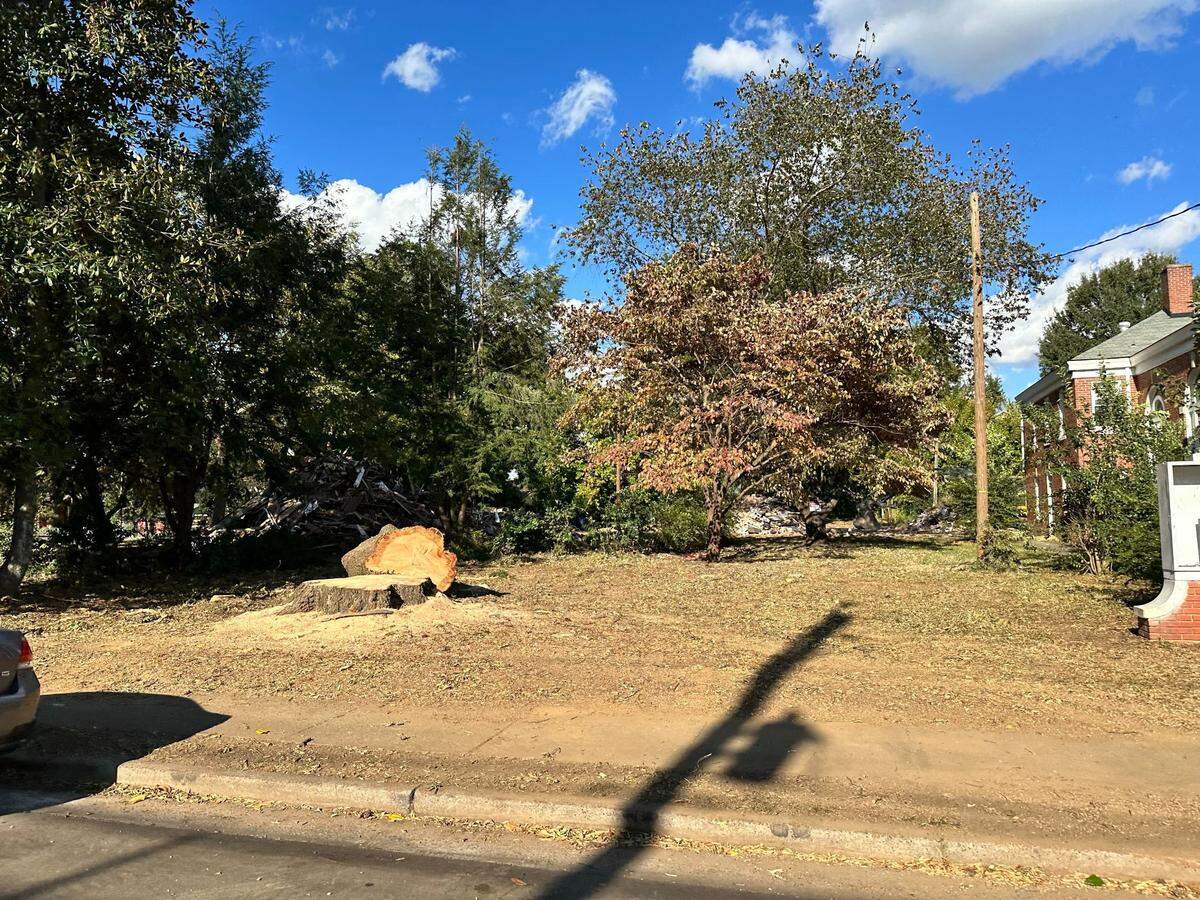
With work starting, some neighbors noticed that a tall willow oak tree estimated to be around 100 years old was taken down. The tree sat prominently on E. 36th near N. McDowell Street, and by one estimate was over 65 feet tall.
The tree was removed in the past few days “due to its decay levels,” according to the developer, Ascent Real Estate Capital. Ascent was disappointed the tree had to go, Caci Jaeger, a partner with Ascent, told The Charlotte Observer in an email. Jaeger added that the team designed the project to protect and feature the mature tree.
A licensed third-party arborist recommended testing the tree’s health due to visual signs of a lightning strike and decline, Jaeger said. Testing confirmed the tree had “excessive decay.”
“We worked with Charlotte’s Urban Forestry team to review the assessment and a licensed arborist will remove the tree,” the developer said.
A new tree will be planted in its place. Ascent will be planting more than 40 trees on the site.
Centro NoDa will have ground-floor retail. Some neighbors raised concerns about the project, saying it threatens the community’s identity with its size and scale in an area with mostly historic, one- and two-story homes. The City Council approved the rezoning 9-2.
Shading NoDa for a century
Jason L. Newton lives around the corner from the project, and has advocated successfully with his wife to protect another willow oak that stands by their property.
The couple started an Instagram account called NoDa Tree Save. The account is aimed at advocating protection of their trees and others in the area.
“This tree has shaded NoDa for over a hundred years and has provided our neighborhood with so much,” the couple wrote in a recent post about the willow oak tree that came down.
“We are lucky to have had such a long time to live with this tree and we know our neighborhood gave it a good home. It’s not ever easy to see a tree giant like this to be taken down and trust us, we are sad too. But in this case, it was the right thing to do.”
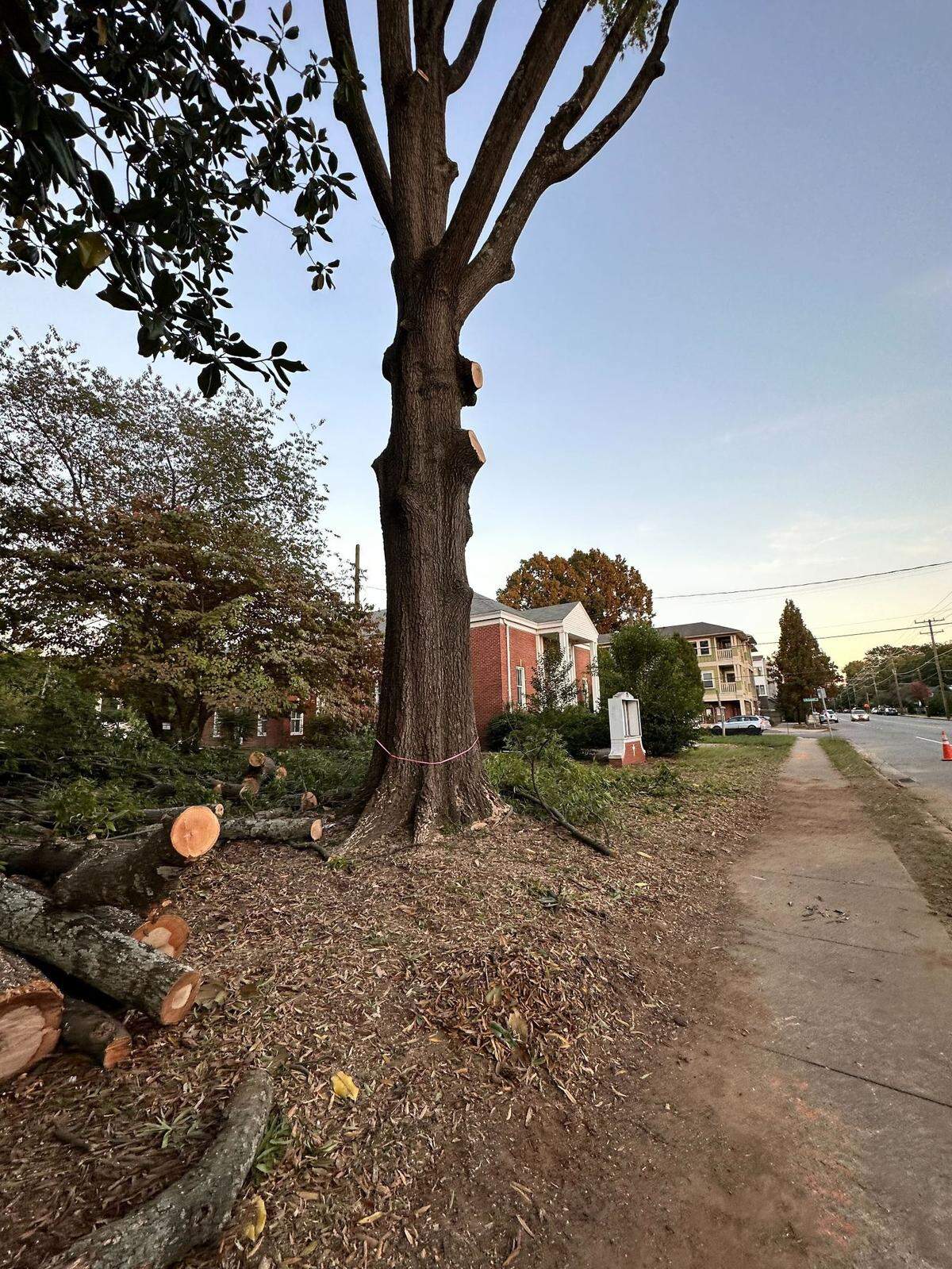
Many trees can live with fungal infections and decay for many years, Newton told the Observer in an interview Tuesday.
He recognized the tree around the corner from him eventually would have needed to come down, but said large trees can still serve functions like providing shade and helping absorb water.
“Trees that large are rare,” Newton said. While he didn’t have an exact size, he said the tree that came down on E. 36th Street was a bit taller than the one by his house, which stands around 65 feet tall.
Charlotte documents tree loss
Tree loss has been an issue in a growing city like Charlotte. Between 2012 and 2018, the city lost 7,669 net acres of tree canopy — or about three football fields per day, the Observer reported in January.
The tree loss wasn’t limited to transit corridors, commercial areas or new subdivisions that pop up in once wooded lots. Most of the city’s tree loss has occurred on residential lands not protected by the city’s ordinances, the canopy measurement revealed.
It’s up to homeowners and property owners to work to protect the city’s canopy as growth continues, Newton said. He said the tree by him likely wouldn’t have been saved if he and his wife hadn’t advocated for it.
He also commended Ascent for its work to protect the willow oak by his home.
NoDa apartment project
Ascent’s Centro NoDa project will have 209 apartments. Prices have not been set yet, Jaeger said.
Construction will take two years to finish, and the project will include smaller studios.
Ten percent of the units — or about 21 apartments — will be priced at 80% of the area median income. For a family of four, units targeted for 80% AMI translates to household income of $75,350, or $52,750 for a single person.
This story was originally published October 19, 2022 at 5:35 AM.