Town home plans in East Charlotte the latest flash point in city growth concerns
The holes in Penny Cothran’s yard don’t seem to go away.
She can count at least seven of them behind her two-story brick, 1960s-era East Charlotte home. Each hole is about 2 or 3 feet wide. Her husband fell over a smaller one last year while picking up sticks, causing him to miss a couple days work. They’ve filled in some holes with dirt.
Their house sits just inside the main entrance to Hampshire Hills, a neighborhood of about 300 homes off The Plaza. It’s not far from neighborhoods like Eastway and Hidden Valley.
Now, Cothran is worried a proposal to build 26 town homes in a nearby 2-acre wooded lot could add to the growing infrastructure problem.
Cothran and other neighbors oppose the town homes. They worry about the stormwater and drainage system facing more pressure. They’re concerned about additional car traffic. They fear more multifamily housing could adversely impact property values.
These sorts of concerns regularly play out when City Council considers an agenda packed full of petitions from developers and property owners for new apartments, office buildings and industrial parks.
The Hampshire Hills rezoning petition was slated for a public hearing Monday but has been deferred to next month.
The rezoning speaks to a persistent challenge for a growing city like Charlotte: how do you build more homes to meet an influx of newcomers while not harming existing communities?
This is happening as the city’s home prices are rising alongside its growing population.
In the past two years, average rents grew $320 and median home prices have doubled to $420,000, according to the 2022 State of Housing in Charlotte report by University of North Carolina Charlotte.

About Hampshire Hills
Hampshire Hills sits off The Plaza, a well-trafficked, four-lane road that cuts through the core of East Charlotte.
The neighborhood was built in 1962 by John Crosland, one of the city’s most prominent home builders.
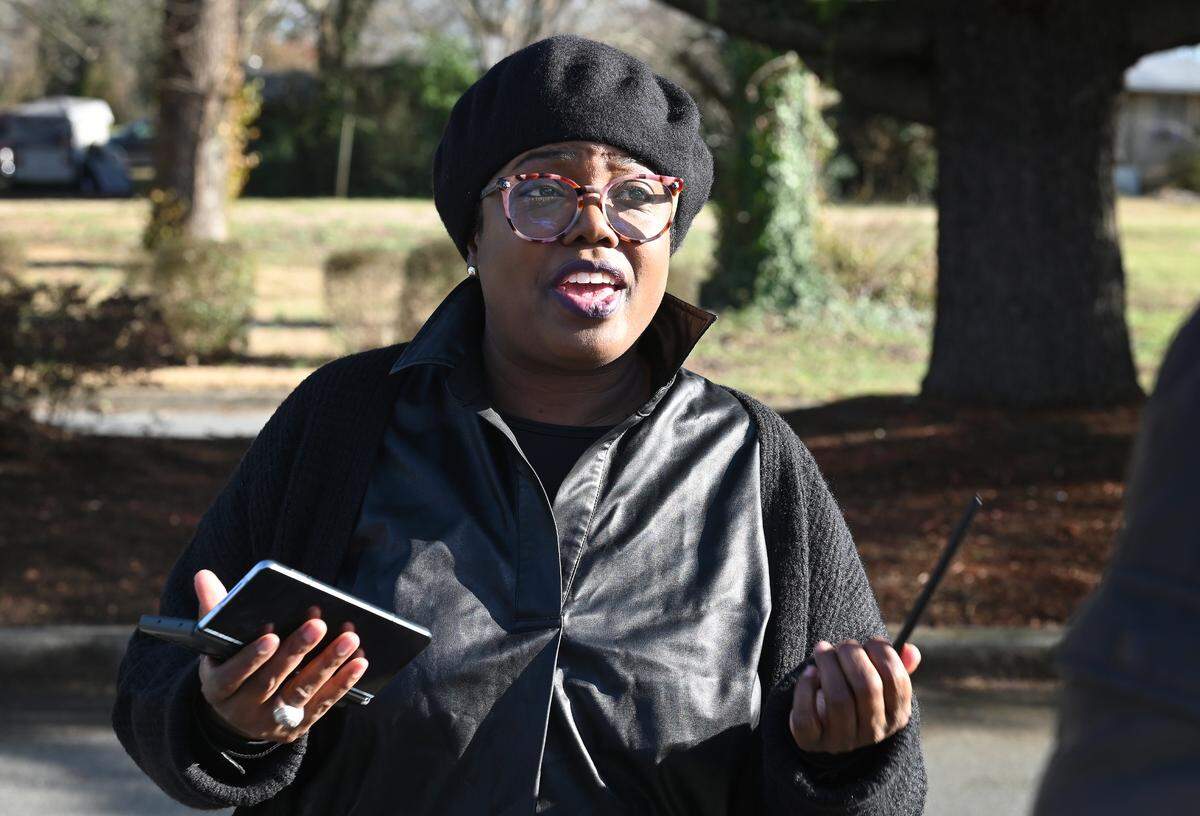
Today, Hampshire Hills is home to many working professionals and retirees, with a mix of Black, white, Asian and Hispanic residents, said Erica Frazier, president of the community association.
Many residents who oppose the rezoning petition have owned homes there for 30 to 40 years.
The typical older brick home has three bedrooms, two and a half baths and is valued between $129,000 and $166,000, a review of a handful of properties in Mecklenburg County records shows.
A number of businesses sit just outside the neighborhood, including a primarily Latino grocer, laundromat and restaurants at a nearby shopping center.
There also are two skill games arcade places as well as a check-cashing spot. Other businesses line The Plaza including an auto repair shop, a CVS and dollar stores.
Hampshire Hills used to have a couple banks and a Harris Teeter.
“We’ve seen a deterioration in the quality of businesses in the last 20 to 25 years,” Frazier said. Residents tend to travel elsewhere to do their shopping.

East Charlotte development sought
Residents want to see more investment around commercial properties.
This part of Charlotte is used to a lack of investment and attention from the city overall, said Greg Asciutto, who chairs the board of the nonprofit advocacy group CharlotteEAST. The group covers a wide swath of East Charlotte, including neighborhoods like Grover Park and Eastway.
The city needs housing, Asciutto agrees. But with more housing, there needs to come intentional economic development that can help lift up this part of town.
“The lack of commercial and decent jobs will truly keep putting our neighborhoods where they’re not set up for long-term success,” Asciutto said.

Details on proposed town homes
The rezoning petition for the town homes is for 6001 The Plaza. The wooded, narrow lot is sandwiched between the Hampshire Hills shopping center and the entrance to Hampshire Hills.
The site was purchased by a Charlotte LLC named Epic Realty Solutions, county property records show. Epic Realty is registered to Charles Amadi-Emina, according to state business records.
The entrance to the town home site would be off Plainfield Drive, a short, dead-end street that sits inside Hampshire Hills. Residents are concerned about the added traffic and would prefer the entrance to sit off the much busier main drag, The Plaza.
Chris Ogunrinde is a longtime architect who formed Charlotte-based real estate development company Urban Trends Real Estate after the 2008 housing crisis. Urban Trends was hired by Epic Realty Solutions to take the town home petition through the rezoning process, but is not the developer on the project.
The Plaza is a state-maintained road, meaning it would be more difficult to put the entrance there, which is why the site plan shows it off Plainfield, Ogunrinde told the Observer.
The plan initially called for 30 town homes, but the count was reduced to add more of a landscape buffer to the neighborhood.
Ogunrinde doesn’t want to force a plan the neighborhood is opposed to. While there was a time when single-family homes could support Charlotte’s population, he believes the city is in need of more housing and that neighborhoods will continue to see a mix of housing types develop.
With more rooftops and a potential mix of income levels, investors are more likely to bring retail, he said.

Infrastructure issues remain
Frazier and Ogunrinde have been in touch about holding another community meeting, likely in the next week or so. And a public hearing could happen next month; a City Council vote wouldn’t come until at least a month later.
Cothran remains concerned about the busted stormwater pipe by her home on Bridgeport Drive.
One longtime Hampshire Hills resident, Bill Pickens, said the drainage system runs from Cothran’s home up to Plainfield Drive where it handles runoff from the shopping center.
About 25 steps from Cothran’s home, on a narrow patch of land, the ground is collapsing around a broken drainage pipe. Cothran noticed the holes getting wider even in the past few months.
A neighbor placed fencing over the largest hole next to Cothran’s house over the broken pipe. It used to serve as a driveway for another home behind the Cothran home.
The city is aware of the broken pipe after investigating the location over the past several years, according to Charlotte-Mecklenburg Storm Water Services spokeswoman Lynda Anello.
The pipe was installed by a developer or property owner for personal benefit, Anello told the Observer in an email. It remains the property owner’s responsibility to maintain it. The situation does not pose a significant risk to the drainage system or the traveling public, Anello said.
The proposed town home site is downstream from the Hampshire Hills neighborhood, Ogunrinde said, meaning any water impacts from the town homes wouldn’t flow toward residents’ homes.
Plus, developers are required to follow city regulations when it comes to managing stormwater, he said.

Residents concerned about property values
Another concern from residents is about property values.
Frazier and others worry their homes’ values will be hurt by a multifamily project like the proposed town homes.
It’s a sentiment that’s popped up across the country: that building multifamily housing as well as affordable housing can lower property values.
But some studies have shown that not to be the case.
In one, a housing expert found that homes in Alexandria, Virginia, within a block of affordable housing developments saw property values increase by close to 1% over a period of 20 years, according to Bloomberg CityLab.
Similar results were found when studying rental apartment housing, according to a Joint Center for Housing Studies by Harvard University titled “Overcoming Opposition to Multifamily Rental Housing.”
For Frazier, the Hampshire Hills neighborhood has seen development of other multifamily projects nearby. But property values, she said, haven’t increased over the years.
Fitting in new development
Charlotte is grappling with changes as the region’s population grows, Ogunrinde said. It’s why the city is seeking to build out its transportation system and why it revamped its zoning ordinance.
Ogunrinde wants to be part of a solution to meet a demand for housing. He doesn’t want to be in a battle with the neighbors.
He’s also trying to balance what is the best use for the site and the owner while listening to and addressing the concerns of residents. He’s open to meeting with residents and hearing what ideas they have for the site.
Frazier worries the new development won’t fit in with the character and framework of Hampshire Hills.
“We are less than five miles from NoDa, Plaza Midwood, where they are building new housing in the framework of existing neighborhoods,” Frazier said.
“We are not opposed to new development,” she added. “We’re just tired of development that is supporting a transitional decline in our neighborhood.”

This story was originally published February 17, 2023 at 6:00 AM.