
‘Our hands are tied’: City approves plan to displace Charlotte mobile home park
By next June, 60 households in north Charlotte will be forced out to make way for new development.
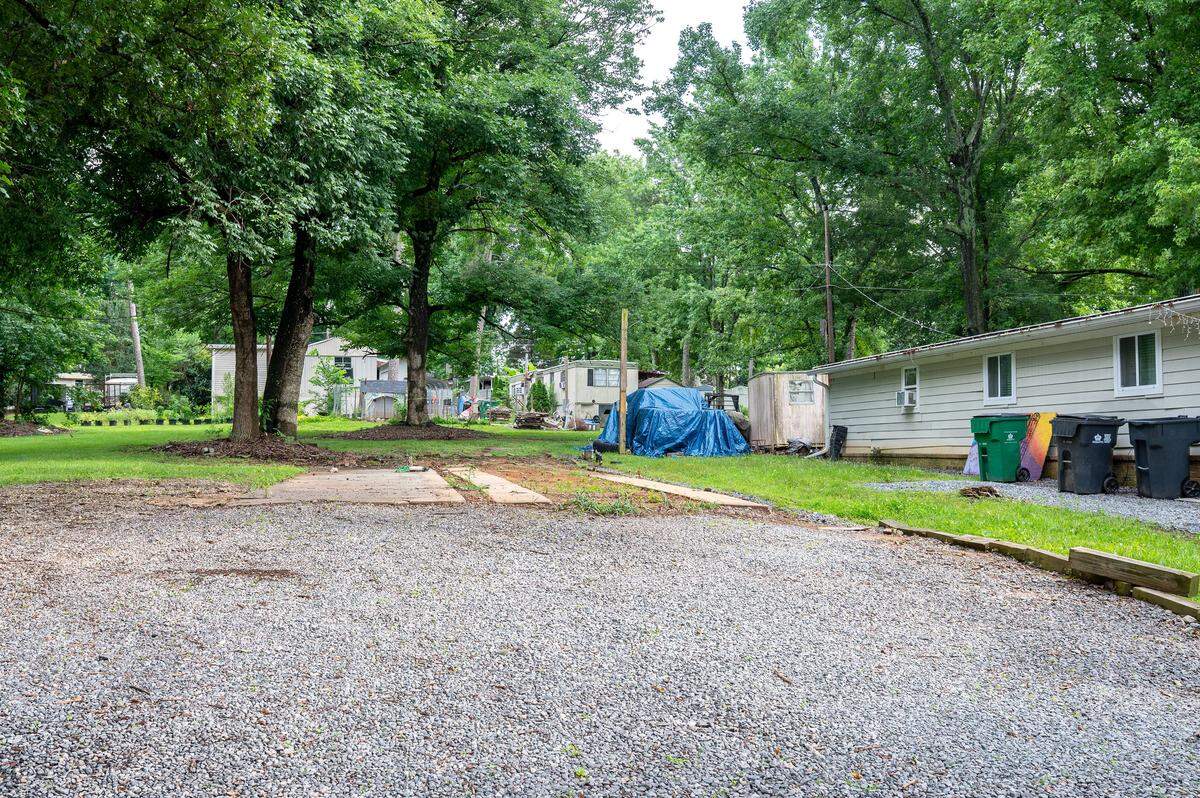
Forest Park Mobile Home Park off Prosperity Church Road — a community with a large immigrant population — is where many have grown up and established a community. But by June 21, families who’ve planted decades of roots and invested thousands into their homes will have to leave it all behind to make way for the vision of developer Wood Partners.
That vision includes transforming the land into a complex of apartments, townhomes and some commercial — emulating new developments popping up across the Charlotte metro area.
Since this summer, residents have been organizing to push back against the sale and rezoning of the property in an attempt to protect themselves from being left to the mercy of the Charlotte housing landscape — which is becoming increasingly expensive. A place like Forest Park, where residents were paying $500 a month in rent, is hard to come by, said Jessica Moreno, a housing justice community organizer for the organization Action NC.
City Councilmembers JD Mazuera Arias and Reneé Perkins Johnson, who represents the mobile home residents, acknowledged concerns about displacement. But they also said that the council was left with a difficult choice.
The council’s vote on Dec. 15 hinged on two realities: state law limited their ability to deny a rezoning on the basis of displacement, and relocation aid for residents from the developer and property owner was contingent on the rezoning’s approval.
“Mobile homes are treated as personal property, and the underlying landowner has a legal right to sell this property. For that reason, while this outcome is difficult, our hands are tied in respect to stopping the transaction itself,” Perkins Johnson said during the zoning meeting.
The property owner and developer have offered residents a relocation package that includes $6,000 and two months of free rent. But residents and Moreno say the hardship this closure will cause far exceeds the assistance being offered.
“We don’t know what else to do,” said Alejandro Hernandez, who’s lived in the mobile home park for 23 years. “ We are trying to hire a lawyer … what we’re trying to do is get a fair situation with this. $6,000 is not enough. Especially now. Not even to move into an apartment.”
Frustrations over spotty communication
The rezoning petition was submitted by the Atlanta-based real estate developer Wood Partners in August 2024. The approval of its petition would turn the 19-acre lot — which currently holds a community of 60 mobile homes — into nearly 400 apartments, 18 townhomes and some commercial business.
In June, Forest Park residents raised concerns about what they considered spotty communication from the mobile home park’s owner, Nesbit Oil Co., about the sale of the property.
Residents received a letter from the owner in May 2024 notifying them of the decision to sell the property. Initial zoning documents said the property owner would keep tenants “abreast of the proposal throughout the process.” But residents claimed they received little to no communication with the property owner since the initial letter.
The developer, however, claimed that residents had received communication about the sale of the property, including a community meeting last December to address resident questions. About 20 people attended the meeting, according to a spokesperson for the developer.
Limitations on council vote
While the approval will change the use of the land, the decision by the city council to unanimously approve the rezoning was not a decision to displace the residents, Mazuera Arias said. In the relocation package sent to residents, it stated the mobile home park would close regardless of the council’s decision on the rezoning.
Mazuera Arias said he spoke with residents after the meeting who expressed disappointment in his decision to vote in favor of the rezoning.
While he understood their position, he said approval of the rezoning was essential to ensure residents got some assistance out of this situation because the property owner told residents they’d only get relocation money if the rezoning was approved.
“I understand a lot of constituents and voters and community members in the Latino community were hoping that I voted against it, at least as a symbolic vote, right?” he said. “I’ve spoken to some constituents that were disappointed in my vote, and I will say it like I said in my statement, I’m also disappointed. It was a very hard vote. My concern was making sure that the families got something. And that was dependent on whether the rezoning was approved.”
Going forward, the focus must shift to creating a strategy for other mobile home parks to be protected, he said.
“There continues to be mobile communities in our city. How are we going to get ahead of the curve so this doesn’t happen again? So the city isn’t put between a rock and a hard place,” he said. “And so that we can actually give protections to these folks that have built homes, that have spent ... thousands of dollars, that have raised families and children in these communities.”
The cost of closure
In the park’s 60 years of existence, families have spent thousands of dollars constructing additions and customizing their homes to their liking. But over time these homes have also aged and become fragile.
Many don’t have the option to move their homes to another park across town or to South Carolina. Because of their age, the moving process could greatly damage them.
This situation has forced many residents to leave their homes behind to buy a used trailer or get an apartment, Moreno said. For many, homeownership is out of the question.
It’s a cost many can’t afford, she said. Relocating to a new trailer or apartment comes with the guarantee of fees and additional cost. A used mobile home can run anywhere between $20,000 and $30,000 and the average rent for a one-bedroom apartment in Charlotte sits at just below $1,500, according to Apartments.com.
“It’s a complicated situation to be in. But it’s a lose-lose for people that own their home, have invested in it. And are going to lose it. I mean, there’s no (way) around that.” Moreno said.
It’s sad to see that the community where he’s lived for over two decades will soon be gone, Hernandez said. It’s the place where he and many others in the community have raised their kids and built a life.
“I feel bad. I feel sad. You know, it’s gonna be a big change for everybody, he said. “The whole family is gonna split up. We can’t afford to buy a house right now, especially with the prices in Charlotte. It’s going to be a challenge for everybody.”