
Being Black-owned helped this uptown Charlotte restaurant survive during COVID
A Charlotte restaurateur, who happens to be a former NFL player and coach, says attention he received for being a Black-owned business gave his business a boost when he needed it most during the coronavirus pandemic.
When Justin Griffith shared on his restaurant’s social media accounts last summer that the Famous Toastery on South Tryon Street in uptown was a Black-owned business, his weekend sales increased up to 50%. He also was able to hire back the majority of his employees.
Griffith, who owns the franchise with his wife Kim, said an outpouring of support came from Black, Hispanic and minority groups, as well as white supporters.
“The community saved our restaurant,” Griffith said. “Those people are supporting us with a whole lot of to-go orders.”
Restaurants’ pandemic struggles
The pandemic has been a struggle for many local businesses. Some nearby Griffith’s restaurant in the heart of uptown have permanently closed, including B. Goods, JJ’s Red Hots and Amelie’s.
“It scares you a little bit but you just keep going to make it to the other side of this pandemic,” Griffith said.
The Famous Toastery restaurant chain, based in Charlotte, serves its breakfast and lunch dishes, like homemade corned beef hash and crab rolls, all day.
Before the pandemic, Griffith had expected to see revenue triple last year with numerous planned sports events and tournaments, conventions, and also the National Republican Convention. But none of that happened.
Last March, dining rooms were closed at the start of the health crisis. Restaurants shifted to relying on takeout orders only. And, uptown workers at major employers like Bank of America and Wells Fargo went remote.
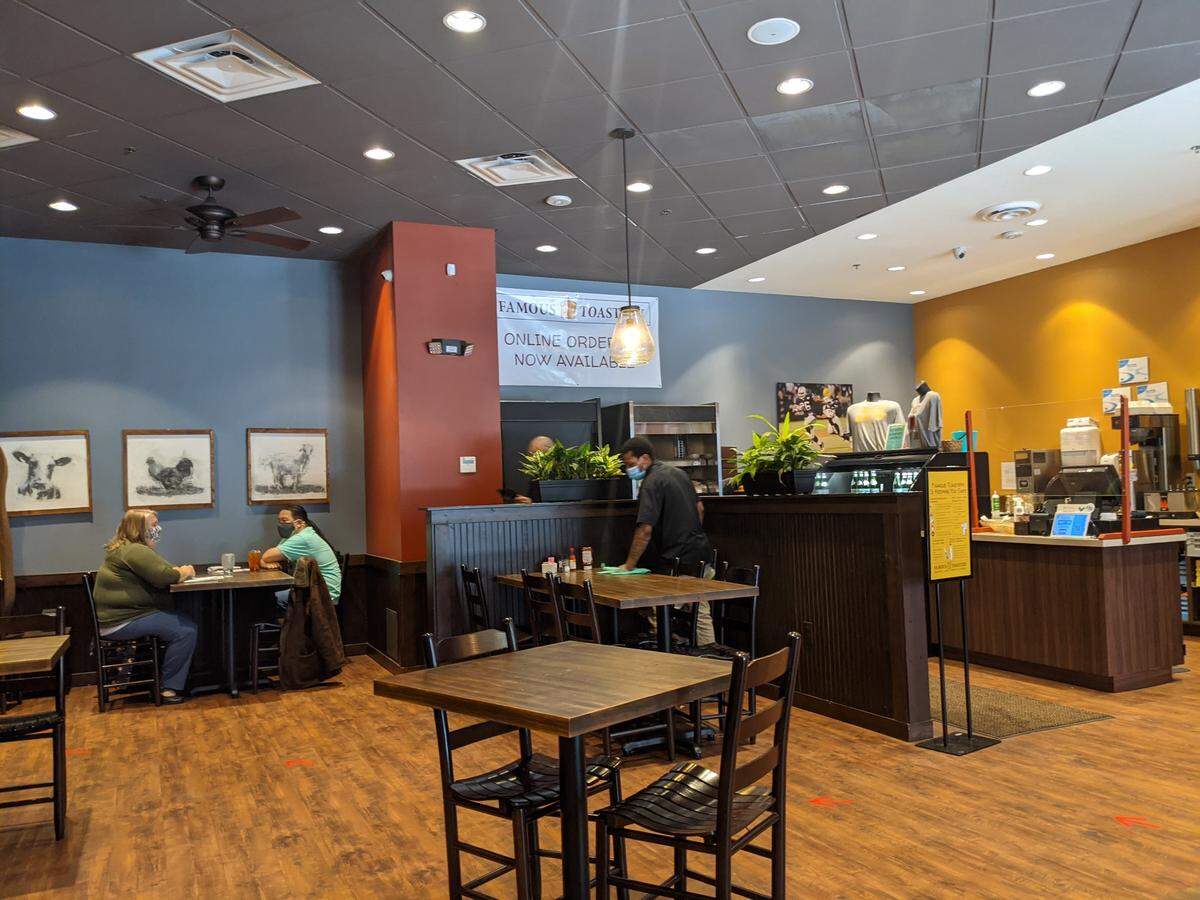
“When that happened, everyone went home, my restaurant took a shot,” Griffith said.
The restaurant revenue dropped 90% in the first month. The staff of 30 went to two managers and Griffith.
On top of that, the restaurant’s freezers died, costing the couple out-of-cost expenses of over $2,000 in loss product.
“That’s what you had to do to survive,” Griffith said. “I have invested too much. I can’t let this small hiccup keep me from pushing forward.”
A franchise fee for Famous Toastery is $45,000, Famous Toastery CEO Robert Maynard previously told the Observer. Griffith said the couple has invested about $430,000 into the business, all told.
Griffith also gets support from Famous Toastery’s corporate office with marketing and a “playbook” of how to run a restaurant. Griffith also received a federal Paycheck Protection Program loan in the first round last spring for $135,000, “which is long gone.”
Like other restaurants, the breakfast restaurant also experienced shortages for meat and even to-go containers.
“Parts of me told myself I don’t know if we’re going to make it through this,” Griffith said.
Learning to adjust
But the 40-year-old is used to thinking on his feet and making quick maneuvers.
During Griffith’s 12-year career with the National Football League, he was a fullback for the Atlanta Falcons, Oakland Raiders and Seattle Seahawks. He also spent several years coaching with the Raiders before becoming a restaurateur nearly three years ago. The Griffiths chose Charlotte, Kim’s hometown, to move to and franchise a Famous Toastery.
“You have to learn how to move and adjust with what is given to you. I’ve learned that as a player,” Griffith said. “I’m implementing those things right now in my business life. That’s helping me push through moments like this.”
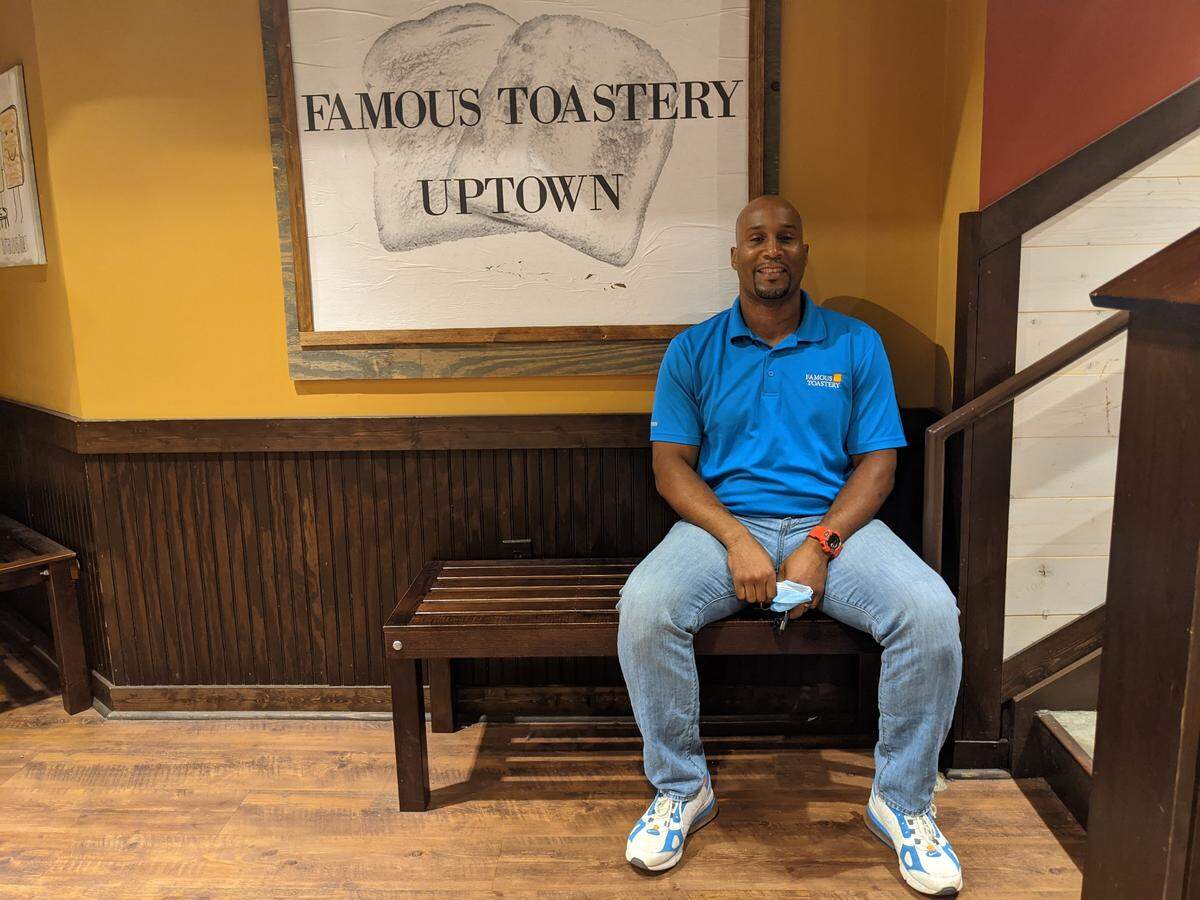
His Toastery has hired back about 20 employees, and added safety measures like plastic shields at the counter. The 5,000-square-foot restaurant also is running at 25% seating capacity, mostly, Griffith said because of lack of demand. Restaurants have been allowed to run at 50% capacity since May.
“This pandemic has definitely been a test,” Griffith said. “We’re hoping that we can get on the other side of it. And even right now, I’m trying my best not to get emotional.”
Black Lives Matter boost
Amid the pandemic, another struggle arose.
Black Lives Matter protests sprang up across the country, including Charlotte, following the death of George Floyd at the hands of Minneapolis police. Out of the fray rose enhanced social awareness and support for Black-owned businesses like Griffith’s.
The National Black Chamber of Commerce reported that about 75% of Black-owned small businesses saw upticks in customers in the two months following Floyd’s death in May.
Griffith said that now, during Black History Month, it’s important to keep the momentum going.
“We need to change the perspective of who we are as a people. We are different but we have to be united,” Griffith said. “We have an opportunity right now in our country to turn this thing around. Get rid of hatred, racism, save a generation.”
Paying it forward
Teaching those lessons starts at home for the Griffiths, who have four boys, ages 10 7, 5 and 2.
“Kim and I got into (the) business to show our little ones, whatever you dream, you can go after it,” Griffith said. “It’s important for them to see you do have a choice and opportunity.”
Having mentors helps.
That’s how Griffith sees Lamonte Winston, a Raiders player development coach. Winston knew Griffith wanted to be a restaurant owner and invited him to a seminar called Ascending Athletes in Texas. Griffith met bankers that helped him find funding to support his business plan.
“That’s what people want is an opportunity. Now I’m almost three years in business,” Griffith said.
The restaurant also linked up with Freedom House Church to provide to-go orders to help the women’s shelter and nearby hotels by offering discounts for guests.
He’s also paying it forward in the Charlotte community by donating to Carolinas Metro Reds, a program that serves underprivileged children to teach them how to play baseball to gain life skills through teamwork.
Momentum must continue
Griffith says the momentum for equality needs to continue.
“We have to start to have uncomfortable conversations to hear a different point of view, and listen to what you have to say,” Griffith said. “Let’s address the hate.”
Griffith grew up in Mississippi, where the Confederate flag was finally removed as part of the state flag last year. “We can’t have anything that represents hate toward one group and call ourselves united,” he said.
And that goes for helping each other and ending the pandemic, too.
“We can only beat this thing being united,” Griffith said.
This story was originally published February 17, 2021 at 6:30 AM.