
Inside a new $21M high-tech greenhouse expanding fresh salad options around NC
An indoor salad farm has planted itself in western North Carolina, and within weeks, its leafy greens will be on the shelves at many grocery stores around the Charlotte area and the Carolinas.
Unlike most of the salads in local grocery stores that are shipped from the West Coast, having locally or regionally grown options means people get better access to fresher food. It’s a trend accelerating with the debut of BrightFarms in Hendersonville, about 90 minutes west of Charlotte.
Instead of taking over a week in transport, lettuce will be in certain Charlotte-area store shelves straight from the farm in about 24 hours.
“There’s been a huge boom for local foods, especially with the pandemic,” said Hannah Dankbar, local food program manager for N.C. Cooperative Extension. “People want to support their local farmers just because they’re their neighbors, and then also just having local foods to cook at home.“
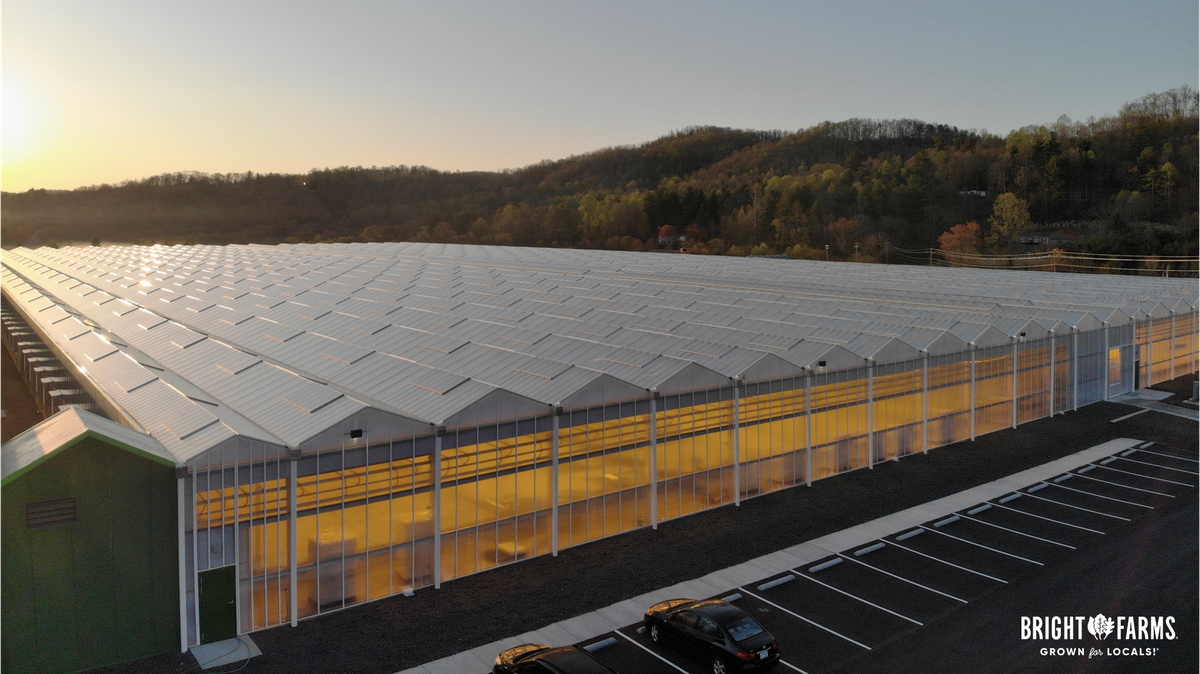
BrightFarms, a 10-year-old hydroponic salad grower, invested over $21 million during the past year to build a 7-acre greenhouse in Hendersonville.
The ag-tech company grows lettuce and herbs hydroponically indoors in nutrient rich water rather than soil. CEO Steve Platt said BrightFarms uses 80% less water, 90% less land and 95% less shipping fuel than traditional agriculture.
While it’s not the first indoor salad grower in the Carolinas, BrightFarms calls its 290,000-square-foot N.C. greenhouse the “largest and most technologically advanced indoor salad farm in the Southeast.”
And, Platt said, BrightFarms already has customers in North Carolina. It partners with Salisbury-based Food Lion, as well as some Kroger and Walmart stores. “They requested us to come down,” Platt said of Food Lion.
For Food Lion, creating partnerships with local growers near its stores is important to help offer nutritious, fresh food “while also helping to grow the towns and cities we serve,” said Food Lion vice president Chris Dove.
.png "DSC01290(1).png")
First crop in stores soon
BrightFarms planted its first seeds in North Carolina this month.
Shoppers will find BrightFarms’ Carolina-grown lettuces like its crunch romaine and iceberg, spring mix, and harvest crunch with reds, spinach and arugula in stores after the first crops are harvested, likely the last week of this month.
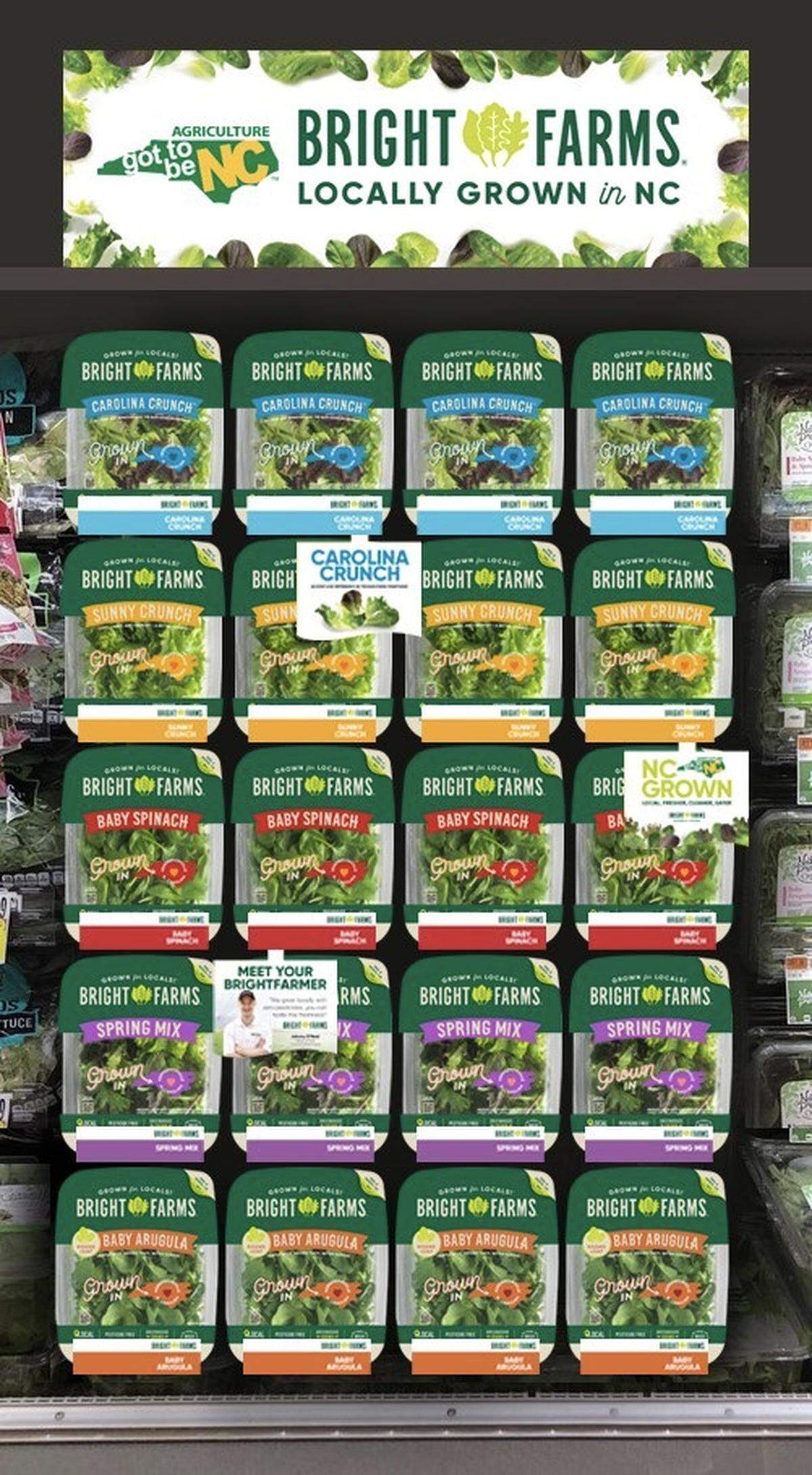
BrightFarms also is adding what it calls a Carolina crunch, a spring mix with crunchy bite, Platt said.
“We’ll be shipping over 2 million pounds of packaged salads to supermarket chains in the Charlotte metro and throughout the state,” BrightFarms spokesman Matt Grant said.
BrightFarms is holding a virtual official opening May 7. After the coronavirus pandemic, BrightFarms will open to public tours.
How BrightFarms grows
Founded in 2011 by Paul Lightfoot, BrightFarms started its first greenhouse in Pennsylvania. Since then, greenhouses have opened in Illinois, Virginia and Ohio. Each farm runs fairly independently, Platt said. The company’s support center is in Irvington, N.Y.
The lettuce and herbs are grown in purified and recycled water in a controlled environment.
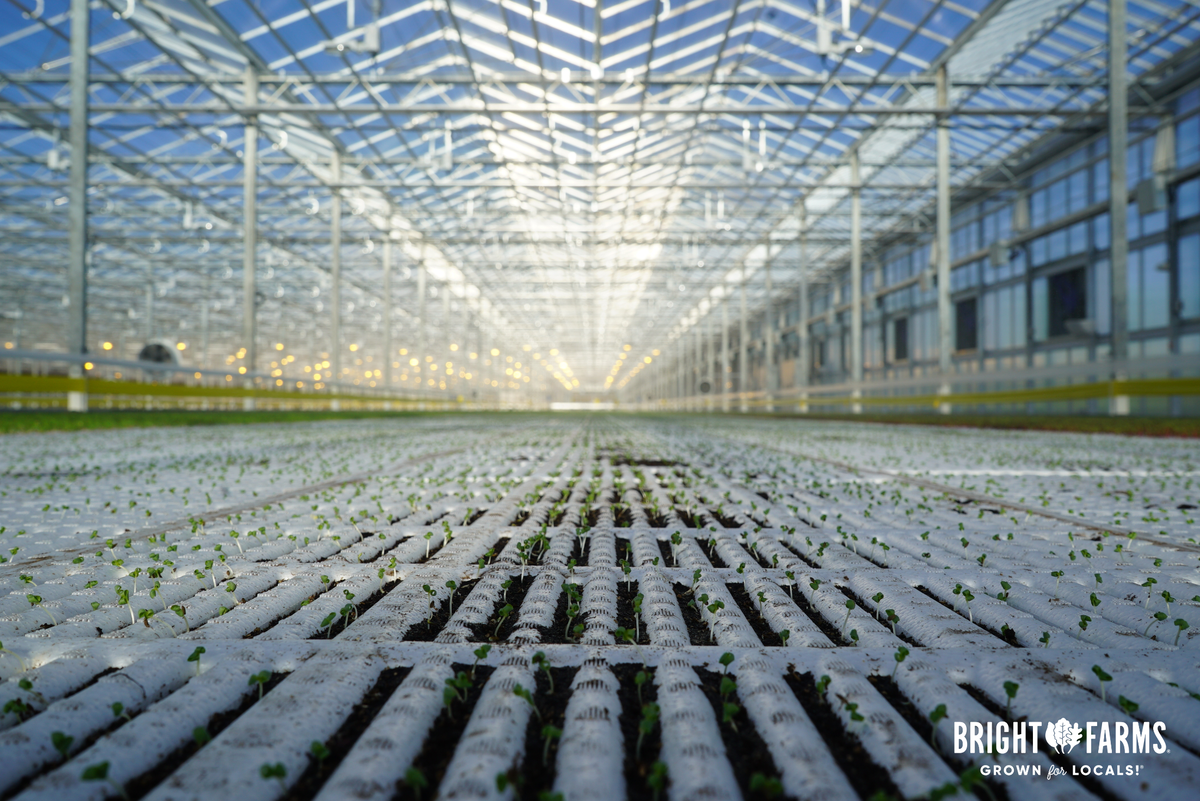
The greens grow on floating platforms in ponds that are about a foot deep, starting as seedlings and moving to the other side of the greenhouse, ending as full plants. It takes about three weeks to reap a harvest, Platt said.
Automated machines harvest and pack the products so the greens are never touched by people or pesticides, Platt said. There’s also no cross-contamination from the air or through the soil.
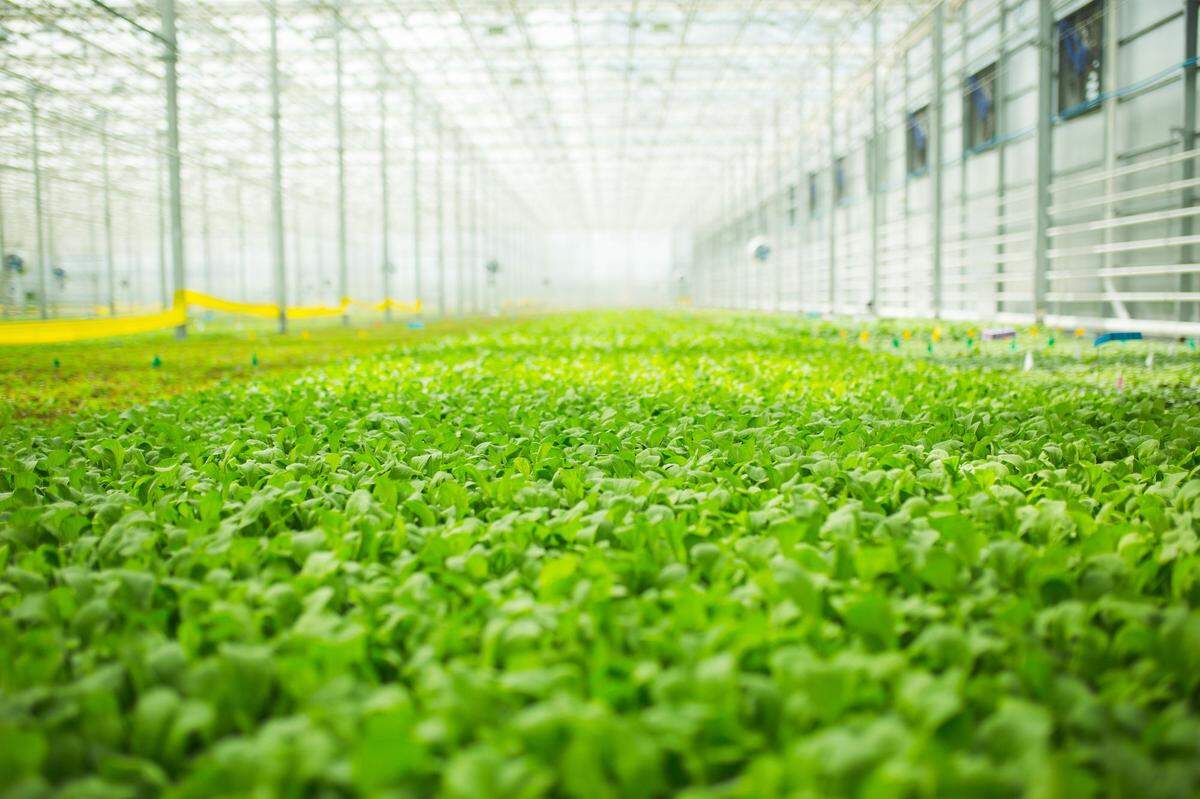
BrightFarms tracks each plant from seed to shelf with thousands of sensors and an artificial intelligence system that analyzes data to optimize plant growth.
“It’s the most technologically advanced farm to date,” Platt said. “We’re getting into collecting data to make sure climate and conditions are perfect.”
BrightFarms expansion plans
BrightFarms plans to increase distribution from more than 2,000 stores in the U.S. to over 15,000 stores by 2025, Platt said.
Amid the record surge in demand last year during the pandemic, the ag company added more than 800 stores, Platt said. Year-over-year sales increased by 40% in July. Since January, sales are up 75%, he said.
The privately-held company expects to exceed $30 million in retail sales this year, Grant said.
Its greenhouse expansion into North Carolina, plus additional moves into Massachusetts and Texas, is part of a $100-million expansion plan led by Atlanta-based Cox Enterprises, BrightFarms’ majority stakeholder, and investment firm Catalyst Investors.
The Hendersonville farm will hire about 60 employees, paying $13 to $15 an hour. There are 250 employees companywide.
BrightFarms received a performance-based state grant of $55,000 from the One North Carolina Fund, and Henderson County provided $530,348 in incentives, said Grant, the BrightFarms spokesman.
A growing field
BrightFarms isn’t the only indoor salad grower expanding into North Carolina.
In 2019, Gov. Roy Cooper announced Little Leaf Farms, based in Massachusetts, would invest $86 million to build a 20-acre greenhouse in Burnsville that would create up to 100 jobs. The company aimed to supply 2,000 grocery stores in the Northeast.
And another salad grower in the Carolinas says demand is growing for hydroponic farming.
Vertical Roots, a Charleston-based hydroponic salad farmer that grows in shipping containers owned by AmplifiedAg, supplies over 1,200 retailers across the Southeast. That includes dozens in the Charlotte area, including Harris Teeter, Publix, Whole Foods and Lowes Food, according to the company website.
“We need to grow safer food in greater volumes closer to the point of consumption, while conserving and restoring the environment,” AmplifiedAg CEO Don Taylor said in a news release last month. “That is what is driving all of our development and innovation, and ultimately the demand we are seeing from indoor farmers and communities across the world.”
More demand to buy local
Despite the recent activity on the East Coast, the majority of salad sold in the U.S. is still shipped from growers in two western states.
California and Arizona account for about 90% of the leafy greens grown in the U.S., according to California Leafy Green Products Handler Marketing Agreement’s website. That group formed in 2007 following illness outbreaks to ensure food safety practices.
Platt said shipping from the West Coast breeds cross-contamination, uses of pesticides and a product that can take a week or more in transport to East Coast stores. “It lacks freshness, taste and is part of an unsustainable supply chain,” Platt said of the competition.
Dankbar with the N.C. Co-op said North Carolina farmers are seeing a surge in demand. Farmers selling weekly subscription produce boxes and with farm stands last year couldn’t keep product in stock, she said.
“Having that shorter supply chain and knowing where it comes from makes people feel more comforted,” Dankbar said. “It really is the social, environmental and economic benefits that people consider when they buy local.”
She said supermarket shoppers like for stores to feature local products. “They know consumers are looking for that,” she said.
However, Dankbar said, each farm decides its own food safety practices, “so we can’t actually guarantee local food is safer.”
A report by The Hartman Group, a firm that researches food and beverage trends, found 26% of shoppers are relying more on fresh foods since the pandemic because they are eating more at home. And 19% of shoppers are relying on locally sourced products, a trend that is expected to continue as additional consumers become aware of vulnerabilities in the U.S. food supply chain, according to the firm.
In a state like North Carolina where agriculture is a top industry with diverse offerings, that’s important, Dankbar said.
“BrightFarms could just add to that diversity and make our food system more resilient,” she said, “so we don’t have to rely on larger national supply chains.”
This story was originally published April 23, 2021 at 6:30 AM.