Judge moves to reduce arrests, prevent COVID-19 outbreak inside Mecklenburg’s jails
Seeking to prevent a COVID-19 outbreak inside Mecklenburg County’s jails, a judge has taken a step aimed at reducing the number of people incarcerated for lower-level crimes.
The order, signed on March 23 by Acting Chief District Court Judge Elizabeth Trosch, suspends orders for arrest for most misdemeanors, with the exception of domestic violence and violence involving a child.
The judge’s order comes at a time when officials in Mecklenburg’s criminal justice system are taking steps to reduce the inmate population at its uptown jail.
Jails and prisons are seen as particularly high-risk targets of COVID-19, the potentially deadly disease that has claimed thousands of lives worldwide and has now cropped up in all 50 states.
In an interview on Thursday, Trosch said the alleged offenders affected by her order pose a greater threat to the public inside the jail than out.
“Do we really need to increase the number of people coming into contact with the jail staff, the lawyers and judges and all the people in the courtroom in the midst of this pandemic?” she asked.
Trosch said she made her decision after consulting with Mecklenburg District Attorney Spencer Merriweather, public defender Kevin Tully, Charlotte Mecklenburg Police Chief Kerr Putney, Sheriff Garry McFadden and Superior Court Judge Bob Bell.
County officials began looking for ways to roll back the jail population earlier this month. On Friday, the uptown jail held 1,470 inmates — about 9 percent fewer than were housed there on March 9. The number of inmates held at the jail for misdemeanors — now about 111 — has dropped by nearly a third over that period.
Tully says Trosch’s order is a positive start, but only a start.
“If there’s an outbreak, the one place where it is very likely to rampage is in the jail,” Tully said. “It is the one place where social distancing is impossible, hygiene is challenging at best, and the conditions are ripe for a widespread outbreak.”
CMPD spokesman Rob Tufano said Friday that the department will follow Judge Trosch’s order. But he said CMPD was not planning any other changes in enforcement to reduce the jail population.
“It would be irresponsible for the CMPD to stop our crime fighting efforts as our community continues to experience victimization of crime during the pandemic,” Tufano wrote in an email to the Observer.
Many of those arrested in Mecklenburg continue to be charged with minor crimes.
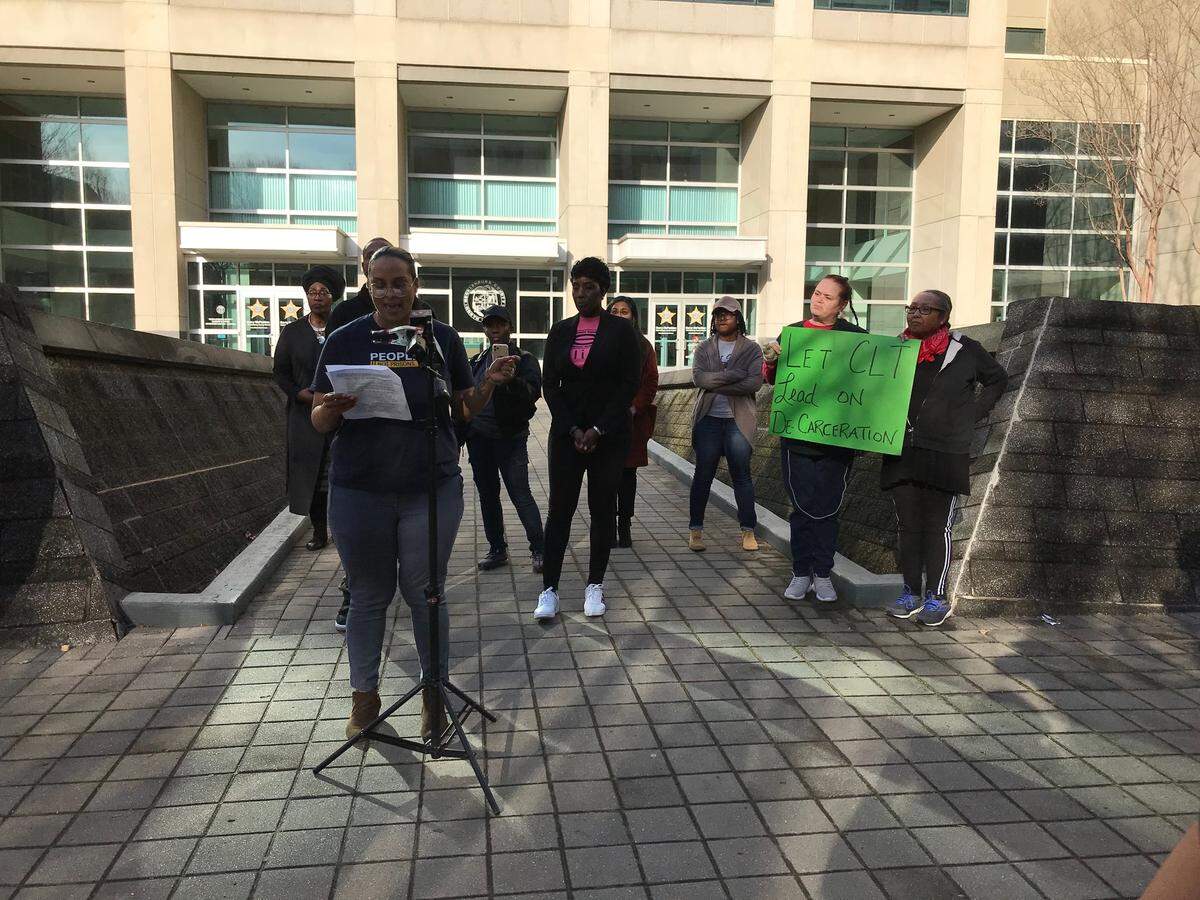
More than 40 percent of the roughly 250 people arrested in Mecklenburg County this week were charged with misdemeanors, according to data compiled by a group of Charlotte lawyers who are pushing to reduce the jail population.
All visitation at the jail and the state prisons has been suspended to prevent the spread of the coronavirus.
Mecklenburg officials have also taken other precautions: taking the temperatures of all who enter the uptown jail and Jail North, and asking new inmates screening questions to help determine whether they carry the virus.
Charlotte lawyer Tim Emry said he was encouraged by Trosch’s order but thinks further steps are needed.
He and other criminal defense lawyers in Charlotte have argued that police need to stop making misdemeanor arrests altogether, instead issuing citations and orders to appear in court.
“It seems like they’re waiting for a confirmed case in the jail,” Emry said. “And by the time there’s a confirmed case, it will be too late ... I don’t want people to die needlessly.”
While those arrested for misdemeanors may not be held in jail, they do have to be processed at the jail. And each time that happens, there is a risk that an arrestee will bring the infection into the jail, Emry said.
Emry argued that a COVID-19 outbreak in the jail could have profound impact on the general public.
“Because a lot of these (inmates) do ultimately get out, they’ll be the people stocking our grocery shelves, delivering our Amazon packages and delivering our food,” he said.
This story was originally published March 27, 2020 at 3:23 PM.