
A Labor Day COVID-19 ‘spike?’ Mecklenburg ‘cautiously optimistic’ there won’t be one
Mecklenburg County Public Health Director Gibbie Harris says she’s “cautiously optimistic” that novel coronavirus metrics will steadily improve locally — and not surge as officials feared ahead of Labor Day gatherings.
Her update to county commissioners Tuesday walked back a bleak prediction earlier this month, when Harris said the Charlotte area should expect to see a spike in infections following lax behaviors throughout Labor Day weekend.
The wave, as Harris initially outlined, would have exceeded the uptick in cases recorded after other summer holidays.
But now that public health data has begun reflecting the impact from those end-of-summer gatherings — based on the incubation period of the coronavirus — Mecklenburg’s daily new caseload still keeps dropping.
“At this point, our numbers have not gone up, which is great,” Harris said. “There’s still some potential for that, so we need to stay vigilant. Right now, it appears that things continue to move in the right direction.”
At the start of September, Mecklenburg’s 14-day average of new cases was 160, according to a Charlotte Observer analysis of county health data. It’s now below 100.
There have been 27,768 cases in Mecklenburg since March. That’s a rate of 254 cases for every 10,000 residents, the state Department of Health and Human Services reported Wednesday.
Mecklenburg’s average positivity rate — which gauges the extent of viral transmission — fell to 5.4% in the past week, the lowest number to date. The county is just 0.4 percentage points away from the state’s target, which is partially used to guide reopening decisions as the virus is brought under better control.
And for the first time since June, the average weekly number of people requiring hospital-level care dropped to 98, according to the latest county health data.
“All of that is really good news for us,” Harris said.
Harris said the county’s coronavirus ambassadors have visited almost 200 businesses to boost compliance with local and state regulations. Some referrals came from citizens and the Charlotte-Mecklenburg Police Department, she said.
About half of those were restaurants, which Harris last week had cited as a major source of coronavirus exposure in the region. Ambassadors also went to tattoo shops, fitness centers and gyms.
George Dunlap, chairman of the Mecklenburg County commissioners, pleaded with residents to keep wearing face masks and practicing social distancing to slow the spread of COVID-19.
“It’s easy for us to get comfortable because we’ve done better,” Dunlap said during Tuesday’s meeting. “But it’s also easy for us to slip back to where we were.”
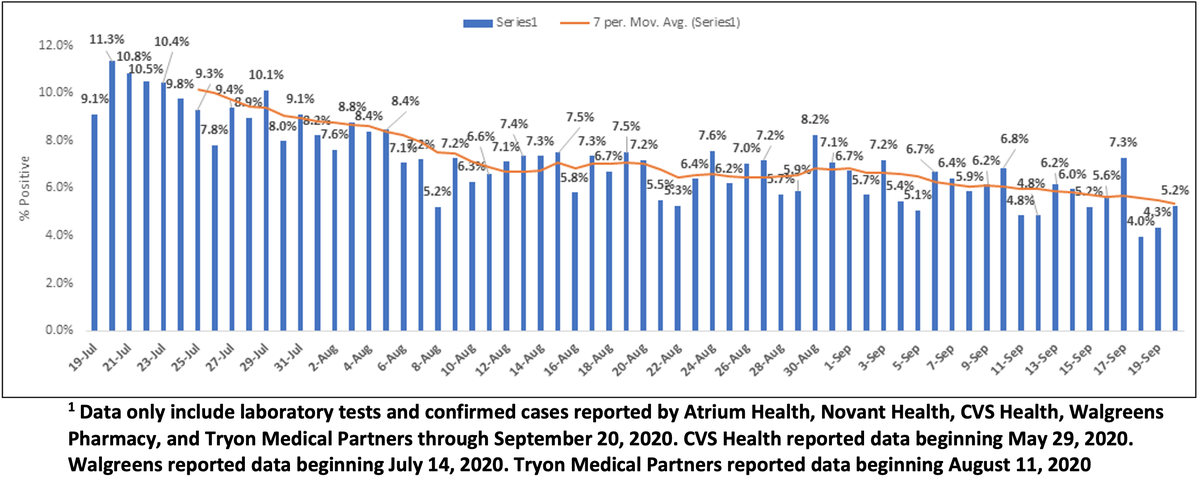
COVID-19 trends
As of Sept. 20 — the last date demographic data was publicly available — county coronavirus data show:
▪ Most people — about 60% of the more than 27,700 cases — were adults under the age of 40. People older than 60 account for just over 12% of cases but about 85% of all deaths.
▪ After symptoms of the coronavirus subside, a person diagnosed may be “released” from isolation under CDC guidelines. In Mecklenburg, roughly 8 in 10 people who tested positive have met the criteria to end isolation, according to local health officials.
▪ About 1 in 20 people diagnosed were hospitalized due to their illness. People age 60 or older were more likely to need hospital care compared to younger people with the coronavirus.
▪ Just over half of those people who have died from COVID-19 locally were connected to “active outbreaks” in long-term care facilities or nursing homes. Still, five of the 346 deaths recorded as of Sept. 20 were among people who had no known underlying conditions. And 45 of the people who died were between the ages of 40 to 59, while four people were under the age of 40.
This story was originally published September 23, 2020 at 10:16 AM.