
Two Weeks to Shutdown: How COVID’s first days brought Charlotte to its knees
Doors slammed shut on a Thursday morning exactly one year ago today.
The two weeks to shutdown — from the first COVID-19 case detected locally, to the forced closure of schools and businesses, to a March 26, 2020, shelter-in-place order — started with an announcement from the county’s health director:
The inevitable has arrived.
What we saw that day seems impossible given what we know now.
Mecklenburg Health Director Gibbie Harris, along with other local leaders, stood close together (no masks in sight) in a room at the Charlotte Police and Fire Training Academy.
Go back and watch the video from the news conference, and you’re transported to a different time: No one wipes down the podium in between speakers. No one reacts when someone in the room, filled with TV news cameras and journalists, repeatedly coughs and sneezes.
Some had forecast but not many had accepted what would come next.
The Charlotte Observer this month revisited those early pandemic days in interviews with five people whose lives were instantly turned upside down when the virus made it to our front doors.
A widow
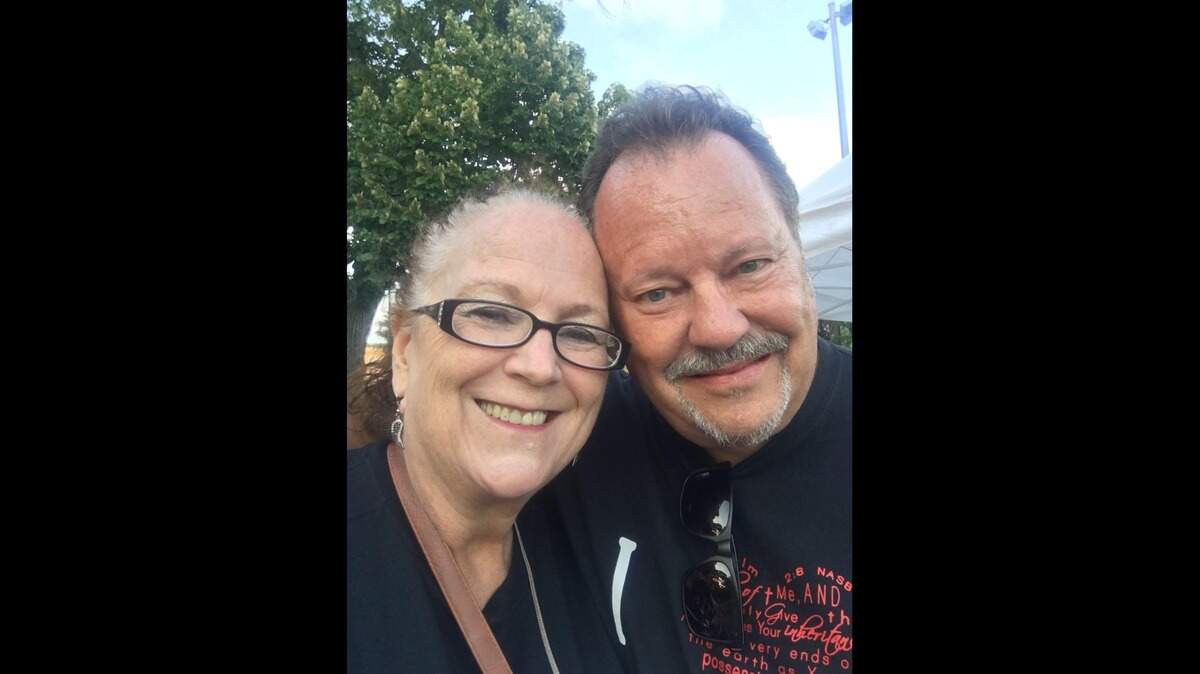
A week before the shutdown, the man who would become one of the first two people locally to die from COVID-19 quietly entered the city in the passenger seat of a Ford pickup, traveling north on Interstate 85.
The Rev. Landon Spradlin had begun to feel poorly during his annual trip to Mardi Gras to play the Blues and save souls. He mingled with fellow musicians and witnessed to some of the hundreds of thousands of people from all parts of the world who — despite the threat of the encroaching coronavirus — attended the event.
Spradlin’s wife, Jean, says the couple took the virus seriously, but it never was even a factor in deciding whether to travel to New Orleans last year.
“COVID hadn’t really hit us. We had heard about it, and Landon was watching the news all the time to keep up with it. But it was a non-issue,” she recalled in a recent interview.
Her husband had taken a COVID-19 test in early March 2020 at the VA hospital in New Orleans, which had come back negative.
Despite the medication he received on that medical visit, Spradlin, with a history of asthma and bronchitis, never felt any better. In fact, his coughing and breathing problems had worsened — leading to a decision by him and his wife to head home to rural Virginia two weeks early so Landon Spradlin could see his regular doctors.
Home, however, was 900 miles away, with Charlotte in between.
They spent the night north of Atlanta. On March 17, with seven hours still to drive, the couple pointed their F-250 toward the Carolinas and set off. They reached Charlotte a little after midday.
Landon’s coughing had eased during this part of the drive, so Jean thought he was resting. She says she knows now that her husband’s lungs were shutting down.
By the time the couple reached Concord, Jean says she had to stop for a bathroom break. When she tried to help Landon get down from his seat, he collapsed onto the service station pavement.
Landon was sent my ambulance to nearby Atrium Cabarrus Medical Center. This time the COVID-19 test came back positive.
By the World Health Organization’s official declaration, it was Day Six of the global health pandemic.
For almost a week, the hospital staff fought to save the pastor’s life. “They did everything they could to save that man’s life,” Jean, who was quarantined in a house Atrium rented for her near the hospital, recalls.
Landon Spradlin, on March 25, was one of 269 people in the United States to die from COVID-19 that day. He and another man, whose name has not been shared publicly, were the first two people to die in North Carolina after being diagnosed. The first known virus death in Mecklenburg would come four days later.
The epidemiologist
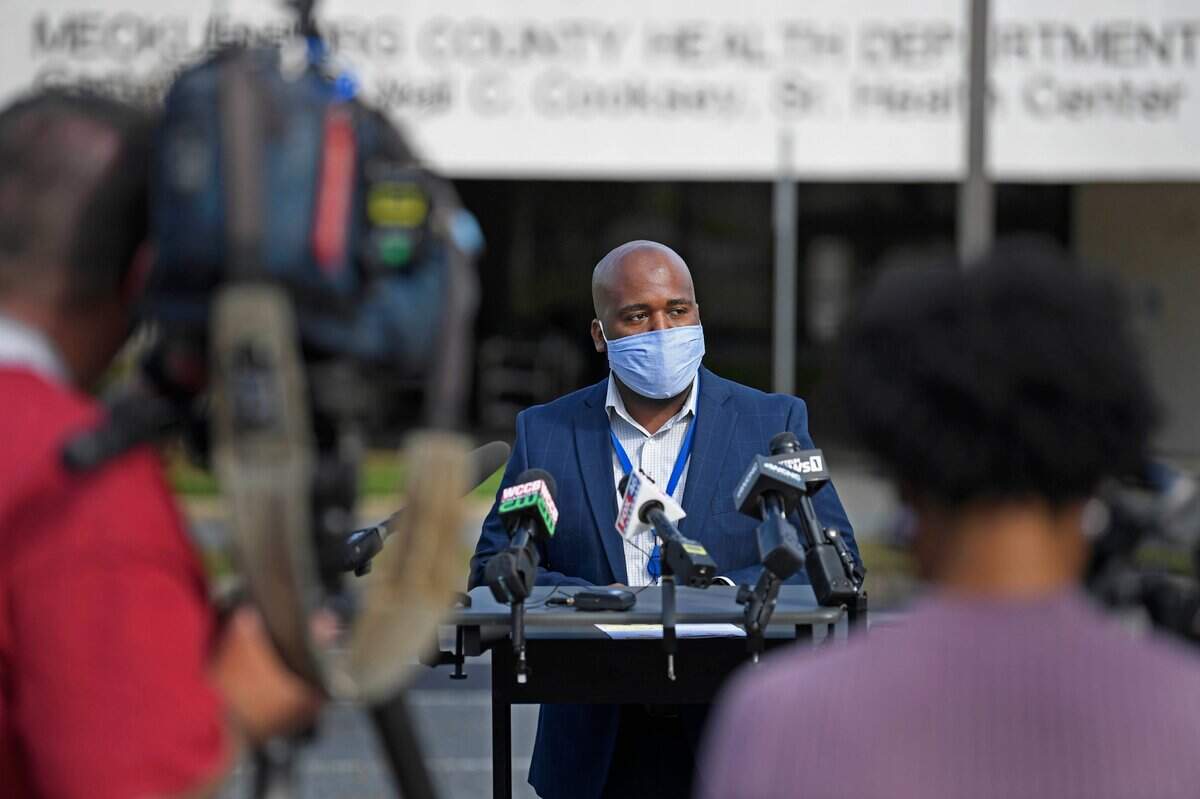
Dr. Raynard Washington was starting a new job. He thought he’d take a short break from work in between his last day as chief epidemiologist for the city of Philadelphia and starting as deputy health director for Mecklenburg County.
“All of a sudden, (COVID) started to really become a thing,” Washington recalled. “And I was like, ‘Oh boy this is a weird time to switch jobs.’”
His job would eventually become one of the most prominent in the local pandemic response. Washington has played key roles in projecting Mecklenburg’s viral spread, leading contact tracing efforts and managing response to outbreaks tied to local churches and businesses. More recently, he has helped with vaccine rollout.
Mecklenburg reported its first local coronavirus case on March 12. Washington’s last day in Philadelphia was March 13. The next day, he flew to Charlotte.
He didn’t have a car yet, or an apartment, so he stayed in an uptown hotel mostly devoid of guests as coronavirus fears kicked into high alert.
That Sunday, March 15, Mecklenburg County declared a local state of emergency. The new deputy health director’s first day began with a Monday in-person orientation at county offices — before taking an Uber across town to the Emergency Operations Center to meet with Public Health Director Gibbie Harris.
It was the start of seven-day work weeks, each day lasting at least 12 hours, Washington said. He’d decompress at the hotel’s fitness center, until that closed due to the virus. After a month-long stay, he moved to temporary housing.
“It was very hectic because I was doing all of this in the middle of COVID times where everything was shut down ... Food was hard to come by,” Washington said. “I haven’t really moved to Charlotte yet, it feels, because I just work all the time.”
A single mom
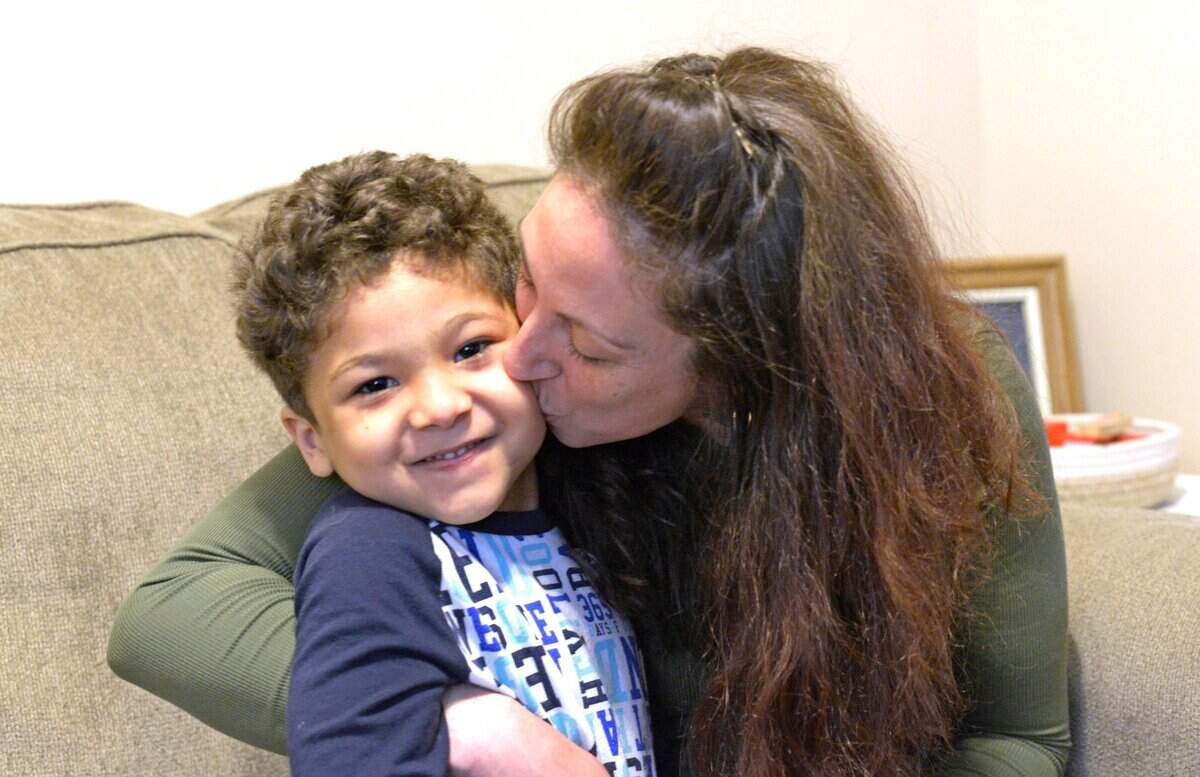
For those already settled here, the virus was shredding all senses of normalcy, even before the official stay-at-home order took effect.
Anna Fiscus was 90 miles away from home when the world began to skid to a halt.
Fiscus, who is in recovery and works for a nonprofit that helps people struggling with addiction, domestic violence and other trauma, was at a professional conference in Greensboro.
She savored the time every year to connect with others who shared her passion for recovery. So she wasn’t as closely tuned to the news as she normally would be when Mecklenburg identified its first cases of COVID-19.
It wasn’t until a trip to the grocery store back in Charlotte after picking up her son from his grandparents that it hit her: Nothing was going back to normal for a long time.
The aisles were bare, she recalled, as the first wave of panic-buying was in full swing. No toilet paper or sanitizing wipes. Few options for bread, meat or other staples she liked to have ready in the freezer.
“Every aisle we went down: ‘Mommy, why is it empty?’ “ she recalled. “I just broke down in the middle of the aisle crying.
“...We walked out of there with way less than we hoped.”
In the early days of the pandemic she felt her nerves alight, a lingering response from previous trauma. It meant trouble sleeping and many hours watching the news.
Her work with Promise Resource Network moved online. Plans to enroll her son in preschool vanished. His home daycare shut down for months. And while she continued to lean on family nearby, the visits became much less frequent for safety.
As a single parent she worried what would happen if she got sick, and began carrying important phone numbers, information about her custody arrangement and other important information in her wallet. She worries about him getting sick.
People of color like him have been disproportionately hit hard by the pandemic. So have those with chronic health problems like the asthma he was born with.
“I think that what is still with me, the fear of the unknown,” she said. “We still don’t have all the answers, but more than a year ago ... You feel it in your body that it’s been a year.”
The pro athlete
A drive last year through the deserted streets of Charlotte brought home the reality to Charlotte Hornets center Bismack Biyombo.
It was days after the NBA shut down March 11, when Biyombo and teammates assumed this was maybe a two-week interruption of their careers and lives.
“I went for a drive, actually, in Charlotte and the city was dead,” Biyombo recalled. “I could actually pull my window down and scream, and I could hear my echo.
“I was like, ‘This is bad.’ ”
Bad enough that Biyombo, a native of the Democratic Republic of the Congo, set about rounding up his six siblings, most of whom are at various U.S. colleges.
Fearful of putting them on airplanes in the pandemic, Biyombo dispatched one of his brothers to drive them back to Charlotte. There were long trips to Florida and Virginia, but soon all six brothers and sisters were under Biyombo’s roof for months to come.
“Having my family back around me was a relief,” Biyombo recalled. “Stores were running out of food. So many essential things (were in flux).
“I needed to get them back to an environment I could at least control.
A restaurant owner
Bars and restaurants have shouldered much of the economic loss throughout the pandemic and in North Carolina, they were ordered to close, except for take-out, days ahead of the state’s sweeping stay-at-home order.
For Matt Wohlfarth, owner of Dilworth Neighborhood Grille, the news came through a television mounted above the bar in the restaurant on March 17. He’d opened that day, St. Patrick’s Day, mostly anticipating business as usual, after having spent several days enhancing cleaning of the restaurant and imploring customers to stay loyal for local businesses.
But that afternoon, N.C. Gov. Roy Cooper issued an executive order that dining rooms and bars must suspend sit-down service.
Wohlfarth said when he heard the announcement, he cursed.
Then he bought everyone at the bar a round of shots and said: “Come on back in eight weeks and let’s do it again. And that didn’t happen.”
Wohlfarth said he sort of knew it was coming as other countries were shutting down but didn’t want to believe it. He was forced to lay off the majority of his 65 employees, keeping about 22, including two bartenders who offered to be delivery drivers, cooks, and people to answer the phone. For a time, the restaurant also offered a free roll of toilet paper with to-go orders.
In the run up to the local shutdown, Wohlfarth estimates he worked about 100 hours over seven days. He was exhausted and his emotions were all over but “mostly fear of losing everything.”
And, not just fear of losing the 15-year-old business he built, but for his own health, the safety of his staff and customers, and worries about his wife and children at home.
“It would have been easy to get depressed or angry,” he said, “but I was too busy.”
On the drives home each night, Wohlfarth said he didn’t listen to radio, or think. He just went numb. He’d get home at 1 a.m., have a beer and do jigsaw puzzles until going to bed at about 4 a.m. Then he’d be back at work at 9 a.m.
“It seemed like this was never going to go away. You can’t forget this happened.”
The shutdown
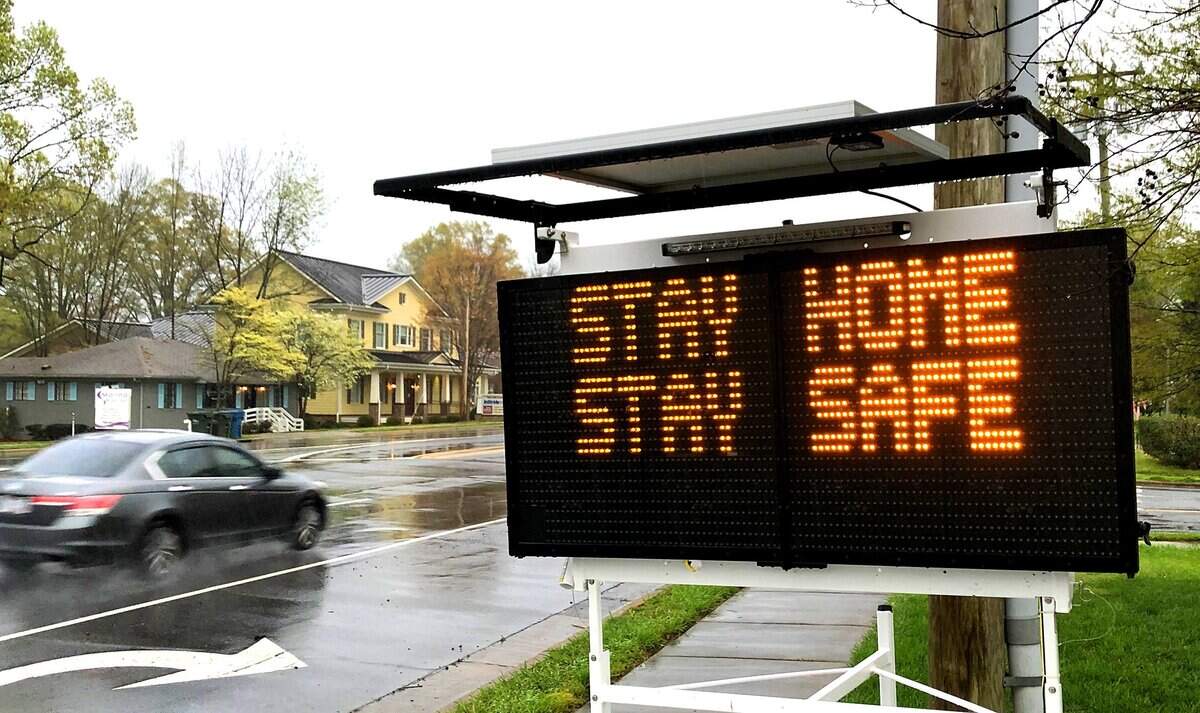
It was originally supposed to last for three weeks.
The post office, the bank, the grocery store, the pharmacy and a limited number of other places were deemed essential. Everywhere else, in theory, would have locked doors.
Mecklenburg’s local stay-at-home order was announced with two days notice and went into effect at 8 a.m., March 26, 2020.
A virus already overwhelming communities worldwide was circulating quickly here, though fewer than 300 people in the county were known to be infected at that point.
The closure of businesses, schools, churches, offices and more successfully prevented countless infections and protected many from grave illness in those early days.
But the day before the shutdown, at a hospital 30 minutes north of Charlotte, the morgue was already seeing its first victims.
Jean Spradlin got the call about her husband Landon, the preacher, around 3 a.m.
Since then, nearly 11,900 families in North Carolina have gotten that news.
The shutdown — and the grief — over the last year, has morphed but never quite lifted.
“It still feels like yesterday,” Jean says. “When I talk about it, I relive the whole thing.”
This story was originally published March 26, 2021 at 7:15 AM.