Mecklenburg court clerk’s office to reopen amid COVID outbreak that ‘has ravaged us’
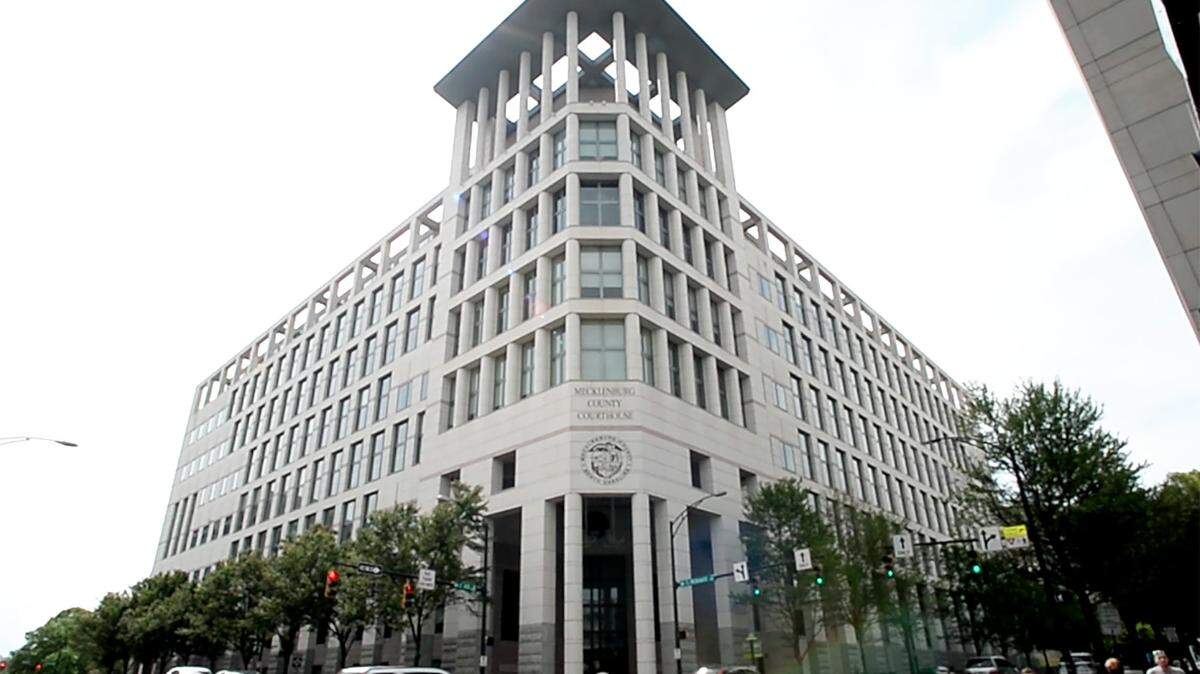
The Mecklenburg County Courthouse will be a little more open to the public on Monday, even as a week-long outbreak of COVID-19 in its biggest office continues to spread.
What started Aug. 6 as a single positive test for an employee in the clerk of court’s office had by Friday ballooned to 45 clerks being forced to quarantine. Of those, 14 had tested positive as of Friday — eight of them “break-through” cases, meaning the person became infected despite being vaccinated.
Twenty-five of the quarantined courthouse workers have so far tested negative, officials said. Tests for six employees were pending Friday afternoon. Dating back to a smaller outbreak in late July, the clerk’s office has now recorded 19 positive tests in the past three weeks.
Senior judges ordered a temporary closure of the courthouse on Aug. 8, after five courthouse employees tested positive for the illness. The building remained mostly closed for the rest of the week.
On Monday, the courthouse will reopen one courtroom in Superior Court for criminal trials. The clerk’s office will resume normal hours, although Clerk of Court Elisa Chinn-Gary says more of her employees will be working remotely as a safety precaution.
In a statement Friday, courthouse officials urged the public and attorneys to avoid the building if possible, and said access to public records in the clerk’s office would be by appointment only. Meanwhile, more hearings will be held remotely. The courthouse continues to operate under a mandatory mask policy.
Senior judges ordered a temporary closure of the courthouse on Aug. 8, after five employees tested positive for the illness. The building remained mostly closed for the rest of the week.
Chinn-Gary said the effort to control the outbreak physically and emotionally exhausted her staff of 230 employees, the courthouse’s largest, as well as workers throughout the building, leading to video meetings this week with mental health and medical experts.
“This is not about self-pity. People are tired,” Chinn-Gary said during a remote briefing with the Observer on Friday, which was attended by other courthouse officials.
“We’ve done a good job managing court operations during the pandemic for more than a year and a half. But this outbreak has required a different level of response. The delta variant has produced an environment where we have no control over the community spread, no control over who comes to the courthouse, no control over who gets vaccinated.
“... It has ravaged us.”
The courthouse offers a microcosm of Charlotte-Mecklenburg. COVID-19 cases spiked in every ZIP code this week, fueled by the highly infectious delta variant and a countywide vaccination rate of only 55%. The rate of positive tests has rocketed to more than 12%.
At the courthouse, what started as a single positive case of an employee in the clerk’s civil division last Friday sidelined 20% of the office’s staff in a matter of a new days. Chinn-Gary declined to say whether the first infected worker had been vaccinated.
Asked if courthouse officials have discussed mandatory vaccinations for all courthouse workers, Chief District Judge Elizabeth Trosch said the committee of officeholders setting COVID policy for the courthouse had discussed such a step, but only to a point.
She said courthouse employees work for the judicial division of the state, and that they had been told that “it is not the policy of the Administrative Office of the Courts to require vaccination of court employees.”
Likewise, when asked if the courthouse knows how many of its employees have been vaccinated, Trosch said, “We were advised that it’s not the policy of the AOC to inquire about vaccination status and that we should exercise caution.”
In response to Observer questions about a mandatory vaccination policy for courthouse employees, the AOC issued a statement Friday that appeared to leave local decisions on public health in local hands.
“The North Carolina Constitution states that ‘all courts shall remain open’ and that ‘justice shall be administered without favor, denial or delay,’ ” it said. “The Judicial Branch is committed to fulfilling this constitutional mandate while protecting the health and safety of judicial officials, employees and the public. The Chief Justice has not entered any new emergency orders. Local judicial officials are in the best position to make safety decisions for their districts and should continue to consult with local health officials.”
Courthouse shutdowns
Courthouses across North Carolina were largely shut down for nine months in 2020 under a statewide order to slow the spread of COVID-19.
The resurgent viral assault on the courthouse picked up steam last month. The outbreak in late July in the clerk’s criminal division led to the quarantining of more than 15 workers. Five tested positive.
On Aug. 2, Superior Court Judge Bob Ervin stopped a lawsuit trial after a week of testimony after three jurors tested positive. Four days later the larger outbreak in the clerk’s office erupted.
During the Friday briefing, Chinn-Gary said Mecklenburg courthouse officials have been consulting with county health department regularly throughout the latest crisis, so much so that “we have (Public Health Director) Gibbie Harris on speed dial.”
“This did not happen in a vacuum in this courthouse,” Chinn-Gary said. “There has been an escalation of positive tests all over our community. It has caused us to pause and revisit our current operations and try to mitigate any potential risks to our staffs and the public, to reduce operations to a level for which we have staff and which is appropriate to protect public health.”
The virus disrupted operations this week in at least two other N.C. courthouses — those in Transylvania and Wilkes counties.
Trosch, who was sickened by virus in December, said the recent health crisis has deposited another layer of anxiety on front-line essential workers who are not well paid but are expected to show up everyday, even in a pandemic. Some, she said, have decided that “we can’t work like this.”
Chinn-Gary says she now has 25 vacancies, most of them COVID-related. One worker recently left, she said, without a word.
The only sign: An ID badge on a desk. An email soon followed.
“I’m out,” it read.
Staff writer Daniel Egitto contributed.
This story was originally published August 14, 2021 at 6:00 AM.