
Wells Fargo board chair, who broke glass ceilings in banking, resigns under pressure
Elizabeth “Betsy” Duke, who shattered multiple glass ceilings for women in banking, has resigned as chair of Wells Fargo’s board of directors after the publication of two Congressional reports that were critical of her leadership. Fellow director James Quigley also resigned, the bank announced Monday.
Last week, Rep. Maxine Waters, D-Calif., and chair of the House Financial Services Committee, called for Duke and Quigley to resign after a Congressional report by her staff showed a “clear dereliction of duty” by the pair. The two are scheduled to testify in front of Waters’ committee on Wednesday.
Waters’ report explored whether the board did enough to get the bank to fix itself after it was caught creating millions of fake accounts, among other misconduct. Management knew about it, Wells Fargo agreed in a $3 billion settlement with the government, turned a blind eye to the practices and minimized the issue to the company’s board.
The resignations were effective Sunday. It’s a remarkable fall from grace for a trailblazer for women in banking.
Duke had climbed through the ranks of community banking, starting as a teller, to become the first female chair of the American Bankers Association as well as the first female chair of a major U.S. bank. But those accomplishments weren’t enough to overcome the myriad of struggles of Wells Fargo.
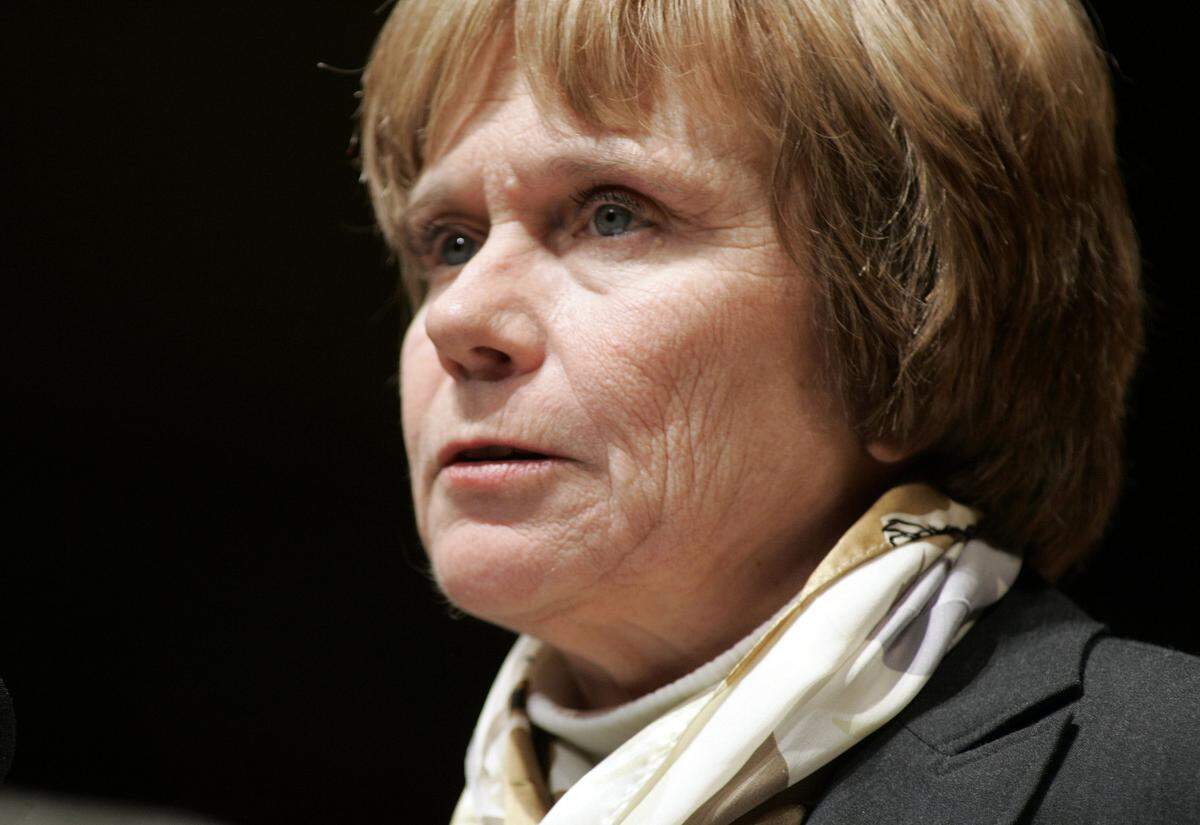
The oversight role of the Wells Fargo board, which Duke joined in 2015 and became chair of in January 2018, is a key check in the process, making sure the bank follows through on what regulators want it to do. Regulators were adamant after the sham sales practice broke in 2016: the bank needed to develop stronger measures to make sure this never happened again.
Waters did not believe the board had done its duty.
Evidence in the report, as well as in another report released by the House committee’s Republicans on Thursday, indicate that regulators didn’t think Duke was an effective check: supporting former CEO Tim Sloan even when regulators were clear that they wanted him gone, and telling one regulator that she didn’t want to be included on important communications between the bank and the agency.
‘Egregious harms’
The hearing Wednesday would have given Duke the chance to defend herself on one of the biggest stages of her professional career.
In a joint statement released by the bank Monday, Duke and Quigley said, “Since we were made aware of the egregious harms suffered by Wells Fargo’s customers, we were and remain fiercely determined to do right by them and to strengthen the bank’s culture and controls.
“Out of continued loyalty to Wells Fargo and ongoing commitment to serve our customers and employees, we recommended to our colleagues on the board that we step down from our leadership roles and they have accepted our resignation.”

Known as a stable, effective operator throughout her career, Duke resigned ahead of the hearing, forgoing a test to determine if she would be the rare Wells Fargo executive to survive congressional inquiry.
Duke and Quigley “have helped the Board navigate significant challenges relating to the sales practices issues, and they began the hard work of instituting necessary changes,” Wells Fargo CEO Charlie Scharf said in a news release. “We wish them the best.”
Duke’s replacement comes with ample experience at another bank. The new chair is former Bank of America chief financial officer Charles Noski. He joined the Wells board last year. Quigley, a former Deloitte executive, joined the board in 2013.
While it is headquartered in San Francisco, Wells is one of the biggest employers in Charlotte with about 27,000 workers, a legacy of the bank’s 2008 purchase of Wachovia.
Drive-thrus and dinner theater
After getting a drama degree from UNC–Chapel Hill, Duke started in the banking industry as a part-time drive-thru teller while working at a dinner theater. From there, she moved up through the community banking ranks in southern Virginia, becoming CEO of the Virginia Beach, Va.-based Bank of Tidewater in 1991.
She ran the bank until it was purchased by SouthTrust in 2001 for about $70 million.
When SouthTrust was bought by Wachovia, Duke remained as an executive there for a stint. She succeeded in a community banking world still rife with good ol’ boys, becoming the first woman to chair the Virginia Bankers Association, then later became the first woman to chair the American Bankers Association.
“I’m sure she’s faced her share of snarky attitudes and doubts of her abilities. But let me tell you, you don’t ever want to doubt her abilities,” said J. Morgan Davis, president and CEO of Portsmouth, Va.-based TowneBank. Duke had worked there for a few years as chief operating officer after leaving Wachovia.
“I have never seen anything rattle Betsy,” Davis said. And she dealt with plenty that would rattle most.
Fed years
In the midst of the financial crisis, Duke was nominated to the Federal Reserve’s Board of Governors by President George W. Bush. She joined the Fed on Aug. 5, 2008, just one month before Fannie Mae and Freddie Mac were taken over by the federal government amid economic free-fall.
At the Fed, Duke helped implement the Dodd-Frank financial regulation law that and stabilize the U.S. mortgage market. Often, she was an advocate for the community banks she came up in.
“She was a welcome addition” wrote former Fed Chair Ben Bernanke in his memoir of the financial crisis. “Friendly and good-hearted, but blunt when she needed to be. I often relied on her terrific good sense.”
Then-Rep. Keith Ellison, D–Minn., said in 2009 that Duke “is not known for wild statements, and is essentially a paragon of reliability and stability.”
After leaving the Fed, Duke joined the Wells Fargo board in 2015 and quickly rose to vice-chair the next year, eventually becoming chair in January 2018 after a board shakeup in the wake of the sales practices revelations.
Skeptical eye
Despite her resume, regulators were concerned about Duke from an early stage, the two Congressional reports show.
The reports say regulators were surprised that when vice-chair, Duke complained that she was included on messages from the Consumer Financial Protection Bureau regarding actions the bank should take. “A board member would not typically object to receiving communication from a regulator,” the Democrats’ report says, citing a senior consumer bureau official.
Other instances show that regulators thought that Duke was overly concerned about earnings, as opposed to fixing the problems that the regulators had pointed out.
A senior official at the Office of the Comptroller of the Currency, unnamed in the Democrats’ report, expressed surprise that Duke and then-general counsel C. Allen Parker commented on the earnings impact of certain matters in discussions with the regulator.
Duke, then-CEO Sloan and Parker had demonstrated an “excessive focus on earnings impact” in the eyes of the OCC, Wells Fargo’s primary regulator, according to an email from Quigley that was cited in the report.
The board, and Duke in particular, drew criticism from regulators for not fully understanding the depth of the bank’s problems.
After OCC officials attended a Wells Fargo board meeting in July 2018, “it became obvious that Duke did not understand how far behind the bank was in complying” with regulators’ demands, according to an official cited in the GOP report.
Board accountability was a “persistent” issue in the eyes of bank examiners, who grew concerned with Duke’s leadership, the Republicans’ report says.
Supporting Sloan
Duke’s steadfast support of Sloan also drew the scrutiny of regulators.
A longtime Wells Fargo insider, Sloan took over from former CEO John Stumpf in 2016 and was tasked with righting the ship.
It became clear to regulators early on that Sloan wasn’t meeting their expectations, according to both Congressional reports. Wells Fargo did not make “any real progress” in 2017 or 2018, according to an OCC official cited in the Republicans’ report. The regulators saw the Wells board as “complacent.”
“An OCC official confirmed that the Board received actionable information on a regular basis but did little in response,” the GOP report says. “Officials at the OCC presented issues surrounding senior management, like Sloan, but the Board did not take action”
Both reports show Sloan as an obstacle to progress, and the board as an obstacle to ousting Sloan. “(T)he Board, headed by Betsy Duke, has made clear their emphatic support for Tim,” according to an internal email from an OCC official cited in the GOP report.
Despite the disappointment, the OCC, which had acquired the unique authority to remove Wells Fargo executives, said it wasn’t going to use it, according to testimony from former board member Karen Peetz in the Democrats’ report.
Removing Sloan would have been an extreme, unprecedented step, even considering the regulators negative opinion of him. Eventually, after prodding from the OCC as well as the Fed evidenced in the reports, the writing was on the wall: Sloan had to go.
When Sloan announced his resignation in late March 2019, he said in a statement that “it has become apparent to me that our ability to successfully move Wells Fargo forward from here will benefit from a new CEO and fresh perspectives.” Still, after the resignation, Duke said to reporters that he had the “full support of the board.”
‘The right path’
The track record for Wells Fargo executives in front of Congress isn’t great in recent years.
John Stumpf resigned as CEO in 2016 shortly after being savaged by lawmakers over the sales scandal. Sloan, his successor, stepped down shortly after a similar treatment by Congress last year.
Duke dodged a similar fate by pre-empting her moment in the spotlight.
“Part of change is recognizing what needs to change and making the right decisions about how to implement that change,” Duke said in a 2019 company video. “We still have a ways to go, but I think we’re absolutely on the right path.”
This story was originally published March 9, 2020 at 7:48 AM.