Parents sue NC charter school, calling ‘Poet X’ novel an ‘assault’ on Christianity
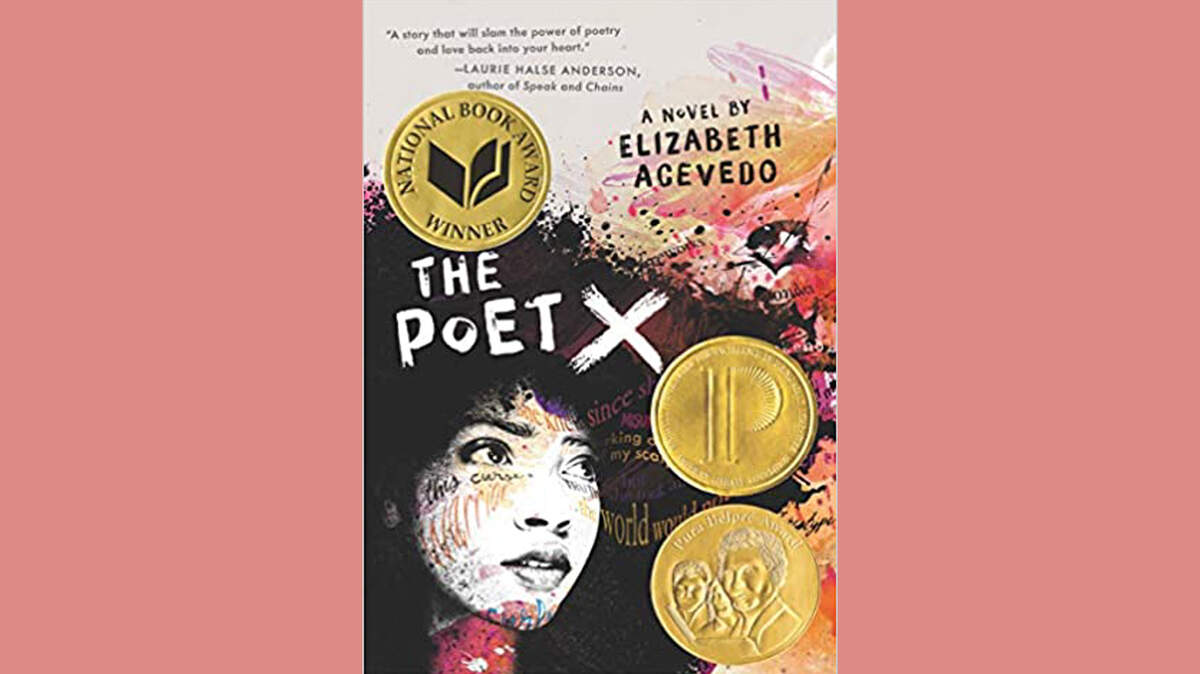
Xiomara Bautista is the fictional 15-year-old heroine of “Poet X,” an award-winning, coming-of-age novel built around the teen’s poetic journaling over boys, family and her evolving beliefs about religion and herself.
Translated, her first name means: One who is ready for war.
Now, she’s started one.
In a federal lawsuit filed Wednesday, the parents of a Lake Norman Charter School ninth-grader have asked the federal courts to remove the book from their child’s classroom.
John and Robin Coble say “Poet X” is overtly anti-Christian, and that the public school’s “endorsement” and use of the novel violates constitutional safeguards against government infringement of religion.
In a statement, the Huntersville school said it will not “censure” Poet X, and that it offered the family the option of having their child read a different book but that the Cobles refused.
The lawsuit, filed by Charlotte attorney Joel Bondurant, frequently excerpts Xiomara’s cryptic word choices to illustrate what it contends is the novel’s anti-Christian bent.
In one of the novel’s poems cited in the complaint, Xiomara, who is Dominican-American, lives in Harlem and has a Catholic mother, says Jesus “feels like a friend … who invites himself over too often, who texts me too much. A friend I just don’t think I need anymore.”
In another another scene, Elizabeth Acevedo’s verse captures her heroine’s ambivalence toward Holy Communion: “I can feel the hot eyes of the Jesus statue watching me hide the wafer beneath the (church) bench, where his holy body will now feed the mice.”
In a third, Xiomara, with Acevedo’s help, describes Mary, the mother of Jesus, as “an impregnated virgin who was probably scared s***less.”
That the Cobles find the novel’s spiritual ruminations disturbing is an understatement. Their lawsuit says the book is “a frontal assault on Christian beliefs and values,” and thus violates the First Amendment.
“If Christians were gearing up war, no reasonably objective observer could blame them,” the lawsuit says.
“The school’s plan to teach the book to the young impressionable minds in their public secondary school runs afoul of the basic precept underpinning the Religion Clauses — that government must remain neutral in the matters of religion and is certainly forbidden from promoting or endorsing materials that exhibit hostility toward any particular religion.”
Rick Buckler, board chairman for Lake Norman Charter, did not respond to an Observer email Wednesday seeking comment. But in a statement released later in the day, the school said it “will not fall to pressure to censor ‘The Poet X’ or any of (our) other literary selections.”
“Instead, we choose to view this as an opportunity to share our school’s core values and to model navigating differences of opinions and perspectives respectfully and civilly,” the statement said.
What children read in schools frequently have ignited community controversies. At some point in their histories, even such honored titles as “To Kill a Mockingbird” and “The Diary of Ann Frank” have found themselves at the center of emotional debates pitting violations of community standards on one side vs. censorship on the other.
In 2007, “Tango Makes Three,” a picture book about the true story of two male penguins raising a family, set off weeks of protest by some Charlotte-Mecklenburg Schools parents who felt the same-sex themes were unsuitable for children.
UNC Law professor Bill Marshall, a specialist in the intersection of religion and the law, says the courts up to now have been hesitant to define what’s taught in public schools as any kind of First Amendment violation, as long as the material is not overtly religious.
“The world may be changing, and we do have a new Supreme Court, but up until this point those cases haven’t won and those arguments are fairly difficult to make,” he said. “People’s spiritual beliefs in this country are so diverse now that almost anything can offend someone’s religious sensibilities. So there’s the problem on how far that can go.”
The dispute over Poet X surfaced this fall with the Cobles and other parents pressing Lake Norman Charter to remove the book, which has been taught at the school for the past two years. According to the WCNC, first the school’s leaders and then the board refused. The lawsuit followed.
In its statement to the Observer, the school said it regrets “that the Coble family has now chosen to pursue the matter through legal means.”
“At LNC, no literary selection is mandatory,” the school said. “If a constituent is not comfortable with the subject matter of a material, their perspective is honored and an alternative selection is offered. The Coble family rejected this option.”
Books like Poet X, the school said, are consistent with its commitment to seek “diverse thought and a range of opinions and perspectives to increase students’ awareness, expand their thinking and ultimately help them grow and achieve their full potential.”
In conversations with WCNC this month, several Lake Norman students stood up for the book and their teachers.
“It’s just a coming of age book,” student Maisie McCall told the station. “It’s not anything crazy, it’s just what teenage girls go through. It’s a girl trying to find her voice.”
Kit Kay said books like Poet X stir better classroom conversations and deeper learning.
“Teachers always reiterate the fact that it’s from a different point of view,” she said. “Whatever happens in the book might oppose our own views and beliefs, but that’s the whole point of reading the book so we get a wider view of what’s going on in the world.”
The Cobles feel otherwise.
This month, John Coble started a gofundme page to raise money for the upcoming court fight. He called it, “First Amendment Defense for Christians at LNC.” As of Wednesday, it had raised $3,500 of its $15,000 goal.
If the fictional heroine’s name of the disputed book intimates an upcoming battle, Coble’s words also showed no retreat.
“We are in a fight to protect our children’s first amendment rights to learn in an environment that is free from religious discrimination and hostility towards our beliefs as Christians,” he wrote. “We feel that reading this book in the classroom constitutes a hostile work environment for Christians, and we believe that there is no place for soft-core pornography in schools.
“The Board of LNC disagrees ... Now, we fight.”
This story was originally published October 29, 2020 at 6:30 AM.