Historic ‘shotgun’ homes in uptown Charlotte get new life as affordable housing
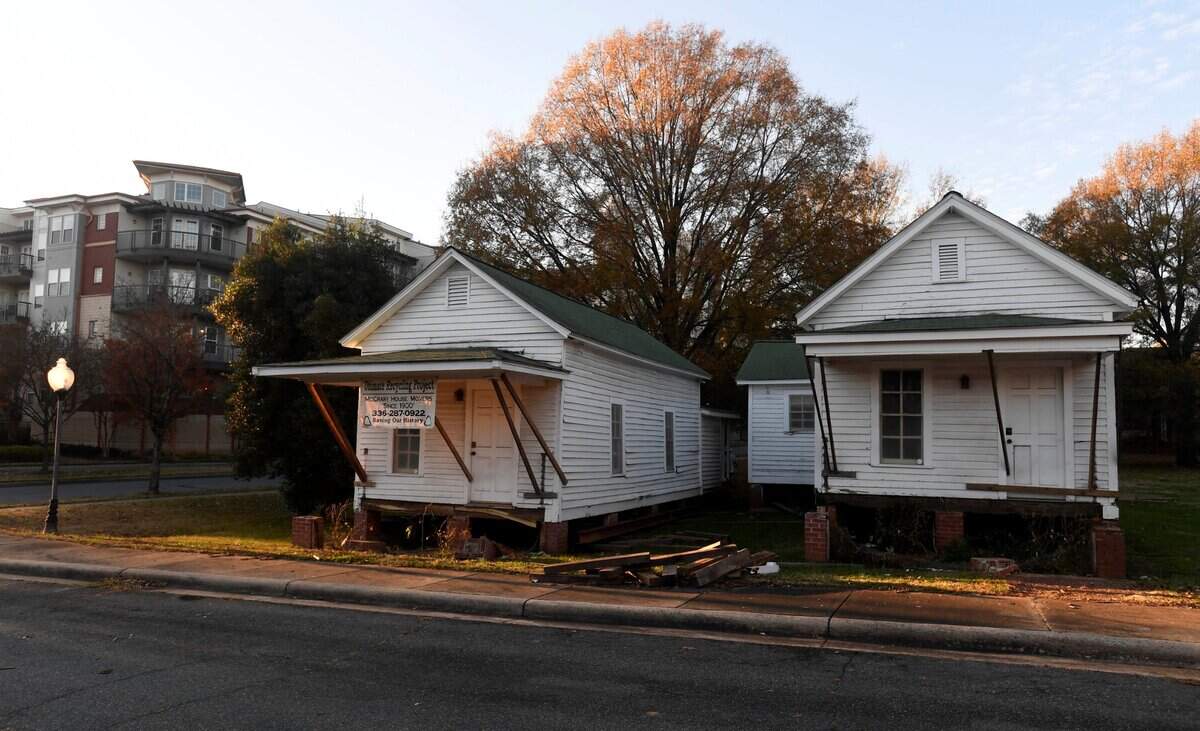
A Charlotte nonprofit will give two historic properties — commonly called “shotgun” houses — new life as affordable housing. The homes, which date back to the late 19th century, were moved to uptown’s First Ward three decades ago.
Now, they’re on the move again. The West Side Community Land Trust has taken possession of the two homes and broke ground Friday to prepare to move them to west Charlotte’s Lakeview community.
Jamall Kinard, a Lakeview resident and land trust board member, noted the significance that the shotgun homes, which largely disappeared through government programs that displaced Black neighborhoods, are being “used now to make history” and preserve affordable housing in gentrifying areas.
“It took many years of vomiting up all the filth I’d been taught about myself, and half-believed, before I was able to walk on the earth as though I had a right to be here,” Kinard said, quoting James Baldwin’s “They Can’t Turn Back.”
“Thank you... for allowing us to make history now together.”
‘Bringing it full circle’
The shotgun homes are the last of their kind still standing in Charlotte, land trust executive director Charis Blackmon said.
“Shotgun” houses got their name, according to a 1986 Observer article, “because a gunshot fired through the front door could go straight through the house and out the back door without hitting any walls.”
In the new location, the properties will be accessory units for two new homes to be built in Lakeview. Once complete, the future homeowner may lease the shotgun homes but the units will be rent-restricted to ensure they are permanently affordable in a city grappling with skyrocketing rents and gentrification.
Though they’re accessory homes, Blackmon said they’re intentionally making sure the homes can still be seen from the street.
The Lakeview community itself has undergone changes, including a name change, due to gentrification and urban renewal over the past several decades. When white residents moved in during urban renewal, they changed the community’s name to Lakewood.
“The community has these ties to urban renewal, and these shotgun homes survived urban renewal,” Blackmon said. “We’re bringing it full circle and reclaiming it.”
She said the Harvey B. Gantt Center for African-American Arts + Culture played a huge role in the project and approached the land trust after seeing their previous work.
“This is truly an amazing opportunity that’s about making and preserving history,” Gantt Center president and CEO David Taylor said.
The units’ design team is composed of Black members and led by RJ Harvey, who said the units will be finished and built with their community in mind. Blackmon said because many Black families are multi-generational, the shotgun homes also could be for older family members.
Leondra Garrett, a Charlotte native who has lived in the Lakeview community since 2016, said units like the two being built are especially important in Lakeview where she estimates 95% of residents are renters.
“Our residents need less talk and more action,” she said. “And this is an action.”
Blackmon said the trust still needs $50,000 to finish restoring the units, which she hopes to raise through partnerships and donations. She expects the homes to be moved by the end of the year and renovated by spring. Then, construction will begin on the two new main houses with a goal to sell the homes by next fall.
West Side Community Land Trust
The nonprofit acquired its first house last year through a donation and moved it to a lot on Tuckaseegee Road. Blackmon said the unit is nearing completion.
The homes in Lakeview are the land trust’s second and third home, and they have some new projects in the Beatties Ford corridor that they’re facilitating next year.
Under the land trust model, the nonprofit obtains or builds homes and sells them at an affordable price to households otherwise priced out of the market. The land trust keeps ownership of the land beneath the homes, both to remove some cost for the buyer and to guarantee the homes remain affordable.
Owners agree to a modest, scheduled home appreciation rate and when they choose to sell, to give the land trust first choice of buying it back.
The goal is to make home ownership possible for low- and moderate-income residents and preserve affordable housing in the quickly gentrifying west Charlotte.
The history of ‘shotgun’ houses
The two homes are among the last examples in Charlotte of the once-common style of housing.
Many of these houses were destroyed during the federal urban renewal program, which cleared predominantly Black communities around the country under the guise of blight reduction.
But in practice, the policy (mostly infamously executed in Charlotte’s former Brooklyn neighborhood) displaced thousands of residents and destroyed Black businesses, churches and schools in the 1960s and ‘70s.
The two homes were originally located on Bland Street, but since 1986 have been on city-owned land near the corner of East Seventh and North Alexander streets in uptown.
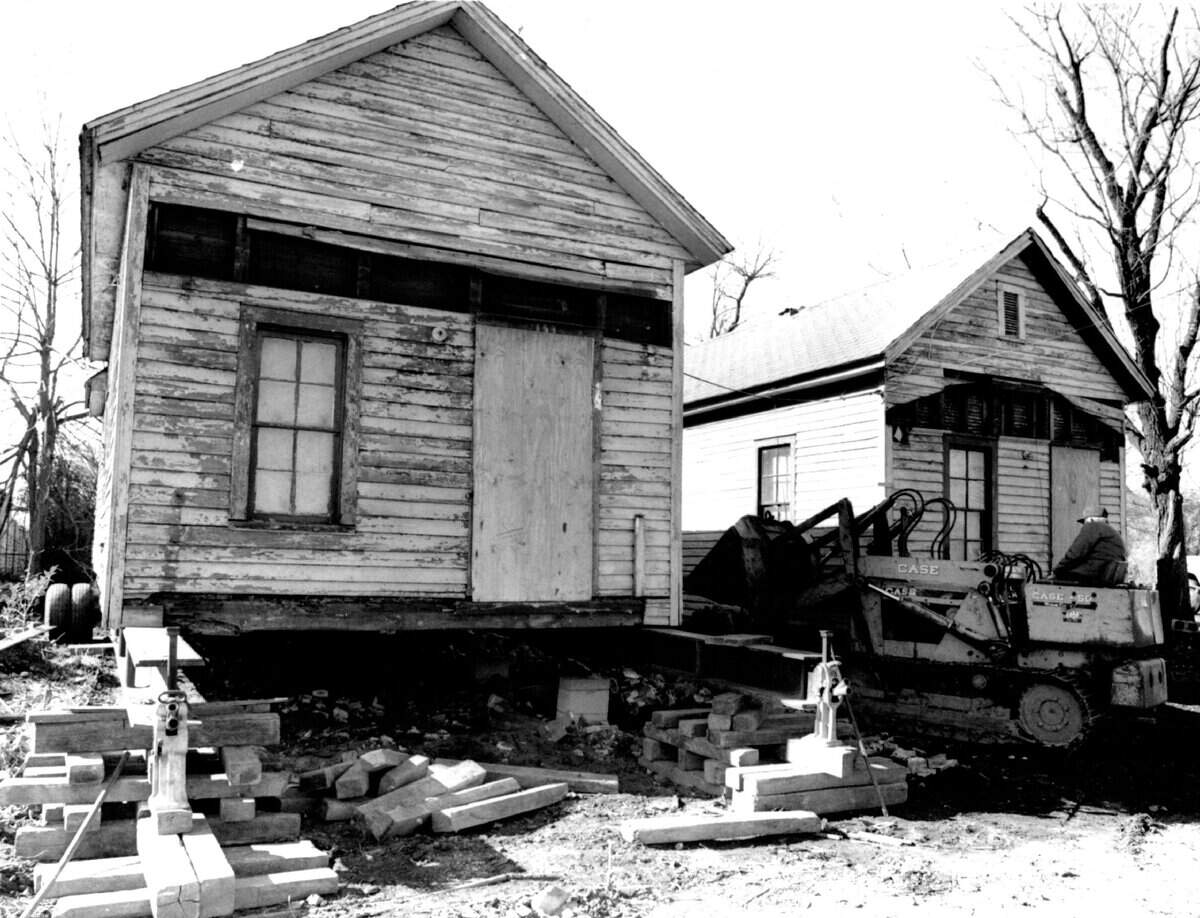
They are moving again to make way for another affordable housing development, 105-unit mixed income apartments built by Laurel Street Residential and Little Rock Community Development Center, a nonprofit affiliated with Little Rock AME Zion Church. The church is next door to the planned site.
The city of Charlotte donated some of the land to be used for the development, which is expected to be ready for residents in 2022.
Tiffany Fant, a community advocate and longtime Charlotte resident, said her grandmother used to live in a shotgun home.
“Our history and preservation runs deep,” she said. “People feel there isn’t an answer to gentrification, but I feel there is…. We can build healthy, sustainable communities we can thrive and live in.”
%20Cropped.jpg)