
Acres of trees flattened, neighbors irate over ‘dead’ plan for 300+ homes in Monroe
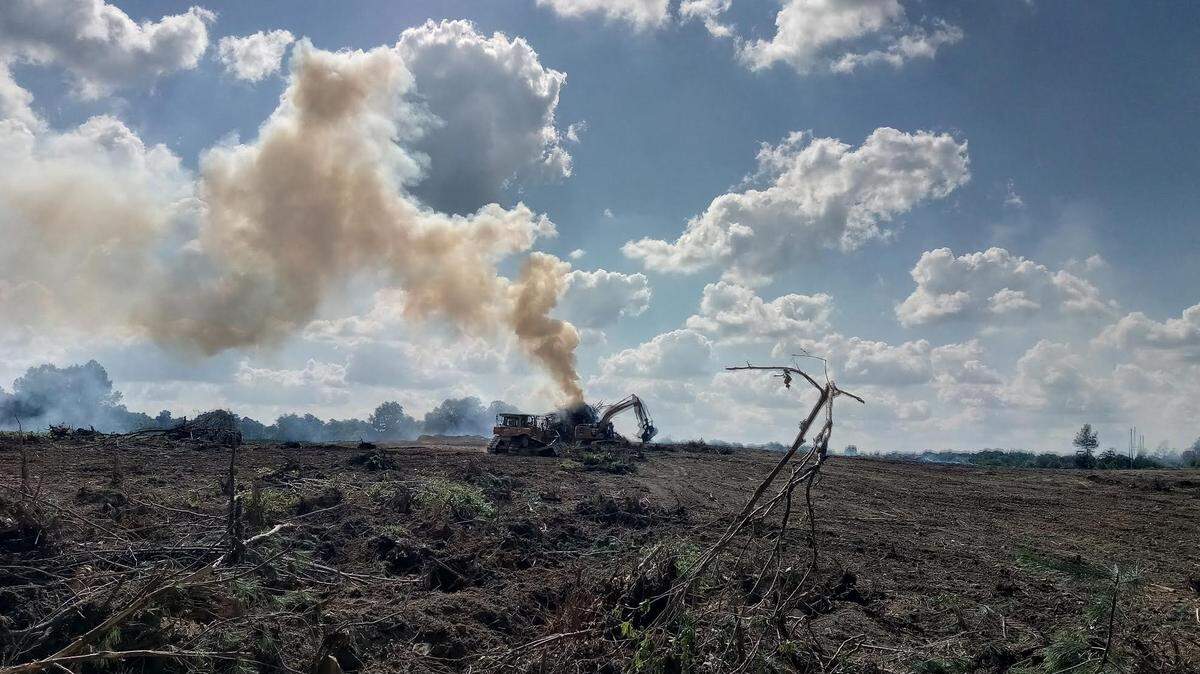
They had chosen the land because of its wilderness and isolation. But over the past few months, acres of woods have been torn down, thick smoke from burning trees has filled the air and heavy rains have caused flooding and mud.
The developer set to build over 300 homes in this mostly-rural part of Union County — about 45 minutes southeast of Charlotte — has backed off, for now. Still, neighbors say they’ve already lost the area’s greatest appeal: trees.
About 45 residents came to Monroe’s Tuesday night City Council meeting to protest development at Cody Downs, where over 30 acres of woods have been cut down. It was their first meeting held in-person this year, and the council chamber was packed.
Many of the concerns raised that night —over new development and preserving natural resources — deal with the same pressures Charlotte’s been facing for years, making it clear the region’s housing and employment boom is not confined to dense urban areas.
The Union County land in debate is currently used as farmland. On Tuesday the City Council was slated to decide whether to annex and rezone the land to allow for the residential development.
At the public hearing Edward Bower, a long-term resident of the neighborhood, showed photos of the property with its torn down trees. He, and other speakers, said that the recent tree clearing caused excess mud runoff when tropical storm Elsa made its way through the Charlotte area last week.
“I’ve never seen that much mud come through our neighborhood before,” said Nadene Tracy who’s lived there for 22 years.
Another resident, Ron Pereira, told the Observer that the piles of cut trees were burned in early July causing excess smoke in the neighborhood.
“It was hard to see on the street,” he said in an email.
Pereira gathered nearly 260 signed petitions from neighbors opposing the development.
Developer Withdraws
Seconds before the City Council began their vote on what to do with the land, the developer withdrew his request.
“His development right now, for lack of a better word, is dead,” city attorney Mujeeb Shah-Khan said.
In order for the development to happen now, the developer will have to go through the entire planning process again.
“I’m happy and excited to go back out and work with the community to see if we can’t bring back something else,” said Matthew Kirchner, managing principal of Eagle Engineering.
The proposed development would have included 319 single family lots at 2.54 units per acre. That high-density housing is not in concurrence with Monroe’s future land use plan, according to Keri Mendler with the planning department.
It was the planning staff’s recommendation that the development be denied.
Each neighbor who spoke at the meeting said that they chose their home because of the trees and open land.
“When we bought this property, it was because it was in the country,” said Astrid Cox.
Though the development isn’t moving forward, the acres of trees have still been torn down.
“The once abundant wildlife has dramatically decreased,” Bower said.
Charlotte developments
In Charlotte, the relationship between development and tree loss is also prevalent.
Land use change through commercial, industrial and residential development accounted for 31% of Charlotte’s tree canopy loss from 2012-2018, according to a memo from The Center for Watershed Protection who performed an analysis of the tree canopy.
As the tree canopy declines, the city loses the benefits that trees offer from cooling the air to bettering public health. The benefits of Charlotte’s tree canopy are valued at more than $335 million each year, according to the city’s Tree Canopy Action Plan report.
Charlotte, though, keeps developing. About 150-200 new developments are considered each year, according to planning commissioner Sam Spencer.
“We very rarely have the full picture of how the tree canopy is going to change because of a development, and that is an inadequacy in our system,” he said.
The recently passed 2040 plan does call for preserving the tree canopy, in part through updating development regulations to mitigate tree removal.
The city is currently working to update development regulations through its Unified Development Ordinance, which is expected to follow recommendations from the Tree Canopy Action Plan.
“We’ll be working with the UDO project team and going through that process to get feedback on tree canopy requirements,” said Tim Porter, the city’s chief urban forester.
The draft UDO will be released in late summer or early fall.