Charlotte radio host grieves her social-media-star mom: ‘You’ll always be in my heart’
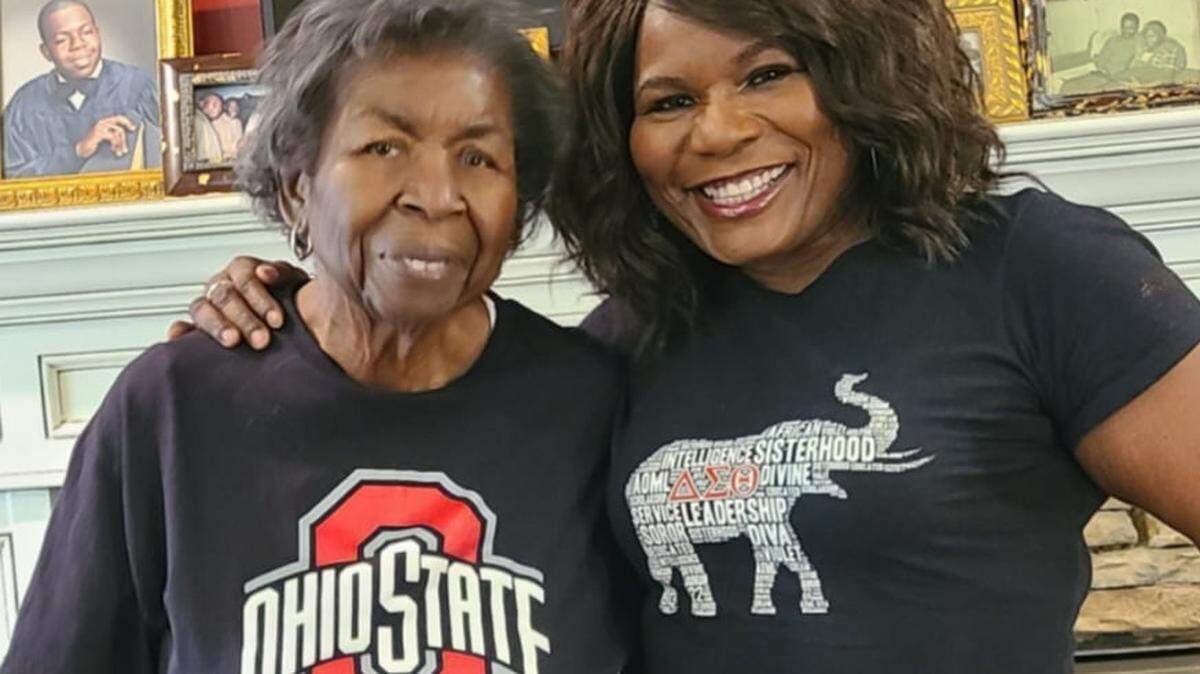
Last December, Louise Glover became an overnight sensation on TikTok not with an outrageous stunt or a quirky sketch-comedy skit, but with a simple conversation that broke her daughter’s heart.
“My name is Ramona,” says the off-camera voice belonging to Ramona Holloway, co-host of the “Matt and Ramona” morning-radio show on Charlotte’s Mix 107.9, in just her second TikTok video.
“What,” Holloway then asks, “would you like me to call you?”
“Um, you can call me,” Glover pauses for a couple of seconds before blurting: “‘Wheezy’!”
Holloway, sounding hopeful: “Can I call you ‘Mom’?”
Glover, scrunching her face: “‘Mom’? I don’t like that.”
Holloway, resignedly: “OK. I’ll call you ‘Wheezy.’”
Glover, suddenly beaming: “Good! Thank you!”
Over the next eight months, Holloway — who for years had been sharing videos on Facebook of her mom’s struggles with dementia — posted more than a hundred short videos on TikTok that highlighted the deterioration of Glover’s cognitive functioning in sometimes-heartbreaking, sometimes-sweet, sometimes-funny but always-honest ways.
Then, just a few weeks ago, Glover’s health suddenly took a sharp turn for the worse, and on Aug. 24, she died after “her brain forgot to tell her lungs what to do,” Holloway says. She was 81.
“It’s a very odd ... situation,” Holloway says, pausing to let out a long sigh before continuing, “where there is relief, because dementia care is really, really difficult. Caring for anyone who can’t care for themselves is hard. Dementia adds another emotional layer as in my case, you know, the person’s personality changes, and eventually this person who was a pillar in your life forgets who you are, and even your association.”
“So there is relief that she’s not going through that anymore,” she says, and “there is relief that I’m not going through it anymore.”
Welcome to ‘The World of Wheezy’
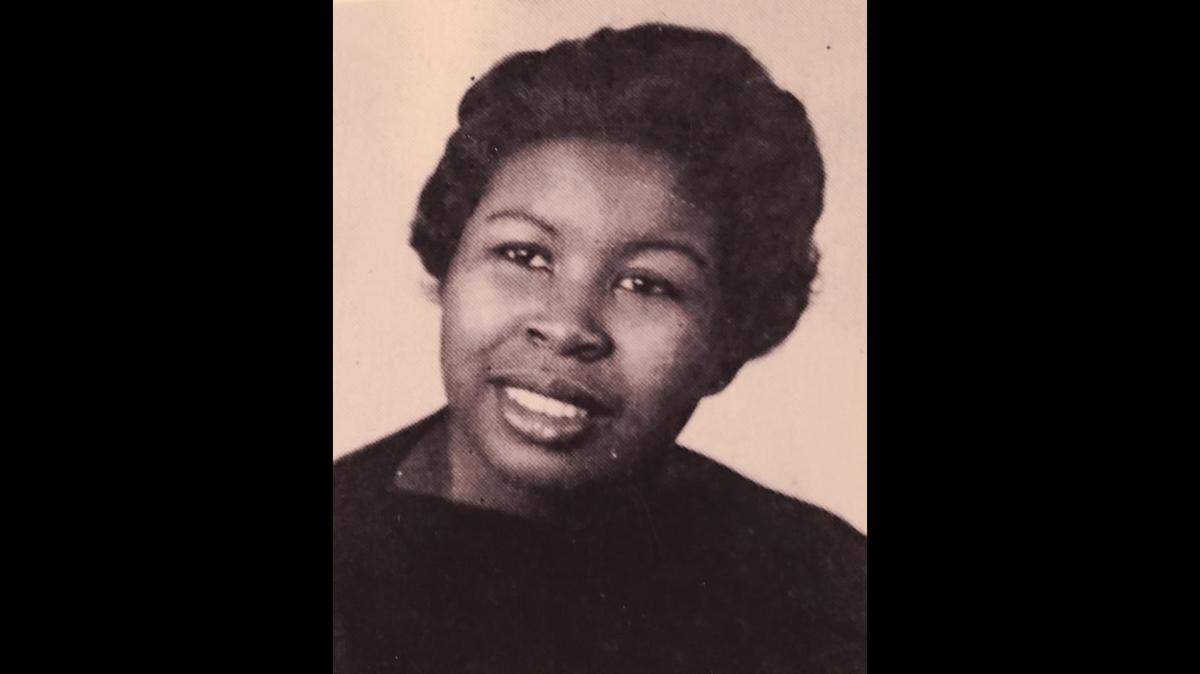
Glover spent more than half of her life as a schoolteacher.
She taught middle-school French and Spanish in Lorain, Ohio; then high-school French, Spanish and ESL in Piscataway, N.J.; and then French, Spanish and “language survey” — a sampling of languages — in Columbus, Ohio. She retired in 1999, but was lured back out of retirement for a couple of years, finally calling it quits for good in 2003 after 42 years of teaching.
In 2004, Glover moved into a home in Belmont with Holloway, who at that point had been working the afternoon-drive shift at WLNK with her radio partner Matt Harris for three years.
Around the same time, Glover managed to pick up the nickname “Wheezy.” There’s occasionally been a misconception that it was because she had actually played Louise (aka “Weezie”) on the old sitcom “The Jeffersons.” In fact, Holloway says, Harris started it because, yes, her name is Louise, but also “because she has asthma, and because Matt Harris is an incredibly inappropriate human being.”
All of this coincided with the heyday of Fox’s “American Idol,” which had a passionate fan in Glover.
And at one point, Holloway and Harris called Glover while they were on the air to ask her about something that had happened on “Idol,” and her commentary was funny enough that they invited her back again. And again. And again.
Soon enough, she was calling in every Wednesday to do a 10-minute appearance that featured her trademark humor and some sort of lesson — “in her own way,” Holloway says, “she was teaching people Black history, and teaching people about relationships, and teaching parents how to work better with their schools, and teaching people how to be better neighbors, and teaching women how to be single better, and married better, and all these things that were important to her. She made it funny and put it on the radio.”
“The World of Wheezy” was born.
‘I wanted to show the joy’
The radio segment lasted for years, with “Wheezy” amassing sponsors, best-of CDs and devoted fans.
But around 2011, when the Charlotte radio market switched to using Arbitron’s Portable People Meters to track listening habits, WLNK decided to move away from talk and focus primarily on music. With that, Glover’s show was forced into retirement.
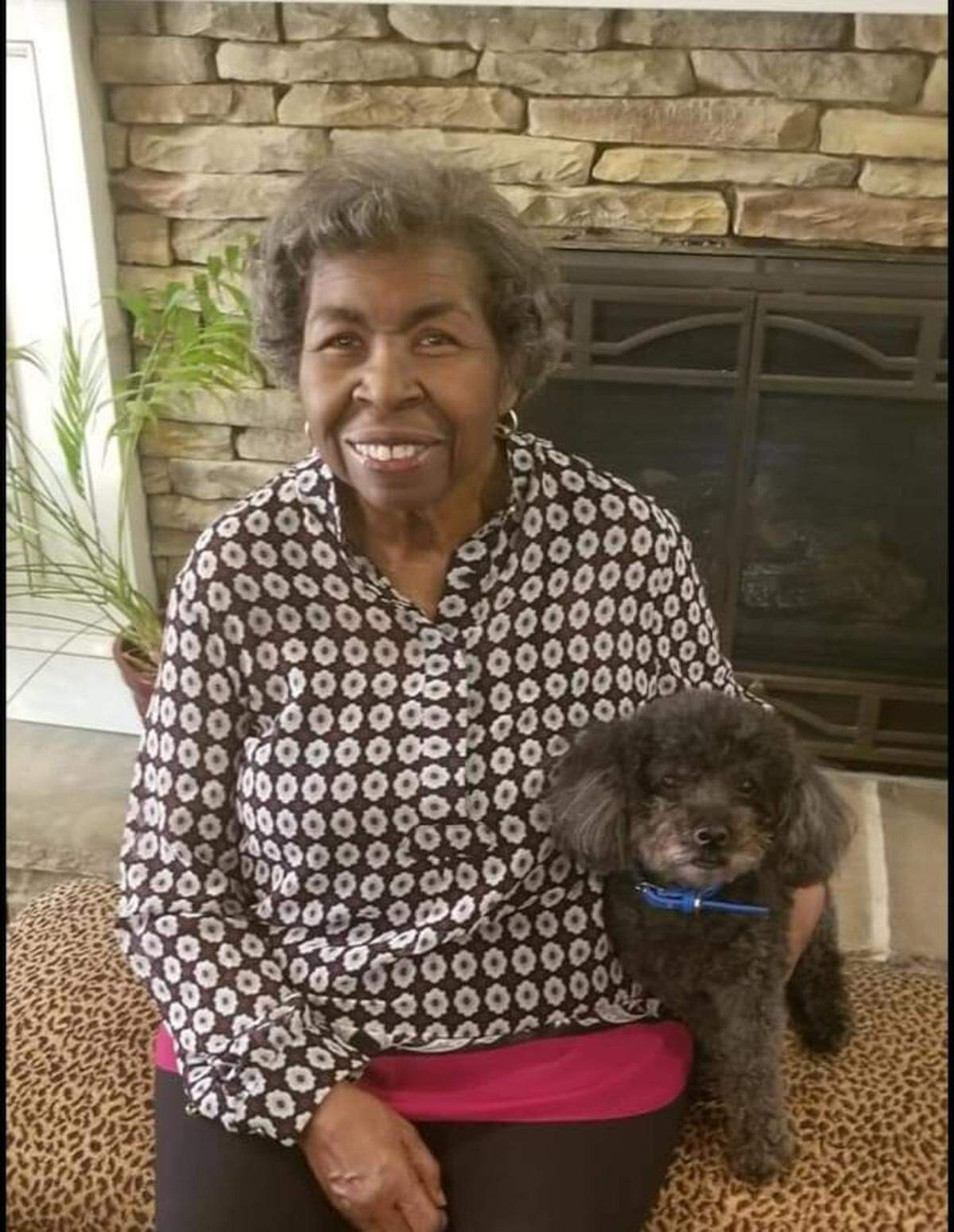
So she focused on simple pleasures, like spending time with her poodle Henri, whom she frequently walked when Belmont Central Elementary School was dismissing students for the day across the street, just because she loved to take in the sound of happy children.
A few years later, in 2015, she was diagnosed with dementia, and soon thereafter Holloway started taking videos of her mother’s behavior — not because she wanted to commemorate her mom’s suffering, but because she wanted to preserve as many of the happy moments as she possibly could, knowing that eventually it would be too late.
“Even though she had dementia, I could still see her sass,” Holloway says. “And I recorded her sass a lot. Especially over the past, I would say, five years I have so many pictures — and even more importantly, I have those videos — where I can hear her voice and I can hear her laughter and I can see her dance. ... It makes it easier to not forget.”
Holloway posted the videos publicly, she says, to show “what dementia looks like, and how to handle it as gracefully as you can.”
“I wanted to be a light, but I knew early on that I didn’t want to just show the hard part. I wanted to show the joy. I wanted to show ... that there could be joy when you met dementia where it is.”
Most people seemed to appreciate the videos of “Wheezy” for the reasons Holloway had hoped. A few, however, would make comments accusing her of exploiting her mom and her illness, a criticism Holloway addresses by saying, simply:
“Maybe I was. But I was damn sure doing it for the right reasons,” she says. “We were gonna be a lesson. ’Cause my mom was a teacher.”
Finding peace in a new home
Moving her mother into a residential care home — after having spent years as the primary caregiver — was a difficult decision for Holloway that also came with some backlash.
People would say to her, “Oh my gosh. Well, I promised my mom I would never do that.”
Her response: “Well, hopefully you can take care of her as well as the facility can.”
And come this past spring, it was simply time. WLNK had been sold and she and Harris were shifted to mornings, meaning very early bedtimes and wake-up calls that would disrupt the mother and daughter’s longstanding routines. The week before the move into the care home, Glover had fallen twice in the house, and her ailing brain wasn’t allowing her to process the act of getting back up.
“I knew,” Holloway says, “that if I wanted Mom to have good care, she couldn’t get it at home. So if I kept her at home, it would have been a really selfish thing for me to do. Because she got better care when I wasn’t the one trying to work full-time and care for her full-time in my home. When it was good, it was good. But when it got to not be good, it would have just been my ego keeping her here.”
If you ask her how she picked a place for her mother, she’ll tell you a beautiful story about praying in her car outside a home she hoped would work out, and walking in to find a little old lady named Donna who recognized her from her radio fame — and who knew her mom was a retired teacher who used to come on her show.
“This woman grabbed my arm,” Holloway recalls, “and she said, ‘If your mom moves in here, I’ll take such good care of her, she’ll never be lonely. And even if it’s 4 o’clock in the morning, if she’s scared or if she’s lonely, I’ll come sit in her room or she can come sit in my room. You don’t have to worry about anything. It’s gonna be OK. I know this is a tough decision for you.”
Holloway was in tears.
Then on the day Holloway took her mom to this care home in May, she texted a mentor to ask what she should say to her mother.
Her mentor texted back: “No words. Your mom knows you love her. You don’t need words.”
“And I thought about it,” Holloway recalls. “It’s like, Why am I coming up with a scenario to make it easy for me to leave? She has dementia, she’s not gonna remember that. You know? So I took her, Donna met her, was like, ‘Oh, Wheezy! I’m so glad you’re here!’ And I showed Mom around, like, ‘Oh, isn’t this place beautiful?’ Then Mom spotted some doughnuts in the kitchen ... and while she was eating her doughnut, I left. I didn’t say goodbye. I just left.”
Holloway had some sleepless nights expecting a call from the staff saying her mom was out of control, wanting to come home. That call never came, even after Henri, Glover’s beloved dog, died in July.
“She loved it there,” Holloway says. “The only time she told me that she wanted to go home was a few days before she died. She said, ‘I want to go home.’ And I said, ‘You can absolutely go home. It’s OK.’”
She pauses, then continues, her voice hitching as she fights back tears: “‘Because I’m gonna be OK. And if you go home, Henri’s gonna be there, and your mom and dad are gonna be there. So it’ll be OK. You’ll always be in my heart. I’ll always be in your heart.’”
‘Let’s take in where we are’
Holloway likes to believe that in the final years of Glover’s life, she was as good a mother to her mom as her mom had been to her.
She believes she found ways to make the best of a difficult situation, succeeded in accentuating the positive, gave her mother the best quality of life that she could possibly give her.
And she says that she learned a hugely important lesson throughout the process.
“One of the biggest problems for me, with dementia care-giving specifically, was my ego,” Holloway says. “My ego was ... out of control. I thought I could do it all. ... But I found something that I simply could not beat down. I couldn’t beat dementia down, I couldn’t beat it back. I tried. There was just no beating it. It was bigger than me.
“I had to learn how to right-size my ego so that I could understand that there was nothing I could do to cure her. I had to understand that her forgetting me wasn’t about me at all. ... Then I had to understand that the same God that was taking care of me was taking care of her. That she had her own God who was watching out for her, and it wasn’t me.”
Holloway says her mom’s last words to her came six days before her death.
They were: Je t’aime, which means “I love you” in French.
She’ll always remember that, and she’ll always remember this:
The memorial service for Louise Glover was held at Stowe Park in Belmont, which sits beside a playground. Sharon Decker, a longtime fixture on the Charlotte business scene and a family friend, got up to lead the prayer. “Right before she did the prayer,” Holloway says, “she was like, ‘Let’s just be silent. Let’s take in where we are. Because we will remember Wheezy in the sound of children playing because she loved children so much and she was a teacher.’ ...
“During that moment ... you could hear the kids doing what kids do — shrieking in joy.
“And it was beautiful.”
This story was originally published August 31, 2021 at 4:24 PM.