
Another $1M set aside for former Charlotte tent city residents. Here’s what’s next.
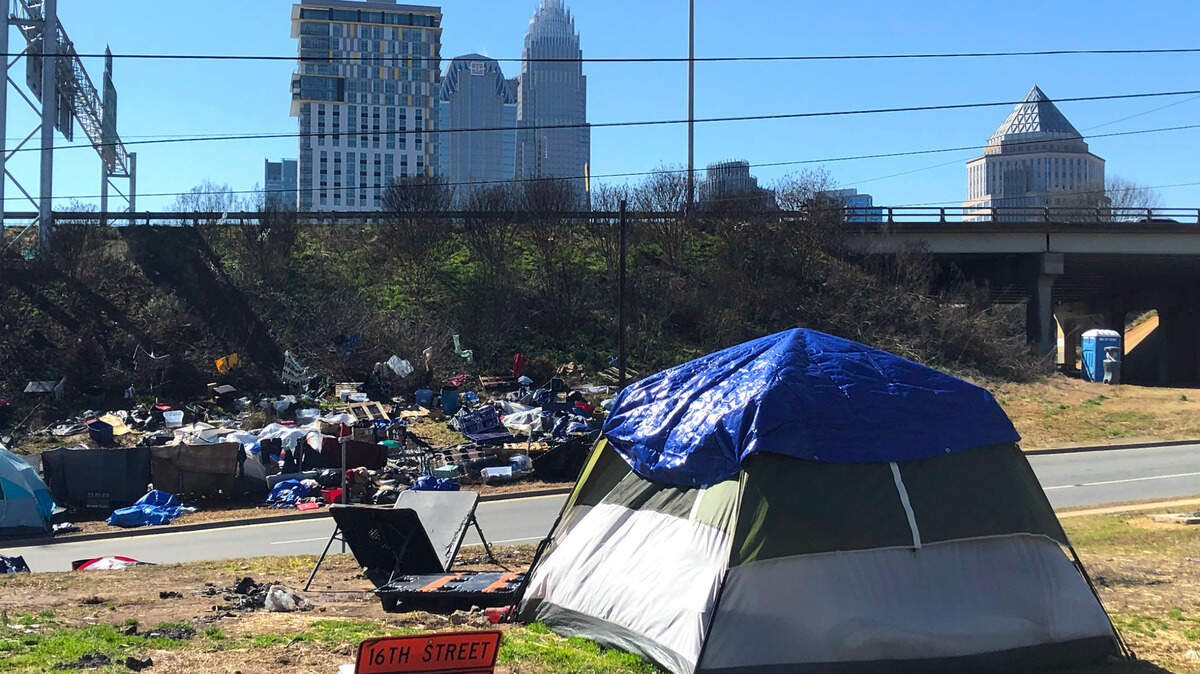
Mecklenburg County will spend another $1 million for housing and support services for residents of the former uptown tent encampment, nearly seven months after the site was cleared.
The money will help people still in the county-funded hotel get into housing, including additional hotel and meal stipends, provide incentives to landlords to accept tenants, and extend access to a case manager, employment services and transitional housing.
More than $635,000 can be reimbursed through FEMA, county officials said. The county’s share will be funded with money it received from the American Rescue Plan.
County officials leased a hotel for residents removed from the site, with plans to operate it through September and a goal to rehouse everyone.
The Board of County Commissioners on Wednesday also approved a related transition plan for those remaining in the hotel to diminish the county’s role in the ongoing rehousing effort. It shifts that work more fully to nonprofits like Roof Above and Block Love Charlotte, which have been involved since the beginning.
Most hotel stipends will go through the end of the year, though stipends for about 20 people will extend to Feb. 28 through Roof Above, including for some people waiting for permanent supportive housing.
This additional funding is another indication of the difficulty to find housing for the former tent city residents.
Of the 215 people who spent some time at the county hotel, 88 are still there, according to county data. Another 51 have returned to unsheltered homelessness and 20 have gone to area shelters. Four have died.
Only 31 have moved into permanent housing and one into temporary housing.
The rest who left the hotels ended up in the county jail or have an unknown location.
The tent encampment on the edge of uptown steadily grew throughout 2020, in part as people drew closer to nearby services from Roof Above and other organizations during the pandemic.
The community swelled, with tents dotting the area near College and 12th streets. Then in February, citing a growing rat infestation and its threat to health and safety, Mecklenburg Public Health Director Gibbie Harris issued an order to clear the camp.
Challenges to rehousing
But a myriad of challenges face those working toward rehousing, including unmet mental health needs, criminal histories, financial barriers and previous evictions. County officials also said a lack of affordable housing and landlords willing to participate has slowed their efforts.
Karen Pelletier, division director of housing, innovation, strategy and alignment for the county’s Community Support Services, acknowledged the significant barriers.
“This entire project has underscored the vast gaps in housing resources for people with complex needs,” she said, including “extensive histories of trauma, severe persistent mental illness managed through substance use, lack of job training and opportunities and continuous involvement with the criminal justice system.”
%20Cropped.jpg)