
‘Truly alarming’: NC road deaths spike again this year. Why?
Following a particularly deadly year on North Carolina’s highways, fatal crashes have continued to rise in 2021.
From Jan. 1 through Aug. 27, the number of fatal crashes reached 1,019, a nearly 17% increase from the same period last year, state Department of Transportation data shows.
“It looks like the number of crashes may be at levels we haven’t seen since the 1970s,” said Arthur Goodwin, a senior research associate with the UNC Highway Safety Research Center. “It’s truly alarming.”
Why the rise in fatal crashes? No one knows for sure. But several factors may have contributed: the continuing stress caused by the pandemic; the power of today’s passenger cars; and a system that allows many extreme speeders to escape stiff consequences.
Speeding continues to play a major role in highway deaths, leading to 258 of this year’s fatal crashes — about 2% more than last year. Speeding has caused about 40 percent more fatal crashes than alcohol so far this year, the data shows.
A recent investigation by the Charlotte Observer and Raleigh News & Observer found that extreme speeding has become rampant in North Carolina. Among the reasons: Enforcement has been spotty, and the state’s overwhelmed courts let most speeders off easy. As a result, many in North Carolina are able to drive at dangerous speeds, avoid punishment and remain behind the wheel.
The number of traffic deaths in North Carolina dropped sharply after 2007, but “unfortunately that has reversed,” said Brian Mayhew, state traffic safety engineer for the DOT.
In 2020, the number of deaths on the state’s highways climbed to more than 1,500 — the highest number in 13 years. And this year is shaping up to be even worse.
“This could be one of the highest years (for traffic deaths) in modern times,” Mayhew said. “That should concern all of us.”
Speeding and reckless driving increased during the pandemic, as some drivers exploited the more open highways, the newspapers’ investigation found. The first and second waves of the pandemic have also left more drivers feeling distracted and distressed, experts say.
“People are still distracted by concerns about the pandemic,” said Mark Ezzell, director of the N.C. Governor’s Highway Safety Program. “They’re still concerned about the economic consequences of that. They’re concerned about their families and friends. I suspect that plays a role in people’s driving behavior.

As was the case last year, failing to buckle up and unsafely changing lanes also contributed to this year’s high death toll, the state data shows. Fatal crashes involving teen drivers and older drivers are also up. One bright note: Deadly wrecks caused by alcohol are down about 22% so far this year.
Most roads around the state are busier now than they were much of last year, leaving drivers fewer opportunities to speed, experts noted.
“But the fatalities are still high,” Goodwin said. “So we need to get a much better handle on what’s happening in order to deal with it.”
Car manufacturers may be partly to blame, some say.
“Cars are now built for speed in a way that may not have been the case 20 years ago,” Ezzell said.
Fatal crashes rise across U.S.
Many other states are grappling with a similar increase in highway deaths. Nationwide, crash fatalities rose 7 percent from 2019 to 2020, according to the National Highway Traffic Safety Administration (NHTSA). The number of deaths increased 4% in South Carolina and 2% in Virginia.
By one measure — the number of highway deaths per capita — North Carolina’s roads are more dangerous than most. In 2019, crashes killed 13 of every 100,000 people in North Carolina, compared to 11 per 100,000 nationally, NHTSA data shows.
Among the fatal crashes involving excessive speed this year:
▪ Lamac De Arthur Nelson, 33, was driving a Dodge Charger at 108 mph on I-77 in Charlotte on Aug. 29 when he rear-ended another car and lost control, according to the Charlotte-Mecklenburg Police Department. Nelson died after his car struck a retaining barrier on the I-85 overpass bridge.
▪ Matthew Lisi, 21, was killed on June 6 after he lost control of his speeding car on Interstate 87 in Wake County. The car, which had been traveling at about 100 mph, went over a median cable and struck a car in the oncoming lane, according to the N.C. Highway Patrol. Three others were injured in the crash.
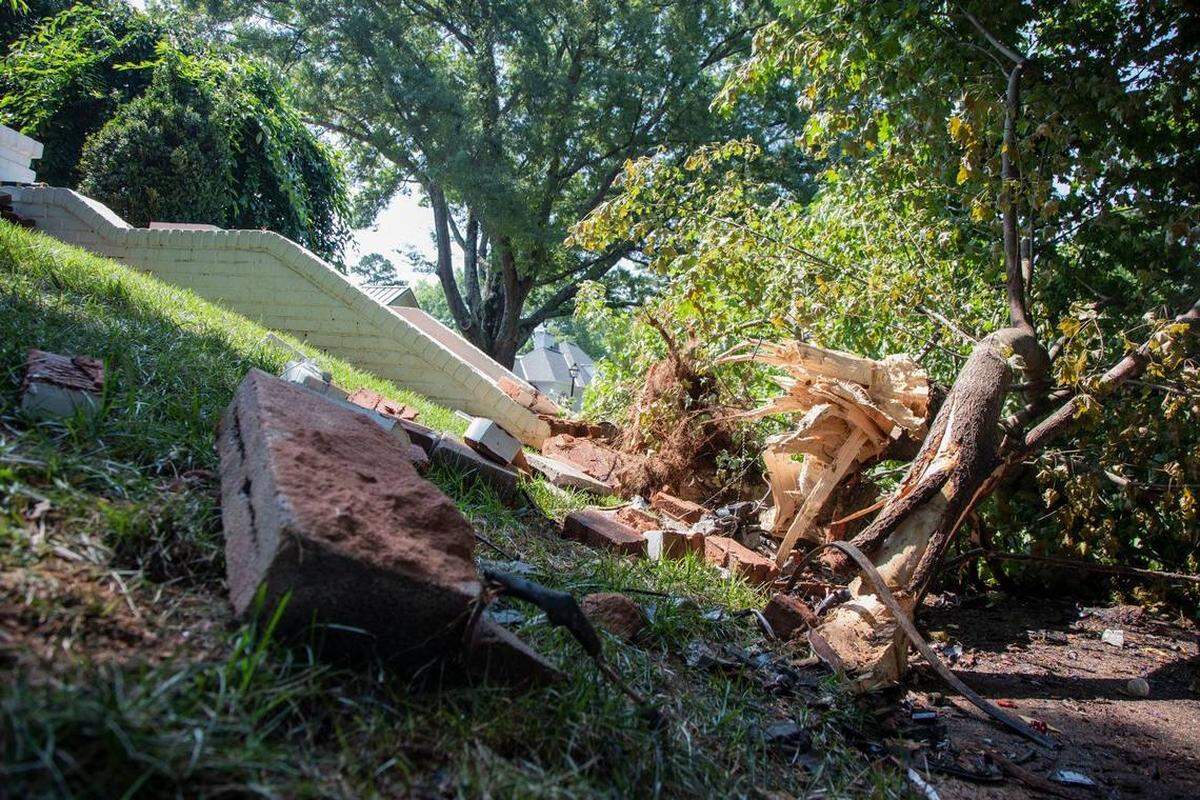
▪ Two young men were killed in Charlotte’s Eastover neighborhood on Aug. 1 when their speeding car plowed into a set of brick steps and then a tree before catching fire, police said. The crash claimed the lives of Robert McElveen Walker, and Henry Huntley Melvin, both 20-year-old graduates of Myers Park High School.
State officials are intensifying their focus on speeding, Ezzell said. In the upcoming fiscal year, his office plans to fund 30 projects around the state that are aimed largely at helping law enforcement agencies deter speeders.
And in last week’s quarterly meeting of the North Carolina Executive Committee for Highway Safety — a group of high-level state and local officials focused on making roads safer — most of the conversation focused on speeding. The officials discussed current efforts to curb speeding, as well as the obstacles that prevent the state from adequately addressing the problem.
There are no simple fixes, experts say. Getting people to slow down will require a multi-pronged approach — changing road designs, enhancing public education efforts and beefing up enforcement, among other things.
“We’re continuing to get data from researchers and folks on the local level to find out a way to address these awful numbers for the last couple of years,” Ezzell said. “...There’s no silver bullet.”
This story was originally published September 9, 2021 at 11:00 AM.
.JPG)