
An urgent, unfinished mission in Charlotte: Veterans help Afghan allies find a new home
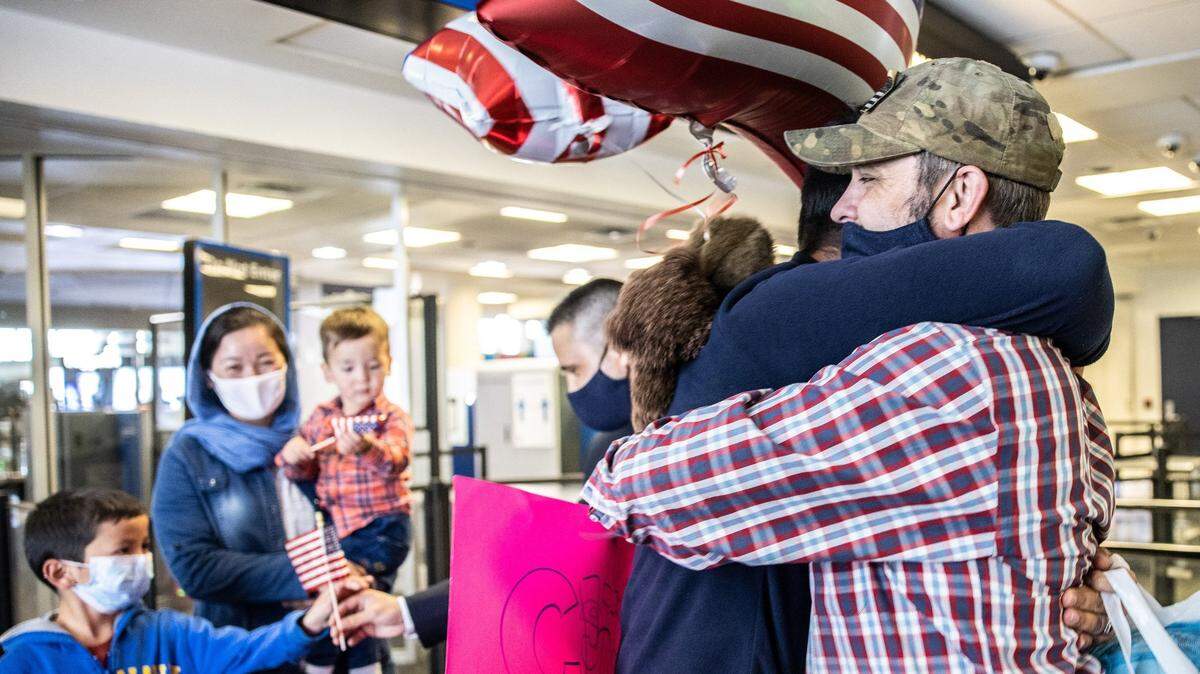
For months now, Sean Kilbane’s inbox has been full of desperate messages.
The Charlotte resident, who deployed twice to Afghanistan with the Army Reserves, was flooded with pleas from people trying to evacuate in August as the U.S. military withdrew and the Taliban overtook the country’s capital and largest city, Kabul.
Messages flew back and forth about the safest routes to the airport. Copies of threats from the Taliban confirmed the country was no longer safe for the senders.
Unable to stomach doing nothing, Kilbane embarked on what he and many others call “The Digital Dunkirk,” an online effort of American veterans, aid workers and others helping Afghans leave the country. But that, he said, is only half of the mission.
There is a moral duty to help Afghans who are targeted for their American ties, said Zia Ghafoori, an Afghan combat interpreter and a cultural adviser who worked with the U.S. military. This underpins the work he and others are doing to get resources to Afghan allies and their families once they arrive in the United States.
“We are going to take care of those guys because they were the ones who fought on the front line with our men and women in uniform,” Ghafoori said.
In 2018 Ghafoori founded the Interpreting Freedom Foundation, a Charlotte-based nonprofit that helps resettle and support linguists, interpreters and translators who served with Americans and their families, including a recent wave of evacuees, after experiencing gaps in services for families like his.
Ghafoori, nicknamed Booyah by his American military colleagues, came to the United States on a Special Immigrant Visa and at first struggled to get settled before arriving in Charlotte. He said he doesn’t want others to get lost in the system.
Ghafoori and Kilbane, a board member for Interpreting Freedom, see it as a continuation of their mission to ensure Afghans who helped the United States military are safe.
“They slept next to us, ate next to us. We fought next to each other. It was nothing to see an interpreter grab an American solider when someone got shot or blown up,” Kilbane said. “They were part of the team. We were encouraged to promise them that we would never leave them behind. That we would never surrender them to death or a life of destitution.
“At the end of the day I made that pact — not the government — with those interpreters we work with,” he said. “If we left them behind or if here we leave them to a life of poverty or homelessness, it’s what we in the veteran community call a moral injury.”
Accomplishing a mission
The effort is two-part: helping people first get out of Afghanistan quickly and then, once they leave U.S. military bases for their destination cities, providing resources and support along with local refugee resettlement agencies.
Among them is Hamid, an interpreter who fled Kabul and this week arrived in Charlotte with his wife and two sons.
But before arriving Tuesday evening, or the flights to Qatar, Germany, and Washington D.C. to wait at a Virginia military base, Hamid was frantically messaging on Facebook with Kilbane more than 7,000 miles away.
The Observer is using only his first name due to safety concerns for relatives still in Afghanistan.
Watching the Taliban takeover unfold brings up ugly, complicated feelings for many veterans, Kilbane said. Calls and texts to the Veteran Crisis Line spiked in August, according to the U.S. Department of Veterans Affairs.
This is a way to channel that frustration and be one small part of the effort.
So he’s thrown himself into this work, which operates out of a small room in the offices at The Independence Fund, another veteran-oriented nonprofit in south Charlotte. There they’ve got piles of hygiene items, baby food and other essentials waiting for families. A whiteboard tracks updates on families expected to arrive in Charlotte.
Interpreting Freedom has a 90-day program that starts when families arrive with a place to stay their first night, and dive into finding employment, getting a driver’s license and hopefully a car.
Success, he said, means interpreters and their families who arrive have their basic needs met, as well as the resources and connections to not just survive but build a life here.
“We need to see actions and results,” he said. “That’s what’s expected of us in the military. We’re not allowed to try. We have to accomplish a mission.”
More information about the Interpreting Freedom Foundation is available at interpretingfreedom.org.
The Veterans Crisis Line can be reached 24/7 by calling 1-800-273-8255 and pressing 1, by texting 838-255 or visiting veteranscrisisline.net.
This story was originally published November 11, 2021 at 6:00 AM.
%20Cropped.jpg)