Police video shows Charlotte man with gun when officers killed him
Video footage from police-worn body cameras show two Charlotte-Mecklenburg Police officers yelling at 33-year-old Derrell Raney to show his hands and drop a gun he was holding just seconds before they shot and killed him.
CMPD released video on Tuesday from the Nov. 5, 2021, shooting, as a result of a court petition for the footage by WSOC. According to additional information also released Tuesday by police, Raney had encountered police officers earlier in the day while experiencing a mental health issue.
It appears Raney was killed almost instantly after being shot by police in the parking lot area of a shopping center on Albemarle Road in east Charlotte. Officers were already at the shopping center of a Food Lion and Walmart when they were called to assist a security guard who said Raney had pointed a gun at him.
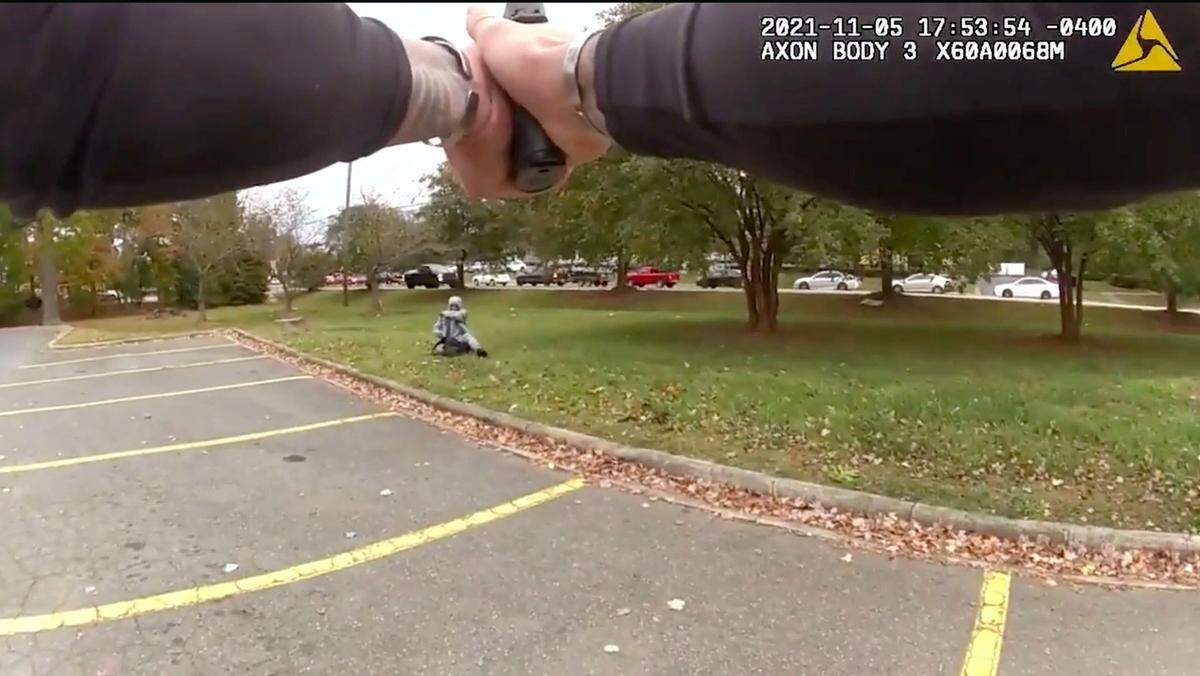
About 30 seconds pass between the officers pulling up to meet the guard standing near Raney and multiple shots being fired, including one that struck Raney’s head, as seen in the video footage released Tuesday.
As police Officer Micah Edmunds exits his patrol car, his body-worn camera shows the unidentified guard telling him that Raney was pointing a gun. Edmunds asks “A real one?,” and the guard says he doesn’t know.
Edmunds and Officer James Longworth — with guns drawn — walk toward Raney, who is sitting in a grassy area beside the parking lot. The officers, according to the video footage, yell at him multiple times to show his hands or “set it down,” referring to a handgun.
About four seconds before firing, one of the officers repeats commands to “drop it” and tells Raney “it’s all good.”
CMPD, in Tuesday’s statement, says Raney had the gun in his backpack, took it out and “partially concealed” it as officers approached before he started to “raise the firearm up in the direction of the officers.”
The North Carolina State Bureau of Investigation says it has completed its investigation into the shooting and delivered its file to the Mecklenburg County District Attorney’s Office for review.
“We have part of the investigation and await the full investigative file,” Meghan McDonald, spokeswoman for the Mecklenburg DA’s office told the Observer.
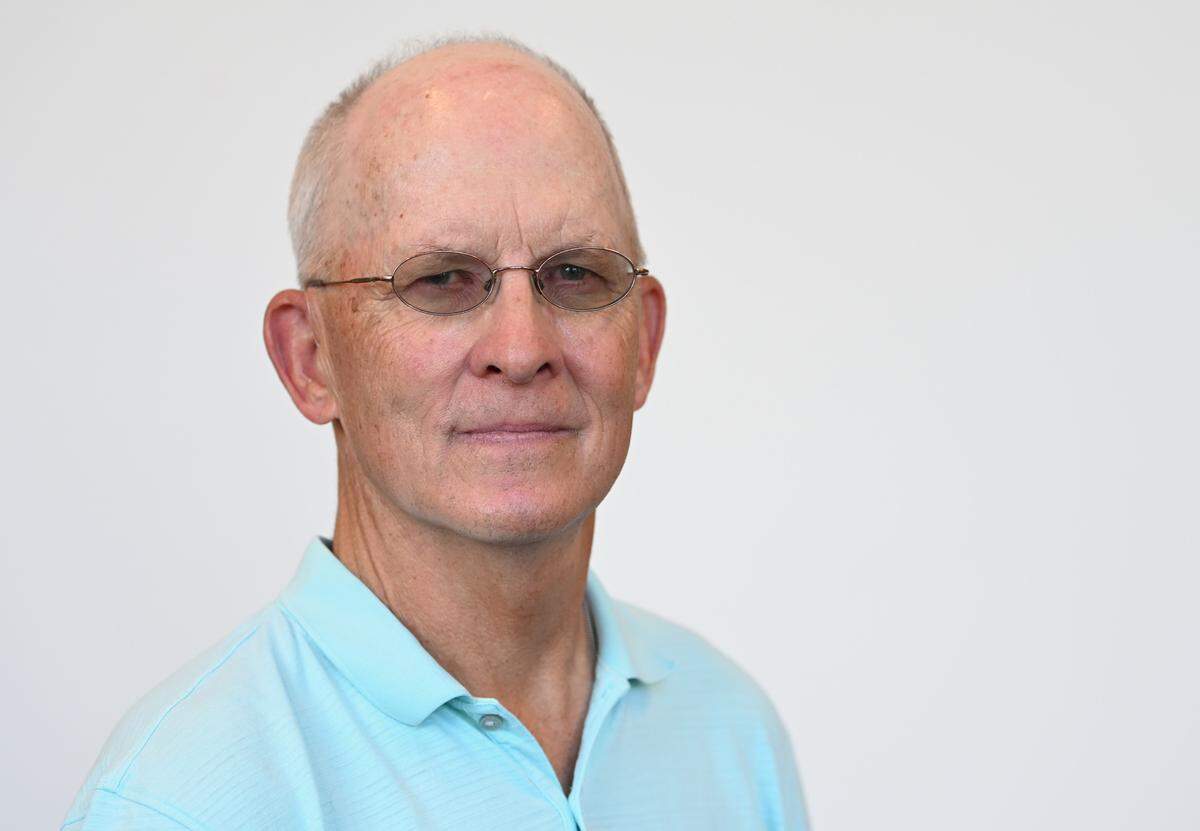
Police shooting expert Phil Stinson told the Observer on Tuesday that based on the video, the officers did not commit a crime.
“I wish there were less lethal methods that could have been utilized. But under the current law, the officers were legally justified in using deadly force,” said Stinson, a criminologist at Bowling Green State University and a former police officer who watched the video at the Observer’s request.
“I’m sure there will be people to second guess what the officers did,” he said. “But police work is ugly, often very violent and tragic, and that’s what the video shows. I’m glad I wasn’t a police officer confronted with those circumstances. It’s a horrible situation.”
Police encounter that morning
Just before 6 that morning, CMPD officers responded to another address, about 3 miles away in the 6700 block of Winding Cedar Trail.
Raney called police after an argument with a family member and “was walking in the woods to get away from them,” police Sgt. Steve Winterhalter says in a prerecorded video. Raney also reported finding two dead bodies there, police said.
Officers searched the area but found no bodies, according to CMPD.
Members of CMPD’s Crisis Intervention Team also responded and urged Raney to be evaluated at a hospital, “but he refused any kind of treatment,” Winterhalter said.
The officers found Raney to be lucid and “did not appear to want to hurt himself or anyone else,” so they had no cause to seek involuntary commitment papers on the family’s behalf, the sergeant said.
Officers reached out to Mr. Raney’s family to notify them of the situation and explain how to seek an involuntary commitment order, according to a police statement.
Because of the nearly 12-hour difference between the events of Nov. 5, Edmunds and Longworth also “had no way to connect” Raney to the earlier call for service, Winterhalter said.
Police shootings nationwide
As is standard procedure anytime a Charlotte-Mecklenburg police officer shoots a person, the department’s internal affairs bureau conducts a separate but parallel investigation to determine if CMPD policies and procedures were followed, according to the department.
The officers are on administrative assignment, which is standard policy whenever an officer discharges a service weapon.
Police nationwide shoot and kill about 1,000 people a year, a number has not changed despite widespread reforms of police use of force training, according to a Washington Post database dating back to 2015.
Mental illness is frequently a factor. According to the Post, 1,324 fatal police shootings between 2015-2020 — about a fourth of the total number — involved a person experiencing a mental health crisis.
Black Americans are killed by police at more than twice the rate of Whites, the Post says.
Arrests and convictions for police shootings are rare.
In Charlotte, one police officer has been charged in connection with an on-duty shooting in the last 40 years.
In 2013, CMPD Officer Randall “Wes” Kerrick was charged with voluntary manslaughter after he shot an unarmed Jonathan Ferrell nine times. Ferrell, a former college football player, had given a coworker a ride home in suburban Charlotte when he crashed his car. He went to a nearby home for help. The resident called the police, and when officers — including Kerrick — arrived, Ferrell ran toward them.
Kerrick’s 2015 trial ended in a hung jury, with eight of the 12 members voting to acquit. The charges were later dropped.
Use of deadly force
Under state and federal law — which reflect the Supreme Court’s ruling in a Charlotte case — police are legally justified in using deadly force if they have an “objectively reasonable” fear of death or serious injury to themselves, fellow officers or the public at large. Supporters say the language accommodates the violent and unpredictable nature of police work. Critics, however, say the legal protections are too broad and used to protect police from even the most questionable killings.
An expert witness in the April trial of Derek Chauvin, for example, testified that the former Minneapolis police officer was justified in kneeling on George Floyd’s neck for more than nine minutes because Floyd posed an imminent threat. Floyd died. Chauvin was convicted of murder.
In three of Charlotte’s most controversial police shootings of the past decade — Keith Lamont Scott in 2016; Ruben Galindo in 2017 and Danquirs Franklin in 2019 — the district attorney’s office declined to bring charges, saying the killings were legally justified, in part, because all three men were armed. Critics still maintain that in each case, police escalated tensions before shooting suspects who did not pose legitimate threats.
The process of viewing body camera footage is trickier in North Carolina than in many other states.
To start with, the footage is not “public record” in the common understanding of the phrase — but it’s not completely private, either.
Body and dashboard-mounted camera footage fall into a legal middle ground, The (Raleigh) News & Observer reported last year, where the courts have the final say on whether police footage gets released to the public.
People who appear in body camera or dashcam videos, or people who are their designated representatives, are allowed to view the videos, but they cannot take a copy with them. Even if a law enforcement agency wanted to release a copy of body camera footage, they couldn’t do it without a judge’s approval.
To gain viewing and publishing access, members of the public and the media must petition the court to authorize the release of a video. That process usually takes a few weeks, but can take months.
This story was originally published February 1, 2022 at 5:04 PM.