
If you can pay rent on time, isn’t that enough? Not always in Charlotte.
After 14 years in her east Charlotte home, the news came as a shock.
Earlier this year, Keesha’s landlord told her he is selling the house to someone looking to flip it — and her family has to be out by early May.
For the first time in more than a decade, she is on the hunt for a new home, and a landlord who will accept the federal Housing Choice voucher Keesha has used for years to help pay her rent.
What she’s found so far is rejection, a steady stream of “automatic nos” from landlords unwilling to even consider her application because of how she pays her rent, she said.
Keesha asked The Charlotte Observer to use only her first name because she’s fearful speaking publicly will further hinder her ongoing housing search.
“I’ve never had this problem before. No one is taking it,” she said. “In Charlotte, man, it’s hard. I’m scared I’m about to be homeless.”
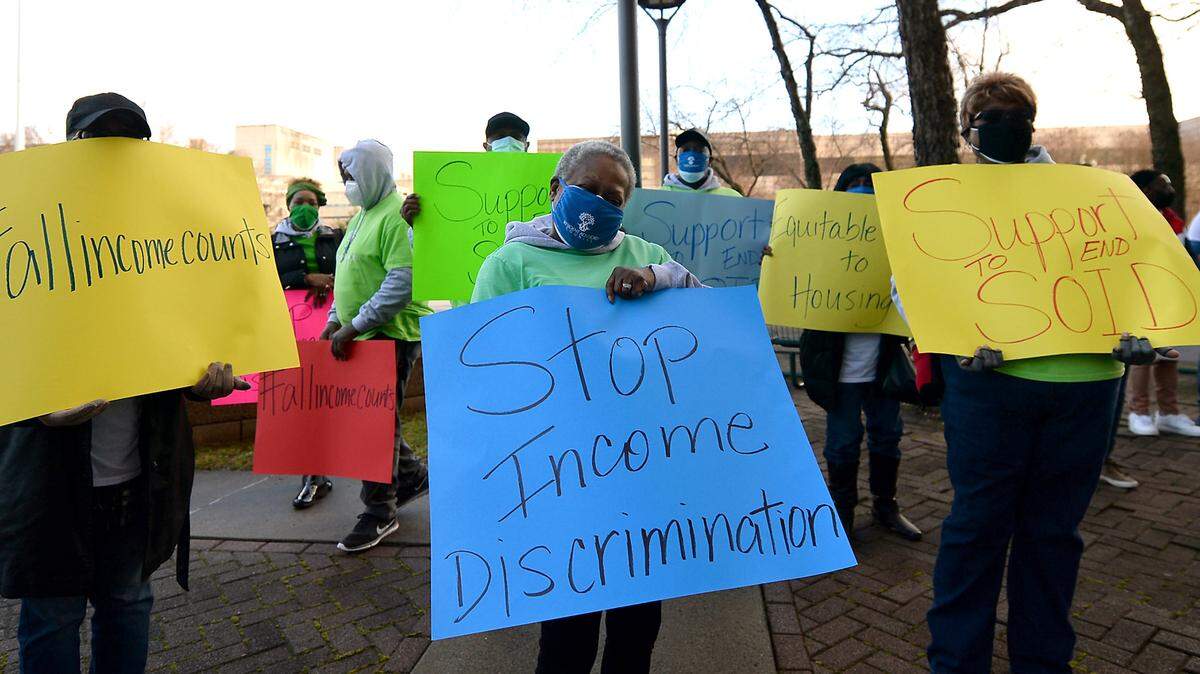
Housing advocates say landlords who screen out tenants with vouchers are committing legal discrimination because there are no laws in North Carolina preventing it. Efforts have stalled over the years to add protections against source of income discrimination — rejecting tenants because of how they pay rent — to Charlotte’s fair housing ordinance.
This spring, Charlotte City Council members will consider another approach, with a new set of recommendations from an advisory committee looking to reduce source of income discrimination. It would build on changes that Inlivian, Charlotte’s housing authority, has already made to increase landlord participation, including sign-on bonuses and paying for damages above normal wear and tear.
Housing Choice vouchers
Keesha’s experience is increasingly common in Charlotte, where 1 in 5 renters who get a Housing Choice voucher have to return it after they failed to secure housing within the search period. Under the federal housing program, commonly known as Section 8, renters in Charlotte can wait up to eight years before it’s their turn for a voucher and then have 180 days to find housing.
Inlivian issues around 5,000 Housing Choice vouchers, which pay the difference between what a low-income tenant can afford and the total rent. Renters will generally pay around 30% of their income for rent and the voucher covers the rest.
But Charlotte is experiencing something of a perfect storm to hinder these renters.
The city is growing, drawing more prospective tenants to a market with a dire shortage of affordable housing, so landlords can be increasingly selective. Rents are rising across the metro area — around 20% year-over-year in some parts of the city — leaving fewer places priced at what the voucher can help cover.
And, there is pervasive stigma and misinformation about vouchers and the people who use them.
That’s led to a push in recent years for Charlotte to add source of income discrimination protections to its fair housing ordinance, which already prohibits discrimination based on race, color, national origin, religion, sex, family status and disability.
Such anti-discrimination rules would protect not only renters in the Housing Choice program, the area’s largest voucher program, but also veterans who have housing vouchers, people whose income includes disability payments, and those using other subsidies through nonprofits.
But city leaders have questioned their legal authority to add this protection to Charlotte’s fair housing ordinance, with some saying they worry state lawmakers in Raleigh will push back.
Instead, an advisory group convened by Mayor Vi Lyles last year has been studying how to address the problem of widespread rejection by landlords.
The City Council is expected to consider recommendations from the group, led by Kim Graham, executive director for the Greater Charlotte Apartment Association, and Mark Ethridge of Ascent Housing, which has purchased several older apartment buildings to preserve them as affordable housing with help from the city’s Housing Trust Fund and a private fund launched for this purpose.
Three recommendations recently released by the committee focus on making voucher acceptance more attractive to landlords, but stop short of giving renters broad anti-discrimination protection.
Public funds rule
Between the city’s Housing Trust Fund and other public spending, Charlotte invests millions every year in affordable housing, usually by giving developers or companies money to build it or preserve it.
The advisory group recommends the city and county both adopt rules requiring developers that get public funds for projects that include rental housing to equally consider applicants who use rental vouchers. That would include units rented at market-rate and those that are income-restricted.
This recommendation aims to increase protections where local government has leverage. It would apply to public investments such as tax increment grants, like the $60 million approved for Atrium Health’s innovation district plan.
Developers using money from the Housing Trust Fund for affordable apartments are already required to accept vouchers. The new policy would cover developments seeking other public funds, including federal HOME and community development block grants.
Fulton Meachem, Inlivian’s CEO, said he wants to see the definition of publicly-funded projects be as broad as possible to maximize the number of covered projects.
“If we’re going to use any county and city funding that creates housing in any way,” he said, it’s important “to make sure to have these protections associated.”
This proposal would not change the rules for landlords who already own existing rental housing in Charlotte. Methods to track compliance and penalize developers that violate the policy are still in the works.
City staff told the Great Neighborhoods Committee this week that tenants who feel they’ve been discriminated against when applying to an apartment covered by the policy could call the 311 line or the Community Relations Committee, which handles other housing discrimination complaints.
Housing search help
The second recommendation calls for more housing navigators — employees who would directly help renters find landlords who take vouchers. And landlords would have more to gain from financial incentives or bonuses, if the recommendation is adopted.
Inlivian has already made several changes to increase landlord participation. Those include sign-on bonuses for accepting a tenant with a voucher, payments to cover the time an apartment is vacant during inspections, and money for repairs that exceed normal wear and tear.
The organization also previously increased time between inspections from one year to two and extended search time for tenants from 120 to 180 days.
“Landlords are being more selective than ever in trying to lease their properties,” Ethridge said of Charlotte’s market. “I think we can compound some of the successes Inlivian has had.”
Graham said the committee supports increasing those incentives and services with funding from local government, the private sector and philanthropic donations.
Property tax rebate
This recommendation would allow developers of new housing to get property tax rebates if they set aside units for vouchers. In “high opportunity” areas — close to jobs, public transit and other services — giving developers a tax rebate could increase the number of tenants with vouchers who can afford some of Charlotte’s more expensive neighborhoods, committee leaders said.
Graham concedes this will be the most aspirational recommendation to enact because of legal hurdles. Council members would likely have to pass legislation to do so, and city staff this week called it “challenging if not impossible.”
Will it change minds?
The source of income committee did not substantially tackle the stigma or negative perception of people who have a voucher, which Inlivian and other supporters of passing full source of income protections say is a considerable factor in tenants’ struggle to find housing.
A survey of Charlotte landlords in 2020 outlined some reasons for their opposition to taking vouchers.
Though it represented a very small sample size (184 respondents of more than 5,000 asked to participate), some who did respond said they saw additional requirements for the Housing Choice program, including inspections, as a burden. They also said requiring property owners to consider tenants with vouchers would push landlords to exit the business and exacerbate the housing crisis.
Others said previous bad experiences with the program turned them off.
However, full source of income protections would not require landlords to automatically take an applicant with a voucher or lower asking rents, but rather give tenants equal consideration if they meet other criteria, like credit checks and a voucher that covers the rent.
With years-long waitlist and significantly fewer vouchers available than are needed, renters who get them work hard to be good tenants and stay housed, Inlivian officials have said. Applicants for a Housing Choice vouchers in Charlotte must be working unless they are elderly or disabled and have to pass a background check.
Keesha, the Charlotte renter searching for a new home, said perceptions of people using a voucher shouldn’t be damaged by a few people.
“Everybody’s not like that,” she said. It’s a stereotype; if one person messes it up, no one gets (a chance).”
This story was originally published March 31, 2022 at 12:01 PM.
%20Cropped.jpg)