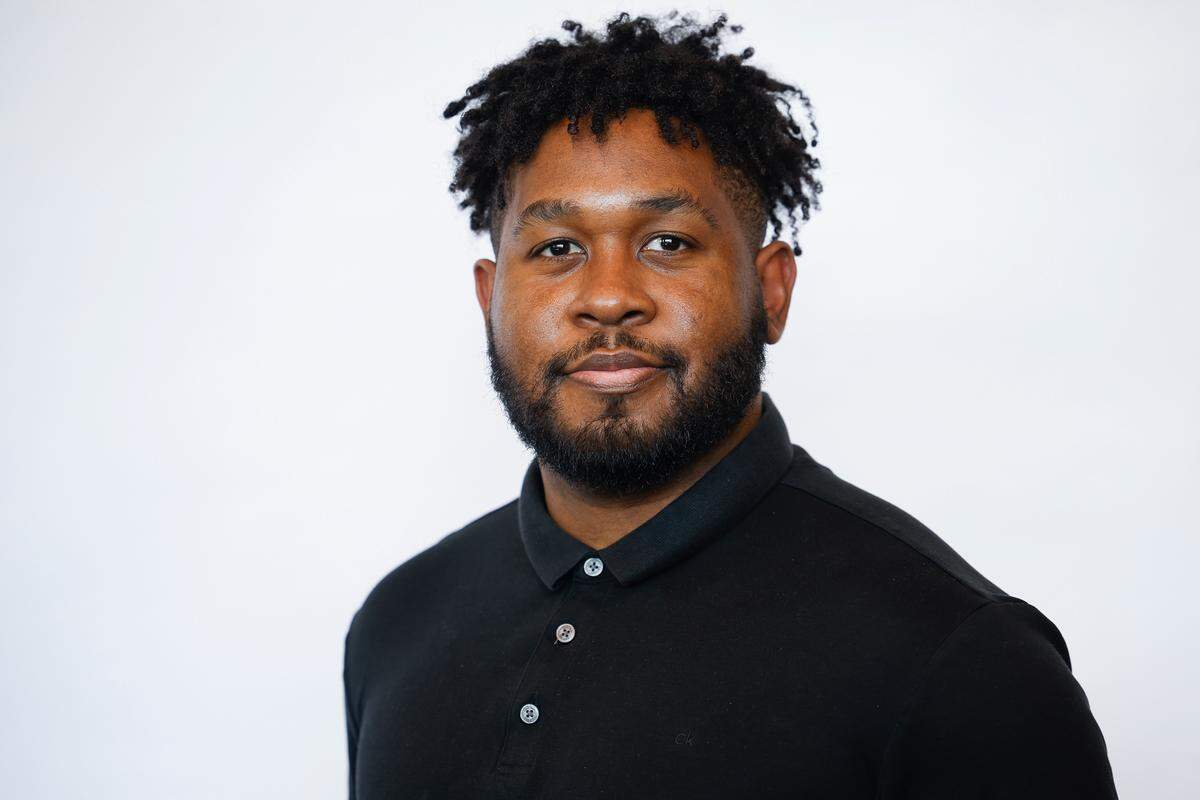
Their lives — so much spent behind bars — have new purpose serving others in Charlotte
Orrin Jackson and Amir Shabazz were meant to die in a federal penitentiary for crimes they committed in their early 20s.
Inside FCI Petersburg in Hopewell, Virginia, the two Charlotte men were there long enough that they became essentially life coaches to other inmates — who Jackson remembers were getting “younger and younger” by the day.
“We had done so much time, we became the OGs,” he said. “We were the ones people were looking to.”
Both men were released from prison last year and are now working with a local nonprofit to help mentor others, especially young Black men.
Jackson, now 53, was just 20 when he was sentenced to 90 years and four months in prison, guilty of firearm offenses and having crack cocaine.
“I was scheduled to die in prison,” Jackson said.
Shabazz, 51, was also 20 years old when he went into prison, convicted of drug and weapon offenses, among other charges. Both men said their sentences were unjust, exaggerated and fueled by racial bias.
All around them, they saw men going through the same — except many were serving much shorter sentences.
“They were going back home eventually. We wanted to make sure they were going home with a different mindset,” Jackson said. “We taught them how to be a positive influence in the community, (as) opposed to a destructive one.”
Their passion to mentor younger inmates led them to team up with Jaraun “Gemini” Boyd, who was incarcerated with them. Boyd, now 47, was sentenced to 50 years in prison for drugs and weapons charges.
Boyd, Shabazz and Jackson began teaching life classes to the younger prisoners. Instead of spending 50 years in prison, Boyd was released after 20. Boyd got out of prison in 2016, in part thanks to the Fair Sentencing Act of 2010. The bill, signed by President Barack Obama, reduced the statutory penalties for crack cocaine offenses.
Boyd would go on to start Charlotte-based Project B.O.L.T., committed to helping people after being incarcerated.
“There was a problem laying right in front of my eyes, so there had to be a solution,” Boyd told The Charlotte Observer. “I told myself, ‘Gemini you got to make a difference, and when you go home, something has to change.’”
And when more federal prison reform laws took effect several years ago, Jackson and Shabazz — who was serving an even longer sentence of 105 years — saw a second chance for life.
Project B.O.L.T.
Boyd started Project B.O.L.T. when he was still in prison but expanded his work soon after his release at age 42. He walked out with a different mentality than he did when he went in at 22.
Boyd said he looked up local nonprofits that helped the formerly incarcerated, but he realized that none of them could bring the real-life experience he had.
“I’m coming from where these individuals are targeted,” he said. “I’m coming from where these individuals feel as though they don’t have no hope or anything.”
The B.O.L.T. acronym stands for “Building Outstanding Lives Together.”
Creating a community
One of the nonprofit’s goals is to help the formerly incarcerated, but another is addressing poverty in neighborhoods that have been under-served, Boyd said.
“Poverty was the key,” he said. “It is the centerpiece of why there’s mass incarcerations, poor education, homelessness, gentrification and all these different things that keep Black and brown individuals on the back burner.”
Project B.O.L.T. received a $10,000 donation from the Charlotte Hornets and Blue Cross NC in 2020 to help with the nonprofit’s program such as employee readiness, educational training, housing referrals, transportation assistance and substance abuse counseling.
In the future, Project B.O.L.T. will look to partner with other nonprofits and organizations to create a community that people can tap into for resources they might not have been privy to otherwise.
“There has to be trust, hope and values in the community,” he said. “If you have those three things, you can transform a community.”
An incoming resource will be the nonprofit’s new “Safe Space” building at 1527 West Blvd. The building will provide laptop and internet access, life skills classes and be a space that’ll help the formerly incarcerated and youth get jobs, Boyd said.
“It’s people walking around out here with a criminal record and it’s hard for them to get jobs,” he said. “Our youth and our young adults really also don’t have nowhere to go also — that’s why you see them just standing around. They don’t have nothing and can’t relate to anything.”
The Safe Space isn’t finished, but Boyd said he’s is working to complete it in the coming months so it can be up and running for the community.
“You got to transform the mind so you can touch the heart,” he said. “We can shift the narrative and change the way people think about the youth, especially young Black males, in our city. We bring hope to the community.”
‘Overwhelmed with emotions’
The First Step Act in 2018 opened the doors for Shabazz and Jackson’s releases. The bill, signed into law by President Donald Trump, focuses on reforming federal prisons and sentencing laws to reduce recidivism and lower the federal inmate population.
Shabazz and Jackson were both released in June 2021. Now, the two men are focused on reentering society.
“It’s been challenging at times, but I wouldn’t trade it for the world,” Jackson said. “I’d rather be homeless on the street then spend a day incarcerated.”
Jackson said some days he’d just be driving around and tears begin to drip down his face because he understands that he could’ve died in a prison cell.
“I remember I went to Walmart during Christmas, and Christmas music was blasting in the loud speakers. I started crying,” Jackson said. “I hope people didn’t think I was out of my mind, but it was just a surreal moment to realize, ‘I’m here.’”
When Shabazz learned he was getting out, he got “overwhelmed with emotions.”
“At that moment, you know you’re going home and your family is waiting outside. It is surreal,” Shabazz said.
The two men have rejoined Boyd in helping mentor the formerly incarcerated and youth, but now it’s in classrooms they’ve built.
“He got the boots on the ground,” Shabazz said. “He helped us to get here, as well. Being here is a feeling I can’t even describe.”
This story was originally published April 17, 2022 at 6:00 AM.