What does ‘Auld Lang Syne’ actually mean? To me, the New Year’s Eve song means plenty
“Should auld acquaintance be forgot/And never brought to mind?/Should auld acquaintance be forgot/And auld lang syne.”
Who among us has not sung those words on New Year’s Eve? At various ages and levels of sobriety and locales, it’s a staple of the moment when the clock strikes midnight and for a brief moment, the window of hope feels wide open.
And who among us has not turned to someone else at that moment and questioned what the words are again and what they actually mean?
For me, this is a shining event in a holiday I am otherwise neutral on. To explain the long, winding tale of “Auld Lang Syne” encompasses some of my favorite things: old poetry, European history and explaining things in great detail.
Auld Lang Syne origin
Put simply, “Auld Lang Syne” is a poem put to paper by the Scottish writer Robert Burns in the 1780s that, set to music, became a popular recitation on New Year’s (a holiday known as Hogmanay in Burns’ native country) in Scotland before spreading through Europe and much of the rest of the world.
“The following song, an old song, of the olden times, and which has never been in print, nor even in manuscript until I took it down from an old man,” Burns wrote of the verses.
Its title and central phrase is an idiom; therefore, a direct translation makes little sense. But “Auld Lang Syne” is in Scots, Burns’ country explains, basically akin to the English expression “For old time’s sake.”
“We’ll tak a cup o’ kindness yet/For auld lang syne,” as the song’s chorus says, is a call to raise a glass to fond memories and the people who make them special.
But taken in its entirety — not just the first few lines we try to recall at 11:59 p.m. on Dec. 31 — the poem is anything but saccharine.
“We two have run about the hills/And pulled the daisies fine/But we’ve wandered manys the weary foot/Since long, long ago … We two have paddled in the stream/From morning sun till dine/ But seas between us broad have roared/Since long, long ago,” Burns writes.
People drift, he’s telling us, and we do well to not try to live under illusions otherwise, even as we look back.
“I think ‘Auld Lang Syne’ is popular in Hollywood not just because it’s in the public domain and therefore cheap, but also because it’s the rare song that is genuinely wistful — it acknowledges human longing without romanticizing it, and it captures how each new year is a product of all the old ones,” author John Green writes in his collection “The Anthropocene Reviewed: Essays on a Human-centered Planet.”
To an extent, you can’t really truly feel what Burns meant until you’ve experienced grief — grief for a loss that’s eternally nonsensical and permanent. At least that’s my experience.
Tune has been part of New Year’s Eve tradition
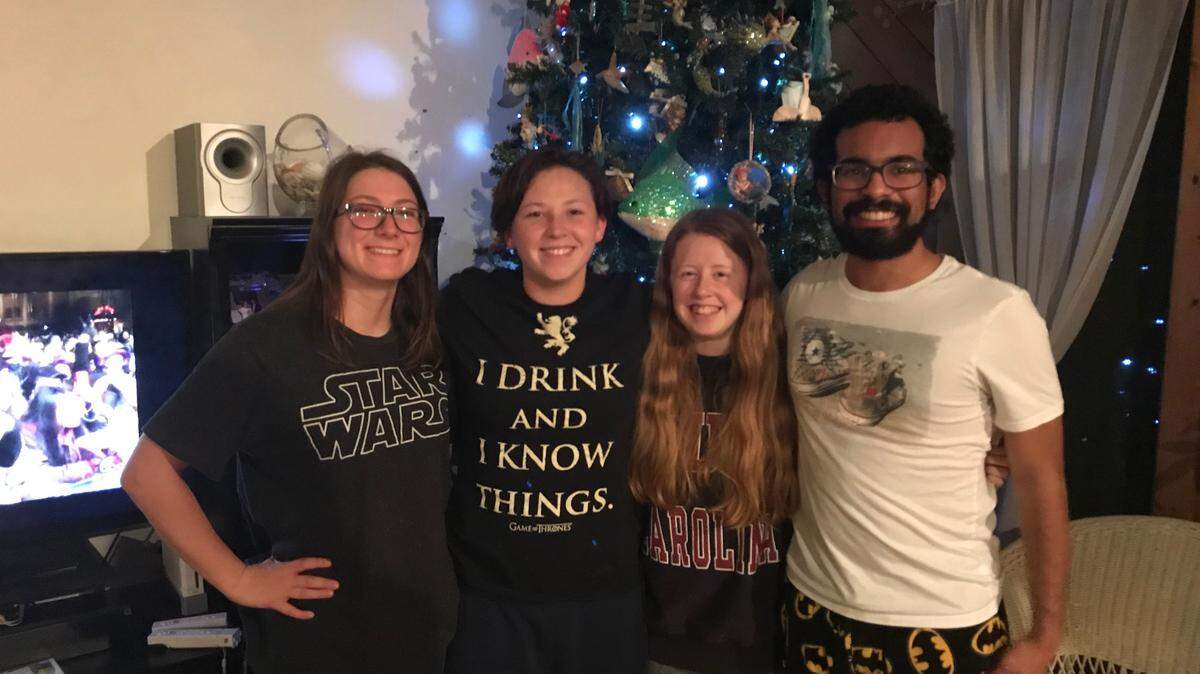
As I said, I am not a New Year’s Eve gal. But for years in our late teens and early 20s, my dearest friends and I would gather that night for a reunion and board games and champagne. It’s a tradition born of that brief era — also known as college winter break — when you’re thrust out of adulthood and back into childhood.
It also was born of burying one of our own just months after we all first left the nest in 2015, a gentle soul so generous you could, unfortunately, so easily miss the pain they excelled in hiding.
As our group raised our glasses that year — still broken and confused and just plain sad but grateful to be in the same room and alive at the same time — I felt I could have written the words “And surely you’ll buy your pint-jug/And surely I’ll buy mine/And we’ll take a cup of kindness yet/For long, long ago.”
Things end and lives end and that is just plain sad but memories are real and are mutual, binding experiences and that is beautiful. That duality is as essential to human life as oxygen and water.
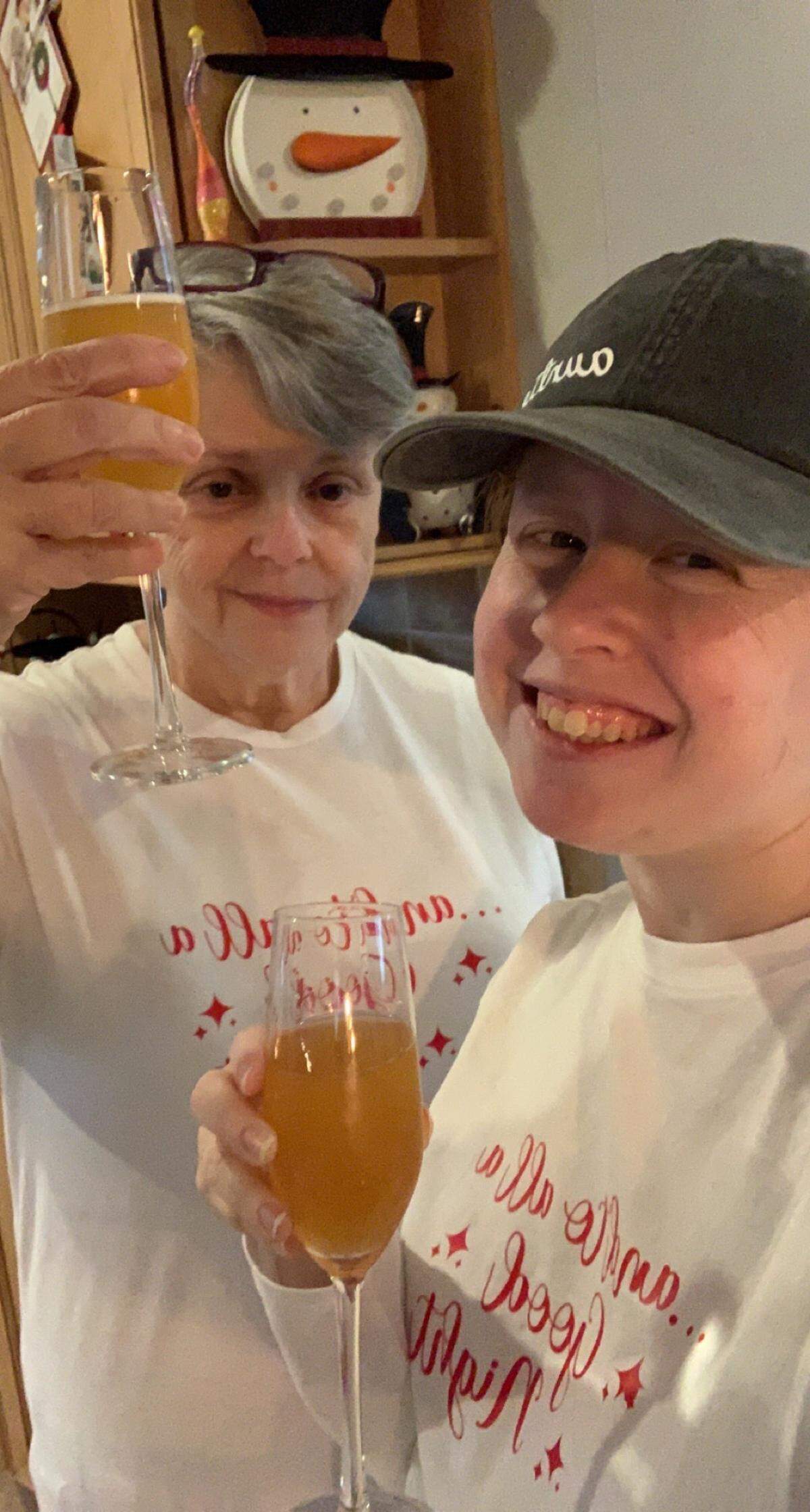
It will once again be especially on my mind as 2022 ends, the year we lost my mom.
We were together last New Year’s Eve to welcome what was unbeknownst to us her last year on Earth. This New Year’s Eve will mark the beginning of our first full year without her. I’ve learned in the months since her death I can’t really predict how each milestone will feel, so I really can’t say what the day will be like.
I like to think that once again those Scots words will provide at least some level of comfort if only the comfort that comes with the familiarity of tradition.
I’m excited to grow in the new year and meet new people and try new things.
But I also don’t want a year to go by without smiling when I hear “Somewhere Over the Rainbow” playing in a random store — a sign that my most caring friend is still looking out for me by sharing his favorite song. I don’t want to stop hearing my mom’s calm voice in my head when I have a kitchen disaster.
I don’t ever want to stop remembering no matter how broad the seas between us have roared.
For Auld Lang Syne.
This story was originally published December 31, 2022 at 6:00 AM.