A task force wanted to help a financially ailing HBCU in North Carolina. It was disbanded.
READ MORE
Barber-Scotia College battles for its existence
The Concord-based HBCU fights to regain its accreditation, amid declining enrollment and financial troubles.
Expand All
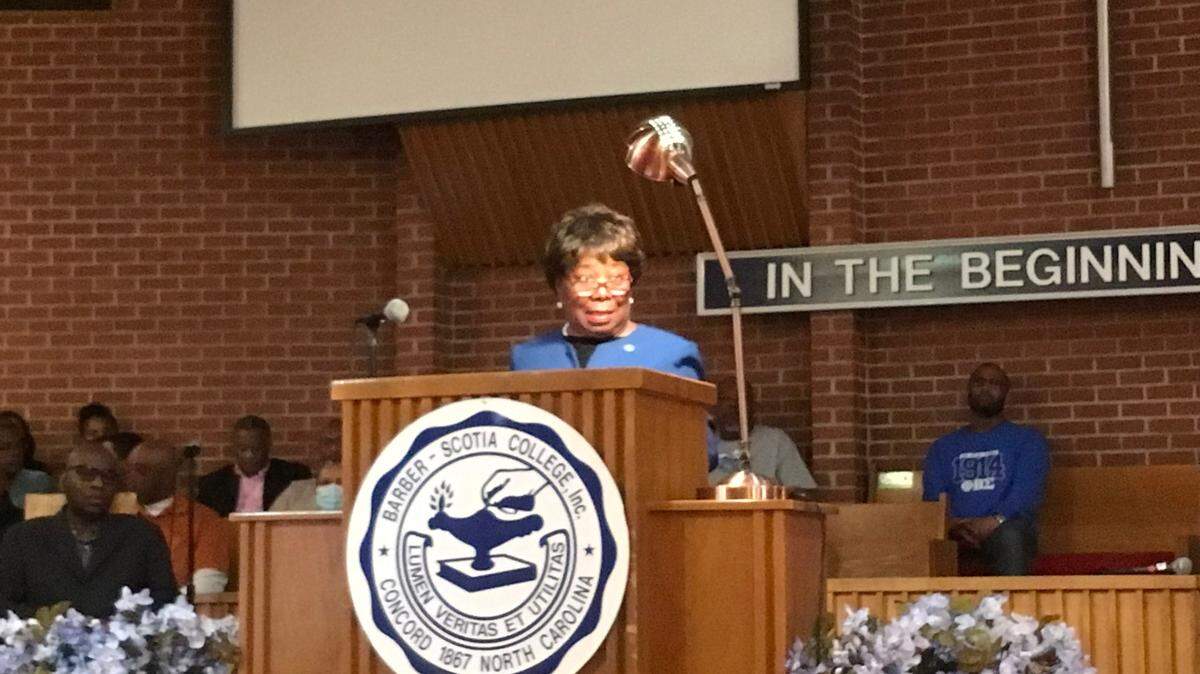
‘Break our silence’: A North Carolina HBCU is questioning its city’s intentions
With 4 students enrolled, this North Carolina HBCU bets on its 5-year comeback plan
Already unaccredited, this North Carolina HBCU faces new problem with county tax office.
A task force wanted to help a financially ailing HBCU in North Carolina. It was disbanded.
The Concord City Council disbanded a task force meant to help a financially struggling historic Black college, citing a lack of transparency, cooperation and continued obstruction from school leadership.
Concord officials started the effort six years ago to create a revitalization plan for Barber-Scotia College, located in downtown Concord. The task force was established to partner with the school.
In the past several years, the 155-year-old college has faced staggering declining enrollment amid financial challenges and other hardships since losing its accreditation in 2004.
“Despite our efforts and financial commitment, Barber-Scotia College officials refuse to work in partnership with us, and have continuously obstructed the work of the Task Force,” Lindsay Manson, a spokesperson for the City of Concord, said in a news release Thursday. “We no longer believe it is possible for the Task Force to work effectively in pursuit of a revitalized campus.”
Members of Barber-Scotia’s Board of Trustees did not immediately respond to requests for comment Thursday. Trustee chairwoman Roberta Pinckney previously told The Charlotte Observer that leadership acknowledges the school’s financial challenges, but remains hopeful “this school could rise again.”
This latest blow is among a few the beleaguered HBCU has faced in recent months. Barber-Scotia remains open to students to receive four-year degrees. At present, four students attend the college.
City council member JC McKenzie co-chaired the task force. The city offered funds for an engineering and construction study on the campus building, Manson said.
The task force also started a community survey in 2021 to generate new ideas for the campus.
“Unfortunately, all of them were met with resistance by college officials, and often times met with no response at all,” Manson said.
Recent Challenges
Last year, Barber-Scotia announced its five-year plan seeking to have its accreditation restored.
Goals from the plan included to strengthen and evaluate current programs through internal academic reviews and increase enrollment to roughly 20 students per program.
Other objectives from the five-year plan are create a student retention plan, to build operational capacity, focus on leadership and financial strength by seeking new donors and creating a facilities plan.
Amid the execution of this plan, in February, school officials learned they could face a new bill. In a Feb. 16 letter to school leadership, Cabarrus County tax administrator David Thrift denied tax exemption for several parcels of the college’s land for not meeting statutory requirements.
School officials could face an estimated $127,000 property tax bill based on last year’s tax rate, according to county tax records. The college has until March 20 to appeal the decision.
Manson said since the college lost its accreditation, six of the 15 buildings have been deemed uninhabitable. Another three were hit with violations. She said city officials remain hopeful the legacy of Barber-Scotia will not whither despite the dissolution of the task force.
“For any task force to be successful it takes a shared commitment and true collaboration,” she said.
This is a developing story. Check back at charlotteobserver.com for updates.
This story was originally published March 16, 2023 at 1:49 PM.