Big changes in Charlotte’s Black neighborhoods begs question: Who’s it for?
READ MORE
Gentrification in Charlotte
Gentrification has long taken place in historic Black Charlotte neighborhoods. One piece of that is through demolishing old homes. But residents say they now feel like outsiders.
Expand All
A recent social media post posed a loaded question: “What’s the first sign a neighborhood is on its way to being gentrified, in your mind?”
The responses ranged from inconsequential to considerable: Memes of white people in traditionally Black neighborhoods jogging or pushing baby strollers; photos of “gentrification gray” paint on new townhomes; or older homes being sold, torn down and replaced.
Multiple signs of change can suggest gentrification is happening in a community, but that may mean different things to different people.
For Thomas Stevenson, who owns a home in Hidden Valley, the decision to sell his mother’s house in Biddleville Heights, the historically Black neighborhood off Beatties Ford Road, really came down to economics.
His mother, longtime community activist Sarah Stevenson, 97, lived on St. Paul’s Street, but it became increasingly clear she could no longer live there alone. On top of that, the house needed hefty repairs. It lacked homeowner’s insurance. Property taxes had crept up. A tree right behind the roof of the two-story home leaned in a way that could be disastrous if it toppled over – a risk he couldn’t take.
“We tried to keep her in that house, as she got old, for as long as we could, but it just didn’t work out,” says Stevenson, a 77-year-old retiree who pays taxes on the Hidden Valley home he shares with his wife of 55 years. “(Her) house was a liability to me.”
With no other family who could afford to help, Stevenson moved his mother into a nursing home and sought a buyer. Late March, the family closed on a sale to Charlotte-based Blue Arrow Group, according to Mecklenburg County register of deeds.
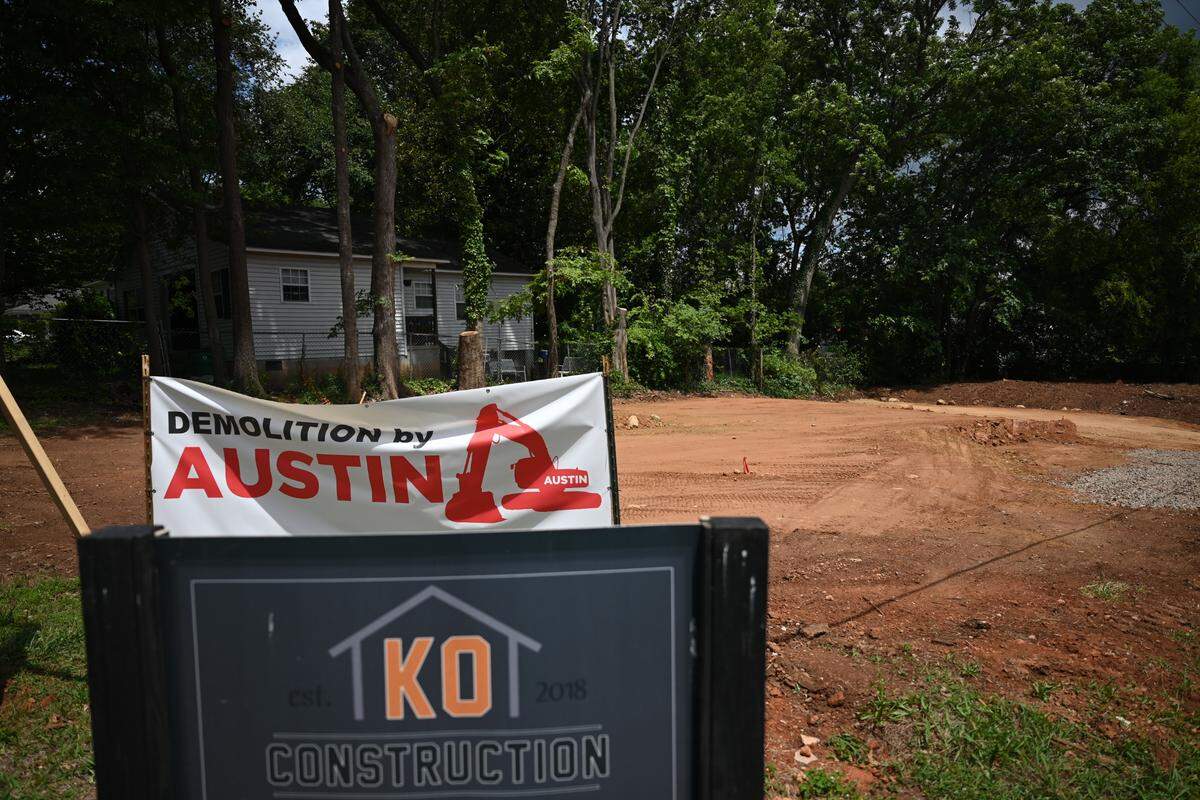
He visited the property last week after learning that in the short time since he sold the site, it had changed dramatically.
“I didn’t know they were going to tear it down,” he said.
When Sharika Comfort wanted to buy her first home in 2020, ideally near her alma mater Johnson C. Smith University, all she found were $750,000 condos off Beatties Ford Road. Decades ago, properties in that area went for less than a third of that amount.
A year later, she looked in the West Boulevard area. There, prices ranged from $350,000 to $400,000 for remodeled homes in the Clanton Park area, she said, ultimately finding a home in south Charlotte.
“I’m a working professional and I’m priced out. What does that mean for others?” said Comfort, now the executive director of the West Boulevard Neighborhood Coalition.
Change is happening in neighborhoods like Biddleville, West Boulevard, the Beatties Ford Road corridor and other traditionally Black neighborhoods around Charlotte, in the form of new amenities, people selling low and buying high, improved rapid transit and shifting demographics.
But whether it’s recognized as gentrification and displacement, or necessary growth, it feels the same to many witnessing the rapid shifts: uncertain.
What the data shows
Recent revaluations in Mecklenburg County sent in March showed that more than 350,000 residential properties countywide increased in market value. The value of some properties increased nearly three times, according to a Charlotte Observer analysis of those parcels, from 2019, when the county last did revaluations.
Hundreds of thousands of residents already paying high property taxes likely will be paying more when residential tax bills come out later this year. It’s expected that many Black neighborhoods will be among the hardest hit.
Further, the population in many historically Black neighborhoods has declined since the last census.
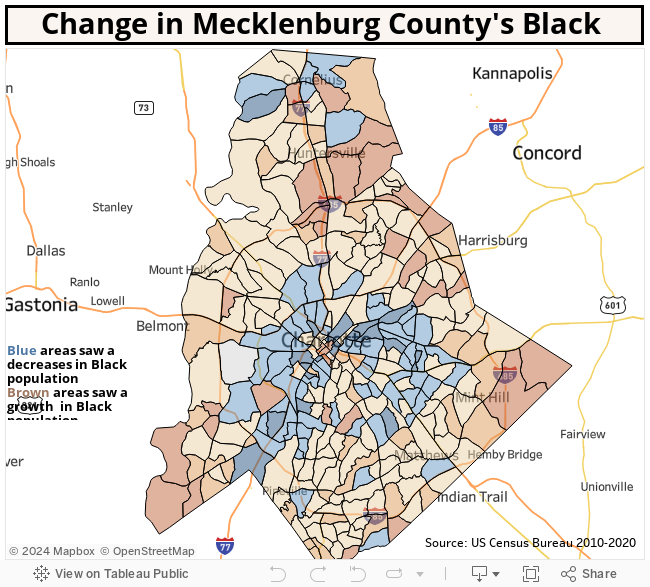
Parts of west Charlotte, from Interstate 277 west to Charlotte Douglas International Airport and north to Interstate 85, saw some of Mecklenburg County’s biggest drops in Black populations, according to census data.
Combined, these neighborhoods, which include Wilmore, Biddleville, Wesley Heights, Enderly Park and others, lost 12% of their Black population from 2010 to 2020. And while the area remains predominantly Black, it saw a surge in white and Hispanic residents — up 116% and 160%, respectively.
Consider:
Wilmore, the small neighborhood, across Tryon Street from South End, lost 39% of its Black population – or nearly 1,000 residents – in the past decade, a Charlotte Observer data analysis found. Meanwhile, Wilmore’s white population increased by the same amount.
Wesley Heights, just north of Wilmore, lost 9.5% of its Black population. Its white population increased more than 820%, and now white residents there outnumber Black residents.
Biddleville, near the intersection of Brookshire Freeway and I-277, lost 29% of its Black population, the data show. Its white population jumped 278%.
In all, those three neighborhoods lost nearly 1,600 Black residents, data show. But it wasn’t only west Charlotte that has undergone change. Communities in almost every direction of uptown and along the Lynx Blue Line have seen a decrease in Black populations from 2010 to 2020.
It’s harder to gauge whether Black people simply are moving out, selling their homes or perhaps dying out in the case of older adults, or if this is partly a cause and effect from the pandemic.
What is true for some is that transition in these neighborhoods makes people uneasy.
Feeling like the other
On a recent Saturday, a group of faithfuls tended a community garden in Lincoln Heights, a cozy neighborhood under growth’s glare. The garden is a refuge for many, adds beauty and offers provisions with a coming bounty of herbs and vegetables this summer.
The community’s streets — Newland Road, Kennesaw Drive, Jennings Street, to name a few, and Catherine Simmons Avenue, where the garden is located — are lined with small single-story homes, mostly resembling brick cottages.
But sprinkled between some of those cottages are multi-story homes, with fancier facades. They have newer sidings, garages and front walks, crisp and manicured.
Tony Withers lives next door to one of the newer homes. He doesn’t care for the optics. He also was approached by a developer.
The 65-year-old has lived more than six decades in this area, having first grown up in Dalebrook — also along what locals call “The Ford” — but now lives in Lincoln Heights. He is suspicious of what’s happening in his neighborhood, such as houses being sold and razed or new road striping creating lanes for bikers, for example.
“They sneak in there early in the morning to paint the signs in the streets,” Withers said.
Withers is skeptical, even as the park where the community garden is located is very limited: a few picnic tables, benches or grills, as compared to other parks uptown.
“This park here, was just put here as a pacifier,” Withers said.
His sister, Elaine White, who worked with him in the garden, has lived in the neighborhood since 1971. The value of her home doubled, overnight it seemed, which means her property tax tab will be higher.
White says the home originally belonged to her grandmother, who had to move a few times. Her grandmother first was displaced because I-77 was built through the Greenville neighborhood and Oaklawn Avenue during the 1960s. She moved a second time because developers again wanted her property.
White also says she has noticed improvements to the infrastructure and new drainage pipes, something that needed to happen decades ago.
“They put new pipes and stuff and people haven’t even moved on the street yet,” White said. “Like all of these streets historically, are dead ends. So they’re even opening up some of these streets that had been dead ends.”
Other homeowners say they get calls so frequently from solicitors or developers asking if they want to sell their home, sometimes several times a day, it teeters on harassment. They believe the improvements coming are not for them, but for others able to purchase the newer, pricier homes coming up. Some neighbors are renting homes in the area worry they will be forced to move at some point.
For those paying attention, development is bustling on sections of Beatties Ford Road and some of it is coming from Black-owned companies. Some projects in the pipeline include a sit-down restaurant, something of a rarity on this side of town.
More transportation options also may be heading northwest along Beatties Ford Road with a proposed third phase to extend the CityLYNX Gold Line, contingent on additional funding. The city of Charlotte approved nearly $4.3 million toward planning and design to extend the existing streetcar line. For now, the Gold Line connects from the Center City, intersects with the LYNX Blue and Red lines, and ends at the edge of the Historic West End at French Street, just past Johnson C. Smith University.
Winston Robinson is a McCrorey Heights resident, husband and father of two who grew up in Wilmore. He wonders why this type of investment in Black communities wasn’t happening decades ago.
His parents purchased a home, post-urban renewal in 1968, like many African American families who moved to, for example, Wesley Heights, Lockwood, Reid Park, Wilmore and communities along Beatties Ford Road and West Boulevard areas. These were among the few places they could go, seeking the promise of the American dream, buying homes in communities that were still affordable.
Robinson said by the time he was born, there was little investment in poor Black communities.
In his youth, he and friends would make a 2-mile trek to Latta Park because the basketball courts were immaculate, unlike the ones closer to home, he said. These days when he comes by to visit his mother, now a minority in her community, that park is all cleaned up.
It’s nice, but as it does for Withers, it also raises skepticism for Robinson. Further, he questions the type of public and private investment now happening in these neighborhoods. When he comes to his old stomping grounds, suddenly he feels more like an outsider.
“It feels like a pathway to ‘othering’ historically marginalized members of this community,” he told the Observer recently.
That, says Rickey Hall, chairman of the West Boulevard Neighborhood Coalition, is the very definition of gentrification.
Gentrification, as Hall describes it, is a social, cultural and economic removal of mostly marginalized communities.
There are many factors that contribute to this feeling of being an outsider in a space that once was a place of belonging.
“Just being inundated with new resources after being long, disenfranchised, you feel like even the good things … you don’t feel like it’s here for you,” Robinson said. “Because when you were asking for 30 years, you were ignored. However, the past two, you see ... these huge shifts.”
With a history of racial discrimination, minority neighborhoods were valued much lower than white neighborhoods, said David Walters, professor emeritus of architecture and urban design at UNC Charlotte.
But years of “this imbalance into the present day, (has left) minority neighborhoods as prime areas for property speculation, leading to rising rents, displacement and gentrification,” Walters said in an email to the Observer.
Are there any solutions?
Most days, Hall, 65, is busy because he’s on a mission.
The West Boulevard Neighborhood Coalition, representing some 19 communities clustered near West Boulevard, is closely watching gentrification trends.
Earlier this month, as Hall juggled some fatherly duties with helping his daughter, a West Charlotte High teacher, move classroom supplies, he shared what’s on his radar and what he’s doing.
In the mid-to-late 20th century, as rapid highway development and urban renewal swept through Black neighborhoods, many Black families were forced to move.
And they did, while white flight took place simultaneously.
Now decades later, there is a reversal, where the white population is increasing in traditional Black neighborhoods, such as Reid Park and other places in the West Boulevard corridor, Hall said.
“Once you know high-income people are moving in, then it tends to drive housing price point, housing values and tax values skyrocket to where people who have low- and-moderate incomes are either taxed out, priced out or bought out,” Hall said. “And wherever houses can be acquired, either through tax foreclosure, or people who are investing their property, then you see an escalation of housing development.”
But Hall sees another another path to bringing some equity back to these communities.
Since 2015, the coalition has been working on a plan to launch a grocery store co-op that will be run by a board and give neighbors an opportunity to have a piece of the investment.
“It’s a community driven solution. It’s just one aspect of a solution to address the issues and the threats of displacement,” Hall said. “ It creates community wealth through a community economic development journey process.
“For 40-some odd years, we’ve been trying to get a grocery store ... we’re tired of waiting on a traditional grocery stores to meet our needs,” he said.
Other ideas are on the table too, such as creating a Merchants Association that will bring businesses together to help chart the future of West Boulevard, and working with the West Side Community Land Trust. While there are more restaurants in the corridor and a small health care facility is coming, the community could use a bank, Hall said.
Comfort, who has been with the coalition since December, previously worked with the West Side Community Land Trust. Part of her motivation to do this work is driven by the housing market trends she is seeing.
Walters, who has studied urban design for many decades, said the real estate “market” really has no way to stop what is happening in these communities.
“Centers of gravity are always on the move in cities, as once-formerly prosperous areas decline and others increase in value,” he said in an email. “The public sector has to step in and put its thumb firmly on the scales to deform this process. This requires activist policies to create a social balance.”
Hall hopes to establish in the collective mindset something he calls “addification” — or gentrification without displacement.
“The question is, how can you have investment without the total divestment of legacy?”
This story was originally published June 15, 2023 at 6:00 AM.