It’s ‘baby copperhead season’ in NC. Here’s what to know about the juvenile snakes

READ MORE
Copperheads and other Venomous Snakes in NC
Everything to know about copperhead snakes and other venomous snakes — how to identify them, how to avoid them, what to do if you (or your pet) are bitten, and more.
Expand All
If you’ve been in North Carolina for a while, you know you need to keep your eyes extra peeled for snakes during our warm summer months. And you know copperheads, our most abundant venomous snake in North Carolina, can be found all over the Triangle — even in our downtown cities.
The News & Observer likes to revisit the topic of snakes often — not to frighten, but to share information from experts about the best ways to coexist with these creatures and to stay safe. Plus, we’re mindful that newcomers arrive in North Carolina every day, and this useful information might be brand new to many.
So we’re revisiting two questions about baby copperhead snakes, which we first answered in 2019:
When are baby copperheads born? and
Are baby copperheads more dangerous than adults?
We’re including more helpful what-to-know’s about copperheads, like where in your yard (or other outdoor spaces) you might find them and what you should do if you spot one — a pretty likely occurrence around here.
Our experts:
Jeff Beane, Herpetology Collection Manager at the N.C. Museum of Natural Science in Raleigh
Talena Chavis, certified wildlife relocation expert and owner of NC Snake Catcher (facebook.com/ncsnakecatcher) in Cary
When are baby copperheads born?
Late August or early September, Beane confirmed. But a few might be born in mid-August or in early October, widening this window a bit.
“Weather, geography, region and other factors can influence the exact time of birth,” Beane said. “But usually the last few days of August and the first few of September are peak for copperheads.”
A few birth facts:
Copperhead babies are born live. They don’t hatch from eggs.
When born, copperhead snakes are 8 to 10 inches long.
Female copperheads can have one litter per year, which can range from 3 to 14 snakes, according to the North Carolina Wildlife Resources Commission.
What does a baby or juvenile copperhead snake look like?
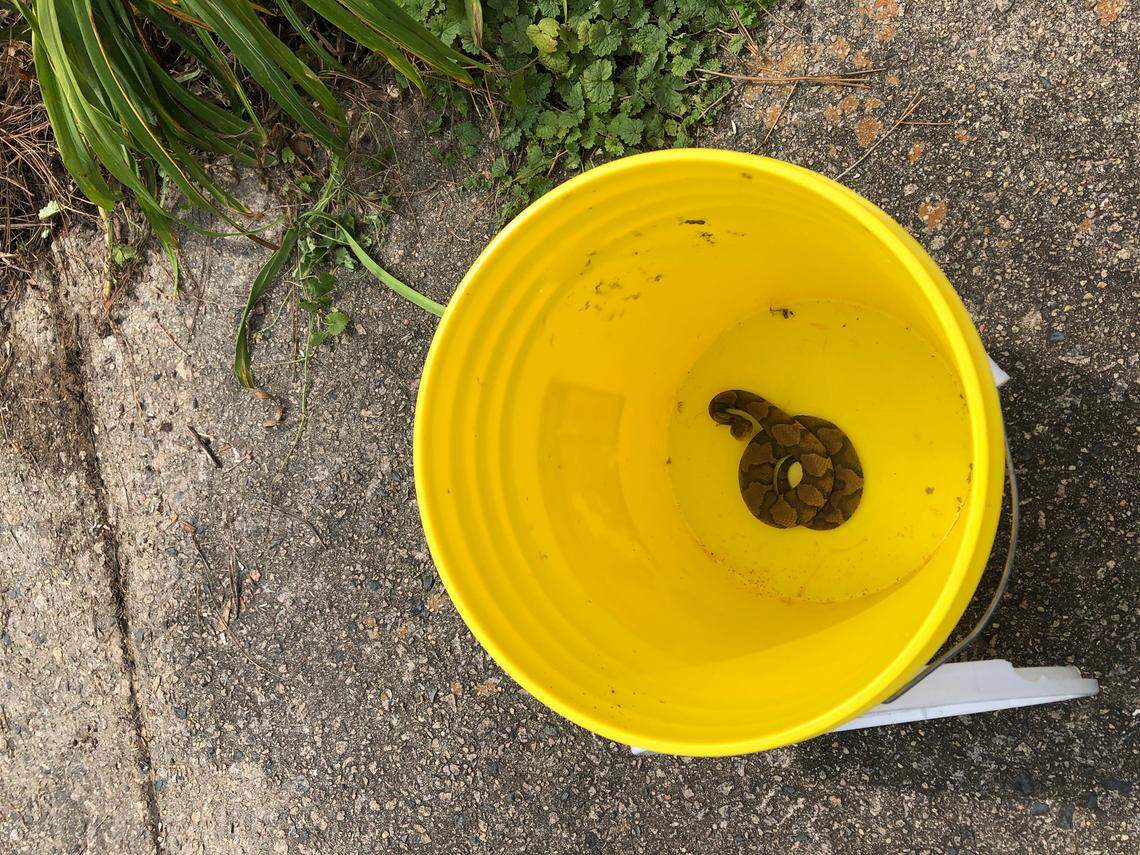
Baby copperheads have a bright yellow or green-tipped tail that darkens pretty quickly.
“I like to point to my safety glove and say ‘A baby copperhead has this color on it,’” Chavis said.
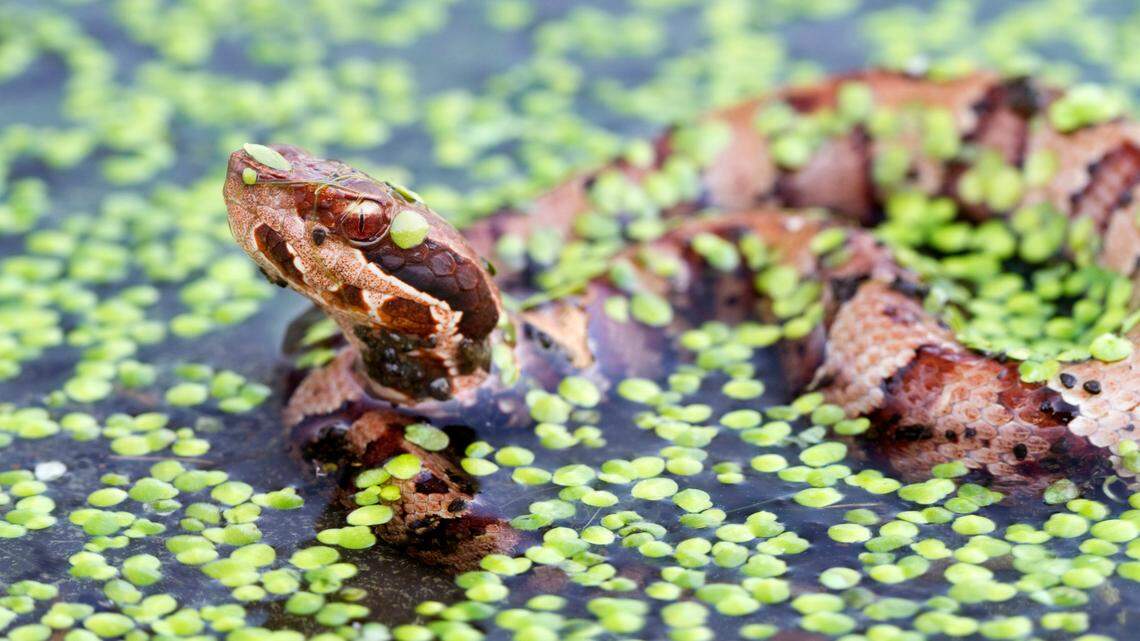
Besides their bright tail and their smaller size, they otherwise look very similar to their adult parents.

What does an adult copperhead snake look like?
Adult copperheads have the following characteristics:
• Pattern: The hourglass-shaped patterns on their backs look like Hershey’s Kisses.
However, Chavis told us it can be tricky to rely just on markings, especially if you haven’t seen many copperheads in person or you only caught a quick glimpse of it.
“There can be a lot of variation in color and pattern with flecks and specks between the kisses,” Chavis said.
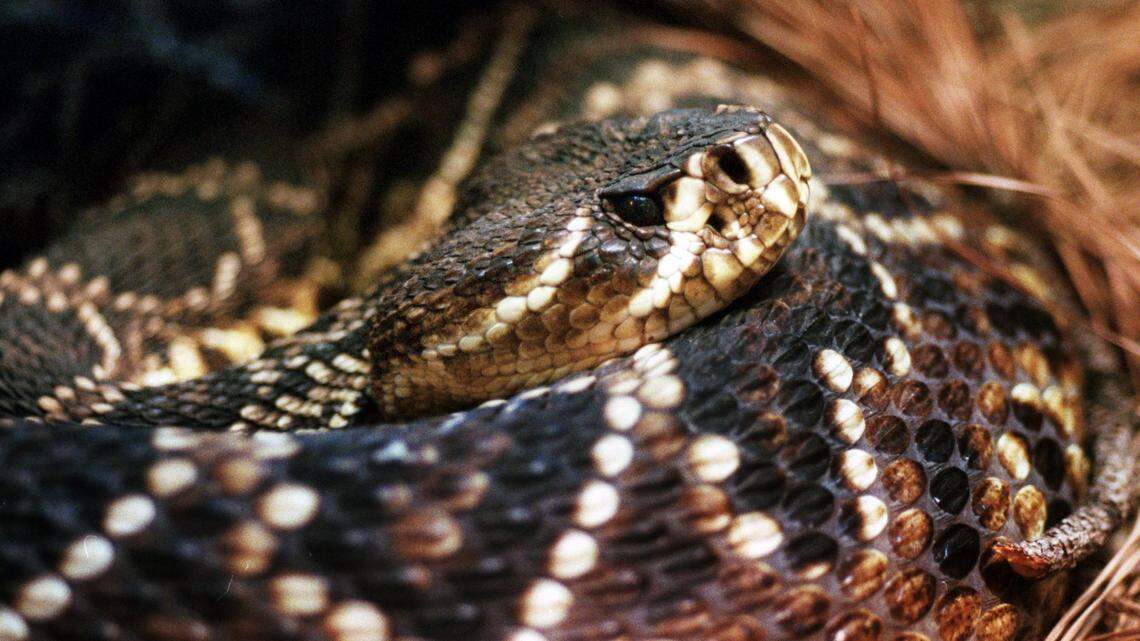
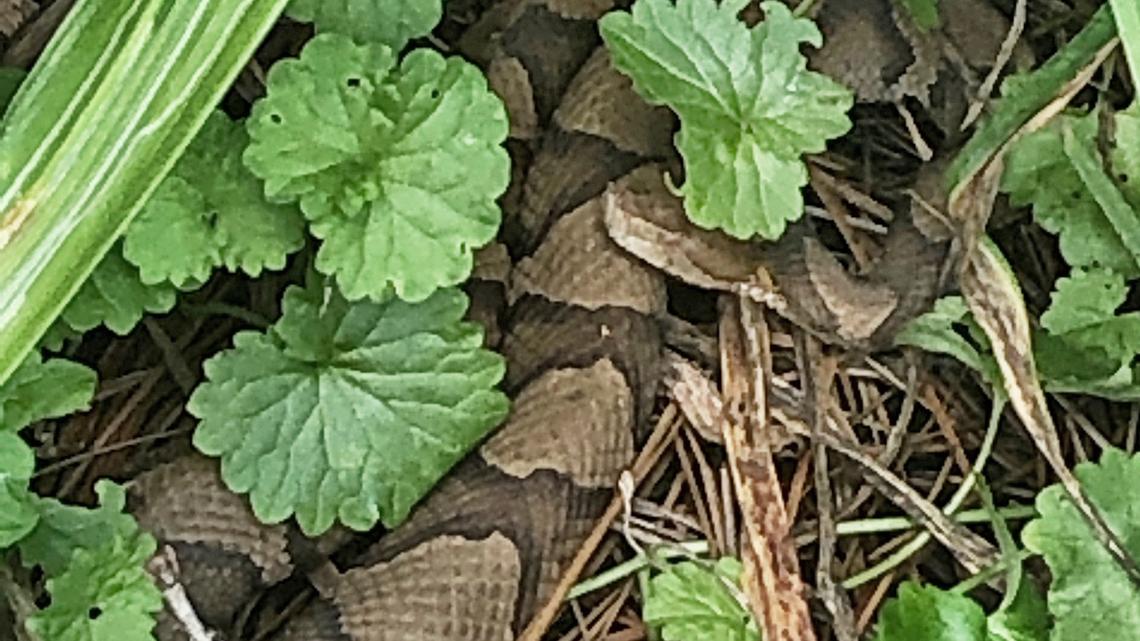
• Color: Copperheads are brownish-gray. They easily camouflage within dry leaves and wood debris.
Newborn or very young copperheads have the same color and pattern as adults, but their brightly tipped tails make them stand out.
“It has a light brown, coppery or tan (sometimes grayish or pinkish tan) background color, with strongly contrasting chestnut brown crossbands shaped like an hourglass or dumbbell,” the Wildlife Resources Commission says.
• Length: Adult copperheads can grow to about three feet long.
For a detailed look at the copperhead snake, visit newsobserver.com/news or ncwildlife.org.

Is a baby copperhead bite more dangerous?
A common NC rumor says that baby copperhead bites are more dangerous than adult bites, since babies can’t control the amount of venom they use.
When we asked Beane about that, his answer was: “It’s a little bit complicated.”
Young copperheads might be less likely to control or withhold the amount of venom they inject, Beane said, but they also don’t have as much venom as a mature snake.
Here are some points to consider, from a previously published N&O report on baby copperhead bites.
▪ Defensive bites vs. prey-seeking bites. A copperhead will bite for two reasons: to kill and eat its prey or to defend itself.
When striking prey to kill it and eat it, a baby copperhead will inject as much venom as necessary in order to achieve that goal, Beane explained.
When a copperhead bites a human, that’s a defensive bite, and the snake isn’t likely to use as much venom in those cases. Sometimes, it doesn’t use any venom at all.
“It is not advantageous for snakes to waste venom — it’s metabolically expensive to make, so they don’t want to bite anything other than prey items,” Beane said.
Whenever a snake bites, it’s an instinctive response, and that the snake doesn’t “reason it out,” Beane said.
But, since a snake’s number one reason for biting is to kill and eat prey, snakes only bite people in an act of self-defense.
“They would be unlikely to mistake something 100 times their size as a prey item,” Beane said.

▪ More concentrated venom? It’s possible that a newborn’s venom might be a bit more concentrated than an adult’s, Beane said.
A larger copperhead has more venom to inject, so larger snakes would probably make up for any differences in chemical composition.
Plus, Beane said, a larger or more mature copperhead has longer fangs, which can penetrate a sock or thick skin, so it has more “delivery capacity” than a juvenile snake.
A mature copperhead can also “strike a greater distance and with more force and accuracy,” said Beane.
▪ Baby copperhead bites just aren’t as common. Most of the time, when a human is bitten by a copperhead, it’s from an adult snake, Beane saie.
“I don’t hear much about people being bitten by newborns,” Beane said.
“Personally, if I had to choose between being bitten by a newborn copperhead or an adult, I would choose a newborn because of the potentially much smaller quantity of venom.”
▪ Bites are rarely fatal. According to the NC Poison Control, copperhead bites can be “severe,” but generally are not as bad as bites from other venomous North Carolina snakes.
About half of all copperhead bites result in only mild swelling and pain, according to the center.
You can call the NC Poison Control at 1-800-222-1222 if you are bitten by a snake.
Copperhead habitats and how to avoid them
We all want to enjoy our summers without any copperhead snake bites — it’s better for you and for the snake.
So use caution when working or playing outdoors, especially in areas where snakes are more likely to be hanging out.
There are a lot of potential snake habitats in wooded areas, on hiking trails and even in our yards. Understand snake habits and recognize that they may be encountered anywhere there is potential habitat.
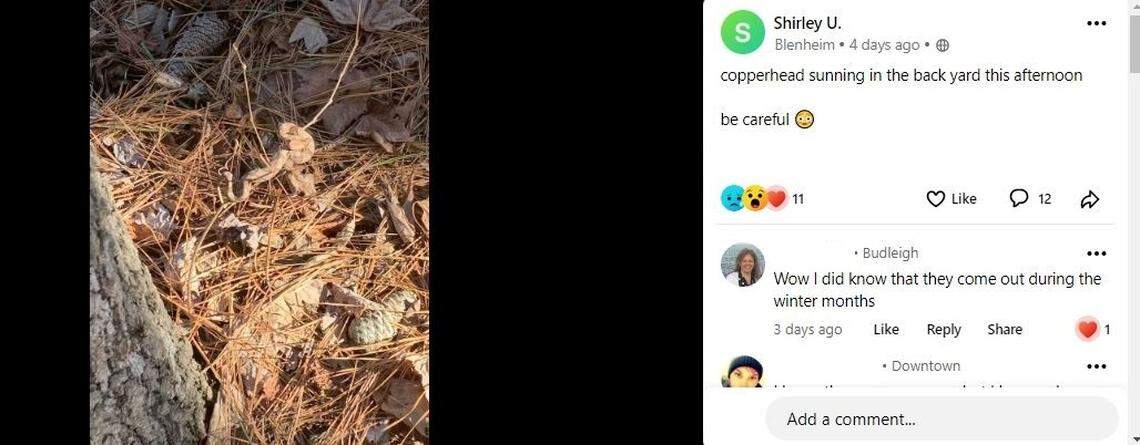
▪ What are snake habitats? Copperheads love pine straw, dried leaves or brush, or dense, low-growing ground cover like English ivy.
They also love wood piles and dry stack walls, which are border walls that are essentially stacked pieces of slate without mortar — those crevices make great homes for copperhead prey.
▪ Where is snake prey? Copperheads love to eat rodents, shrews, lizards, snakes, frogs and salamanders, and even insects, such as large caterpillars and cicada nymphs. So know that anywhere you might see those creatures, you could also see a snake.
Take these precautions against snake bites. Here’s what Beane advises:
Don’t put your body parts into places you can’t see.
At night, wear shoes and use a flashlight.
Don’t walk barefoot in thick vegetation.
Don’t stick your hands underneath wood piles.
Overall, watch where you’re putting your hands and feet.
“This will prevent the great majority of bites,” he said.

▪ Be more cautious at night. Copperheads are active during the day or night time, but are largely nocturnal during hot weather, says NC Wildlife, so use more caution at dusk or dark.
Chavis, who said she averages about a half dozen snake calls per week, advises people to check out their yard before dogs or kids go out.
“The big thing I tell folks about copperheads is, they are not shy snakes,” Chavis said.
“They are good at camouflaging themselves, but they are not shy. ... They hunt at night, so try to let the dogs out before dark, if you can, and wear your boots. We get bitten at night because we put on our little flip-flops and grab the trash and walk out, and that’s when we get tagged.”
▪ Leave them alone. While many bites occur when someone inadvertently puts a hand or foot near a copperhead, NC Wildlife notes that a large percentage of bites occur when a person is trying to kill or remove a copperhead.
The best thing to do if you encounter a copperhead is to leave the snake alone.
“Admire them from a safe distance and leave them alone,” said Beane, who does not advocate for killing the snakes.
“Many bites and other injuries have occurred while people were attempting to kill snakes,” he said. “No one was ever bitten by a snake while they were leaving it alone.”
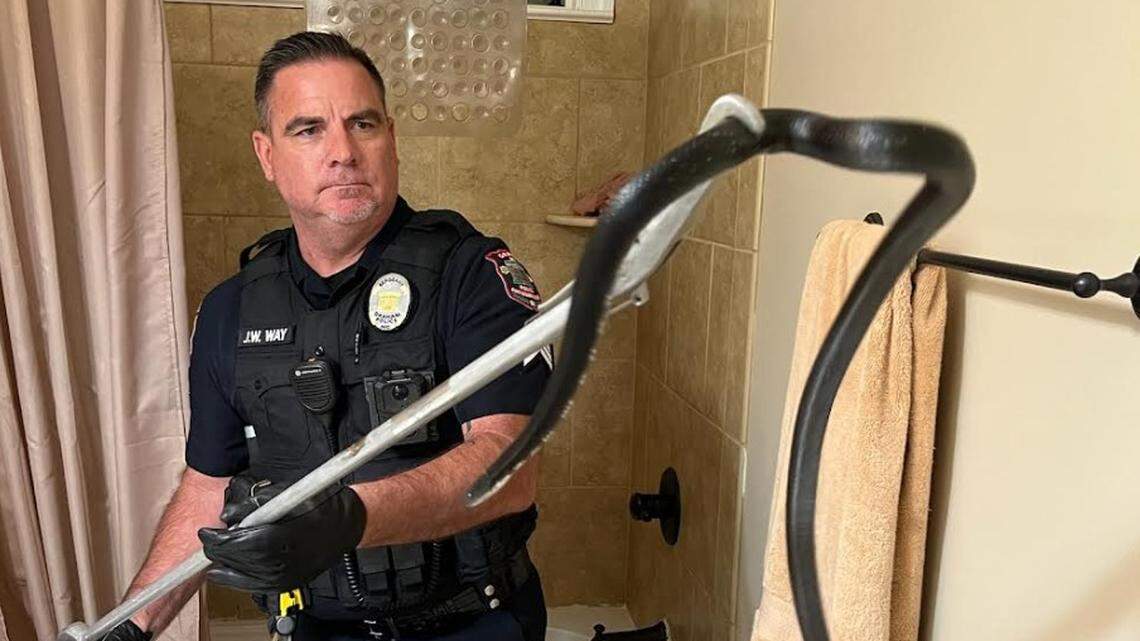
If leaving it alone makes you nervous, you can call a professional wildlife relocation expert to remove the snake from your yard.
What to do if you’re bitten by a copperhead (or other snake)
If you’ve been bitten by a copperhead or other venomous snake, follow NC Poison Control’s advice:
Sit down and stay calm.
Gently wash the area with warm, soapy water.
Remove any jewelry or tight clothing near the bite site.
Keep the bitten area still, if possible, and raise it to heart level.
Call NC Poison Control at 1-800-222-1222.
If a snakebite victim is having chest pain, difficulty breathing, face swelling, or has lost consciousness, call 911 immediately.
You should not:
Cut the bitten area to try to drain the venom. This can worsen the injury.
Ice the area. Icing causes additional tissue damage.
Make and apply a tourniquet or any tight bandage. It’s better for the venom to flow through the body than for it to stay in one area.
Suck or use a suction device to remove the venom.
Attempt to catch or kill the snake.
(Source: ncpoisoncontrol.org/types-of-poisons/venomous-creatures/snakes)
N&O staff writer Brooke Cain contributed to this report.
This story was originally published August 9, 2023 at 2:14 PM with the headline "It’s ‘baby copperhead season’ in NC. Here’s what to know about the juvenile snakes."