Mold costs Charlotte renter thousands. NC offers little protection for others like her
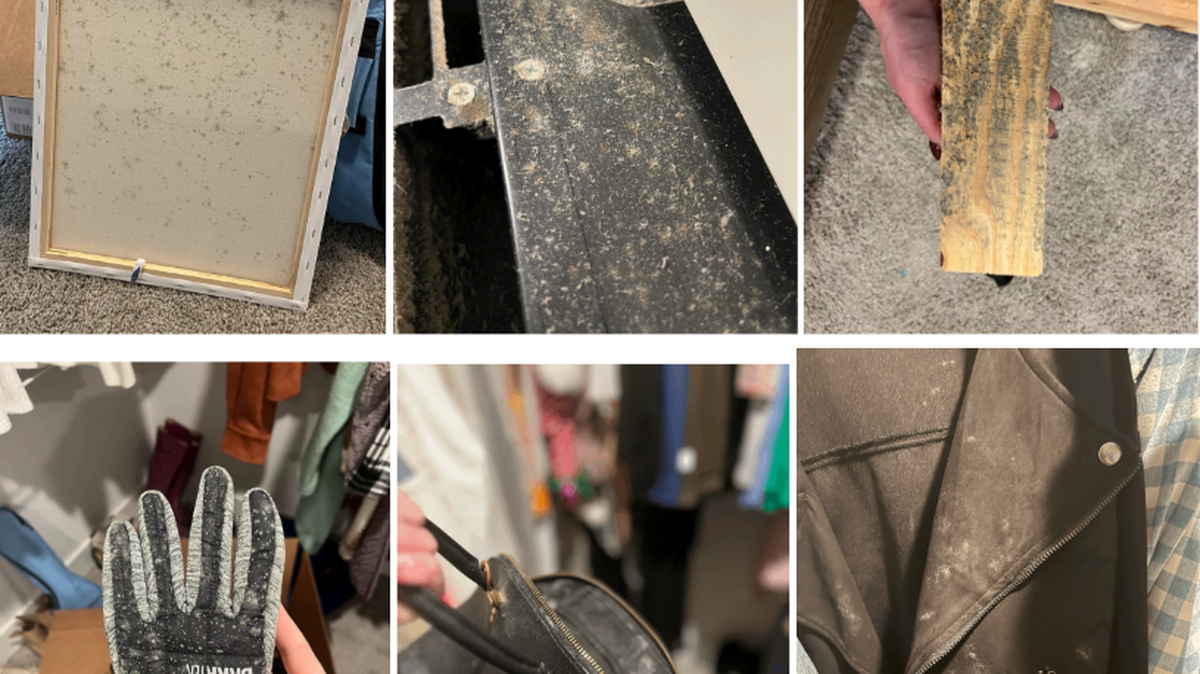
When Brooke Davis moved into her first Charlotte apartment in 2022, she was excited to start her career as a young professional living in a spot with high-end amenities and luxury branding.
Three years later, Davis has lost nearly all of her belongings to pervasive, untreated mold at the apartment that cost her thousands of dollars and almost led her to bankruptcy.
“Once I started finding it, I didn’t stop finding it,” she said about the mold. “It’s been the actual worst experience of my life.”
A mold test on Davis’ apartment by laboratory EMSL Analytical found spore counts in her unit were nearly 28,000% higher than the US Environmental Protection Agency’s top remediation thresholds, according to documents obtained by The Charlotte Observer. Her apartment complex Broadstone Ayrsley is located at 2200 Silver Crescent Drive in Charlotte under management company and real estate giant Greystar. Davis said the complex did not allow Davis to stop paying rent and made no move to remediate her apartment while she lived there.
“While we disagree with our former tenant over the matter at issue, we hope to resolve it privately and amicably, as we have attempted to do so since becoming aware of their concerns,” a representative from Broadstone Ayrsley wrote in an email to the Observer. “Regardless of the cause of the problem, we remain committed to maintaining a high standard of living for all our residents and addressing any concerns efficiently and effectively.”
Renter rights in NC
Renters with mold problems in North Carolina have little recourse to get help from code enforcement, said Nick MacLeod, the director of the North Carolina Tenants Union.
The statewide minimum housing code doesn’t include guidelines for mold, but rather focuses on basic safety precautions such as a building’s foundation, MacLeod said. Cities have the authority to write their own housing codes, as long as they don’t go below the floor set by state law, he said. Charlotte does not include mold in its minimum housing code.
A booklet made for renters by the city of Charlotte states neither the city nor Mecklenburg County conduct mold testing or consider mold a violation of minimum housing code. A code enforcement director can look only for mold-causing violations such as a leaking roof or plumbing, but mold itself does not constitute a violation.
Landlords in North Carolina are required to make repairs to ensure “fit and habitable” conditions, according to state law, but tenants are not allowed to withhold rent without a court order even if the unit is unlivable, MacLeod said.
“There’s some real limitation there,” MacLeod said. “There are, on the legal side, very very limited protections against tenants being taken advantage of by unscrupulous landlords who are not doing repairs.”
Mold problems
Davis said her problems stemmed from a dirty heating, ventilation and air conditioning unit. It was difficult at first to get a maintenance worker to visit her unit when she first noticed the mold, she said, since the apartment first told her the mold could have stemmed from her air conditioning being set too low or not drying clothes completely before hanging them up. A maintenance worker inspected the unit and told her the mold was the worst he had ever seen.
Rachel Noble, a professor at the University of North Carolina department of environmental sciences and engineering, said mold spreads easily because it is airborne and sticky, like pollen. Mold can be caused by damp conditions caused by plumbing leaks, open windows or inadequate air conditioning units, she said.
“This is a common, common situation,” Noble said of HVAC units causing mold. “In North Carolina there are certain windows of time during the winter months when the HVAC units are are running and producing heat and there’s a build up, essentially, of mold and moisture that happens in the duct work ... that duct work can become really clogged and those air filters are only going to perform properly if they’re replaced at regular level.”
While some people can tolerate mold exposure, for others prolonged exposure to mold can lead to respiratory infections, chronic fatigue and breathing issues, she said.
“Chronic exposure can really set up kind of a situation where it can have an impact on your life,” Noble said. “One of the most pronounced outcomes of chronic exposure is susceptibility of your lungs, which are now kind of primed for some other kind of infections to set in. So you become more prone to more serious outcome if you were to be become infected with, say, the flu or with COVID.”
Davis threw away most of her belongings because of the mold. After back-and-forth with apartment managers and customer service representatives, there was still no promise the company would treat the apartment or reimburse her for the damages. Davis found mold on all her clothes, on her bed frame, in the bathroom, the washing machine and in the kitchen.
“The only time that they did end up following up with me was to ask if I wanted to resign my lease. I lost it,” she said. “I decided to vacate the property as soon as I could because I was, at this point, really scared, because of how much more mold we were finding.”
Davis moved out of her apartment in November, spending nearly $4,000 on the relocation and, she said, still had to pay rent to Broadstone Ayrsley for the month she could not live in the apartment. Davis also said she experienced negative health impacts, including extreme fatigue, swollen lymph nodes and brain fog.
MacLeod said the best thing a renter can do when encountering unsafe conditions in their home is ask neighbors if they are experiencing similar problems and work together to look for legal aid or pressure landlords.
“It makes them a lot more effective if you have half a building calling code enforcement to say, ‘hey, we all have the same problem,’ then it becomes a priority for the city to deal with,” he said. “Or if you have a big group case for rent abatement, where you can go in and say, ‘we have a lot of people who are dealing with this.’”
Davis said the apartment has offered her two settlements for $3,000 and $5,000 which she calls “insultingly low,” in exchange for her signing a nondisclosure agreement. She said the mold cost her $20,000 in discarded items, $5,000 in medical expenses, $1,000 for mold testing, $4,000 in lost wages, and $6,000 for a personal loan she took out to avoid bankruptcy, among other costs.
“It’s like you essentially go bankrupt before North Carolina is willing to help you, and there’s no real laws around mold,” she said. “At the end of the day this is a devastating problem, and there’s not really any laws that hold landlords accountable for this.”