Why this Charlotte-area community flooded during Helene — and could be submerged again
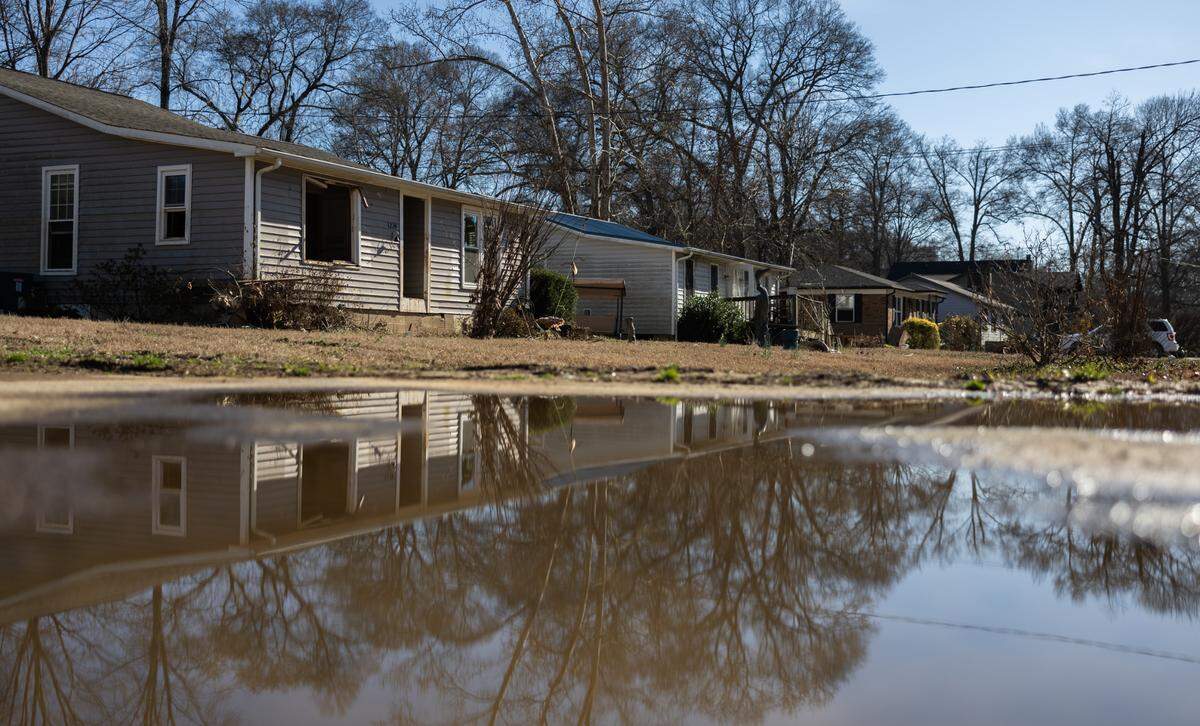
Susan Covington was “hysterical,” when she first saw a photo of her Charlotte home flooded with 6 feet of water after Hurricane Helene devastated parts of the Southeast.
“It was up to the gutters, and I just had a really big panic attack,” she told The Charlotte Observer. “I lost my house… I lost my joy.”
Covington, 60, bought her home along the Catawba River on Lake Drive in 2018. Like others near Mountain Island Lake, Covington said Duke Energy should have moved more water downstream ahead of the storm to prevent the floods that damaged at least 170 structures near Mountain Island Lake.
When Duke Energy opened Cowans Ford Dam’s floodgates, Mountain Island Lake experienced nearly 8 feet of flooding despite the Charlotte area receiving only around 4 inches of rain. Duke maintains it acted appropriately before and after the storm, but residents like Covington say the utility didn’t prioritize protecting residents.
“I’m not an expert, I just feel like they really don’t care,” she said. “They do whatever they want to.”
An incident report filed to federal regulators by Duke states the company communicated properly with emergency management agencies about the system’s conditions and could not have prevented the flooding in Mountain Island Lake even if it had lowered water levels earlier.
“Due to the size of Mountain Island Lake, one of the smallest lakes on the Catawba-Wateree River, and the historic amount of rainfall from this event, any additional storage that would have been created in the lake would not have prevented the flooding experienced on Mountain Island Lake,” the report states.
The Federal Energy Regulatory Commission, which sets standards for the operation of dams and basins, accepted Duke’s explanation of events, which did not mention damage to Mountain Island Lake-area homes, according to a Jan. 14 letter to the utility. Some residents remain unconvinced.
‘Flooding is unavoidable’
Ultimately, Duke controls the fate of areas like Mountain Island Lake and Lookout Shoals Lake near Statesville when it comes to dealing with storms like Hurricane Helene, said Catawba Riverkeeper Brandon Jones.
“It’s Duke’s decision on how they weigh those two different uses, drinking water and flood mitigation. And so they are the ones that are saying ‘we have this confidence in this forecast, so we’re gonna decide when to start drawing these areas down and what the acceptable levels are,’” Jones said. “So they certainly have the responsibility there.”
The river system is not set up for mitigating flooding in the Catawba River Basin, said Jones, who has been the Catawba Riverkeeper since 2018. Efforts to upgrade floodgates like Duke did at Lake Wateree in South Carolina are expensive, Jones said.
“Those same kinds of investments have not been made at the Mountain Island dam, and there’s not really an indication that they would even be successful there,” he said. “There’s a lot of competing interests and flood mitigation, with the exception of Lake Wateree, has never risen to the top.”
Flooding is unavoidable when forecasts aren’t accurate enough, Jones said. Duke needs to know far in advance if there is going to be rainfall or storms so it can manage the reservoirs appropriately, he said.
Flooding will only get worse along the Catawba River as climate change progresses and development on the water increases, Jones said.
“Even if we had just the exact same storm events every year, just by population growth and paving, our flooding will get worse,” he said. “So it’s not a matter of if, it is when the next flood happens. You know, where will homes be built? What kind of warning systems will be in place and what policies will Duke have to kind of weigh those competing interests?”
Most reservoirs and impoundments along the Catawba River have little storage capacity, with the exception of Lake James and Lake Norman, said Craig Allen, a UNCC hydrology professor. Just a few inches of water on Lake Norman corresponds to several feet on a smaller, shallower area like Mountain Island Lake, he said.
“It’s kind of a juggling act, balancing as you draw down one, and you don’t want to flood the downstream reservoir, so you are spilling water from that one to the next one and so on,” he said.
Allen said he’s not sure if flooding events like this are avoidable.
“If we keep having these extreme rainfall events, and we see this in urban areas, in Charlotte, areas that are repeatedly flooded, homeowners either have to raise their homes or relocate,” he said.
How does Duke Energy manage flooding?
Duke Energy manages the entire Catawba-Wateree River basin, which consists of 11 connected lakes and 225 miles of river, said Bryan Walsh, a Duke Energy engineer who oversees the Catawba system. Water travels downstream before reaching a system managed by the US Army Corps of Engineers and eventually to the ocean.
The four largest lakes – Lake Norman, Lake James, Lake Wateree and Lake Wylie – contain 84% of water in the entire system, so moving water from a large lake like Lake Norman to a smaller one like Mountain Island can have a significant impact on lake levels, Walsh said.
Walsh said Duke makes decisions for the entire 11-lake system, not for one lake. The system is not designed for flood mitigation, he said. It’s a hydroelectric system providing drinking water, power and recreation.
If Duke reduced lake levels too much before the storm or if the forecasts were off, Walsh said it could have led to drinking water shortages because Mecklenburg County relies on Lake Norman and Mountain Island Lake for water.
On Sept. 26, ahead of Helene’s landfall in North Carolina, Duke worked to draw down the lake levels, according to the FERC report. But data from the utility’s website show water levels on Sept. 26 sat at 98.1 feet, more than 2 feet above the utility’s target and just 2 feet below maximum levels. Duke’s report states Mountain Island Lake would have still flooded once the gates opened even if the water had been drawn down to it’s minimum level of 94.3 feet.
Dam safety is ‘critical’

Preserving dam safety is Duke’s number one priority, Walsh said. If any dam fails it would lead to evacuations and impact communities and residents on a large scale, he said, so ensuring dams remain operable by opening floodgates when necessary is critical to protecting public safety, he said.
It’s dangerous for trash and water to flow over gated spillways like the ones at Cowans Ford Dam, Walsh said. It could damage gates Duke is required to keep operable by FERC if trash ends up floating down river.
Out of the 11 gates at Cowans Ford Dam on the southern end of Lake Norman, Duke Energy opened four and part of the fifth gate during Helene.
Some residents’ believe Duke likes when neighborhoods like those near Mountain Island Lake flood because it allows for buyout programs like the one being offered by Mecklenburg County, said Jonathan Beller, the project manager for Charlotte-Mecklenburg Storm Water Services. But no one is being forced to sell their homes, he said.
“We are trying to reduce flood risk, but it’s a voluntary program,” Beller said. “But my thought would be their number one priority is dam integrity. If that dam fails, you got a lot of bigger problems.”
Covington said she and her neighbors feel Duke focuses on energy generation and the usefulness of the river at the expense of residents. Flood mitigation should be a larger priority for the utility, she said.
“If you’re going to use the water for energy, then you’ve got to figure out how to keep from devastating people. That’s like saying, ‘well, my four-year-old child knows how to swim so he doesn’t need a life jacket,” Covington said. “That’s not good enough.”
This story was originally published February 26, 2025 at 5:00 AM.