We set out to find Charlotte’s true culture. Here’s what our search turned up
AI-generated summary reviewed by our newsroom.
- Charlotte's identity remains undefined amid rapid growth and constant reinvention.
- Newcomers and developers heavily influence Charlotte’s cultural and urban fabric.
- City initiatives aim to preserve diversity and neighborhood character during expansion.
When the Democratic National Committee decided to hold its convention in Charlotte in 2012, it was an opportunity for the burgeoning city to make a name for itself.
With eyes across the nation and major politicians focused on the area, it was set to be a pivotal moment for Charlotte, said UNC Charlotte politics professor Eric Heberlig, who studied the convention and wrote a book on how cities host them.
That moment came at a time of explosive growth. Between 2000 and 2010, Charlotte’s urban area grew by nearly 65%, the fastest of any U.S. metro. The city was quickly stepping onto the national stage, both politically and economically.
As such, the host committee set out to find a symbol of Charlotte’s culture and identity to offer as a memento to attendees, Heberlig said. The only problem: they had no clue what that symbol could be, he said.
“There’s nothing immediately obvious and consensual that everybody’s going to say, ‘yeah, that’s Charlotte,’” Heberlig said. “New Orleans, you have something related to jazz. Nashville, you have something related to country music. New York, you have the Big Apple and the Statue of Liberty. Charlotte, you know, it’s banking.”
The struggle to pinpoint Charlotte’s identity is nothing new, said Charlotte historian Tom Hanchett. The city has long been defined not by enduring traditions but by constant change. And there’s little consensus on what, if anything, makes Charlotte culturally distinct.
“If you’re looking for a constant cultural thing that runs through our history, paradoxically, it’s that there’s not a cultural thing that runs through our history,” Hanchett said.
So, the Charlotte Observer set out to find Charlotte’s identity, and we found that for many that openness to change and reinvention is exactly what makes Charlotte so attractive.
‘A city of newcomers’
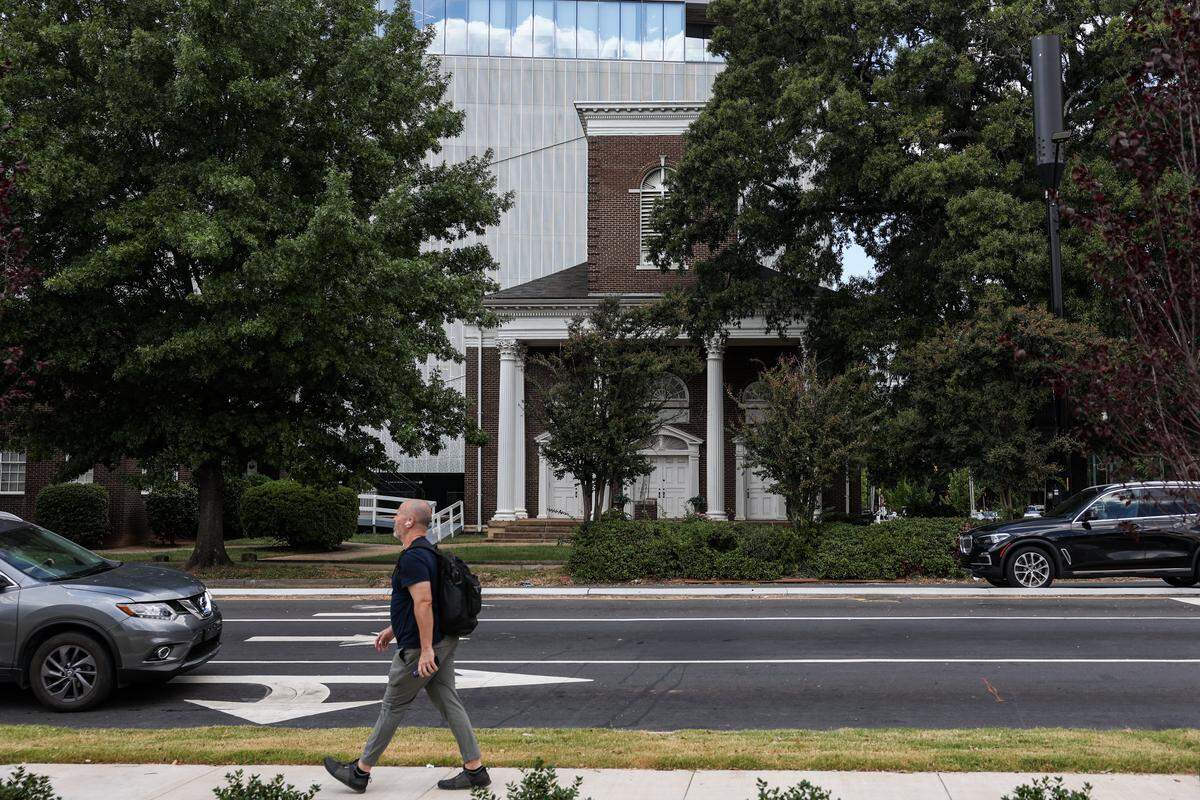
Hanchett describes Charlotte as a city of newcomers. It’s the kind of place where it can feel like everyone just got here last week, even though longtime residents will quickly remind you that’s not the case.
Charlotte’s rapid growth is no secret. It’s one of the 15 most populated cities in the United States, situated under Austin, Texas and above Columbus, Ohio, according to Census data. Between 2023 and 2024, Charlotte saw the sixth-largest population increase in the nation, with more than 23,000 new people moving to the city.
For Gina Holmes, 71, who moved from New York nearly a decade ago and now lives near Northlake Mall, that growth is the city’s strength.
“There’s all different cultures... and within that you find the food, the entertainment, the things you do, the way people celebrate, the way people worship,” Holmes said. “It’s like a salad bowl.”
Hope Hulse, a 20-year-old who moved to Charlotte for college, said she expected more character from a city its size.
“There isn’t much to do. There’s no community. It’s kind of weird,” said Hulse, who lives in NoDa.
But when it comes to defining the city’s identity, that role has long been filled by outsiders, Hanchett said.
“A huge amount of what makes Charlotte, Charlotte is created by people who came here, saw a lack, saw an opportunity, saw a hole to fill, and got on to doing it,” he said.
But if a city’s identity is shaped by newcomers, what happens when the influx of transplants is constant?
According to Emily Zimmern, the former director of the Levine Museum of the New South, it means constant reinvention.
“Charlotte has really been about looking to the future, not the past, for inspiration. Newcomers have seen opportunity here and moved here, and they have brought their drive, their energy, strivers of all kinds, and reinvented the city,” she said. “From field to factory to finance to, I’m not sure what’s next. We’re probably in another phase of reinvention.”
Still, that constant churn creates a challenge residents often point to: If the city is always remaking itself, it has to decide what’s worth holding onto.
You can’t sum it up in a slogan
The city’s vision for itself is laid out in the Future 2040 Comprehensive Plan, which is focused on economic growth and change it plans to support. The plan says it serves as a “vision for the future of Charlotte.”
One goal is to maintain the city’s “identity and charm.” But the plan is less clear about what that identity actually is.
For Erin Chantry, the city’s planning division manager, that identity isn’t something you can sum up in a slogan.
“We are a very diverse community, and that’s one of the most beautiful things about Charlotte,” she said. “I’m not sure that we have one identity, that’s the best part now about living in Charlotte, right? We’re not vanilla anymore. We’re rocky road.”
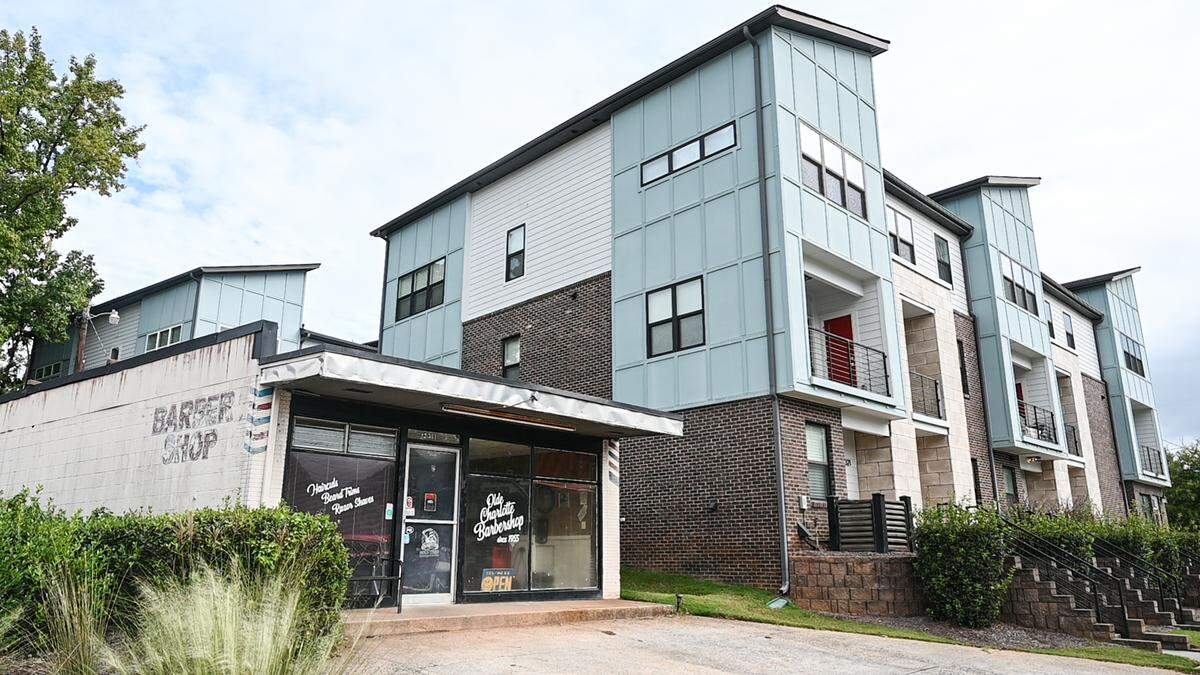
That mix shows up in how the city has tried to honor both old and new. It backed the revival of the former Ritz Theater on Beatties Ford Road, placed markers to highlight history along West Boulevard and expanded historic districts to protect character, Chantry said. Future city goals aim to make it easier to reuse older buildings, offer ready-to-go housing designs that fit existing neighborhoods, and grow preservation into more of a cultural and educational force.
Banks? NASCAR? Belonging?
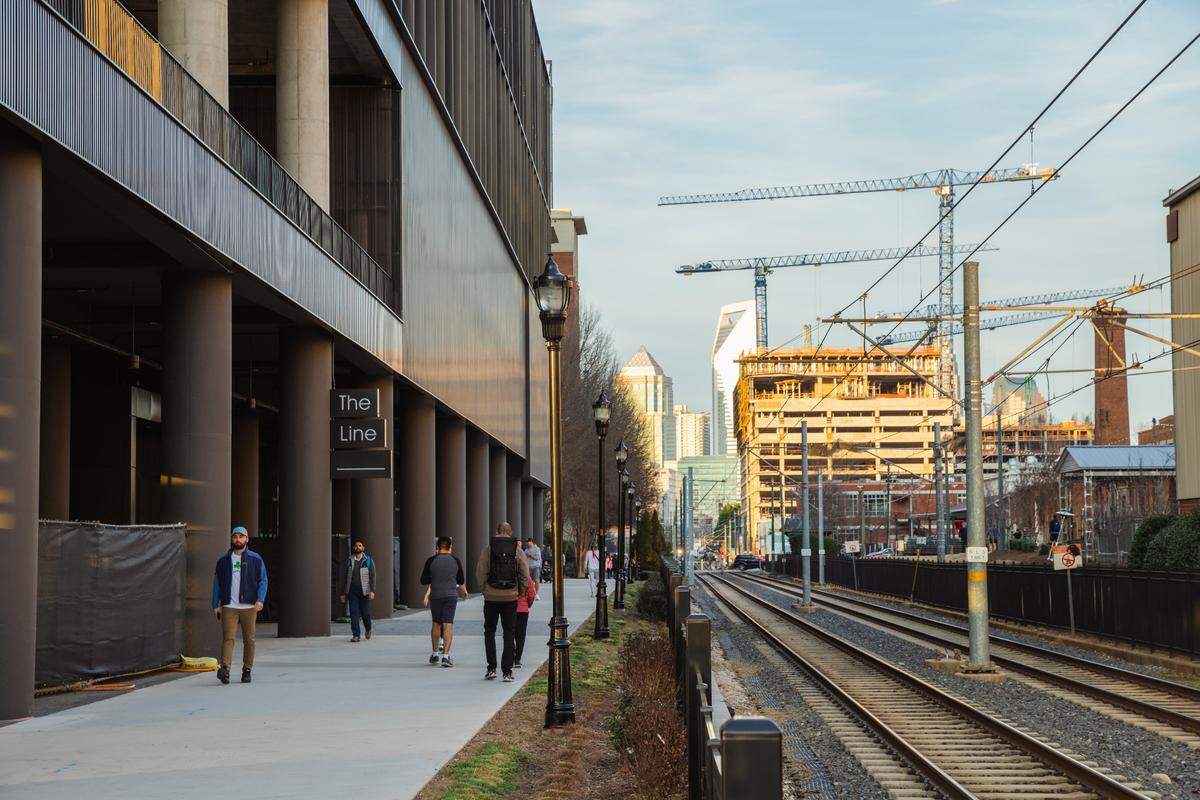
It’s easy to see who is physically building Charlotte’s future. Developers Northpoint Development, Beacon Partners and The Keith Corporation dominate Charlotte’s real estate market based on square footage.
But what about the city’s soul?
Ask residents what defines Charlotte, and they might point to uptown’s banks, NASCAR’s Hall of Fame, or the Carolina Panthers. But shaping a city’s identity isn’t only about institutions or sports teams, it’s about creating a sense of belonging.
For Paola Garcia, the marketing director at Camino, a nonprofit that serves Charlotte’s Latino community, the soul of the city lies in its diversity.
“You can wake up one day and go to a Panthers game, then walk down the street to a Spanish restaurant,” she said. “No one is really ever from Charlotte, and that mix of cultures and perspectives is what makes the city unique.”
Small business owner Helen Moffitt, 31, who runs Thrift Pony and lives in Plaza Midwood, said Charlotte was a good place to start her business and find community.
“I think people say Charlotte’s really soulless, and that’s something I thought when I first moved here,” she said. “But I think it’s a really awesome place and it’s growing and I think there are a lot of people trying to add character to it.”
The identity is Charlotte’s diversity?
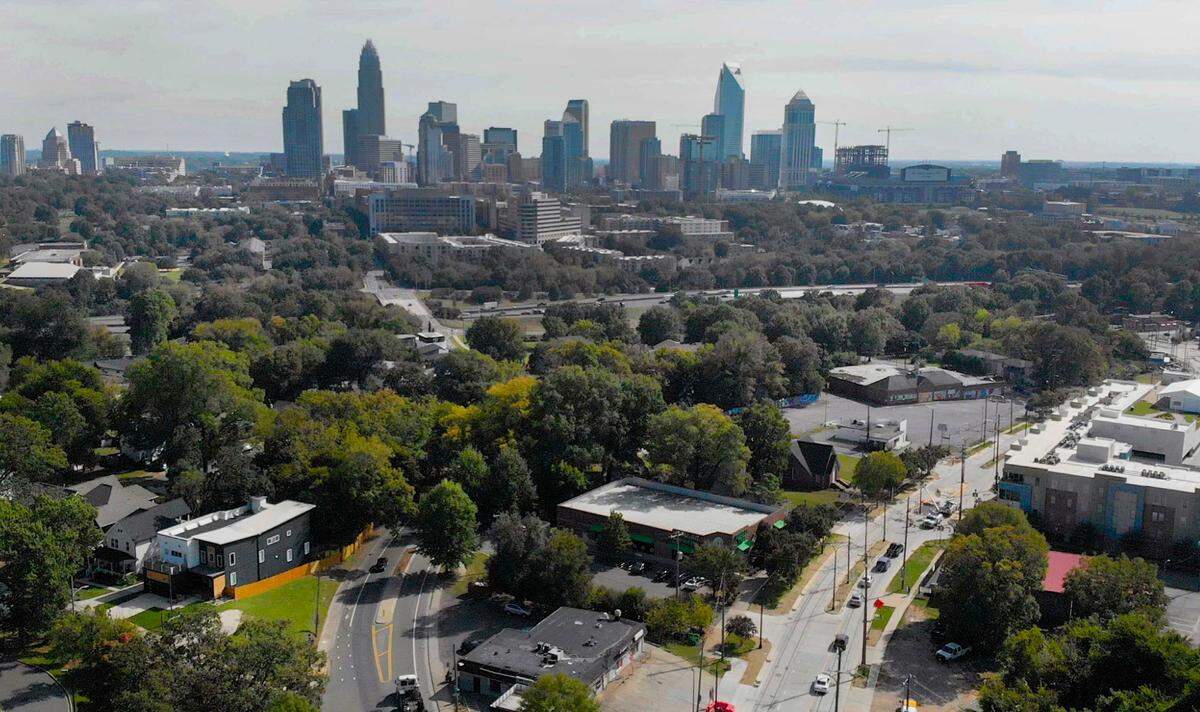
Charlotte Center City Partners, a 47-year-old nonprofit, is tasked “with the vibrancy” of uptown, South End and Midtown, according to its CEO Michael Smith. Its scope of work stretches from economic development to urban planning to event programming, and, as Smith put it, “owning the narrative storytelling” of Center City.
Smith sees Charlotte not as a finished product but as an “extraordinary, aspirational city of tomorrow that is still becoming.”
That sense of aspiration, he said, makes it especially attractive to city builders.
“When your city is still becoming what it eventually will be, you’re able to be very intentional about your values,” Smith said. “Because it’s easier to shape momentum than to create it.”
Rick Thurmond, the group’s chief marketing officer, said newcomers are crucial to that process.
“I think one of the ways that you continue to raise your own cultural bar is by raising your own standards for what’s new, what’s innovative, what’s exciting,” he said. “They’re bringing ideas, things they’ve seen or experienced in other cities, and they’re bringing them to Charlotte.”
The Knight Foundation is among the groups influencing Charlotte’s future. It’s a national nonprofit that funds arts and community development in cities across the country.
Charles Thomas, program director for the Knight Foundation in Charlotte, says the city’s identity is inseparable from its diversity. The organization has worked in Charlotte to highlight voices ranging from major cultural institutions to neighborhood arts groups in an effort to make sure growth reflects the people who live here.
Thomas points to Charlotte’s Black neighborhoods, particularly the Historic West End, as places where community leaders have shaped the city’s character and where history should be preserved as development continues.
“In order to make sure that our community feels inclusive, we have to build community-based infrastructure and institutions that represent the community voice,” Thomas said.
Without that, he warned, Charlotte’s rapid growth and change risks becoming detached from its neighborhoods and their diverse histories.
Through the Knight Foundation’s support, groups like Goodyear Arts at Camp North End and JazzArts have helped push Charlotte’s culture into the open, holding performances in public spaces rather than only inside museums or concert halls.
That focus on culture and expression mirrors what others see in Charlotte’s growing arts scene.
Clayton Sealey, a member of the Charlotte Planning Commission, runs the popular CLT Development social media accounts and co-hosts a new podcast called Shaping Charlotte. A Charlotte native, he returned to the city after some time in New York five years ago. He said Charlotte’s momentum is what drew him back.
For Sealey, what makes Charlotte unique is a combination of its natural features such as creeks, trees, access to the outdoors and its pro-business spirit. He said the city has a “blossoming” arts and culture scene from institutions like the Mint Museum, where he serves as marketing director, to “little guys” like Davidson Community Players, Three Bone Theatre and Independent Picture House.
“Unlike most other cities, really any other city, Charlotte still has the chance to define itself,” Sealey said. “We’re not locked into one identity.”
So, does Charlotte have an identity crisis?
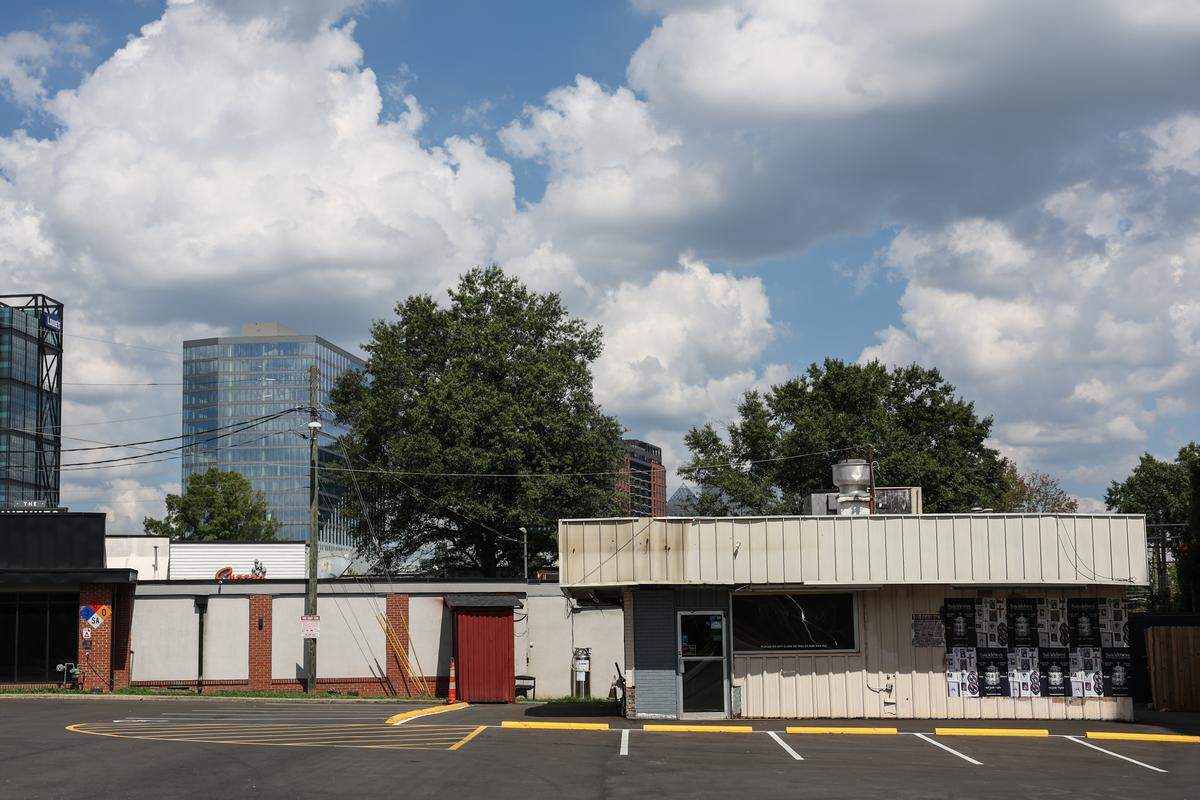
While Charlotte has less of a clear identity than other major cities, Hanchett said he doesn’t think it actually bothers a lot of people.
“They’re focused on living a good life here… and are drawn by the kind of prosaic, everyday world that you create around you here,” he said. “I don’t think they’re coming for secret she-crab soup or hot new country musicians that might be an attraction in other big cities.”
That everyday quality of life, and especially its neighborhoods, is what Andrew Blumenthal, a Charlotte native and member of the Charlotte Planning Commission, said defines the city.
“When you fly into Charlotte, you don’t ever have any idea that this is a metro area of pushing 3 million people, right?” he said. “Charlotte’s identity is our neighborhoods with tree canopy, our charm, our quality of life.”
Blumenthal admitted it’s a tough identity to package and sell, but Charlotte may not even need a marketable identity.
But in 2012, the DNC host committee gave marketing Charlotte a try. It decided the symbol it would use to represent Charlotte is barbecue. The convention held a barbecue sauce competition, and Michelle Obama credited Charlotte as a city with Southern charm, warm hospitality, and “great barbecue.”
Not everyone was convinced.
John Shelton Reed, the author of of Holy Smoke: The Big Book of North Carolina Barbecue, told the Associated Press at the time: “Complete the sentence: As a barbecue town, Charlotte is one, not what it used to be; two, like Minneapolis for gumbo; three, good enough for Yankees; four, not far from Shelby.”
Even then-Mayor Anthony Foxx admitted there was better barbecue elsewhere in the state.
But even without an obvious cultural touchstone or marketable draw, Charlotte’s transformation shows no sign of slowing. That constant influx of new residents, Smith said, is what keeps Charlotte in motion.
“What’s most attractive about this city is that its best days are yet to come,” he said.
Or, as Thurmond put it, Charlotte may not have a single cultural symbol like Nashville’s country music or New Orleans’ jazz, but it does have something else.
“A pervasive sense of optimism about what’s possible,” he said. “A blank canvas.”
This story was originally published October 8, 2025 at 5:00 AM.