They moved away from Charlotte for peace, space. The city’s sprawl followed
AI-generated summary reviewed by our newsroom.
- Newcomers picked Charlotte’s suburbs for space and quiet; rapid suburban growth followed.
- Growth boosted jobs and commerce but strained roads, schools and drainage.
- Rising property values fuel tax hikes, squeeze farmers and alter county identity.
Eight years ago, Leyla Bahmanyar bought a house in Concord for the quiet.
Farmland stretched nearby. Traffic was light. She found a place that felt close enough to family but far enough from Charlotte’s sprawl.
Today, Bahmanyar, 41, finds herself boxed in by subdivisions. Stormwater systems grew strained and left her street flooded after heavy rains. She works part time at a veterinary trauma hospital in Charlotte, but says traffic forced her to cut back her hours.
The drive is only one piece of what Bahmanyar describes as relentless growth in Cabarrus County. Her taxes spiked after a reappraisal raised her property value by $150,000. Other residents tell stories about longtime neighbors moving out and small businesses being forced to close amid construction.
Bahmanyar’s frustrations are hardly unique. Across the Charlotte-area’s suburban counties, families who fled the big city in search of more space, lower taxes, and slower living are discovering rapid growth didn’t stop at the county line — it followed them.
“It’s devastating,” she said. “I moved here for some peace and quiet… Now it’s turning into another Charlotte.”
A county in transition
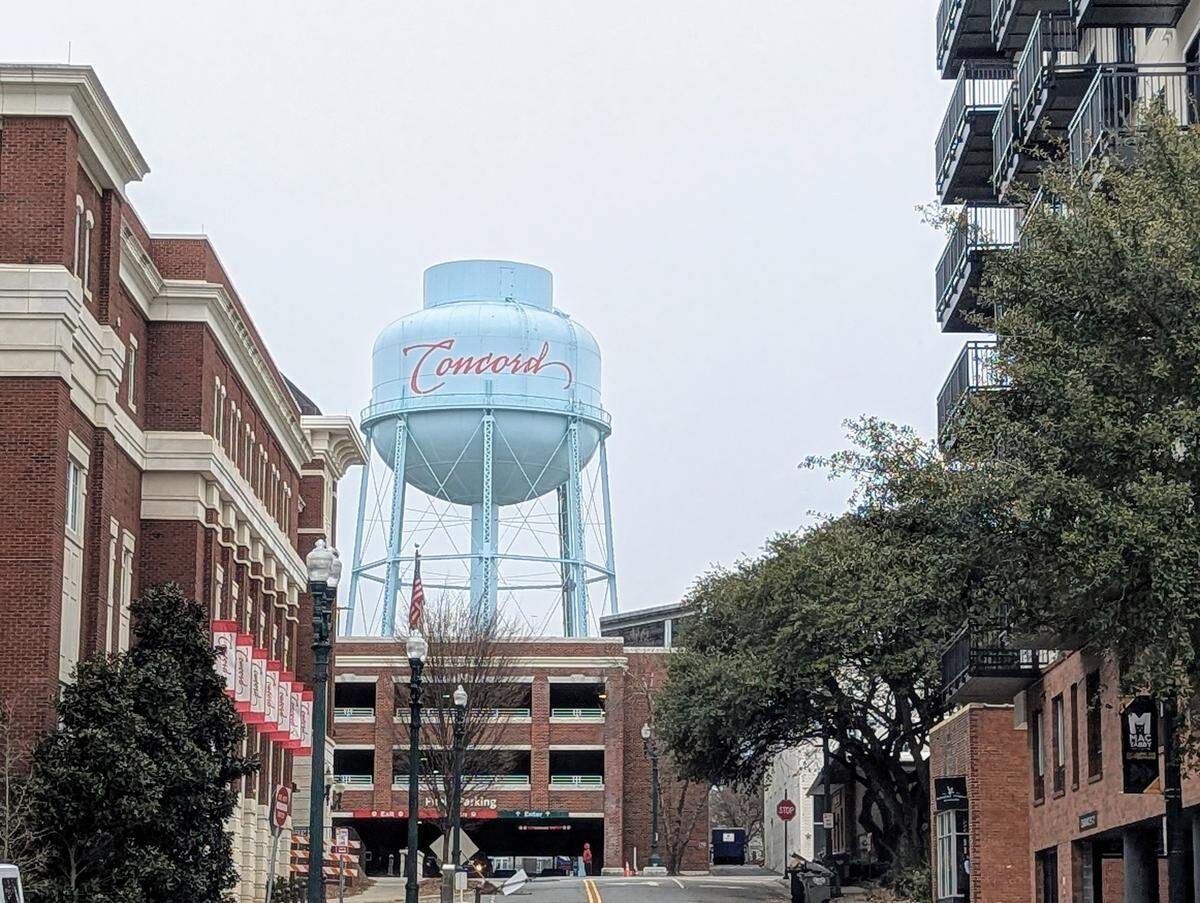
For generations, Cabarrus County’s identity was built on textiles and manufacturing. Cannon Mills and Pillowtex once dominated Kannapolis, and Philip Morris ran a sprawling tobacco plant in Concord. Their closures in the 2000s gutted the local economy. Pillowtex’s collapse in 2003 marked the largest single-day job loss in North Carolina history.
“That was a pretty devastating time here,” said Steve Morris, who served on the Cabarrus County commission for over a decade and is currently running for Concord mayor. “Many people had worked in the mill their entire lives, many of them without even a high school degree.”
In the years since, growth rewrote the county’s story. Cabarrus’ population has jumped nearly 38% since 2010, according to U.S. Census data, making it one of North Carolina’s fastest-growing counties.
For many of the newcomers, the county is a bedroom community of Charlotte: a place to sleep, not work.
“At one point, about 75% of our working population left Cabarrus County to go work in another county every day,” Morris said.
New opportunities are beginning to arrive in Cabarrus. Today, pharmaceutical giant Eli Lilly and Red Bull are investing billions into the area. But while the county works to find its economic footing, the pace of daily life has transformed for residents.
The reality of living in these neighboring counties often clashes with the vision that lured newcomers there.
Morris said he hears complaints about growth most often from newcomers.
“They moved here because there was less congestion, and there was more open space,” he said. “And now, with the growth that has occurred, there are more cars on the road, there’s less open space.”
Laura Beaver, who has lived in Cabarrus for two decades, said she remembers when her 5-acre property still felt rural. Now, she said, traffic clogs the roads, her property tax bill increased, and the deer she once saw regularly are gone.
“It feels like we’re being set up for disaster,” she said.
The frustration is familiar to Charlotte historian Tom Hanchett.
“The disgruntlement over the unexpected growth is really strong in the outer areas,” he said. “Because they’ve changed more than Charlotte.”
Agriculture under pressure

That change is especially clear on farmland. Once central to Cabarrus County’s identity, agriculture is now among its most vulnerable sectors.
Daniel McClellan with the Cabarrus Soil and Water Conservation District said development broke large farms into smaller tracts, making it harder to operate efficiently.
“A farm has to have a certain amount of available land that they can go to and not be transporting their equipment down the road all the time,” he said. “People are having to farm on smaller scales now.”

For sixth-generation farmer Brent Barbee, the pressure is relentless. Developers call almost daily to see if he’ll sell his land in Concord. He pivoted his production to fruits and vegetables because traditional row crops no longer made sense.
“When I came home from college, fruits and vegetables were the only way we could use the farm for me to make a living,” Barbee said. “Row crops, corn, soybeans, wheat, you’ve got to have several thousand acres to make it pencil out. With development, there’s nowhere for us to expand to.”
Still, growth has created new markets. McClellan said farmers markets are thriving as more growers shift to selling directly to consumers. Barbee said his Community Supported Agriculture program, farm stand and Saturday market in Davidson all benefit from the influx of people moving to the county. But property values have skyrocketed, driving up taxes and squeezing farmers’ margins, Barbee said
“There’s pluses and minuses to every side,” he said. “Everything is OK in moderation.”
For long-time farmers, the deeper fear is whether agriculture will remain part of Cabarrus’ identity at all.
“Farmers are concerned because their livelihood is farming,” McClellan said. “If they keep losing land, at some point it may not even be possible like it was in the past.”
‘10 years ago it was like a ghost town’

Union County leaders say they hear the same frustration almost daily.
“Growth is our number one issue, it’s what’s at the forefront of the residents’ mind that we represent and… they are fed up with it,” said Union County commission Vice Chair Brian Helms. “When you’ve seen the kind of growth that Union County has, it does have the ability to change your county, and not necessarily for the best.”
Helms grew up surrounded by fields of soybeans and corn. Now, he said, those fields are subdivisions, movie theaters and new schools the county built just to keep pace with the influx of families.
The county’s character, once defined by agriculture, is shifting as development spreads east from Charlotte.
Residents have watched downtown Monroe change, too. Kent Millsaps, owner of Alice Jules Coffee House in Monroe, said he remembers when it was “basically a ghost town.” Today, he said, the streets are busy with new restaurants, shops and breweries. Since he opened Alice Jules, Millsaps has watched two more coffee shops open nearby. Proof, he said, of how far downtown has come.
“So much more growth (is) coming to downtown… it’s like a revival,” he said.
Helms emphasized he isn’t against growth altogether.
“Union County is not… averse to growth, but it has to be the growth that we need,” he said. “Ninety percent residential is not sustainable for Union County in the long term.”
What he wants is more balance, and a tax base with more commercial and industrial development so the burden doesn’t fall almost entirely on homeowners.
Union County recently completed its regular reappraisal process, where the average property value rose about 60%, the Observer previously reported. Commissioners lowered the tax rate following the revaluation, but many residents saw higher bills because of the sharp increase in assessed values.
To that end, the county has launched farmland preservation easements, strengthened zoning requirements, and now requires 30% open space in major subdivisions, Helms said. Leaders also created an economic development department to actively pursue businesses. Still, he said, they don’t want to “cannibalize what makes Union County so great.”
Diversifying the type of growth in the county could also help keep more people in the area for work. Helms said a “huge percentage” of residents commute to Charlotte everyday. The problem, he added, is that many of those same people moved to Union County hoping to escape traffic and congestion.
“That’s the challenge,” Helms said. “People come here because they want things quieter, but the traffic and the growth they were trying to escape is catching up with them.”
Turner Wilkinson, a 29-year-old Indian Trail resident who grew up in Monroe, said traffic is much worse than it used to be, and housing costs have climbed so high that many young people can’t afford to buy a home. He wishes the growth would slow.
“I joke about that,” Wilkinson said. “That I wish less people came here.”
Still, he said growth revived parts of the county.
“Ten years ago it was like a ghost town,” he said. “Now it’s busy, with bookstores, breweries, coffee shops, restaurants.”
The trade offs

Leaders acknowledge that while growth has expanded the tax base, it has also strained schools, roads and sewage systems. At the same time, it has brought undeniable change in the form of new industries, changing demographics and revitalized downtowns.
“If I had to pick my problem, I’d choose managing growth over watching a community shrink and die,” Morris said.
But for residents like Bahmanyar and Beaver, the costs feel personal. The jobs and amenities may be new, but the quiet they moved for is slipping away.
“We moved out here for peace and space,” Beaver said. “Now it feels like Charlotte is moving in on us anyway.”
This story was originally published October 8, 2025 at 5:00 AM.