Charlotte’s deadliest plane crash has finally been memorialized after 51 years
AI-generated summary reviewed by our newsroom.
- Eastern Flight 212 is now memorialized in Charlotte, 51 years after deadly crash.
- The 1974 crash killed 72 and led to safety reform: The FAA's 'sterile cockpit’ rule.
- Families of Flight 212 victims initiated memorial talks after Charlotte Observer series.
It is an unadorned metal bench, located in the middle of one of Charlotte’s underrated treasures — the Airport Overlook park, with its awe-inspiring views of planes arriving and departing and its massive playground that delights children.
If you sit on the bench, you are greeted with a sign that looks like a historical marker and is mounted directly in front of it.
The sign reads: “Forever remembering Eastern Airlines Flight 212 on final approach five miles south of this memorial. Sept. 11, 1974. Federal safety regulation ‘sterile cockpit rule’ enacted as a result of this tragedy.”
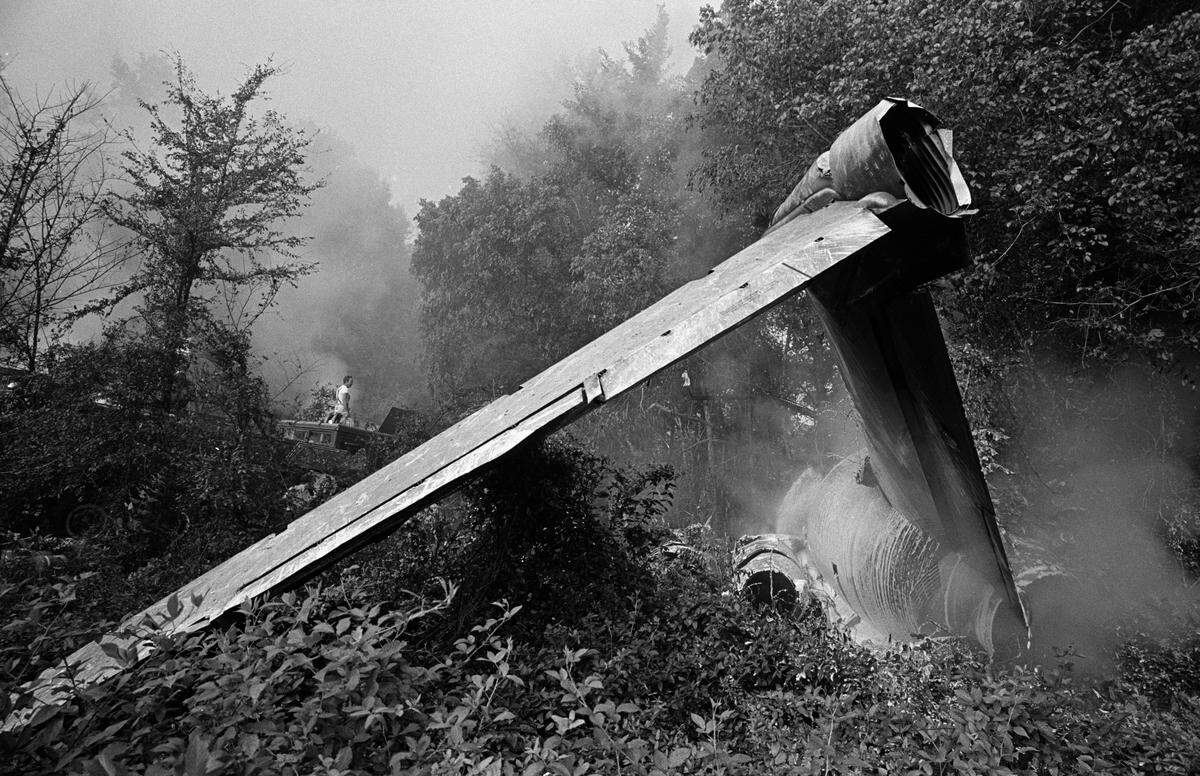
Those 31 words may not mean much to you, but they mean a lot to the several dozen people who gathered Saturday, on a warm morning at the park. All of them had a deep connection to Flight 212, which crashed into a cornfield short of its intended runway in Charlotte on Sept. 11, 1974, killing 72 people.
The horrible accident — later determined to be caused by pilot error — remains the deadliest plane crash in Charlotte history. But it has been largely forgotten over the past five decades, as the people who knew about it and the 10 people who survived it grew older or passed away.
So this new bench and its accompanying marker are significant. For the past 51 years, the crash of Flight 212 hasn’t been publicly memorialized anywhere in Charlotte. Where the plane went down in Charlotte remains on private property and cannot be easily accessed. Those who lost someone on the flight often found themselves with nowhere to go to remember their loved ones.
Julia Norem, now a doctor in the Fayetteville area, lost her father Walt Norem in that plane crash. Walt Norem, a beloved professor at UNC Charlotte at the time of the crash, was returning from a business trip.
Her father loved to fly, Julia Norem said, and often brought the Norem children to the airport on weekends to watch planes take off and land. She said at the dedication of the memorial Saturday that her father would have appreciated the bench’s simplicity and its appeal as a place for quiet contemplation.
“This is humble,” Norem said, gesturing to the bench and the monument. “This is simple. And it shows what his personality would be, to very quietly touch a lot of lives. And I think this is going to very quietly touch a lot of people, this remembrance, in the way it has touched all of us in all of our personal lives.”
Also among the speakers was Bree Watson Johnson, a schoolteacher who had driven four hours from Georgia to be at the dedication with her husband and one of their sons. Her mother, Colette Watson, was a flight attendant on the doomed Eastern plane, but walked away from the crash nearly unharmed.
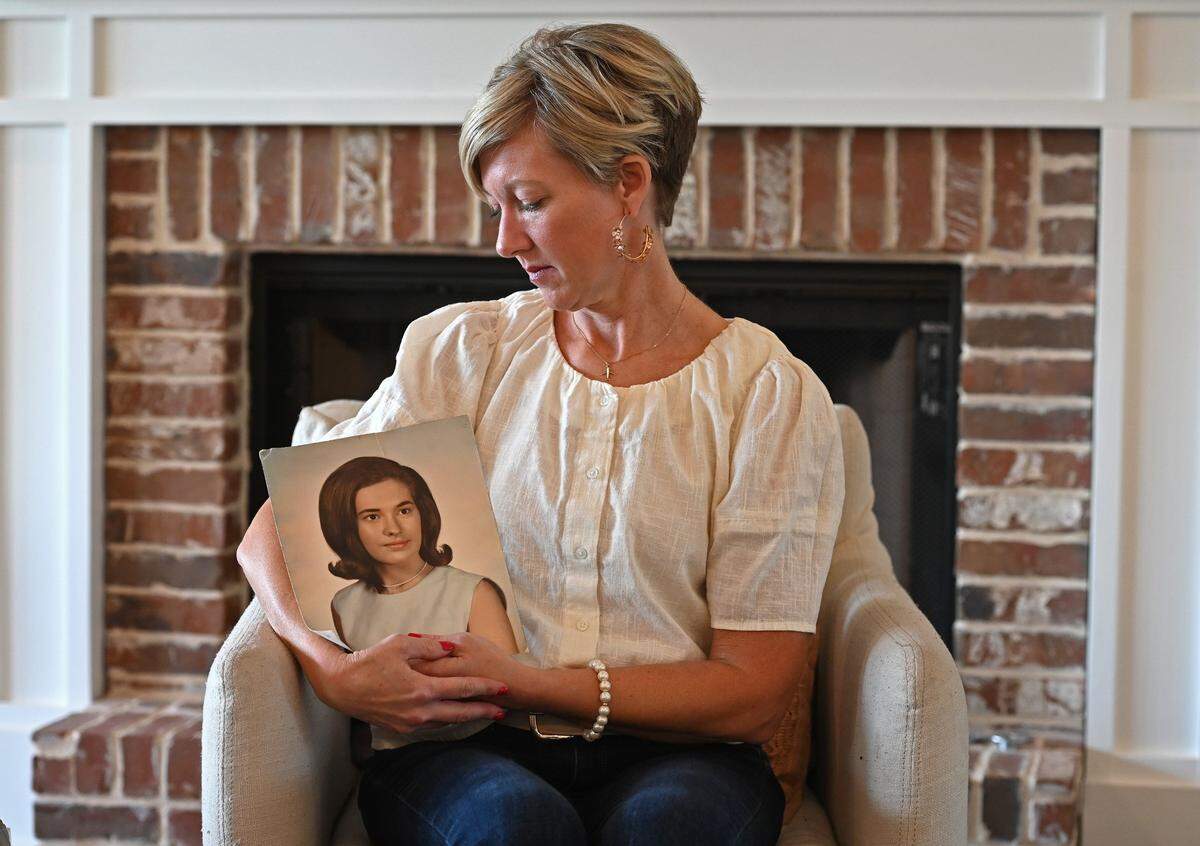
Colette Watson continued to fly for Eastern afterward but was haunted by survivor’s guilt, her daughter said. Colette Watson died in 2023.
“But if she was here today,” her daughter said, “she would walk around to every one of you and give you a big hug.”
Eastern Flight 212 is now memorialized in two different places in Charlotte. The effort to remember the disaster began a year ago, shortly after The Charlotte Observer produced a five-part series and a 30-minute video documentary (now available for free on YouTube) on the 50th anniversary of the crash.
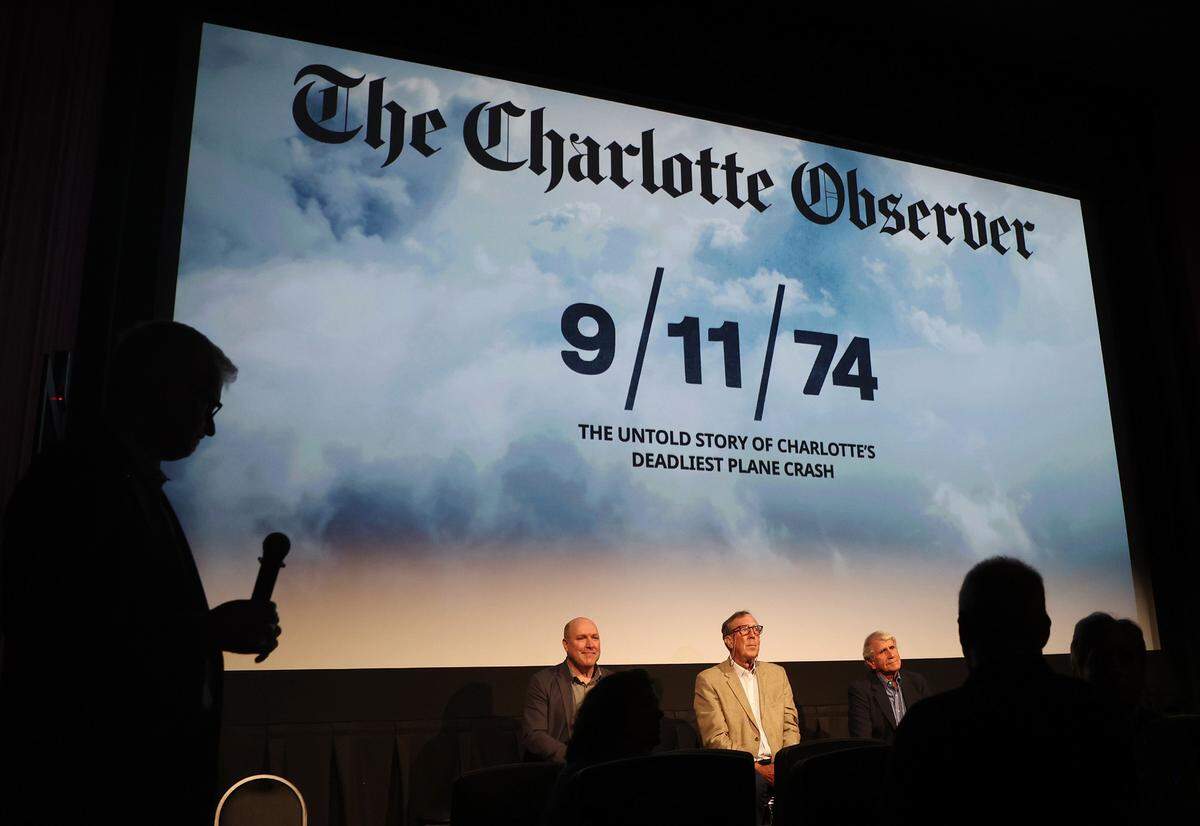
The video premiere of the “9/11/74” documentary was held in Charlotte at Independent Picture House, and Charles McDonald was in the audience that night. McDonald’s father was one of the flight’s 72 victims. Holding a microphone during the Q and A session that followed the film, McDonald proclaimed that he would volunteer to lead the charge to answer one of the film’s central questions: “Why is there no memorial anywhere for this flight?”
Banding together with a number of other relatives of the victims and survivors of the flight, as well as other volunteers, McDonald spearheaded an effort that eventually led to a memorial website and a number of engraved bricks remembering people on Flight 212 being placed on the patio at the Sullenberger Aviation Museum in June.
Now, a few months later, there is another tribute — this bench at the Airport Overlook, paid for in part by victims’ families and with the cooperation of airport officials. A memorial at the actual crash site didn’t seem appropriate, McDonald and others connected to the flight believe, since it happened on wooded land that is now private and belongs to a church in south Charlotte.
Eastern Flight 212 — which originated from Charleston, S.C. — is known to aviation enthusiasts for several reasons. For one thing, the father and two of the older brothers of future late-night TV comedian Stephen Colbert were killed in the crash (Stephen Colbert was 10 years old at the time he lost those three family members — the Colbert family has since been helpful to McDonald in the effort to memorialize the crash).
And most importantly, Flight 212 helped to make every single flight you take today safer because it was at least partly responsible for the advent of the “sterile cockpit” rule, introduced by the FAA in 1981 and a big step forward for aviation safety.
The sterile cockpit rule prohibits pilots from engaging in conversations unrelated to operating the aircraft when flying below 10,000 feet. The National Transportation Safety Board concluded Flight 212 crashed in 1974 due to pilot error, and the recording of the two pilots’ conversation while landing revealed a lot of casual conversation that had little to do with flying the plane.
“Poor cockpit discipline,” the NTSB would term it. The only known surviving piece of Eastern Flight 212 is the flight data recorder, which is currently on display at Sullenberger Aviation Museum.
The crash of Eastern Flight 212, ultimately, was an avoidable tragedy.
But since it happened, McDonald and the many other family members related to its victims and survivors believed it should never be forgotten. Now, with two memorials in the Queen City, placed 51 years after the crash that affected so many families, it will long be remembered.