How Charlotte volunteers connect with the city’s growing homeless population
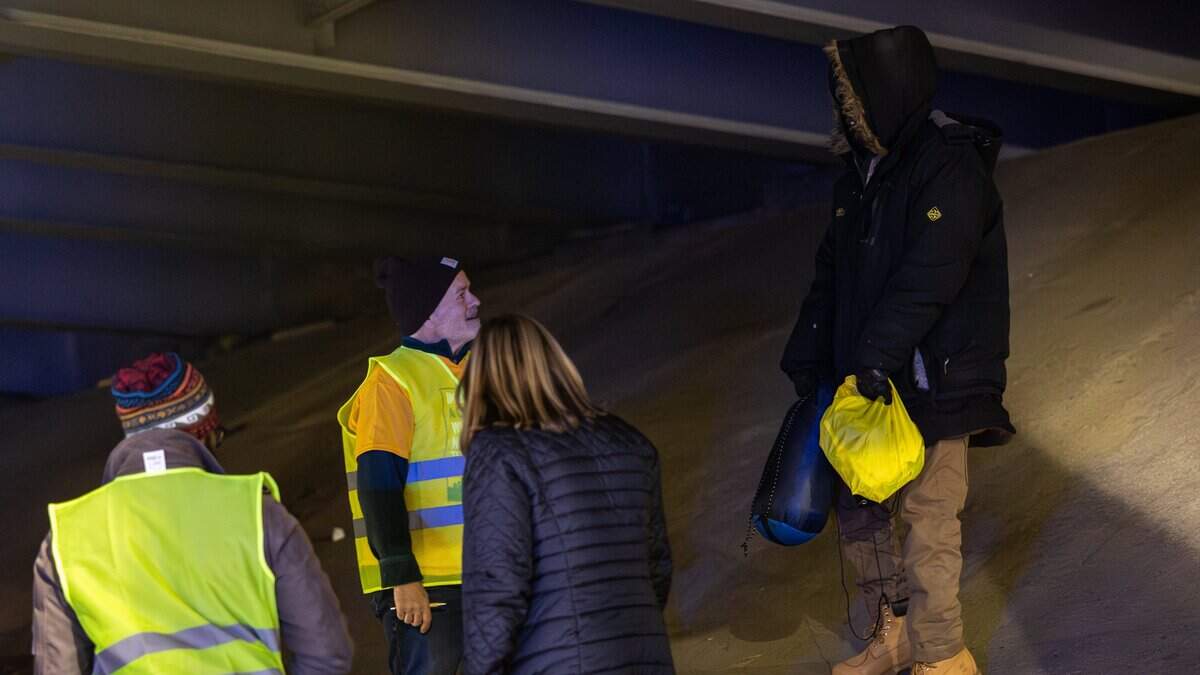
In the slow and sleepy morning hours, Allison Winston laid out a solid game plan to her crew at the Homeless Resource Center in uptown Charlotte.
Winston works for Community Solutions, a national nonprofit that works to end homelessness.
And on Thursday at 5 a.m., she was one of the many dozens of captains leading a team during Mecklenburg County’s annual Point-In-Time Count, where volunteers survey and count individuals experiencing sheltered or unsheltered homelessness. It’s a nationwide event that takes place in January and is required by the U.S. Department of Housing and Urban Development.
The game plan was this: her crew would head to the outskirts of uptown. Think the Music Factory near Pinewood Cemetery, Frazier Park, SouthEnd, parts of Wilmore and Little Sugar Creek Greenway.
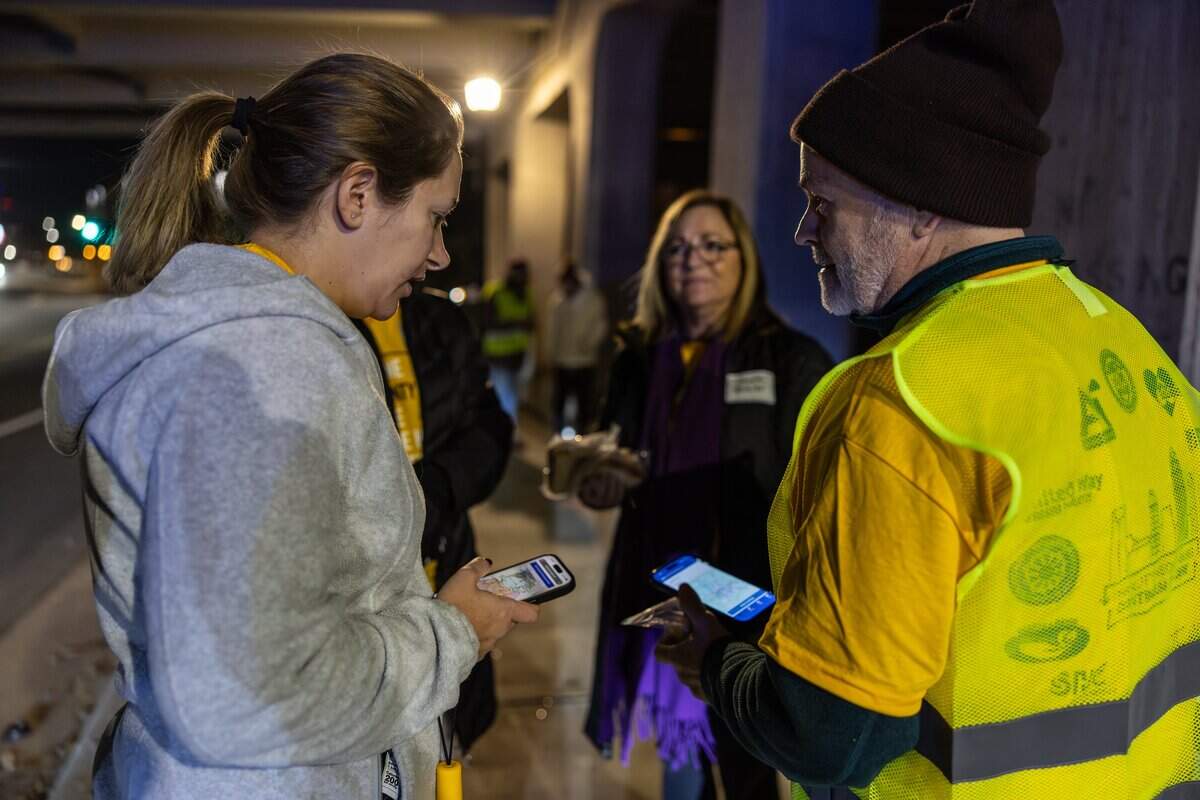
Typically, those areas house encampments or individuals sleeping in doorways and park benches.
While there are no set expectations for what volunteers will find during the count, Winston anticipated seeing some people in those areas.
“Of course, you want to see less people because you made progress, but I don’t know how realistic that is,” Winston said before the crew headed out.
Homelessness in Mecklenburg County
Homelessness is rapidly increasing in Mecklenburg County.
Here are the number from county statistics:
- Last year, 444 people were experiencing unsheltered homelessness. That’s the highest number the county has seen since 2010.
- Of that group, six were minors. That’s the highest number of children living outside since 2008
- Charlotte-Mecklenburg Schools identified 5,680 students experiencing homelessness during the 2024-25 school year. That’s an 18% increase from the previous year.
- Between June 2022 and June 2024, the homeless population rose by almost 15%, increasing from 2,428 people to 2,784.
- And as of October, that number sits at 2,300 people, according to county data.
The official PIT count numbers will be released possibly in May.
The increase stems from increased housing costs and stagnant wages, according to advocates. Around 11% of Charlotteans live in poverty. Another 61% of renters earning between $50,000 and $74,999 pay more than a third of their income toward housing costs — meaning they can’t sustainably afford rent.
A quiet search through central and south Charlotte
A portion of the Interstate 277 underpass near the Music Factory was fenced off and unoccupied, which surprised Winston.
“This is really a hot spot with long-established encampment,” Winston said. “For 10 years, I’ve been doing this kind of work, and I’ve never seen it that way.”
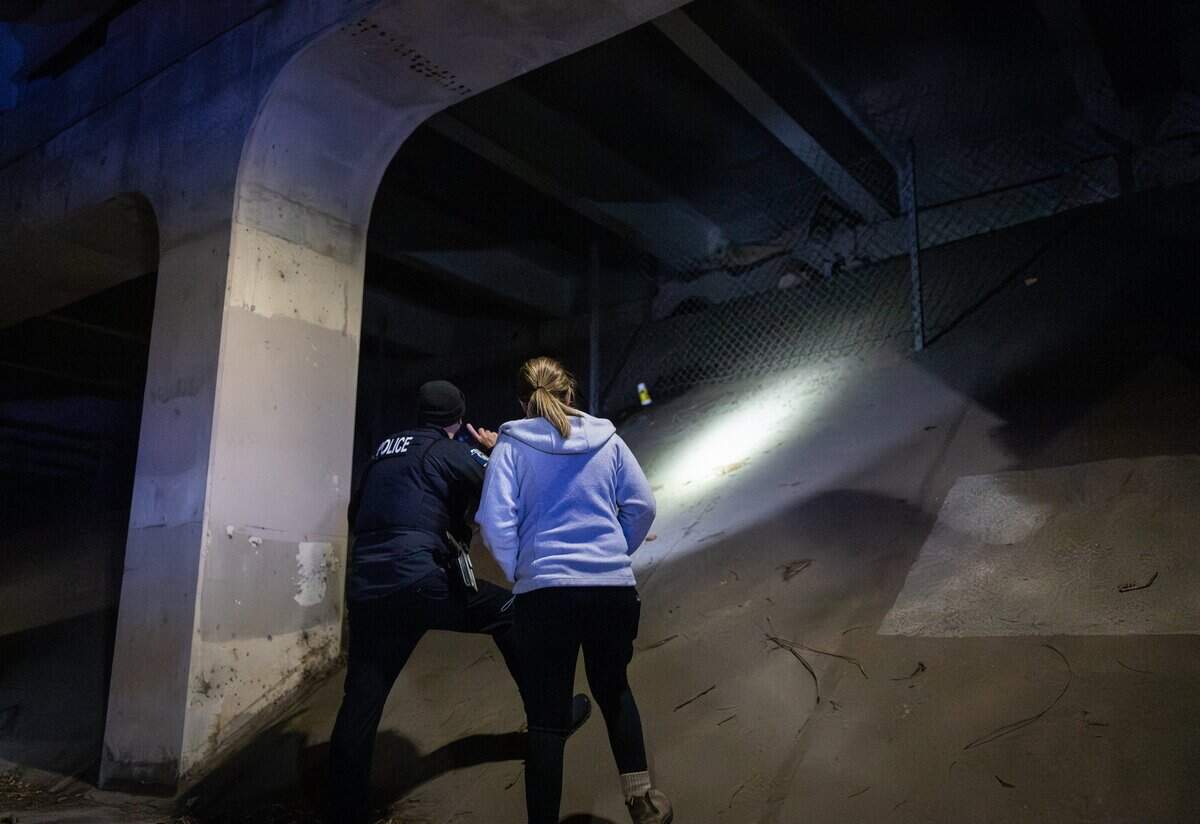
The surprised quickly turned to worry as many areas where outreach workers previously met with unhoused people were empty.
Heading down to the train tracks near Pinewood Cemetery was eerily quiet.
An open field near S. Tryon Street and W. Kingston Avenue was deserted, as were the benches along the greenway at S. Kings Drive.
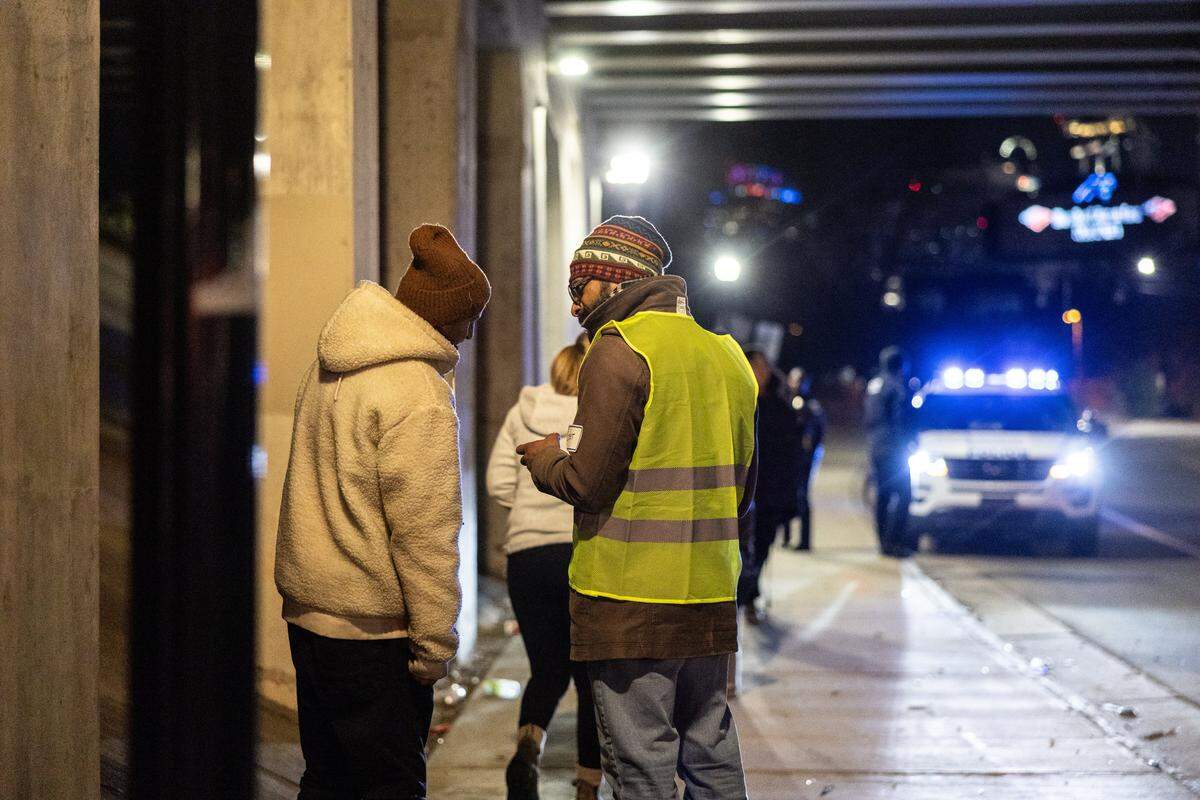
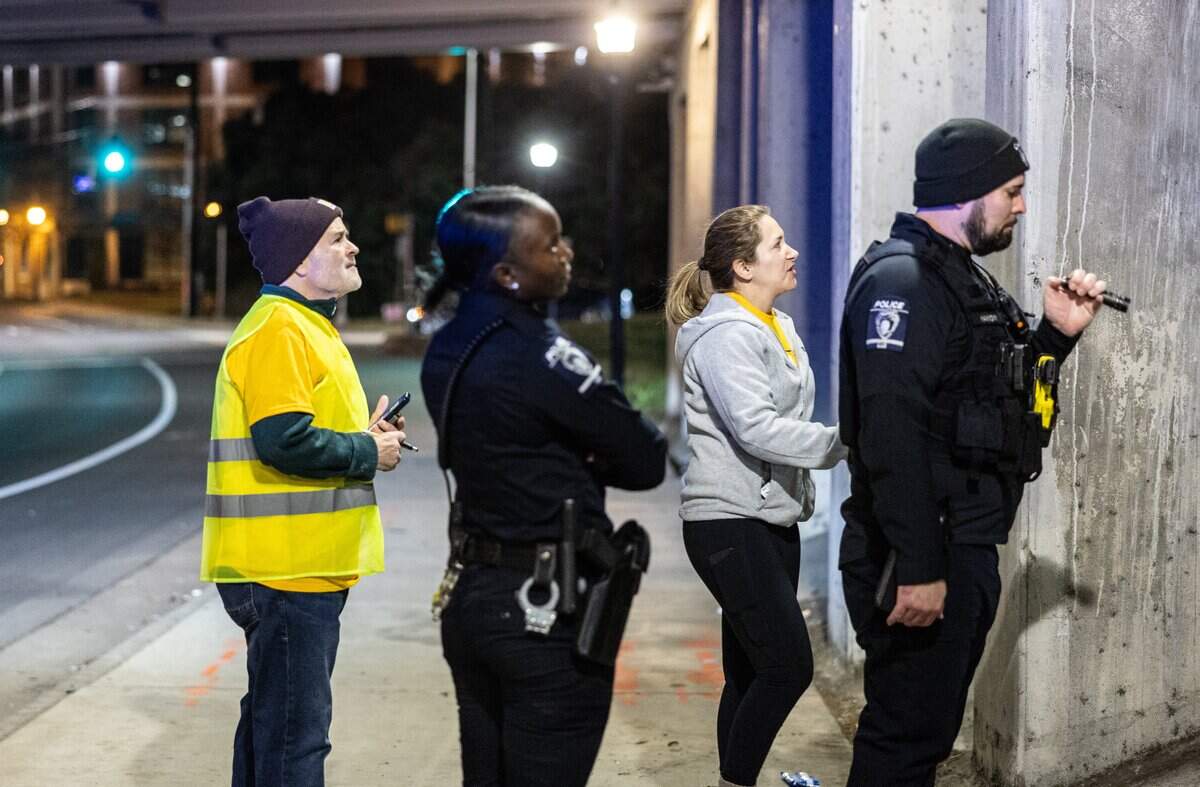
Winston’s team did meet several people, hidden and tucked under interstate overpasses.
Volunteer Jeet Pawar spoke with two of the men, who both said they were chronically unhoused, meaning they’ve experienced homelessness for more than a year. They’ve also experienced homelessness more than once.
The men also shared their stories of why they weren’t in shelters.
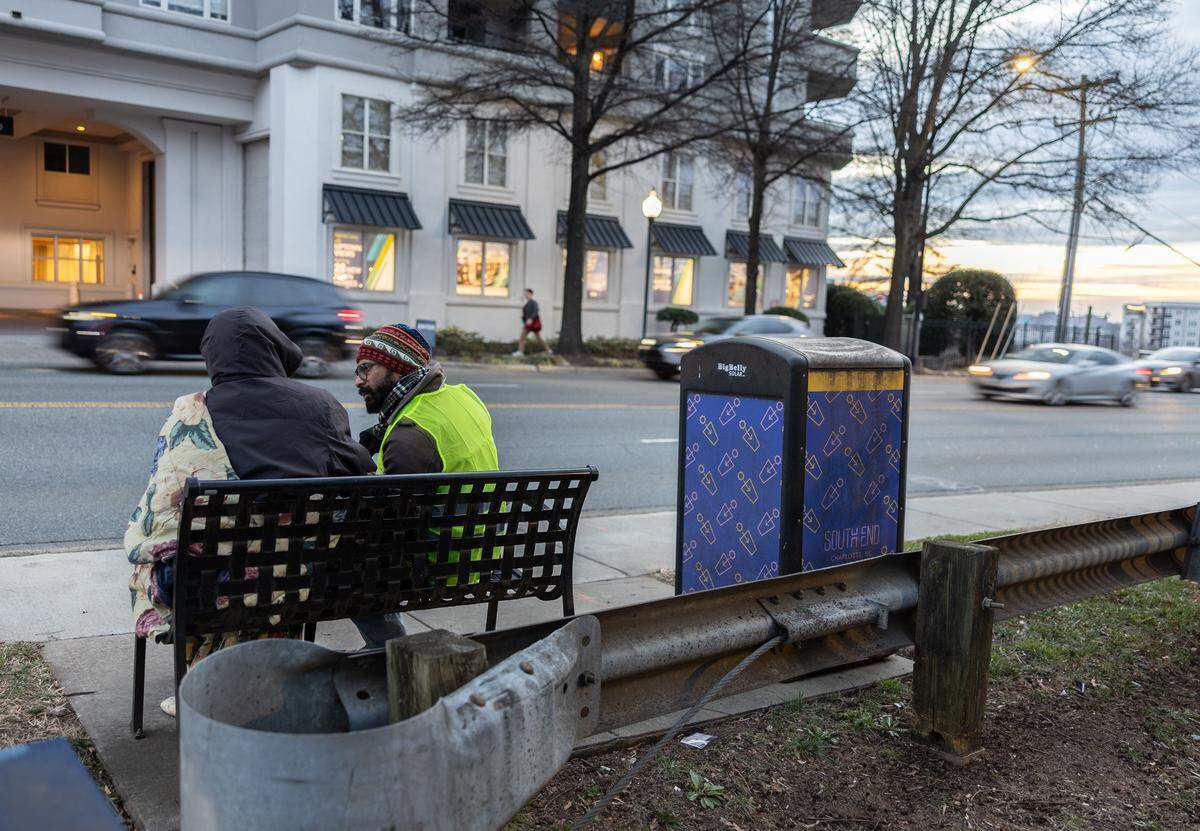
A man sleeping under the Interstate 77 bridge said shelters could be unsafe and didn’t provide privacy. Another man sleeping on a bench near E. Morehead Street said he has trouble finding available services. He doesn’t have a case manager.
Both of their stories ring true among studies of why some people experiencing homelessness are outside.
Entering a shelter can be timely and wrought with barriers such as not having a birth certificate, according to a 2019 study by the NYU Silver School of Social Work. The study also showed that some found shelters to be unsafe, lacking in privacy and weren’t disability-friendly.
There are four shelters in Charlotte; two facilities for men run by Roof Above; a woman’s shelter run by the Salvation Army; and a domestic violence shelter.
Displacement in Mecklenburg County
Winston wasn’t the only one anxious about why her team didn’t encounter more people.
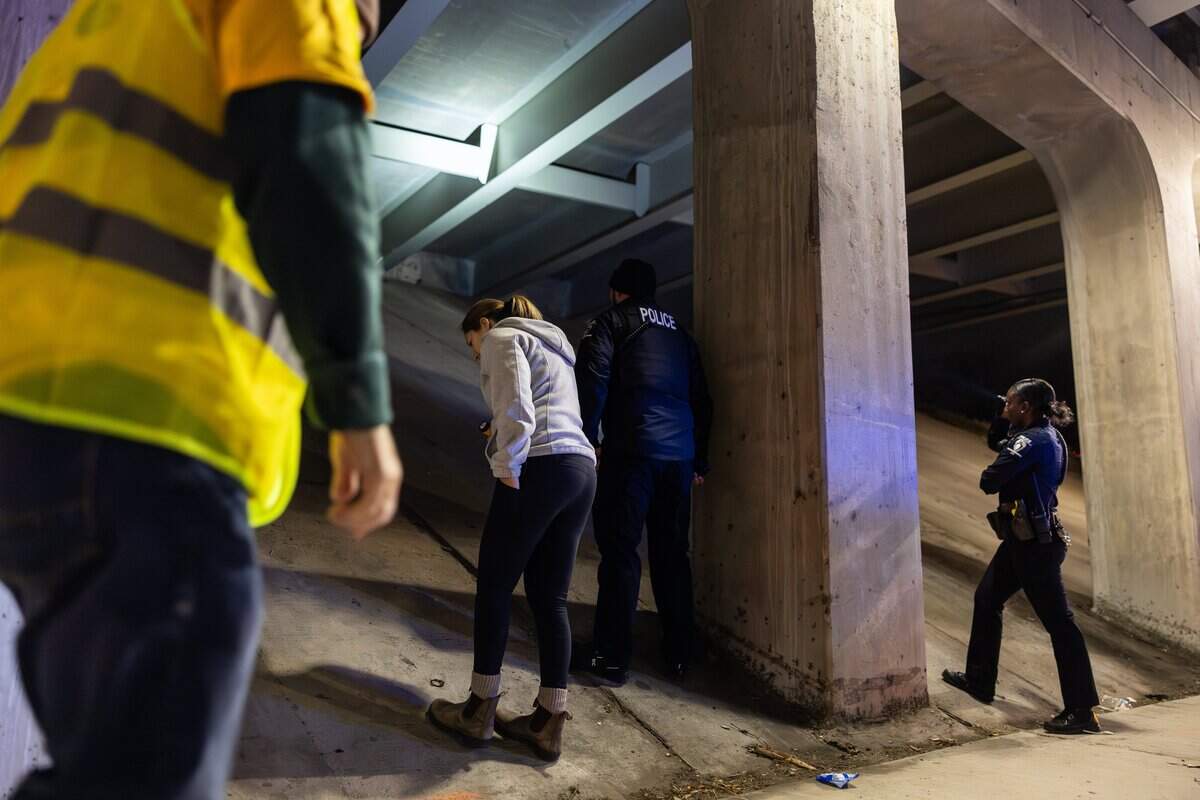
Liz Clasen-Kelly, CEO of Roof Above, said her team also didn’t see many people outside. Roof Above is a nonprofit that works to end homelessness.
Last year, when temperatures dipped into the low teens, she encountered more people uptown than Thursday, where temperatures were warmer.
Winston said other team leaders expressed a similar sentiment.
“We know that homelessness has not gotten better,” Winston said. “So, our question is where are the people? Are they getting displaced and more on the outskirts of the city center, or are they getting better at finding spots that we don’t know about to sleep.”
Mecklenburg County Commissioner Laura Meier wondered the same thing.
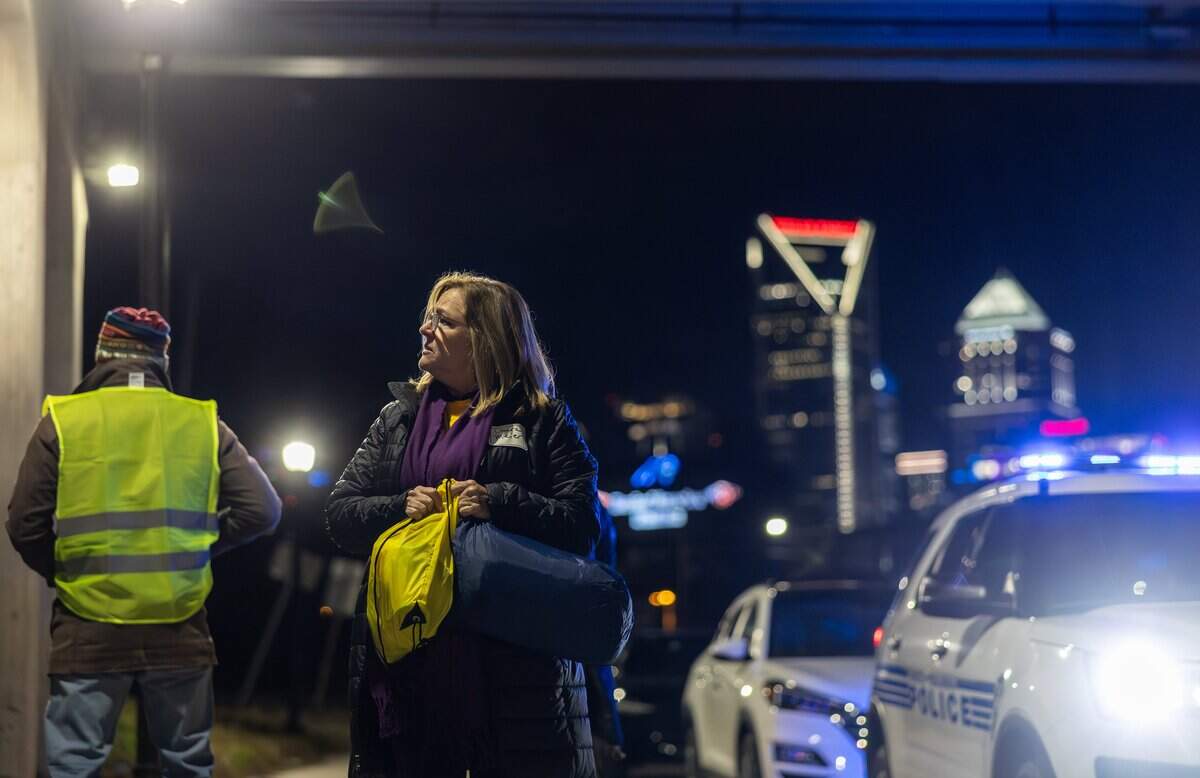
She was part of Winston’s team and was worried about the low number of encounters.
“I’ve seen so many people in the past during the day, and it makes me wonder where are they,” Meier said. “But just because we didn’t see them, I know they’re there. They’re somewhere. They’re not housed.”
Meier is aware that city center leaders are pushing for an increase in encampment enforcement. Winston noted that more and more areas are being fenced off, like near the Music Factory.
It’s unclear if the Charlotte-Mecklenburg Police Department has ramped up enforcing the encampment ban, which prevents people from setting up tents in public areas. CMPD did not immediately respond to a request for comment.
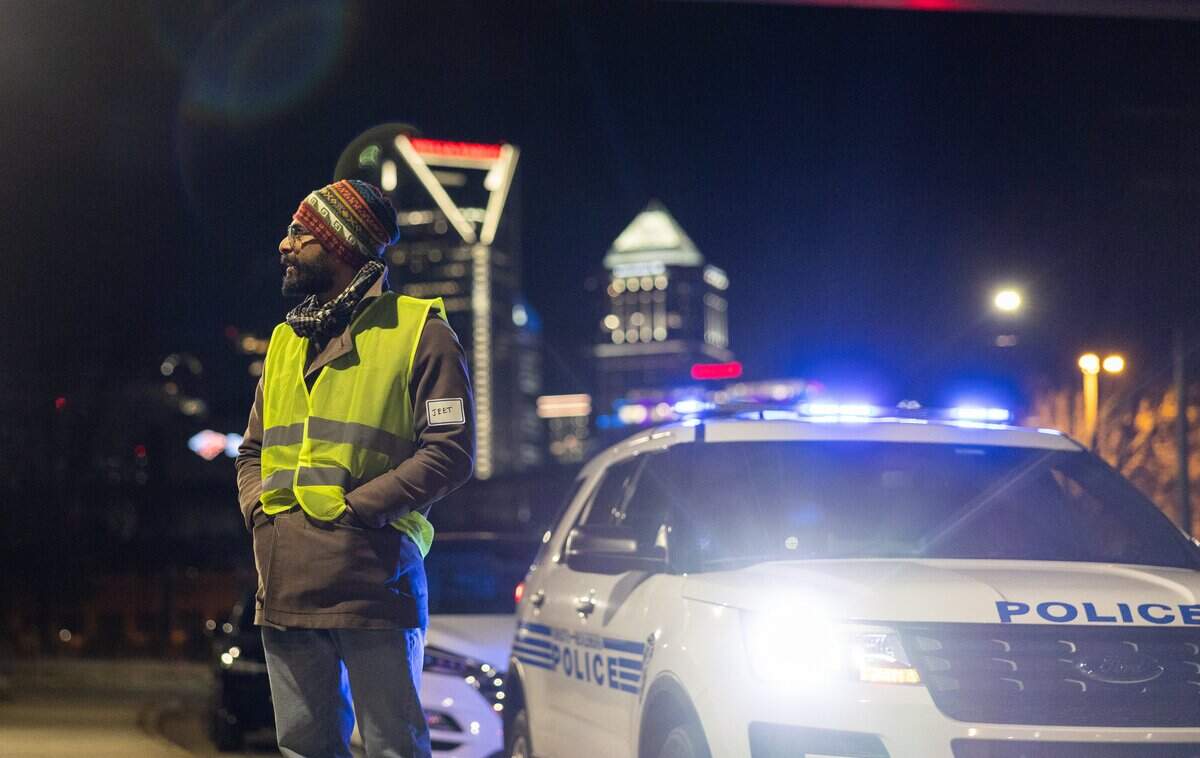
Enforcing the ban doesn’t end homelessness, Winston said. It just moves people to a different place, which could disrupt outreach efforts.
“You’re just kicking the problem down the road,” Winston said.
PIT Count continues in Mecklenburg
Clasen-Kelly felt a mixture of hope and worry with the numbers her group saw.
There’s hope in that maybe some folks on the street went into a shelter. Then there’s the worry of maybe they were being displaced as Winston described.
PIT data is considered the minimum number of people experiencing homelessness. And the count isn’t absolute because some people may not be around during the outreach times.
But looking at some preliminary numbers, the county is on track to see the same total of people living outside or higher, according to MaryAnn Priester, Mecklenburg’s Housing and Homelessness Data and Research Coordinator, and PIT count coordinator.
This year, the county brought back an evening shift that occurred from 10 p.m. to 2 a.m. Some of the groups were targeting people sleeping in their vehicles, a population the county wants to have more connection with.
Last year, about 4% of homeless people reported sleeping in their cars, according to the county. But officials believe that number is much higher.
With the new shift, a smaller number of groups went out and encountered about 80 people. Again, those numbers are preliminary and don’t account for possible duplication.
Another death in Mecklenburg County
Data from the PIT Count gives a face to a portion of Mecklenburg’s homeless population. The numbers also point to what services are needed. And as the numbers increase, so do the deaths.
A person was found dead during the count near Woodlawn Road and the I-77 interchange.
“A team of volunteers was surveying and assisting a group of homeless individuals when they made the discovery,” said Alex Burnett, a Mecklenburg County spokesman.
This is the second consecutive year a person was found dead during the count.
Last year, Abdul Wright was found dead on North Tryon Street during the PIT Count. The cause of death was listed as pneumonia, according to the Office of the Chief Medical Examiner.
Clasen-Kelly was part of the group that found Wright. For her, another death means an even bigger need for more services. She pointed toward the county’s work with unhoused veterans.
With significant investment, especially from the federal government, there’s been a 60% reduction of homeless veterans, Clasen-Kelly said.
With a similar investment, homelessness can end in Mecklenberg County.
“I continue to believe people are worth it,” Clasen-Kelly said.