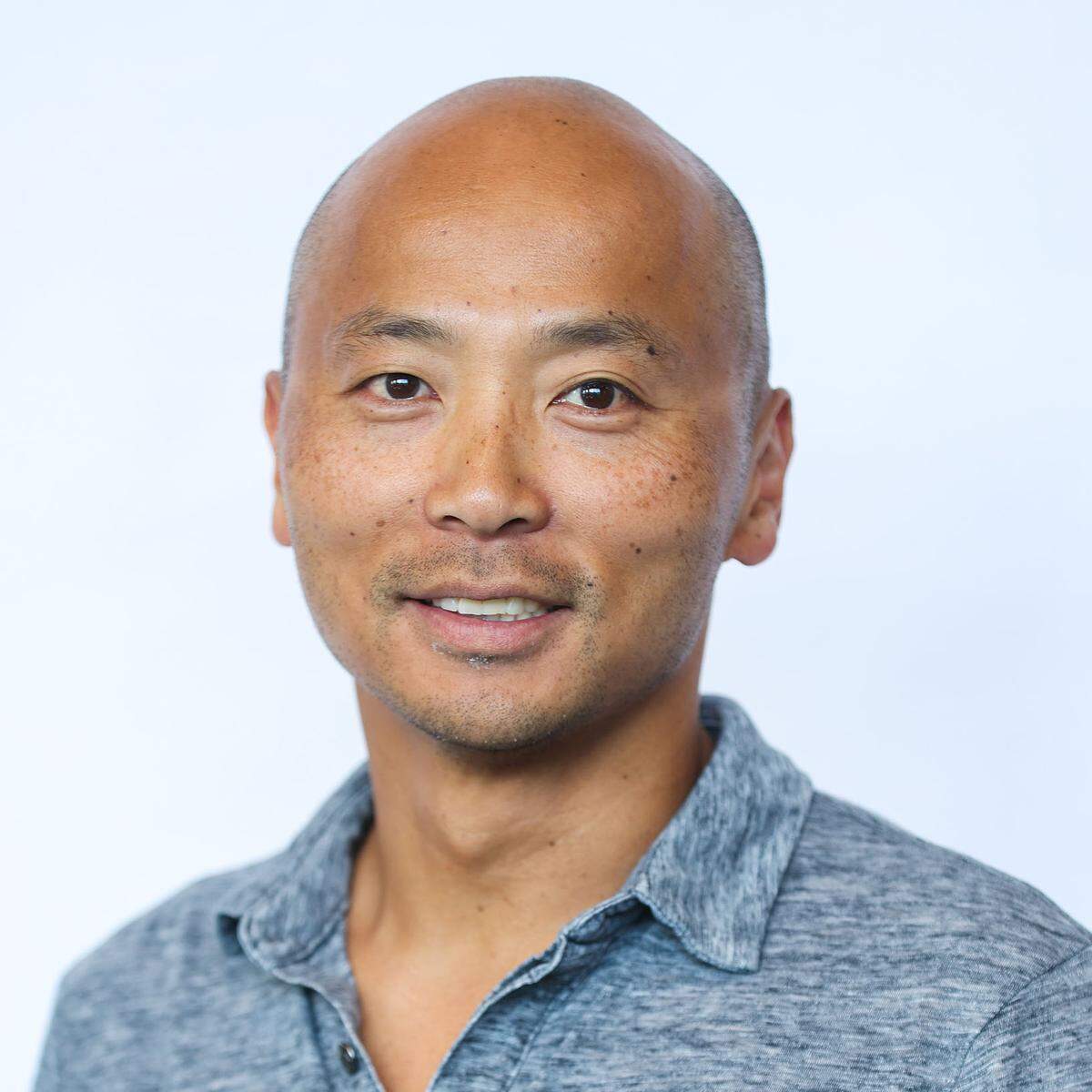
I returned to Korea to ask a stranger why he helped me. I got a surprising answer
I don’t remember exactly how many different ways I asked Jaehwan Woo the same question.
But sitting across from him in a quiet cafe in Seoul, speaking through Yejin, my translator, I kept circling back to it — trying to phrase it slightly differently each time, hoping something in the wording might unlock a more satisfying answer.
Why did you help me?
Two years earlier, on my first trip to South Korea since being adopted to America as an infant, he had been a stranger working at a community center in part of the city where I believed I might have been born. I’d shown up with the scant information I possessed about my origins, and very little hope that someone might be able to point me in the right direction.
And yet he tried — to a degree I hadn’t expected.
He recruited a co-worker to drive me and my birth-family-search volunteer around. Walked with us through rundown streets and into decaying alleyways. Knocked on doors, talked to residents, got us invited inside senior centers. Told them my story — that I had been left on a street in 1974 and adopted to America, and now, decades later, had come back searching for any clue about my birth family. Posted flyers with my baby photo asking that anyone who still recognized my face after nearly 50 years might come forward.
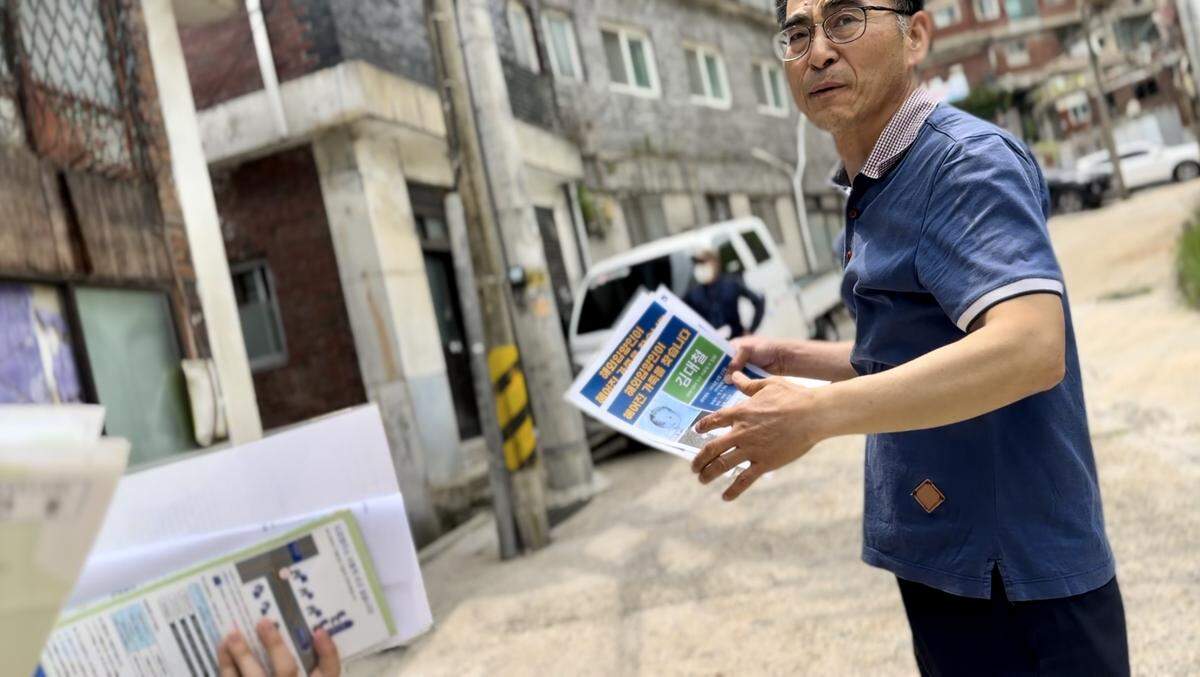
At the end of this lengthy impromptu tour, I asked him where the volunteer and I should get lunch. Instead of simply suggesting a place and heading back to the office, he walked us to a nearby market with a line out the door and bought us a bag of kkwabaegi, the Korean word for twisted doughnuts. Then he led us to a restaurant, got us seated, paid for our lunch, and left.
I was incredibly moved. It felt like he had stopped everything to help me. It made the Korean part of me feel seen and cared for in a way I hadn’t experienced before.
So when I returned to Korea with my wife Amanda and our adult, half-Korean daughter Joie last week, nearly two years later, I made a point to find him again. I had to know why he did what he’d done. But no matter how I asked the question, his answer didn’t waver.
He just smiled slightly and deferentially, saying he didn’t do anything out of the ordinary.
And at first, I challenged that idea.
What he did was just ‘jeong’
I told him how I had come to think about it over the past two years.
“I always felt like maybe I caught you at the exact right time,” I said, pointing out that, for one, he had been just days away from retirement when I walked into his office in May of 2024.
Then I also noted he’d told us at the time that he’d grown up in the same neighborhood where I was relinquished — Hyeonjeo-dong — moving there at age 6, just a few years before I was born. “So I thought maybe you felt some kind of connection to my story,” I continued. “Like maybe you treated me a little differently because of that — because of where we both were, and when.”
Maybe, I suggested, it wasn’t just a random act of kindness. Maybe it was something more personal.
But each time I tried to explain it that way, he gently pushed back. From his perspective, it wasn’t outside the scope of his job. He didn’t think of his role as something confined to an office. If someone needed help, and he could help, then that was simply what he was supposed to do.
What he had done, he said, was simply natural.
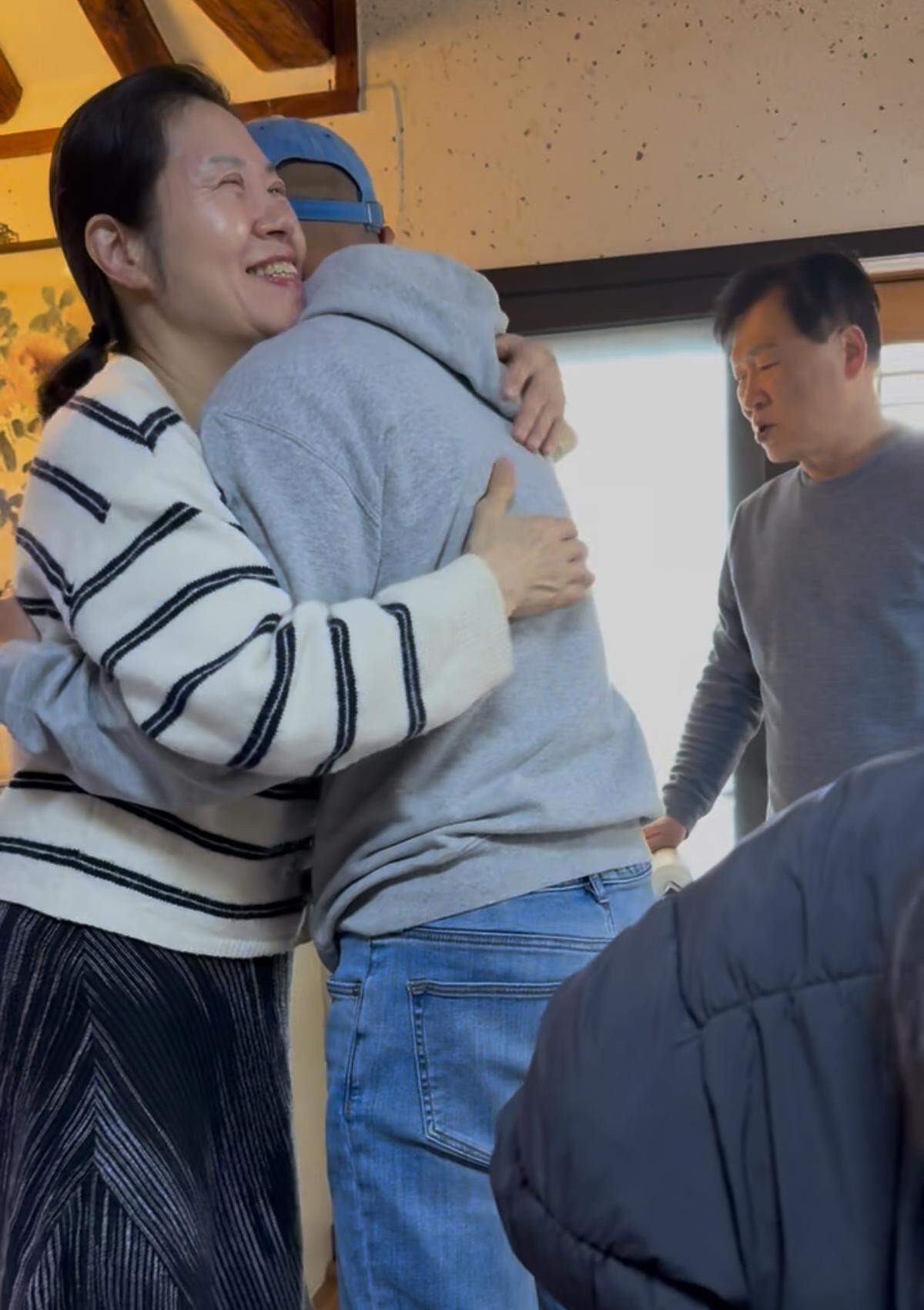
Then he used a word that doesn’t have a perfect English translation: jeong — which, loosely, means a deep sense of care and connection between people.
The way neighbors look out for one another. The way strangers, sometimes, don’t feel entirely like strangers.
The slice of Hyeonjeo-dong where we had walked together had been and remains largely emptied out, with only about 20 families waiting out the eventual demolition and redevelopment that looms. But he told me his old streets — our old streets — used to be full of jeong. People sharing what little they had. Paying attention to one another. Stepping in when something needed to be done.
That was the best explanation he could offer: What he did was just jeong.
And somewhere in the middle of him explaining that — calmly, without emphasis, almost as if he were describing something obvious — I began to realize that he could be right.
But that, at the same time, so could I.
Beginning to see it more clearly
For almost two years, I had treated that day like something singular. A moment where, for reasons I didn’t fully understand, one person intentionally and selflessly stepped out of the normal flow of his life and into mine.
But over the course of this second trip, that same instinct started to show up in other places.
- On a Saturday night in Seochon, in the hanok where my family and I were staying, when our hosts Shin and Lee (a couple I met and bonded with during my first trip) went above and beyond for us. A BTS concert was streaming live just a few blocks away, and when we came back from trying to see what we could see in person, they had a surprise ready: hot chicken, cold beer, the TV tuned to the broadcast. Before we could even fully get out a thank you, they gave up their spots in front of the screen and disappeared upstairs, as if it were obvious that we should have the space to ourselves.
- On a Monday morning in a senior center in Hyeonjeo-dong, as I stood in front of women who didn’t know me and couldn’t give me answers, but showed me care and compassion anyway. They looked back and forth between me and the flyers Yejin handed them, listened closely as my story was translated, remarked how they hoped I found my family — and then, before we left, pressed coffee and candy and bananas into our hands, smiling, insisting, as if sending us away with nothing would have been unthinkable.
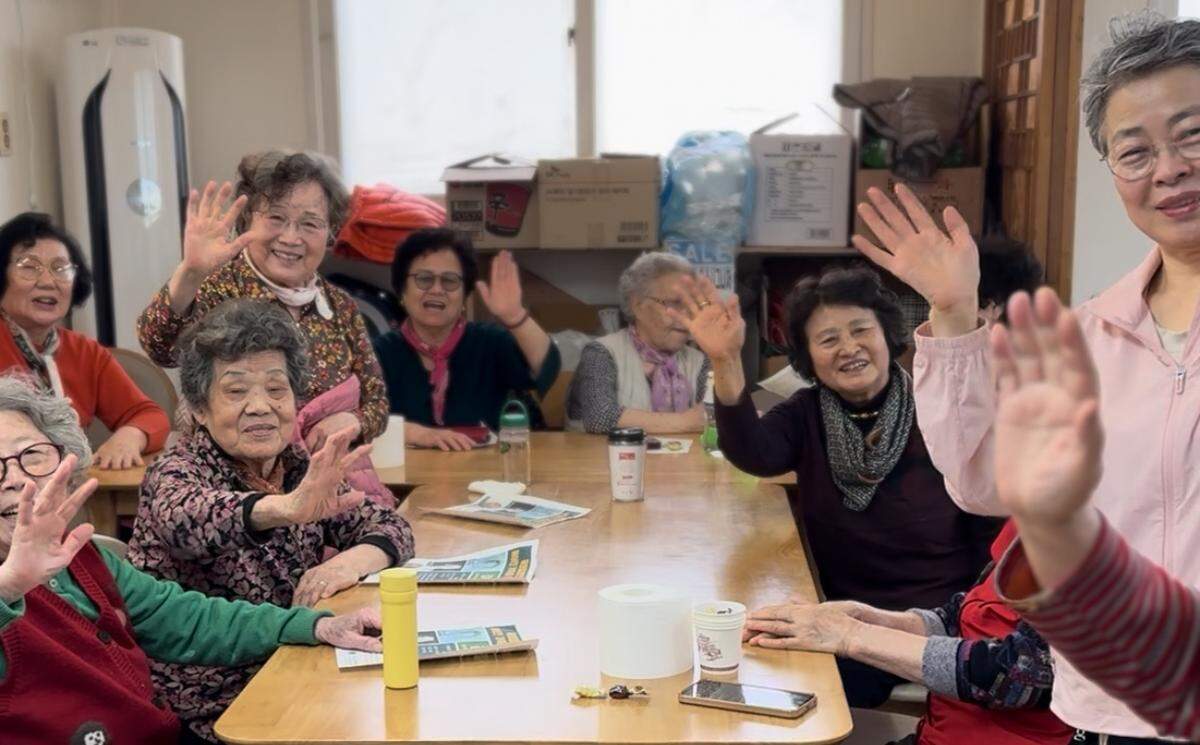
Both of those moments came before my meeting with Jaehwan Woo, and as they were happening, I didn’t connect them to him. But as I sat across from him last Monday afternoon and listened to him describe what he had done as something ordinary, I realized I couldn’t separate those moments from him.
And once that connection clicked into place, I saw more clearly what I had done with that day.
For two years, I had carried it with me as something rare — a moment tied to one person, one place, one stretch of hours that somehow stood apart from everything else. That was why I wanted to see him when I went back.
Not just to ask why. But because I needed to understand what, exactly, I had been holding onto.
A place I can keep returning to
If he was right — if what he did was just jeong, in the way what Shin and Lee and the little old ladies did for me was just jeong — then it meant that moment wasn’t something I had to hold onto as rare.
But it didn’t make it any less meaningful.
“Well, you know, in some ways it probably doesn’t or shouldn’t matter whether or not he was going above and beyond,” I said to Yejin, as she translated. “It just matters to us that it felt like he was.”
My wife Amanda chimed in: ”I think sometimes people don’t realize how much how they act or how they behave makes a difference to others.”
After our words were relayed to him in Korean, he bowed his head sharply and made his one and only attempt at English, saying, simply: “Thank you.”
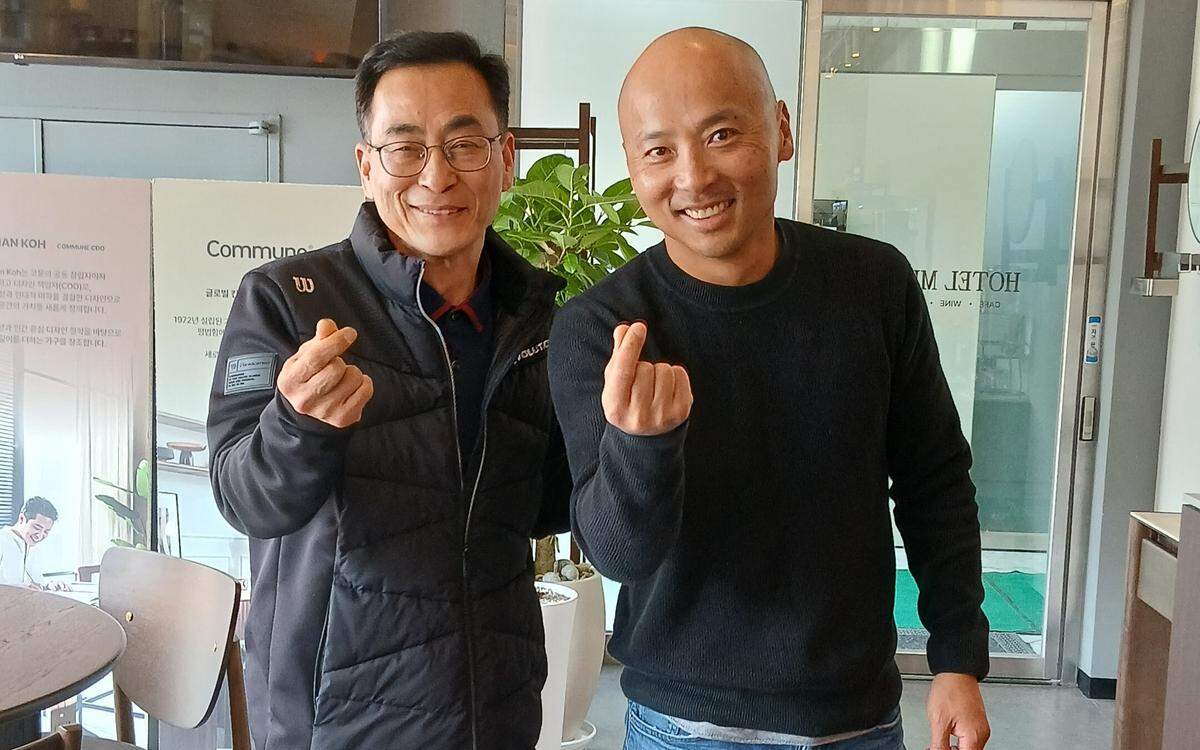
For most of my life, Korea had existed as a question I couldn’t answer. A place tied to something missing. Something unresolved.
That hasn’t changed.
I still don’t know where I came from. I still don’t know who I belong to in the way I once thought I might. But for the first time, that doesn’t feel like the only way I can relate to it.
For the first time, Korea doesn’t feel like a place I lost. It feels like a place I can keep returning to.
Not because I found what I was looking for on my first trip, or on my second. But because, in ways I hadn’t fully understood before, I have now been met there. Seen there. Taken care of there. Allowed, even briefly, to exist not just as a visitor, but as someone whose presence made sense.
I exist now in Seoul not just as an American passing through, but as someone who, in small and unexpected ways, belonged — even if only briefly.
And maybe that was what I’d been looking for all along.
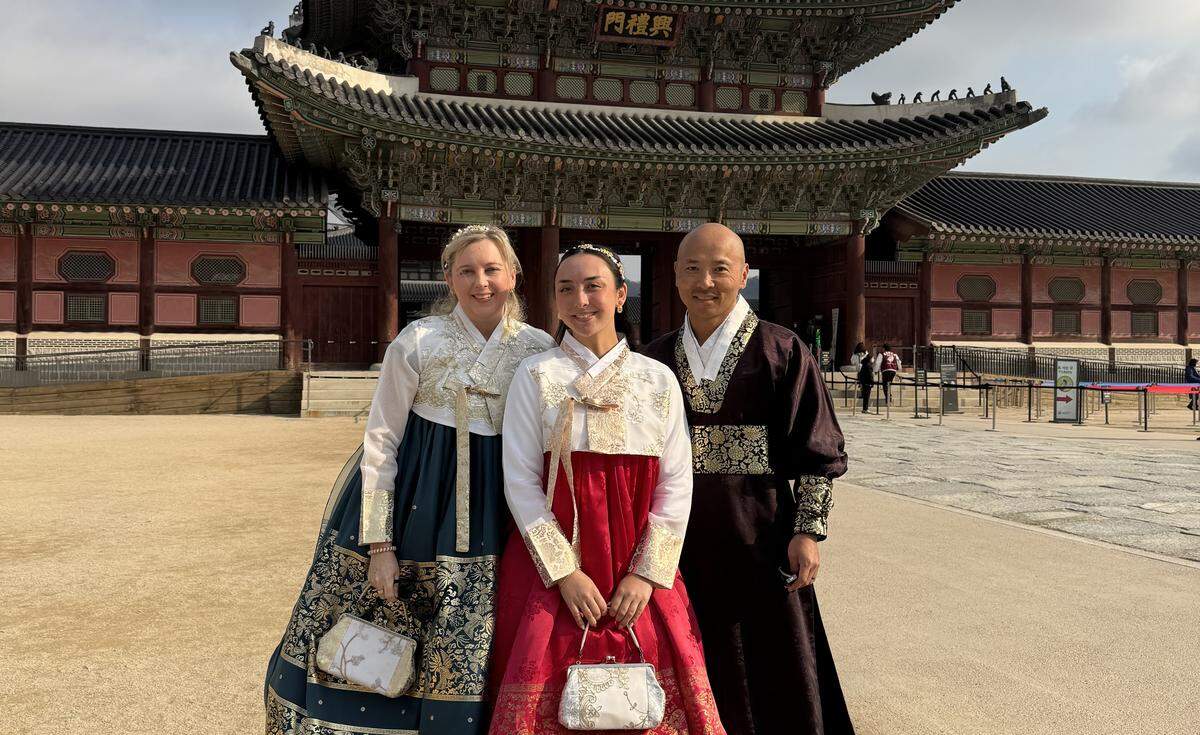
This story was originally published April 1, 2026 at 5:11 AM.