As a baby, I was left on a street by ... someone. As an adult, I tried to figure out why
READ MORE
Searching for adoption truth
The Charlotte Observer’s Théoden Janes recently found himself doing a deep dive into the history of his adoption. It’s unearthed other stories of adoptions from South Korea that has left him questioning everything.
Expand All
As a baby, I was left on a street by ... someone. As an adult, I tried to figure out why
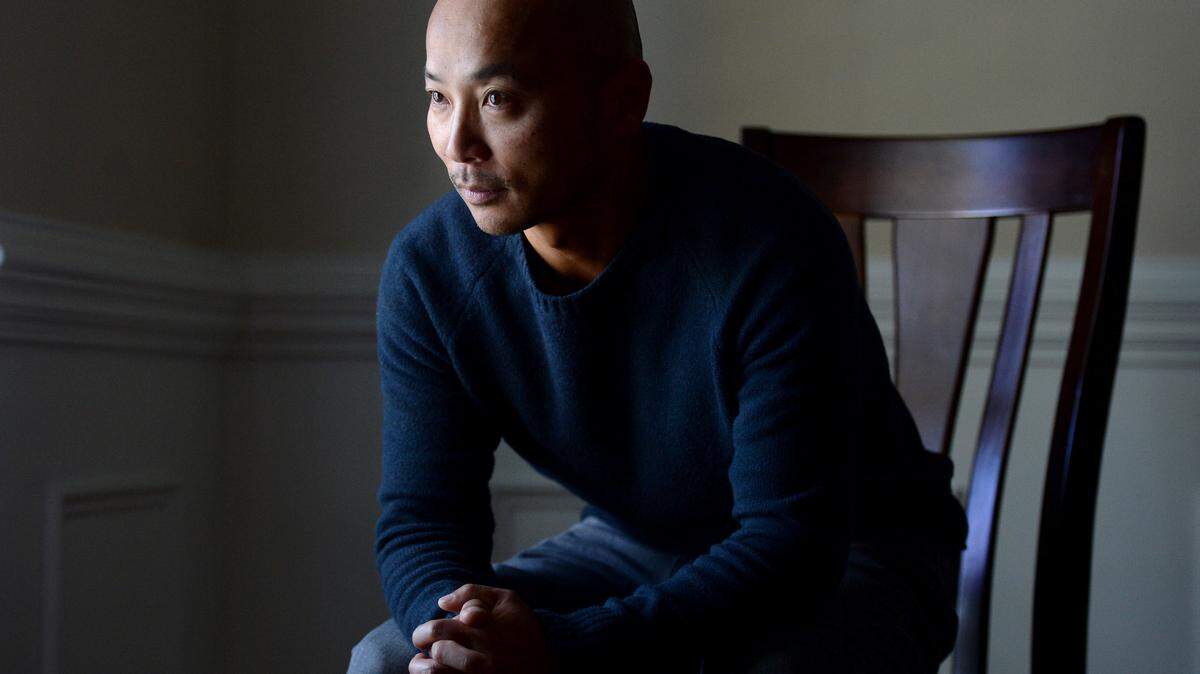
Charlotte Observer reporter Théoden Janes’ quest to find his biologicial parents
They did DNA tests to verify they were sisters. By accident, they found their birth father.
I wrote a story last year about my adoption. Was some of it possibly based on a lie?
I’ve never known why the woman who gave birth to me decided to abandon me.
I’ve never known whether the man who fathered me helped make that decision, or if he made it himself, or if he wasn’t involved at all. I’ve never known whether she (or he, or they) lacked the means to raise me, or whether she (or he, or they) simply lacked the desire to do so.
I don’t know if I was born at a hospital, on an apartment floor, or in an alleyway.
In fact, I don’t know when my actual birthday is.
But for a long, long time, I didn’t care — about any of this.
It wasn’t resentment or anger toward them, or fear of or anxiety about confronting my feelings about the past.
No, it was me being a selfish kid, then a shallow teenager, then a self-absorbed young man. One so indifferent about the topic that when I was gifted a coffee-stained, dog-eared folder containing all the information that was known about me as an orphaned Korean baby, I tossed it into a box in my garage like an old baseball glove.
I was not about self-discovery or self-reflection. I was about trying to get people to like me. I was about obtaining the nicest possible apartment, car, clothes, shoes and gadgets, because I thought they made me cooler. Most of the time, I was about what was right in front of me; the rest of the time, I was about what I aspired to be.
All that stuff behind me? I just plain did not give a damn.
Even the birth of our first child in 2001 — a breathtaking occasion for any parent, but particularly so for someone with no relationship with any blood relative — didn’t push me to take a real interest in my roots. It didn’t make me any more curious about who brought me into the world, or in the chain of events that would carry me halfway around it at just 9 months old.
At the beginning of this year, however, a switch (finally) flipped inside of me.
Maybe it was pandemic. More likely, it was the fact that I would turn 49, just a quick pit stop on the way to 50, an age that can easily trigger a mid-life crisis.
Or, in my case, an existential one.
That’s why I found myself combing through that folder of documents earlier this year, wondering whether I might unearth anything that would lead to a life-changing revelation — and, eventually, stumbling upon a shocking bit of news that threatened to reshape the way I looked at much of what was inside it.
A box full of history — lost, then found
My adoptive parents originally gave this file to me in 2015, the year they cleared out of the eastern Connecticut house they raised me and my two sisters in to relocate to Drexel Hill, Pennsylvania, not far from where those two sisters now live. (FWIW: Though I basically never refer to them as “my adoptive parents,” I’ll do so throughout simply for clarity’s sake.)
If I spent more than 15 or 20 minutes looking through it then, I’d be shocked. If what I saw made an impression, it didn’t last.
What I do know is that at some point soon after I slid the folder into a plastic grocery bag, and placed that bag inside an Amazon box, and put that box on top of an old slot machine that sat on a table in front of my parking space in our garage.
For the next six years, that box was in my field of vision every time I left or returned home. But while I wish I could tell you, in hindsight, that it made me feel some sort of emotional conflict — guilt, or anxiety, or fear, or self-loathing — I have to tell you: I almost never thought about them.
On the rare occasions that I did, sure, I thought about taking another look. I also thought about taping it up to protect it from pests, and I thought about moving it indoors to protect it from the extreme temperatures that can torture a garage in North Carolina.
A beat later, though, I’d get distracted by something else I wanted to clean up in the garage, or by something on my phone, or whatever, and the box would sit there unnoticed for another few months.
Then, last November, we moved, too. The box disappeared among hundreds of others.
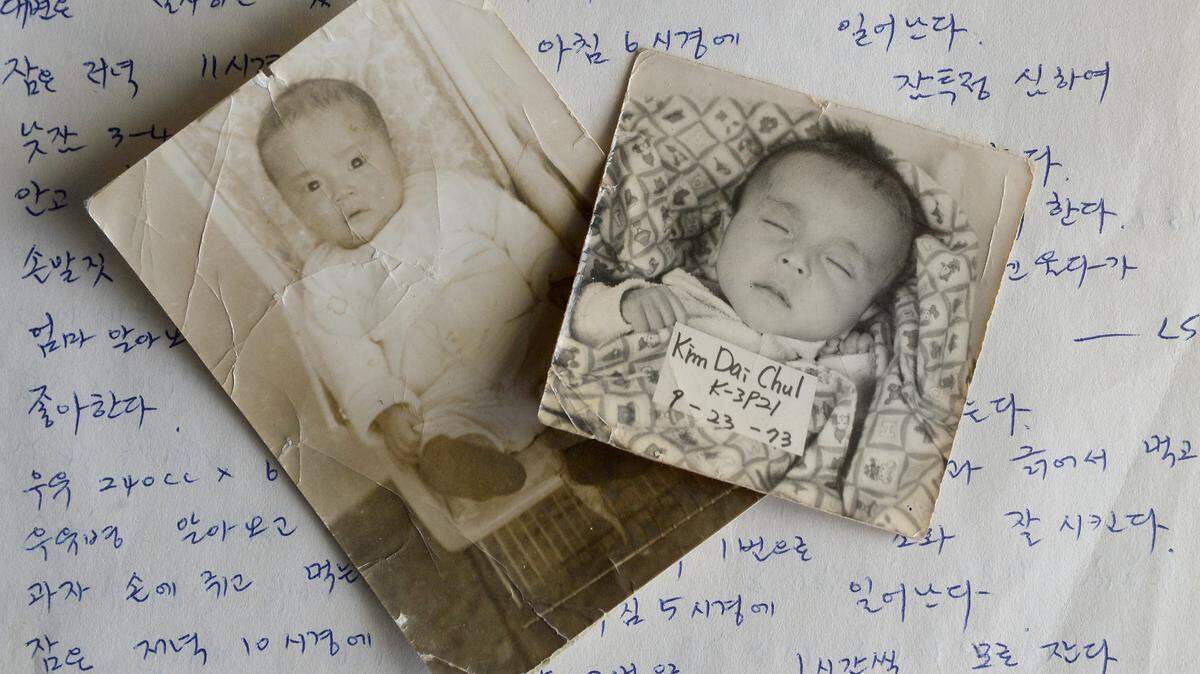
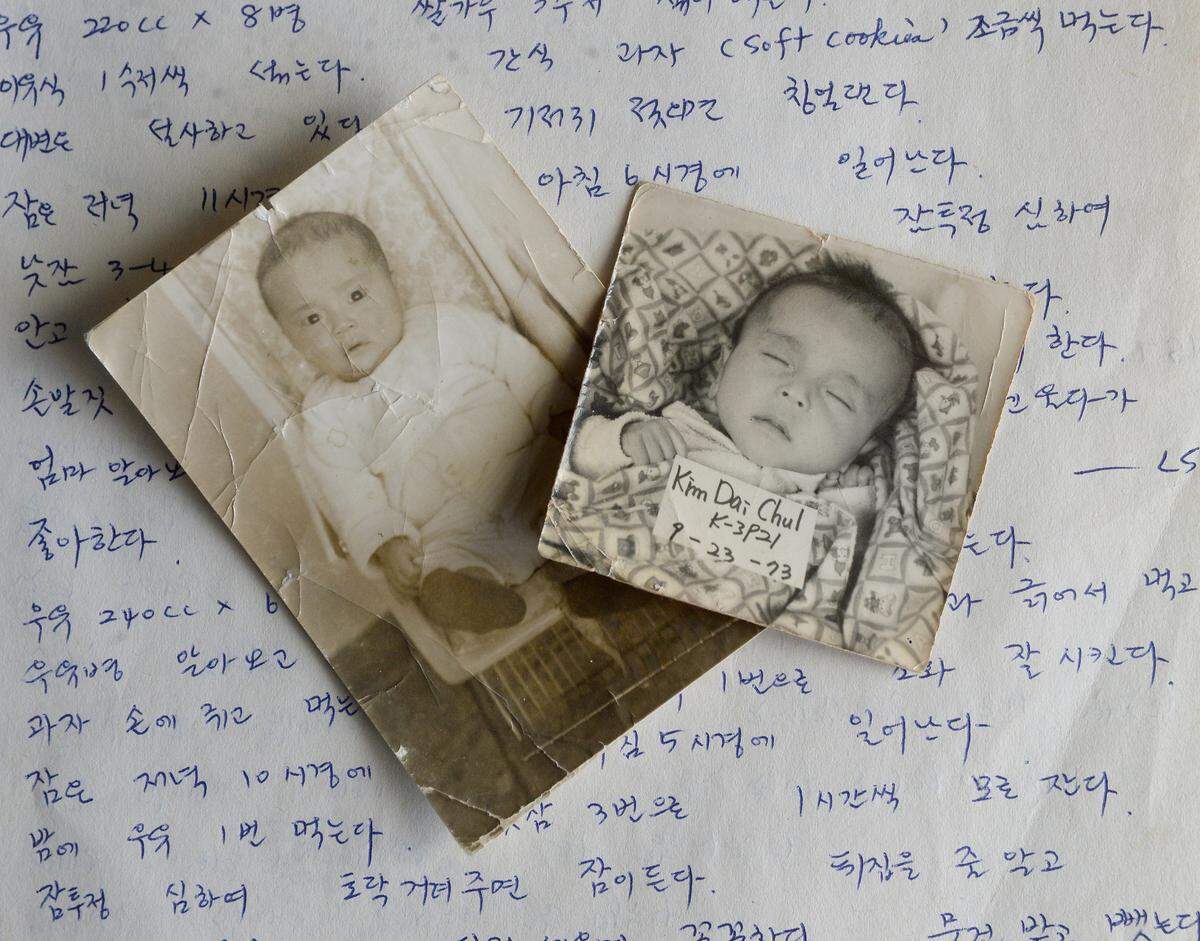
Three months later, on a cold, raw day in February, I decided to hunt for it. I found it in the closet in the guest room, buried under stacks of framed pictures we’d decided not to hang, and opened it right there on the bed, spreading its contents out on the quilt. And I’ll be completely honest with you, sifting through my records, it felt like I was peeking at someone else’s life and not my own — maybe because several pages were in Korean, which I don’t speak, maybe because I was often referred to as Kim Dai Chul, which isn’t my name.
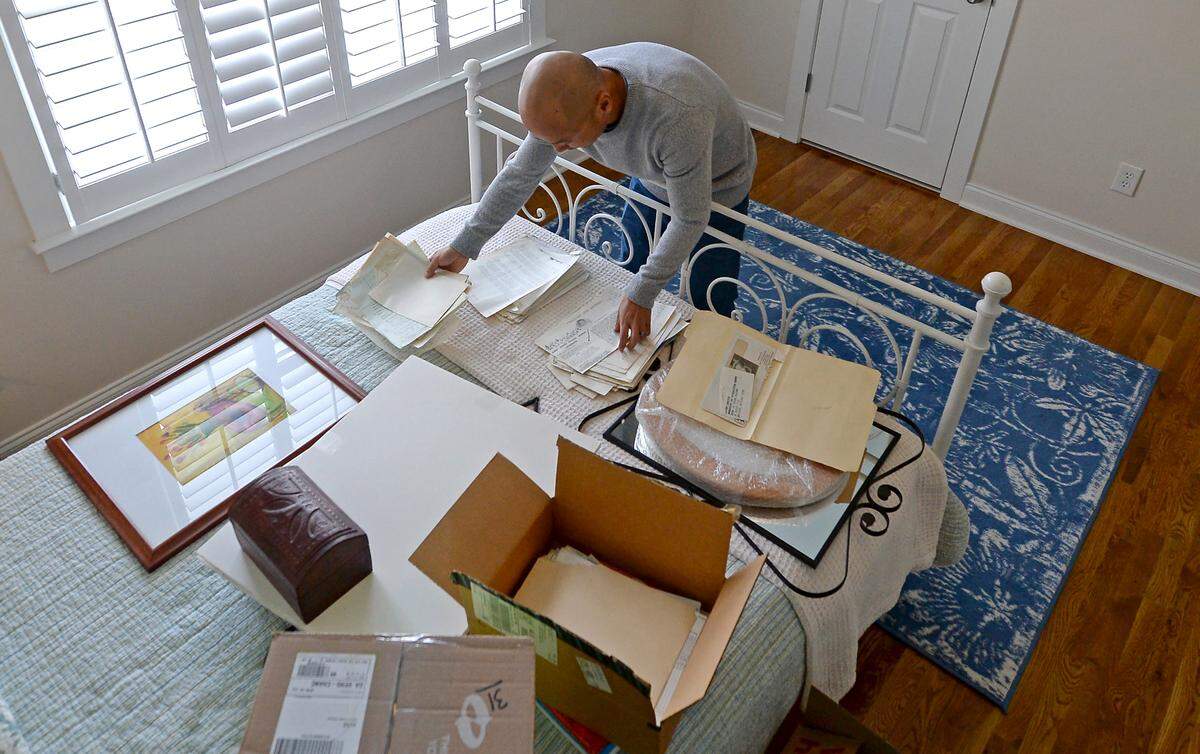
Or maybe it’s bigger and broader than that. Maybe it’s because I’m a journalist who’s used to researching and gathering information from a detached viewpoint. Maybe this is what a doctor feels like when examining their own patient file after some sort of life-altering diagnosis.
In any case, I intended to digest all of the details inside that folder, and to determine if there was any hope whatsoever — nearly 50 years after the fact — of solving my life’s mysteries.
‘Where babies were left to die??’
Of all the days to be abandoned, the day picked for me was Valentine’s Day.
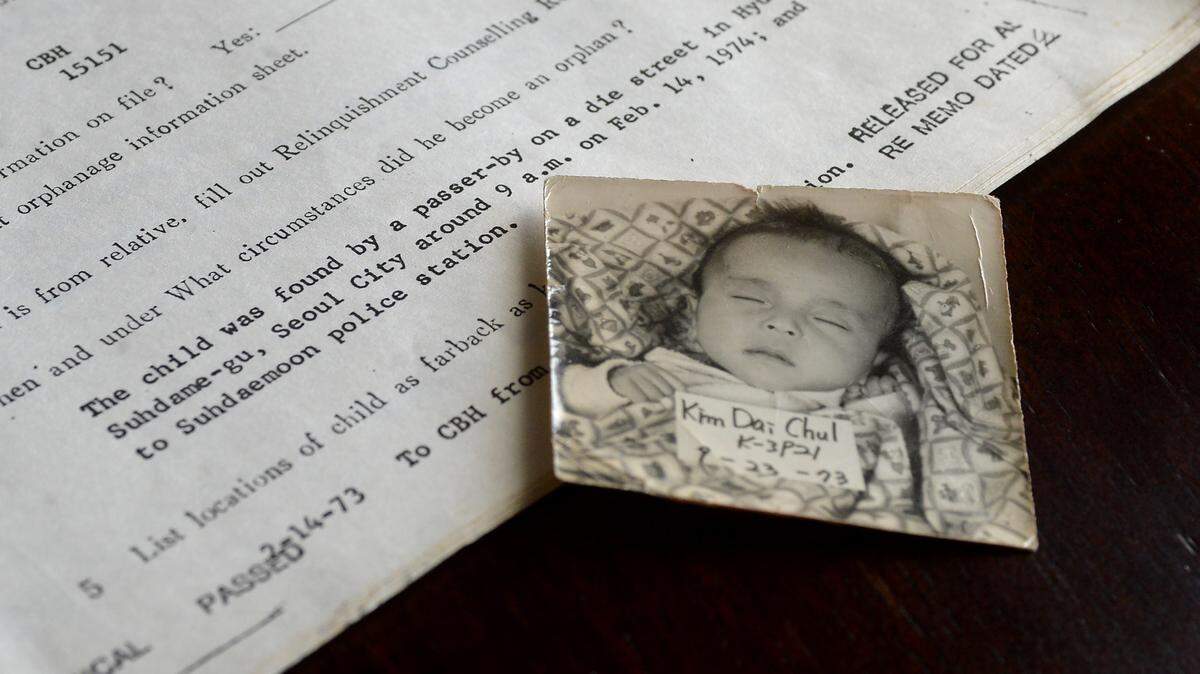
“The child,” states a March 8, 1974 report, “was found by a passer-by on a die street in Hyunju-dong, Suhdame-gu, Seoul City around 9 a.m. on Feb. 14, 1974; and referred to Suhdaemoon police station.” (In case you were wondering, Koreans do indeed celebrate Valentine’s Day, on the same day as Americans.)
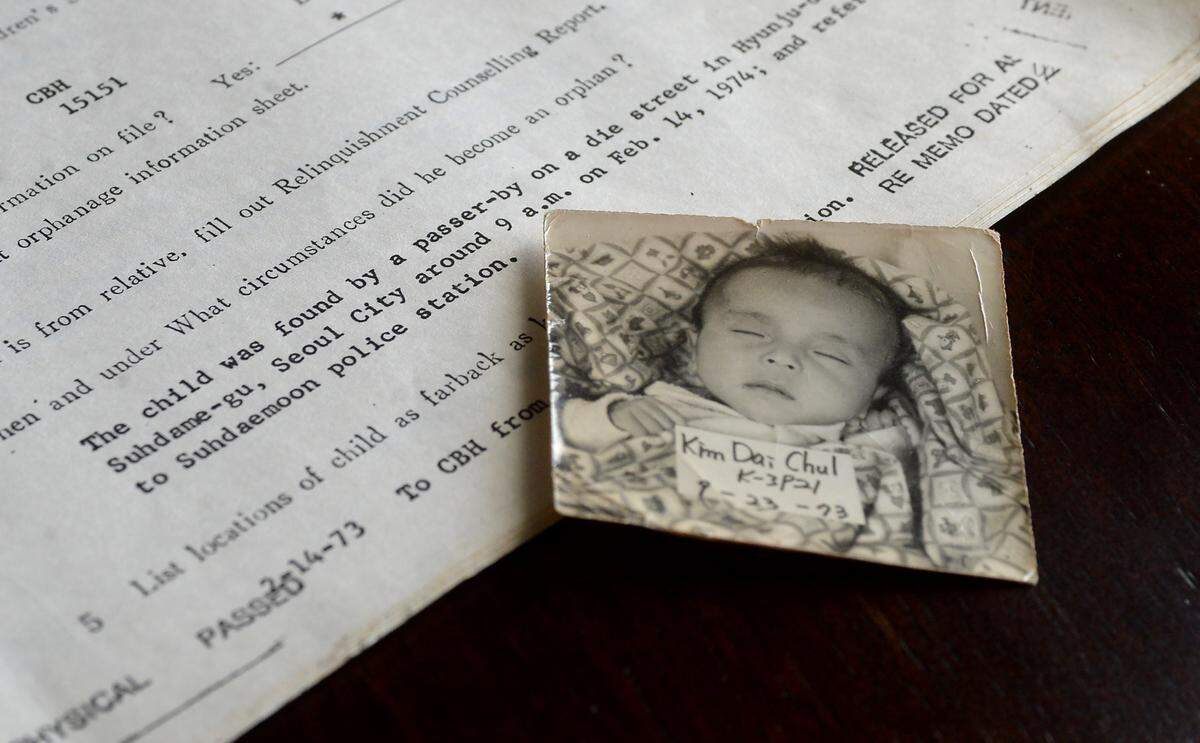
At first, what kept jumping out at me were these two words: “die street.” I suspected something was being lost in translation, like either it was a term that doesn’t translate to English or it was simply something that had been mistranslated. Regardless, it also sounded rather unsettling. In fact, one person I showed the document to floated a macabre theory: “Jesus,” he said, his eyes bulging. “Do you think there was a street in Seoul where babies were left to die??”
I don’t know. Google has consistently informed me, however, that it’s unfamiliar with a “die street.” I’ve come to believe it was a typo, and that the intended term was “dead-end street,” or “side street.”
But it’s the stuff I can’t look up on the internet that is the most confounding. Although I’ve managed to detach from the emotions of this for most of life, when forced to confront them, the questions that form in my head are the same ones many formerly orphaned adoptees might have.
Who abandoned me? What led to their decision? Did they turn and look back? Did they cry? Where did they go next? Where did their lives lead them? Did they have more children? Did they feel any regret or remorse over that abandonment?
Did they ever wonder about me?
Or did they just feel relief?
A made-up birthday, and a made-up name
By and large, the first several months of my life will be forever reduced to that one sentence, which I could read a million times without being any closer to solving the mystery of that blank spot in my life.
The only conclusion anyone tried to make about my “Life Before” was made because it had to be. I had to have a date of birth, so I could get a visa, and get a passport, and get adopted. So, someone took their best guess at mine based on... boy, I mean, back in the ’70s, it couldn’t have been based on much more than a shrug and a hunch, right?
Sept. 23, 1973, it was.
While they were at it, for the same reasons, they gave me the temporary name of Kim Dai Chul. (Quick aside: Kim is the most common family name in Korea. The agency that handled my adoption tells me that was probably the family name of the director of the orphanage at the time. Sometimes the meaning of a name is explained in agency paperwork; in my case, it was not.)
Of course, coming up with a birthday and a name were merely formalities. What the writers of the reports seemed most concerned with were precisely what you’d hope — my health, my well-being, and my care.
The first two, in my case, weren’t initially ideal. According to my papers, I developed bronchitis a couple weeks after being rescued, and a little over a week after that, a report stated: “Is not healthy; looks weak and thin. ... Is much behind other children of his age in physical area. Needs good care and warm love so that he may grow healthily.”
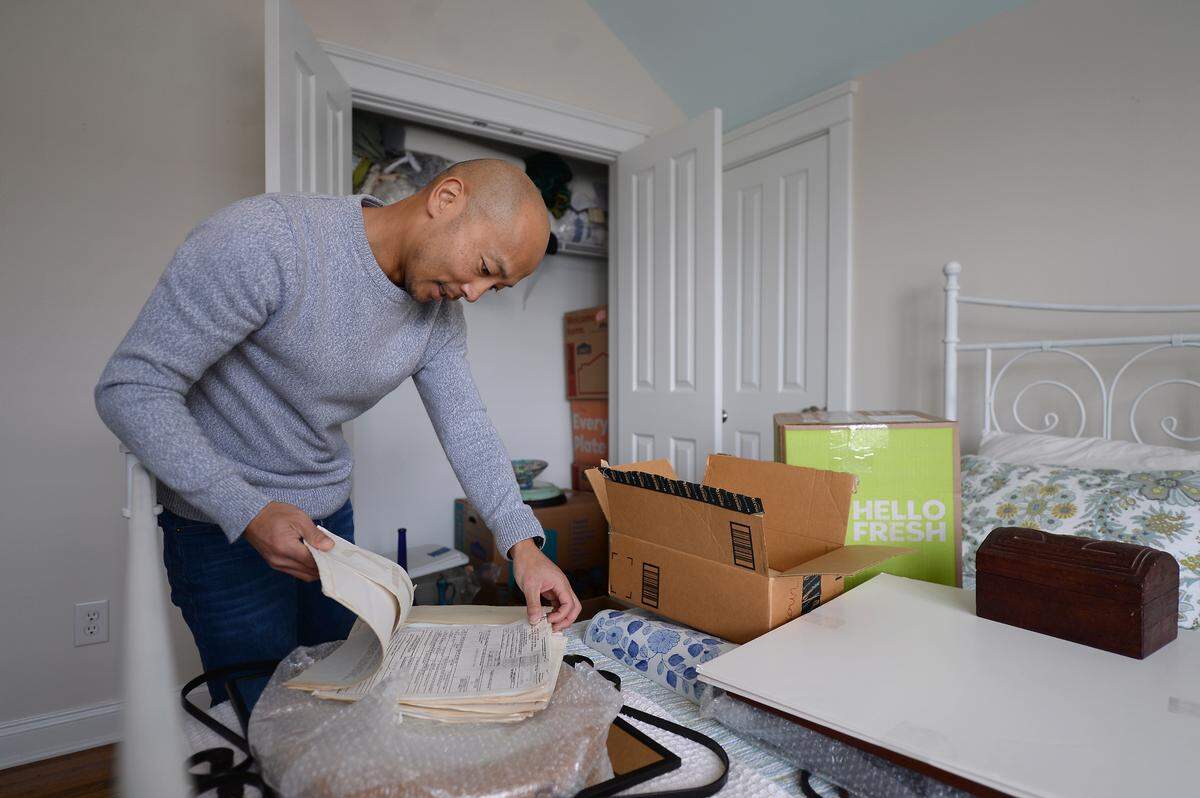
I apparently got it. By springtime, a large family in Seoul that had a history of fostering to-be-adopted babies had taken me in. In fairly short order, the report says, I had “become chubby” and was showing “much increase both in weight and in height.”
In the last report, dated July 4, 1974, the social worker ended with three observations — two out of three of which are still true today.
- “He is shy of strangers.”
- “He smiles lovely as soothed.”
- “He is bright.”
‘We weren’t trying to save the world’
Norman and Jacqueline Janes began talking about adoption within a couple of years of getting married in 1966, after doctors told Jacqueline she had a pituitary gland issue that reduced her estrogen production, causing infertility.
And it went the way those things sometimes go in this wacky world. They learned, in 1969, that Jacqueline was pregnant.
Still, after their daughter Krishna Pryia was born, this Quaker couple with a penchant for quirky names continued to feel a pull toward adoption.
Specifically, they wanted a baby. But they quickly learned that the wait for a baby through the adoption system in Maryland, where they were living at the time, could be several years. They tried a couple other faith-based domestic agencies, only to be declined because they didn’t have enough income or assets.
So they then turned their focus overseas.
At the time, the Vietnam War was still winding down, and in response to a resulting orphan crisis, adoptions of Vietnamese children were ramping up. That wasn’t what motivated my adoptive parents, though.
“Our wanting to adopt was not political at all,” my adoptive mom told me when I sat her and my adoptive dad down earlier this year to ask all sorts of questions I’d never asked them before. “We weren’t trying to save the world. We wanted a child.”
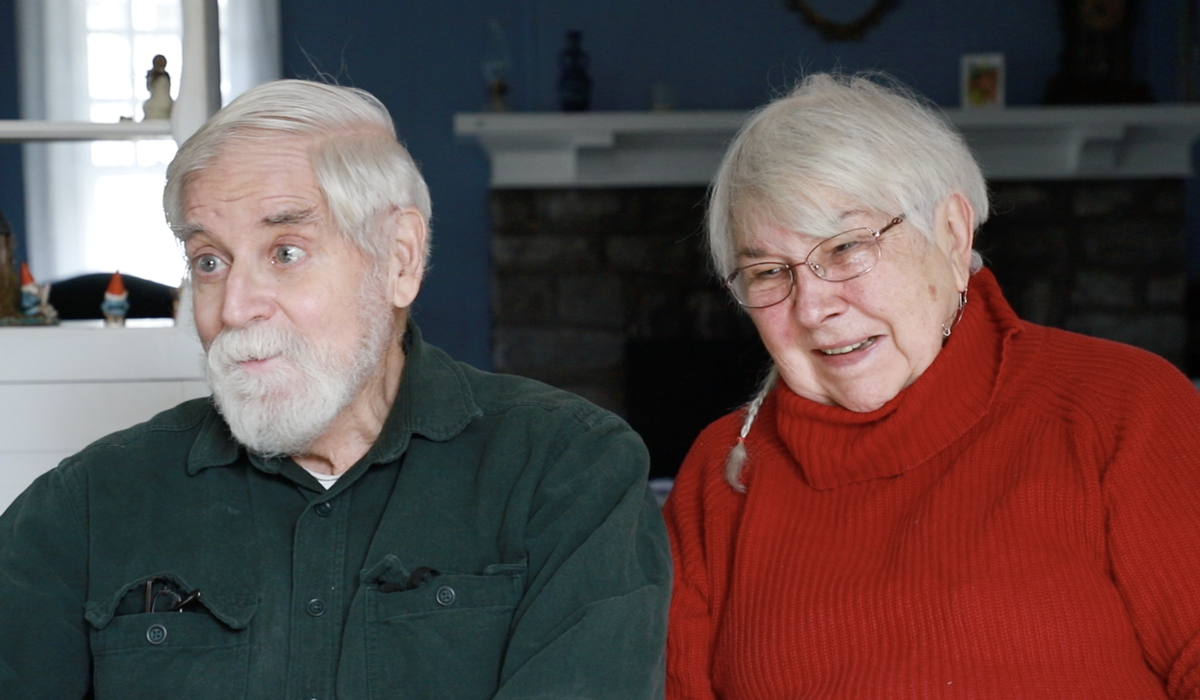
Finally, in the late summer of 1973, an agency that largely dealt in placing Korean children with American families put Norman and Jacqueline on a waiting list for a baby and scheduled the first of multiple home-studies, kicking off what was anticipated to be a very lengthy process. Even after a case worker called the following May to say the agency had identified a child, the reality, they were told, was that it might still take a year or two for everything to be finalized.
But just over a month later — on July 5, 1974 — they were huddled with a mass of other anxious, expectant adoptive parents at John F. Kennedy International Airport in New York, where a giant plane pulled up with a big group of orphaned Korean children.
“And the (adoption agency) people said, ‘We’ve gotta do this in an organized way,’” Norman recalls, “‘because we have to make sure we’re getting the right parents matched with the right child. So it’s gonna take a little time.’ I don’t know how many times they said, ‘We don’t want you to all crowd around. Please wait over here. We’ll call the name, and then we can meet over here, and you can get your child.’
“So what did everybody do? In spite of their instructions, the babies start coming out and they all GOOOOOOOOOO! You know, there was a mass movement towards the door where people were coming off the plane.
“You were the first one.”
A change in my attitude toward my past
My adoptive parents have always been matter-of-fact about how I fit with them and their two natural-born daughters.
“You were never ‘other’ to us,” my adoptive mother says. “We never thought, ‘He doesn’t have our biology.’ I mean, I can’t explain it, but the minute you were brought to us as a possibility, you were our son.”
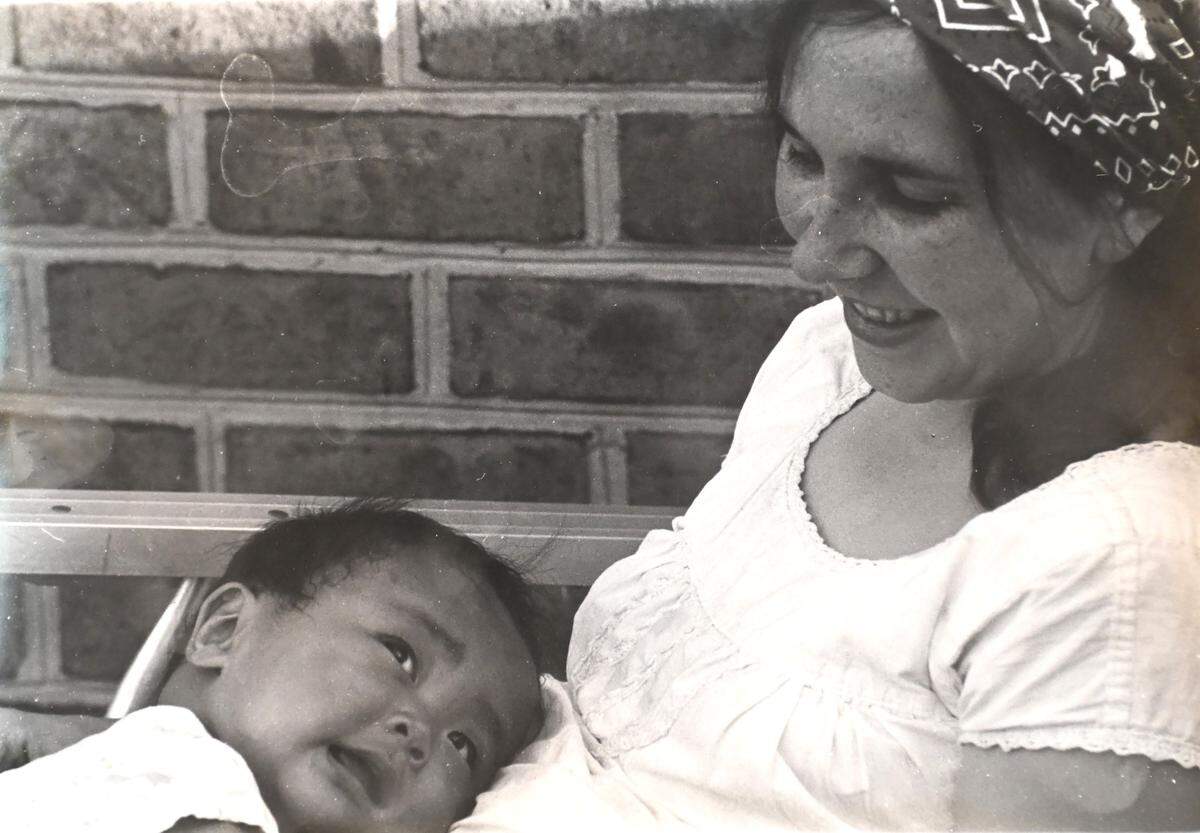
“You were ours,” my adoptive father adds. “You were part of our family. What happened nine months prior to your coming ... I don’t remember being curious about it.”
I wasn’t either. When I was growing up, they did get a few books about Korea, “but you never seemed interested in them,” my adoptive mom recalls. “And you never really asked anything.”
My lack of interest came from a negative space.
I spent my entire childhood in a small town where I was the only person of Asian descent that I knew. Probably for a combination of complicated reasons, I had a low self-esteem almost entirely associated with looking different from everyone else.
If anything, I wished for less of a connection to Korea, a feeling that continued into my 20s and 30s, even as I became exposed to big cities and more people who did not look different than I do. (I don’t have a good explanation for this, other than to say that there must be plenty of grown-ups out there who are still haunted by childhood insecurities...)
Then came middle age. If you’re entrenched in it or have been through it, you know: It changes your priorities. It changes your view of your relationships with your family, your friends, your job. It changes the way you regard your place in the world. It’s like a second coming-of-age, although when you come out the other side of this one, you’re a much more fully formed adult than you were when you came out of adolescence.
In my case, with this newfound maturity came a newfound curiosity — admittedly more so about the cold, hard information about my adoption than about getting in touch with my feelings about my birth parents. But a curiosity all the same.
So what did I find inside the folder? Pages and pages of often-typewritten, sometimes-handwritten documents — home visit records, applications, medical reports, reminders of agency protocols and citizenship requirements, legal notices, receipts, canceled checks — that offer a stunningly detailed picture of how international adoptions worked in the 1970s.
Or so I thought.
‘Flooded with baskets with children’
I felt like I already knew the answer, but I did it anyway: In March, I contacted the agency that handled my adoption to inquire about searching for my birth family.
A representative told me that, based on the meager information they had, there was no way to even start. In other words, my file with the agency has had the exact same info about my birth parents since 1974 — i.e. “none.” They did suggest trying my nearest Korean consulate, pointing out that the Korean government in recent years created a “missing person database,” which among its public services could potentially help adoptees find their birth parents, and vice-versa.
So I submitted DNA to the consulate in Atlanta in May; in August, I learned there was no match in the system, but that I would be contacted if there’s a match in the future, if a birth parent or natural sibling did come forward. (And yes, I’ve done an Ancestry DNA at-home test; the results yielded some fourth cousins, but nothing closer than that.)
Along the way, I also did a fair amount of reading about adoptions from Korea.
I learned that approximately 200,000 South Koreans were adopted internationally over the course of the past six decades, mainly to white parents in the United States and Europe and mostly during the 1970s and 1980s. I learned that one of the main reasons for this boom was because the military dictators of the era saw adoptions as a way to reduce the number of mouths to feed (thereby boosting the economy), while also solving the “problem” of single mothers and deepening diplomatic ties with the West.
But in the late stages of working on this project, I came across a number of stories online published in August and September about adoptees demanding that the South Korean government investigate the circumstances around their adoptions.
The claims were shocking.
Basically, the now-adult adoptees — many of whom, like me, were adopted in the 1970s — were alleging that their adoptions as babies and children were based on fraudulent paperwork that laundered their real identities or statuses to ensure their adoptability as agencies competed to export Korean orphans for profit.
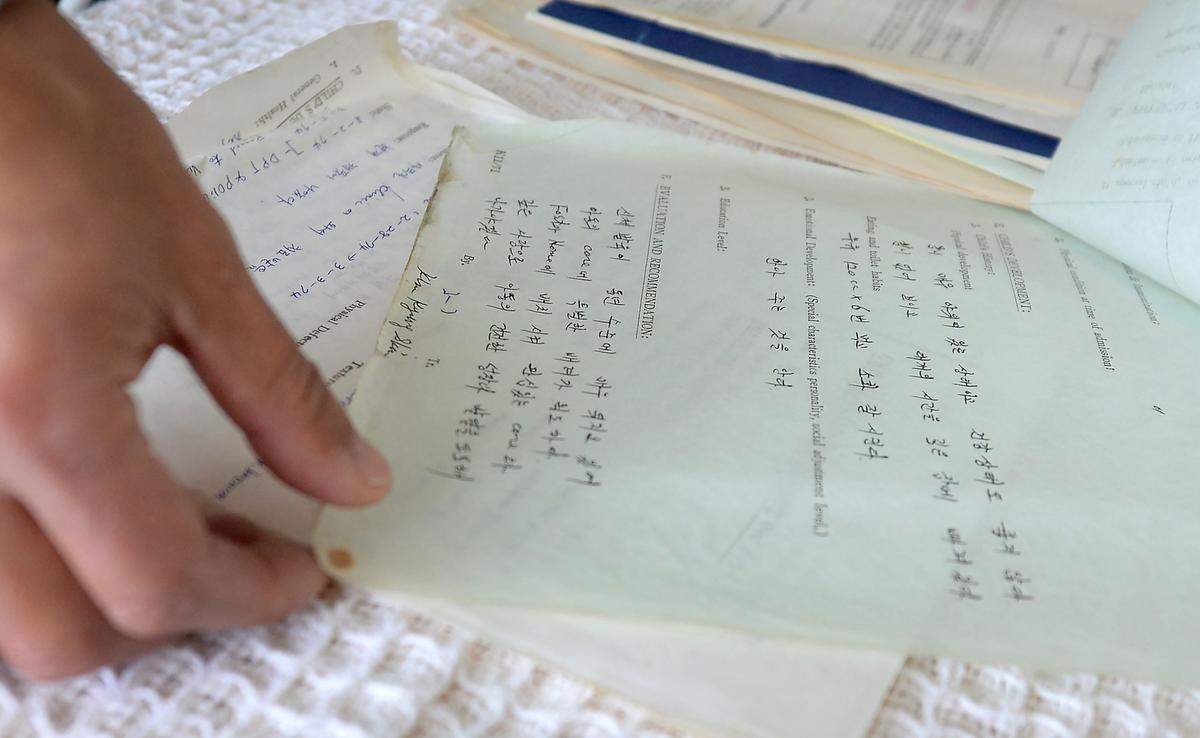
More specifically, they were alleging that stories of babies being left on streets are complete fiction.
“None of us are orphans,” one told the Associated Press in August. “(In) a lot of papers, the Korean state at the time have stamped papers that say people were found on the streets. If you do a little bit of math, that would mean that from the 1970s and 1980s Seoul would be flooded with baskets with children lying around in the streets. … Basements will be filled with lost child reports at police stations.”
As a journalist, I’m supposed to be skeptical, but I was never skeptical of the story of me being found on the street.
And although during this project I’ve mainly felt another thing journalists are supposed to be — impartial — I suddenly felt something else, too: incredibly naive.
In the end, leaving it to my imagination
It sounds totally plausible, and boy, if it’s true that the file I’ve been hanging onto for years is full of lies ... that would be objectively horrendous.
The question is: Will I ever know for sure? I think the chances are better that I’ll finally hit the Mega Millions jackpot tonight.
My wife recently asked me what I had hoped to gain from working on this, and what I thought others might get out of hearing about my experience. I told her I wanted to get as close to the truth as I could, and that I thought others could relate to the idea of trying to solve a mystery of their life.
She said, “But I don’t think that people can relate to the idea of not feeling anything about something like this. I can’t believe you don’t feel anything. Do you feel anything?”
I think I did, in small fits and starts, over the course of this journey I’ve been on. But I don’t think it really washed over until I was writing this story — when I confronted the reality that I’m not any closer to answers than I was when I started.
I mean, I think it’s just as possible that what’s in my file is true. Because in addition to adoption scandals, there’s also a long, sad history in South Korea of a brutal stigma attached to women who bore children out of wedlock. So it would not have been unusual in, say, 1974 for a single mother to abandon a newborn to avoid the shame she and her family might endure.
Someone pointed out to me that if my date of birth was estimated as 9-23-73, but I wasn’t found until February, one could infer that someone tried to make a go of taking care of me.
My mom agrees. (I said I’d use the word “adoptive” to qualify my parents throughout, but I’m sorry, I just can’t do it anymore.)
“My instincts always told me that there was something drastic that had happened that you couldn’t be cared for by your biological family. My whole instinct about you was that you were a loved child. ... Because you couldn’t as a baby have regained that strength back so quickly if you had had a very poor start.”
“I really do think,” my mom said, “that there was desperation of trying to perhaps give you another opportunity.”
I think it’s possible that a big part of the reason I spent so much of my life not caring about who gave me up and why is because, deep down, I was like, “If they didn’t care about me, why should I care about them?”
What this journey has taught me is that maybe they did. And in the very final stages of writing this — as I imagined my birth mother at least trying to keep me — my eyes welled up with tears.
This story was originally published October 21, 2022 at 6:00 AM.