As CATS touts small crime drop, former Charlotte bus drivers yearn for justice
Former CATS bus drivers who have been assaulted on the job say the transit agency, the Charlotte Mecklenburg-Police Department, the Mecklenburg County District Attorney’s Office and state law do too little to hold their attackers accountable.
Five former drivers told The Charlotte Observer that CATS publicly touts caring about its bus drivers while leaving them to navigate the aftermath of on-the job-assaults alone.
CATS bus drivers were physically or verbally assaulted by passengers at least 200 times from 2023 to last year. About 40 of those assaults were physical and five required drivers to seek immediate medical care, a Charlotte Observer analysis of federal data found.
The Observer was unable to interview current bus drivers. The parent company of the firm that employs them, WeDriveU, refused the Observer’s request to interview people. Drivers could get in trouble for talking to reporters without company approval.
Former drivers Sheila Andrews and Tierra Mack required medical attention after unrelated attacks by passengers. But neither knew what happened with their cases until The Observer started seeking answers in recent weeks from law enforcement and the Mecklenburg County District Attorney’s Office.
“This is what happens to drivers,” Andrews said. “They get assaulted and nothing happens.”
No arrests after CATS bus driver attacked
On a January morning in 2024, Mack picked up a passenger near West Trade Street and Rozelles Ferry Road who immediately started arguing with her. She radioed for help and got off the bus while she waited.
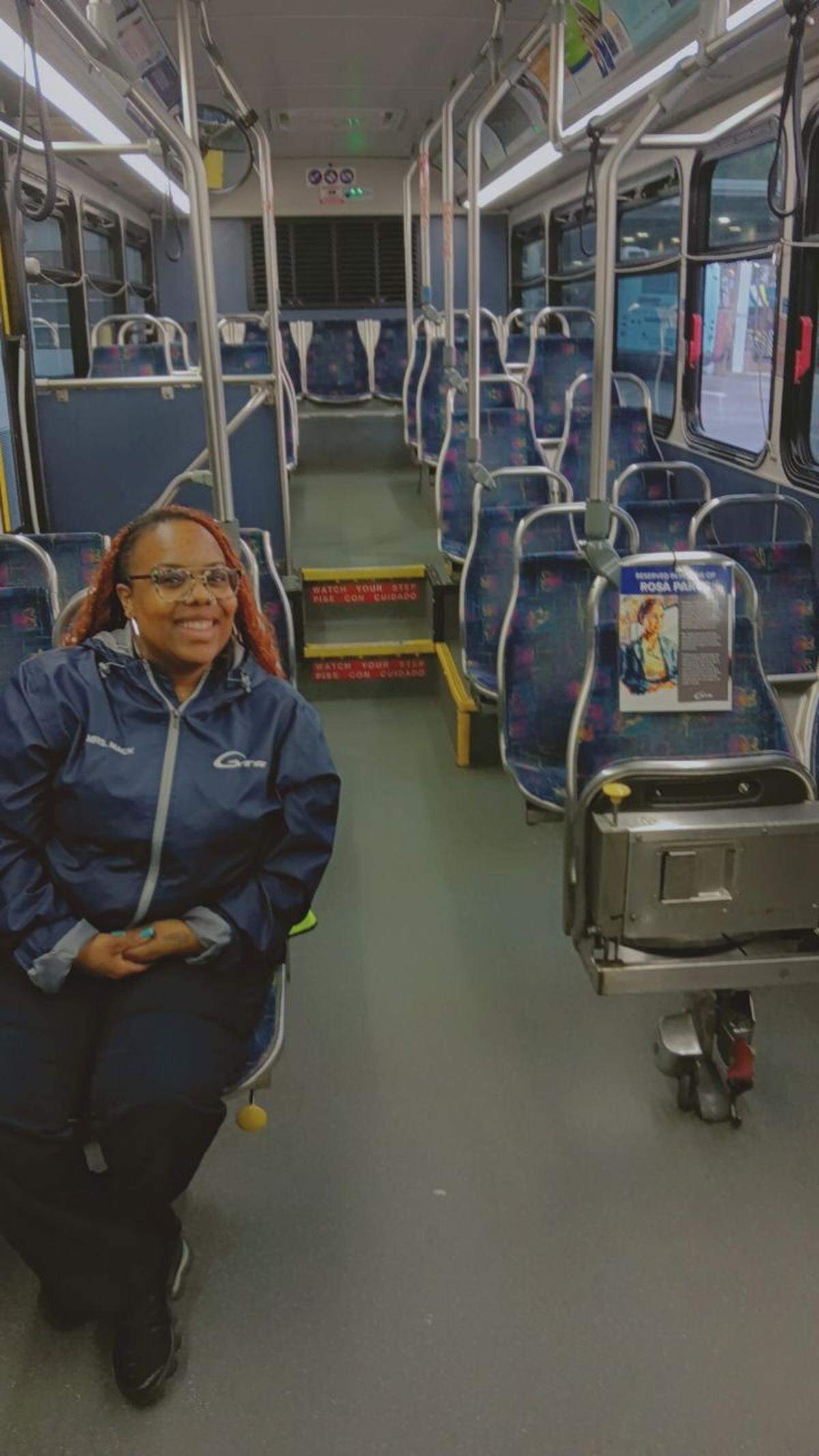
The woman followed her, joined up with her friends on the street corner, and they chucked alcohol bottles, bricks and a metal pole at Mack.
Mack pulled out a pocket knife and the attackers backed off enough to give her space while she waited 20 minutes for police to arrive.
CMPD did not arrest any of the three women for attacking Mack. Police categorized what happened to Mack as a misdemeanor simple assault, the incident report shows.
Less than a quarter of those types of cases have been cleared with arrests city-wide from 2023 to 2025, according to an Observer analysis of police incident data. That rate also was reflected on public transit, where 50 simple assault cases out of about 200 were cleared by arrest.
For CMPD to pursue charges on misdemeanors they do not witness, the victim must go to a magistrate and request what’s called a “criminal process.” Officers communicate that to victims, the CMPD media relations team said.
Mack did not know about the magistrate process, nor did she have the bandwidth to be proactive at the time of her assault. She spent months in therapy working through her trauma. She assumed there would be arrests.
“They jumped on me. I’m a driver, driving the bus and these women are mad and erratic at me,” Mack said. “I was out there trying to fend for my life for a long time.”
Had she known the rules, Mack would have gone to the magistrate. CMPD spokesman Brian Gallagher said he could not comment on Mack’s case.
Requiring victims of misdemeanor offenses like Mack to take action is a policy specific to CMPD.
State law does not require that victims ask police to press charges for misdemeanor criminal prosecutions to happen. And many such crimes are prosecuted when there is no individual victim, such as drunk driving, having drug paraphernalia or carrying concealed weapons, according to the North Carolina Administrative Office of the Courts.
No communication after a CATS bus driver’s nose was broken
In January 2025, two drunk teen girls assaulted Andrews in the driver’s seat while she was waiting for passengers to board at the uptown transit center. One of them broke her nose.
The police arrested the teens and charged them with simple assault, according to an email to Andrews from Sterling Faggart, CATS’ safety and security manager. Faggart told Andrews that she would be subpoenaed and that someone with the city would attend the hearing with her.
Andrews called District Attorney Spencer Merriweather’s office once a month since last June.
Every time, Merriweather’s office routed her to juvenile court. Every time, she’d ask the person on the line about her case and gave her contact information for a call back. If no one answered, she’d leave a message.
“Hell has to freeze over.” she told the Observer in April. “They’ll never call back.”
But in May, Andrews finally got her call, after the Observer had pressed court staff for answers for weeks.

Heather Taraska, an assistant district attorney who leads the juvenile team, told Andrews that one of the teens completed a diversion program and a case was dismissed. It was unclear whether both teens faced the same consequences or what happened in the other case.
Taraska couldn’t share more than that because the cases involved teens. In juvenile cases, she told the Observer, victims who don’t make it to court and see the proceedings can’t find out sentencing details.
That call was the closest thing to closure Andrews would get.
The realization washed over Andrews in a rage. She never got to testify that the girls broke her nose. That she developed vision loss. That she never could drive a bus again. That her career had ended.
She demanded to know why she was never contacted.
Taraska said her team called the phone number on the police report. But it was not Andrews’ number. It was a city phone number. A non-working city number.
The team tried no further.
Taraska found no notes in Andrews’ file that she had called and left contact information. Taraska told Andrews she didn’t know what happened. She said she was sorry.
Taraska said no one from CATS tried to reach the court either, at least according to the notes in her system.
Andrews thinks they should have. “To say, ‘Hey, my operator was assaulted by these two juveniles. What are we doing?’ They should have been on it, if they really cared about their drivers,” she said.
Little accountability for NC bus driver attackers
Drivers say one big change could force authorities to take their assaults more seriously: increase the penalty for assaulting public transit operators from a misdemeanor to felony.
While federal law dictates up to 20 years in prison or assaulting pilots or flight attendants, there is no nationwide standard for public transit operators.
Some states have laws that make assaulting transit operators a felony, such as New York and Arizona. In North Carolina, assaulting a transit operator is a Class A1 Misdemeanor, punishable by up to 150 days and a fine determined by a judge.

Raising the charge to a felony is the number one public policy priority for The North Carolina Public Transportation Association, which represents 95 public transit agencies in the state, said Executive Director David Rhew.
“It’s about taking care of people, and protecting people,” he said.
The challenge has been spreading enough awareness to pique lawmakers’ interest when they have so many other issues competing for their attention, he said.
Rep. Sarah Crawford, a Democrat serving the Wake County area, has taken interest in the issue, Rhew said. Crawford did not return the Observer’s phone calls or text messages about it.
CATS leaves some security questions unanswered
CATS started spending more on security about three years ago and ditched one of its security firms that had performed poorly.
The agency also recently started reviewing videos of driver assaults to learn lessons, aiming to mitigate future conflict. And officials are reviewing new technologies that could help prevent crime on buses.

But it is unclear whether CATS’ officials track what happens to their drivers’ assault cases and to what degree they help them navigate the criminal justice system.
The agency’s chief safety and security officer, Eric Osnes, was too busy to do an interview, CATS spokeswoman Catherine Kummer said. She did not provide answers to the Observer’s written questions about what role, if any, CATS plays in helping drivers get justice.
Instead, Kummer sent a statement saying there were three physical assaults against bus drivers in the first quarter of last year and two in the first quarter of this year. Passenger-on-passenger assaults dropped from three to zero, she said.
The email echoed the sentiment of a news release the agency sent out a few days before The Observer’s investigation on bus driver assaults published this week. In that email, CATS touted a “significant downward trend” in crime on transit.
“Their main motive and aim is to not get negative publicity,” said David Harris, a retired CATS bus driver. Harris was also assaulted during his 12-year career at CATS. He was appalled that the agency didn’t help Andrews with her case.
“There is something legal that needs to be done here to compensate her pain and suffering,” Harris said. “This is just so wrong.”
This story is part of an Observer series exploring the dangers that public transit bus drivers face. To reach reporter Caitlin McGlade, contact her at cmcglade@charlotteobserver.com.