Charlotte parents see e-bikes as freedom. But others see them very differently.
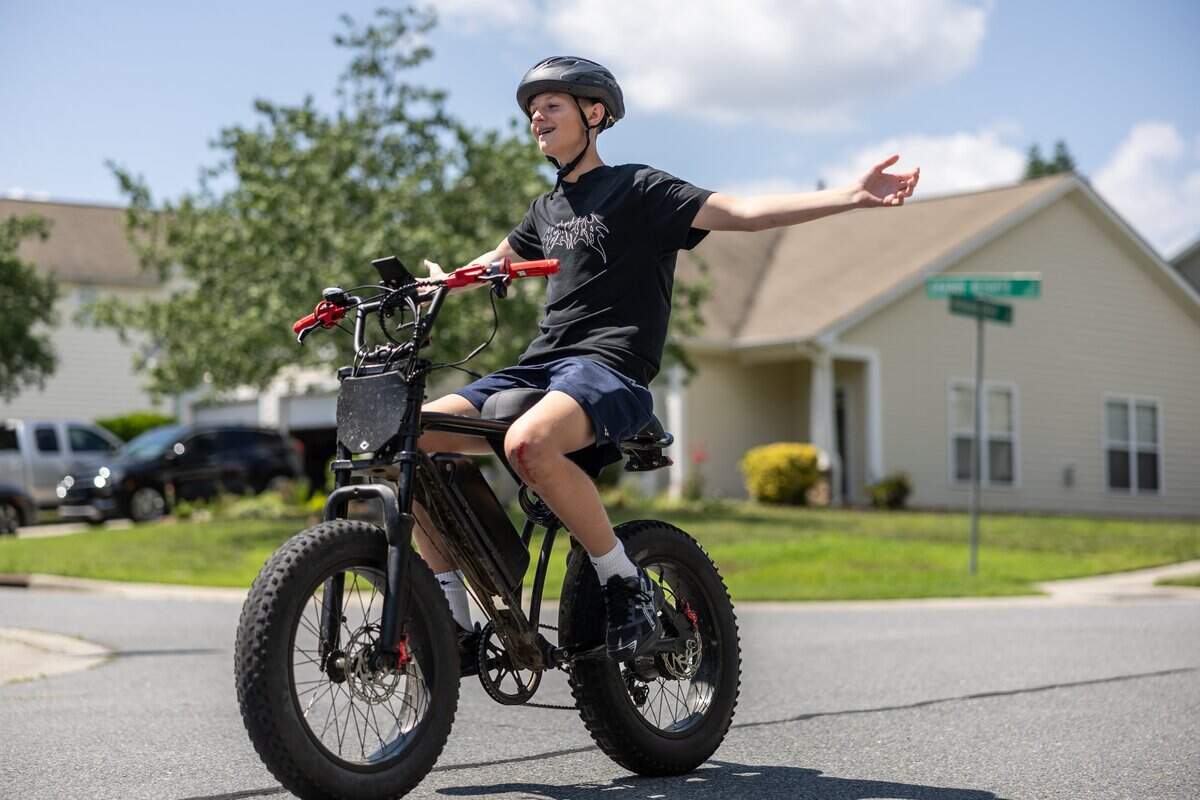
For months leading up to his 13th birthday last July, Cam Fuller watched one friend after another cruising around his north Charlotte neighborhood on something electric. He wanted it, too.
The same thing many kids his age want: the freedom to leave the house without asking for a ride. His friends could zip to one another’s houses, the neighborhood pool, Lowe’s Foods or the golf course — places that could feel much farther away on a regular bike. He didn’t want to be the kid pedaling behind everyone else.
Azu, his mom, resisted the idea at first.
At the same time, she also didn’t want another summer with Cam indoors playing video games, and saw the benefits of him being outside riding with his friends instead of inside staring at a screen.
She also understood exactly why he wanted one.
So, reluctantly, she decided to say yes — but on her terms.
She researched the options and intentionally bought a slower model than the one Cam wanted. And when she and Cam’s dad gave it to him on his birthday late last July, she remembers insisting on a helmet every ride. She remembers warning him away from busy roads. She remembers telling him she’d be monitoring his speed on Life360.
The main thing Cam remembers is just being “super excited.” As soon as the bike arrived, he says, they unboxed it, assembled it and he took off riding.
His mom felt like she was trying her best to manage the risk. She believed that if she put enough guardrails around the freedom, he could enjoy it safely.
But Azu couldn’t shake the feeling that something might go wrong.
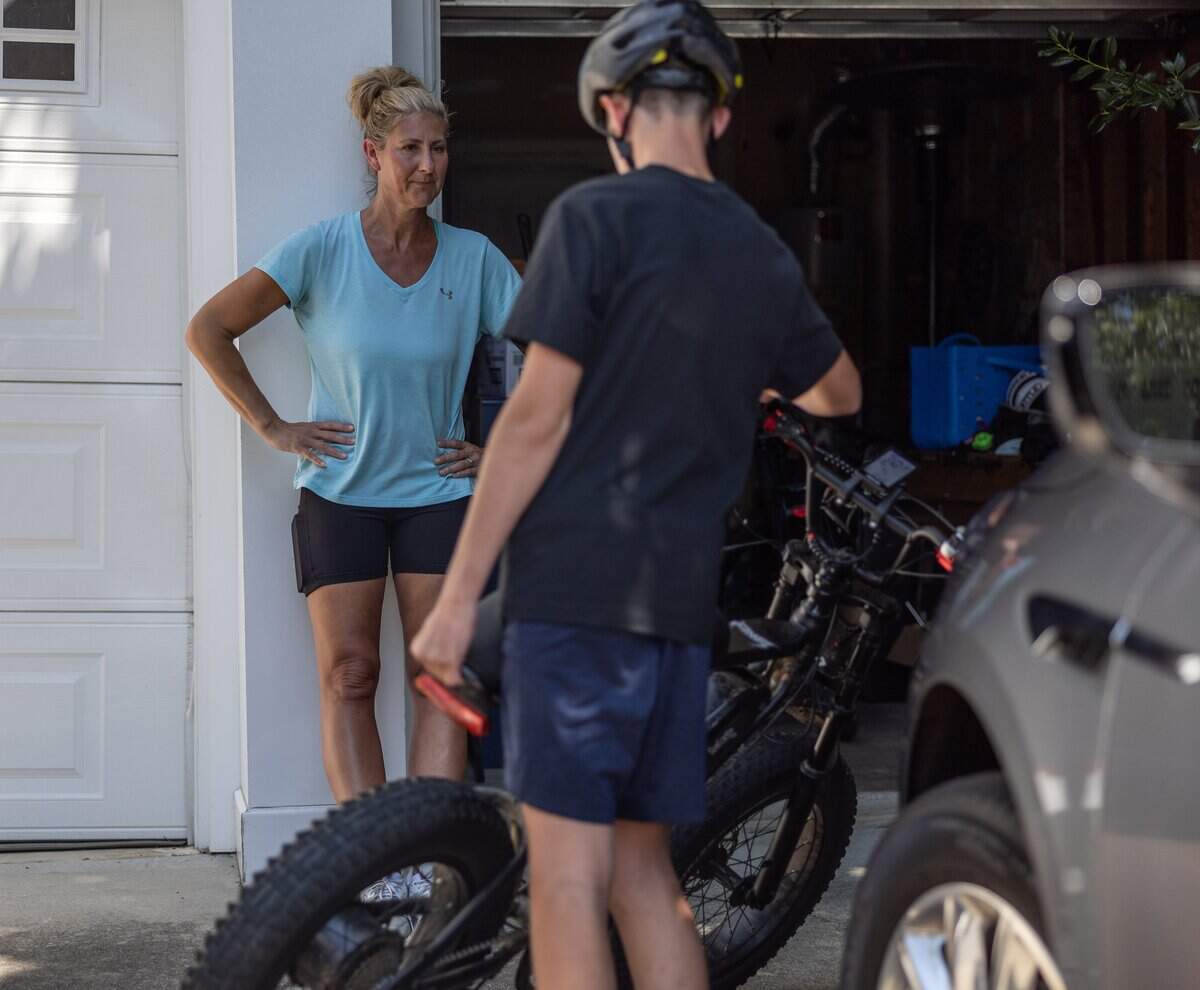
“We all hate those things,” Azu recalls as the takeaway from a conversation she had with another neighborhood mom as they watched their boys ride in and out of the cul-de-sac one day last summer. “You just kind of worry and hope nothing happens.”
Then, on May 20, something did.
‘You should get him an e-bike’
Across Charlotte, thousands of parents are making that same calculation.
For years, many watched as their children’s worlds shrank to whatever destinations Mom or Dad had time to drive them, as kids’ use of traditional bicycles gradually declined. Then came battery-powered bikes.
Almost overnight, they restored something many parents appreciated about their own childhoods, particularly in the summer: the freedom to leave the house after breakfast, meet up with friends, ride to the neighborhood pool, stop by the basketball court or convenience store and come home before dinner.
When Amy Justice’s son first asked for an e-bike, she initially rejected the idea outright, believing kids didn’t need motorized bikes and should simply pedal like previous generations. Her son pleaded, telling Mom he wanted one badly enough that he was willing to sell his gaming system to help pay for it.
But it was a conversation with her brother, an avid cyclist, that changed her thinking.
“I was like, ‘Oh, he can use his own feet to get where he needs to go. Like, these lazy kids on the e-bikes.’ My brother was like, ‘Amy, kids don’t ride bikes for exercise the way that we do. ... Kids ride bikes for freedom and to get places where they want to be with their friends.’
“And he was like, ‘You should let him have one.’”
Ultimately, she and her husband agreed to buy the bike — but only with strict safety rules, mandatory helmet use and constant monitoring through Life360 to track both her son’s location and his speed.
For Nicole Brown, meanwhile, it was largely a practical decision. She says her son’s backpack often topped 20 pounds, and the ride to his middle school in Cornelius included a steep hill. The bike made that commute easier while giving the family one less daily transportation challenge.
In other words, it represented freedom for both child and parent.
But in a larger sense, every family interviewed for this story was trying to answer the same question: How much independence should they give their kid? And how much risk comes with it?
Neither Justice nor Brown bought these bikes because their sons were thrill-seekers. Like Azu Fuller, they saw the bikes primarily as tools — for independence, transportation and time with friends.
There’s been a broader trade-off, though, for the public. As more teenagers in general have begun riding electric-powered vehicles, neighborhood streets, greenways, sidewalks and shopping centers suddenly have been experiencing a new kind of traffic moving through them on a regular basis.
And with that has come a growing sense that the rules haven’t kept pace with the technology — as well as a gradual realization that many of the people on both sides of the e-bike debate aren’t even truly arguing about e-bikes at all.
A bad reputation
Online, complaints are nearly as plentiful as the machines themselves.
A quick and simple search for the word “e-bikes” on NextDoor produces a trove of outrage. “Parents letting their kids zip around on these things are foolish.” “Disrespectful little jerks!” “Lunatic overprivileged children.” “Obtuse kids.” “Acting like an entitled a-hole.” “Little juvenile jerks.” “Sign of bad parenting. It’s kids like this that give cyclists a bad name.”
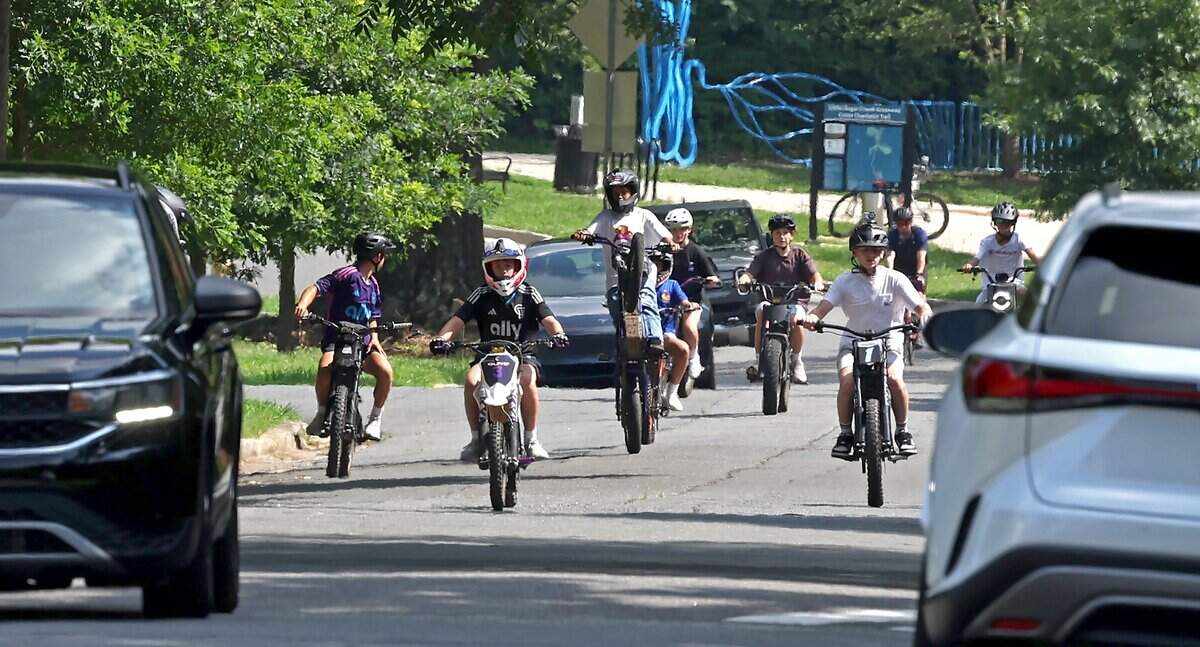
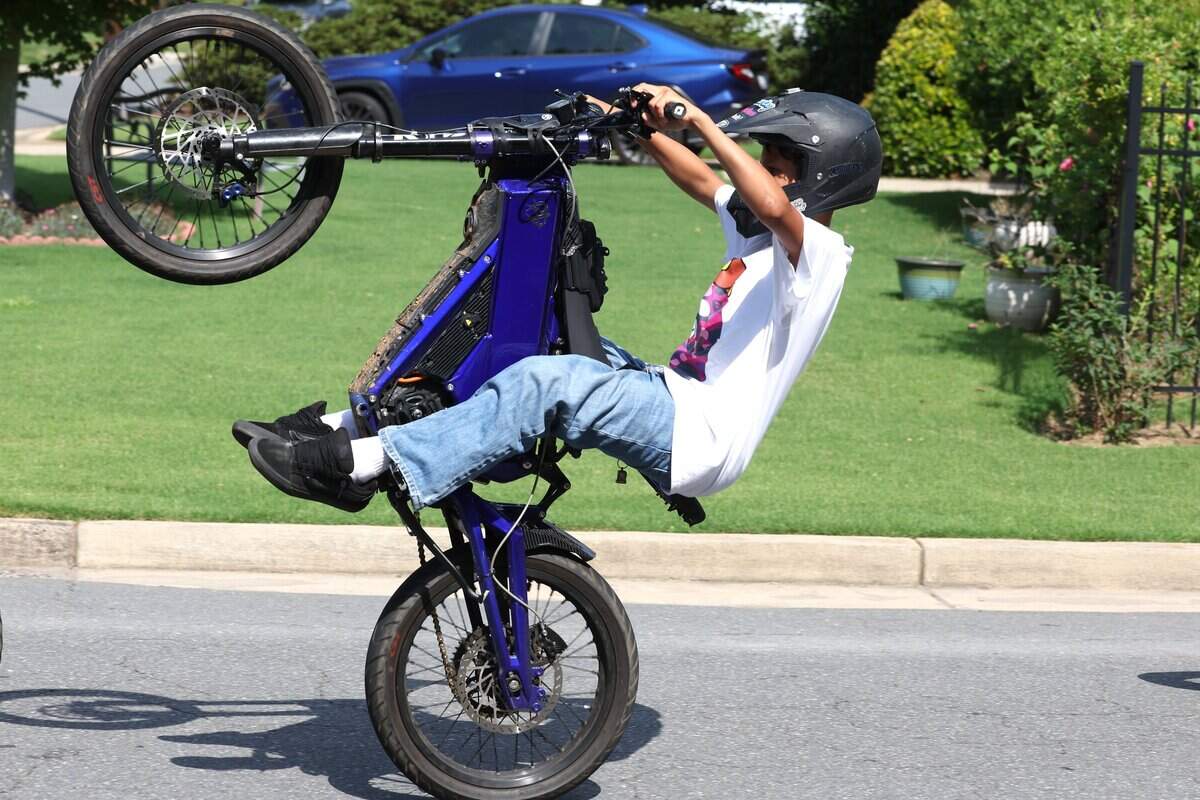
The insults often accompany reports and even videos of kids and teens engaging in reckless riding — weaving through traffic, running stop signs, ignoring pedestrians, and performing stunts like wheelies in opposing lanes, sometimes without helmets.
Myers Park resident Josh Heiskell has a front-row seat to this kind of activity, with a back deck that has a clear view of Little Sugar Creek Greenway behind Park Road Shopping Center.
“These kids will go up and down Westfield, popping wheelies, and fly,” he says. But “to be honest, I don’t really have a problem with that. I mean, if they’re on the road and they have a helmet, and they’re following all the rules, I’m fine with it. I know some people don’t like it, but I have no problem with that. My problem ... it’s on the greenway.
“I’ve had a couple of instances where I’ve almost gotten hit. It makes it feel unsafe.”
Heiskell says that just last week he encountered a group of kids whose vehicles blocked the entire width of the greenway.
“I said, ‘Hey, you guys aren’t supposed to have those on the greenway. Get them off.’ And they followed me home, dude. They followed me to my house. I fully expected to wake up to my house being egged.”
Jon Roberts, a former competitive cyclist who lives in the University City area, says he and his wife have had similar run-ins on the Toby Creek Greenway near their home.
“Lisa was running, I was (on my bike) maybe a bike length behind her, and this kid came weaving between the two of us, and just about brushed Lisa ... and he was laughing,” Roberts says. He adds that he tried to chase him down to chew him out, but on his pedal-powered bike was outmatched by the kid’s electric-powered motor.
“I couldn’t — you know, he’s going 30, 40 miles an hour.”
‘Cam’s been in a bike accident’
On May 20, Cam Fuller was using his bike exactly as his parents had hoped he would — to spend time with friends.
That evening, the boys had ridden their bikes to hit golf balls near Birkdale. Cam had been wearing his helmet while they played. At one point, one of his friends started teasing him about it.
So he took it off. He never put it back on.
“It was the one time,” Cam recalls. “I don’t know why I wasn’t wearing it.”
By the time the boys were done playing, it was dark. Cam slung his golf bag over one shoulder and climbed onto his bike. One hand gripped the handlebar. The other held his clubs behind him. They all took off.
Just a few minutes later, as he rolled over a speed bump, he lost control.
The bike pitched forward. Cam flew over the handlebars, striking the pavement hard enough to lose consciousness almost instantly.
He remembers none of it. What he does remember is coming to in the back of an ambulance as flashes of red and white light flickered through the rear and side windows.
Around the same time, a phone call reached his mother, Azu.
“Cam’s been in a bike accident,” another parent told her. “The ambulance is on the way to the hospital.”
That was all the information she had.
Azu arrived to find doctors piecing together the damage. Cam had suffered a concussion and a small brain bleed. His collarbone was broken badly enough that it would eventually require surgery. Much of the right side of his body was covered in road rash. For days, headaches left him vomiting and in pain.

The bike survived the crash far better than Cam did.
The great misconception
Part of the reason it held up so well is that Cam’s bike is built sturdily, weighing in at 85 pounds with its steel frame, front and rear full suspension, and 20-inch by 4-inch all-terrain fat tires.
It also can reach speeds of up to 33 mph — faster than many neighborhood speed limits.
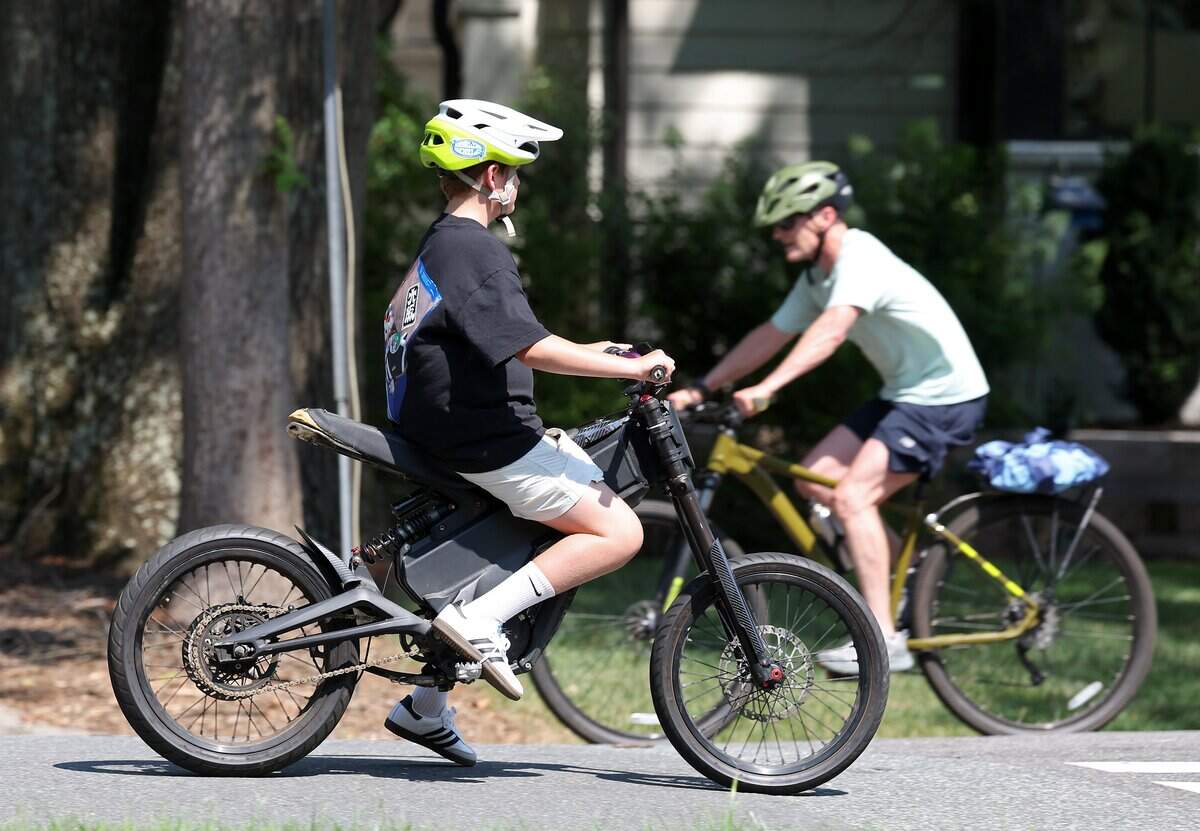
Cam’s bike, in fact, is one of a growing number of vehicles marketed as e-bikes that blur the line between traditional electric-assisted bicycles and more powerful electric motorcycles, often called e-motos. These machines can accelerate harder than traditional e-bikes, and in many cases can be modified to travel much faster. That changes both the safety concerns they raise and the rules that apply to them.
Neither Azu nor Cam realized that the bike he’d been riding since last July is not considered a standard electric-assisted bike by the state of North Carolina until The Charlotte Observer happened to look up his particular make and model and relayed that information to them.
It’s a widespread misunderstanding.
Sara McDonnell of Huntersville is another parent who thought that her 14-year-old son Liam had what qualified as a traditional e-bike — and he did, too. But the Observer determined that his Hikeep K6-G exceeds the speeds and power output of a true e-bike.
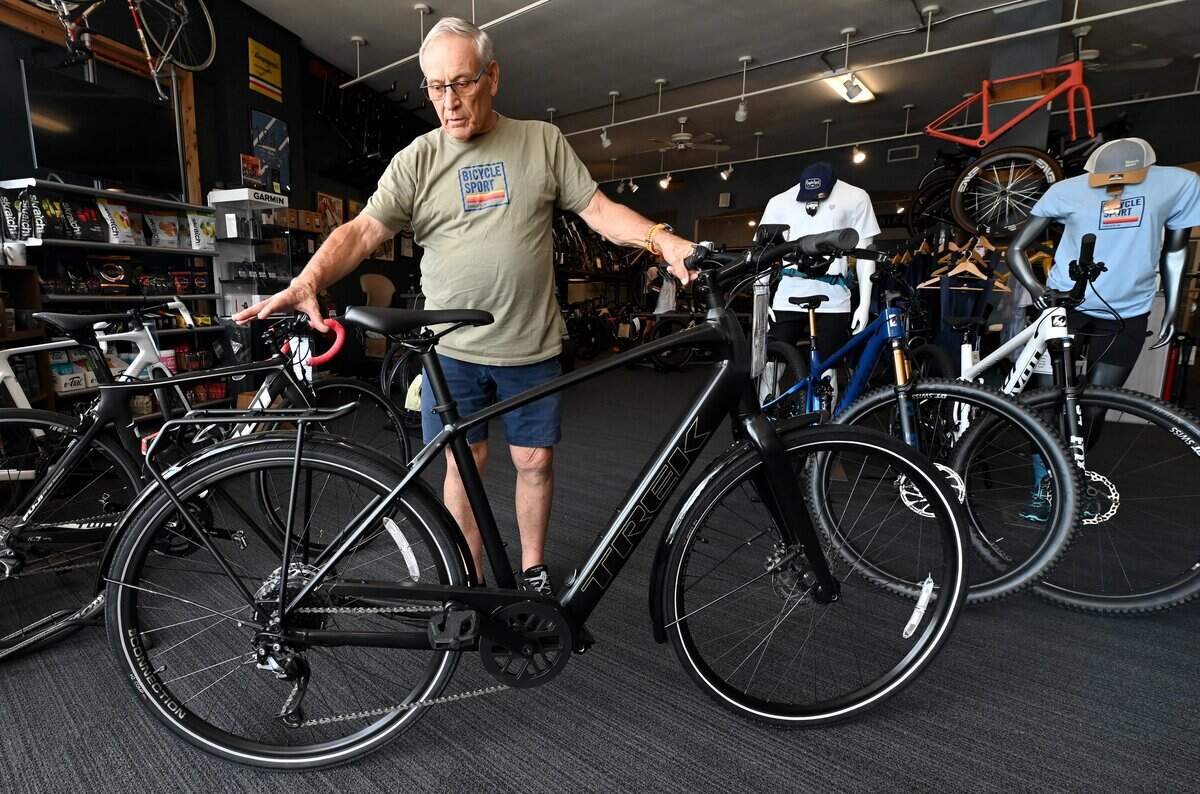
This confusion is something Bicycle Sport owner Ben Cooley sees almost every day. Manufacturers and online retailers, he says, routinely market everything from traditional pedal-assist bicycles to much more powerful electric motorcycles under the same broad “e-bike” label.
To him, it’s simple: “We wouldn’t call a Tesla a golf cart. And I wouldn’t call something that does 50 miles an hour with a throttle a bicycle.”
But “we have parents come in here and they’re like, ‘Oh, I want to get my kid an e-bike,’” says Cooley, who owns shops in uptown and Myers Park. “And I’m like, ‘Well, what are we talking about here?’ And they start describing it, and I’m like, ‘Okay, well, that could be purchased at a motorcycle store, not here.’”
To many cyclists and trail advocates, that confusion isn’t just semantic. They say it has fundamentally changed who — and what — is showing up on greenways and trails.
Curtis Storm, president of Tarheel Trailblazers and a former dirt-bike racer, says the problem isn’t electric bicycles. And it isn’t simply speed, either. It’s that the powerful electric motorcycles blurring the line between bikes and motorcycles are creating conflicts on and causing damage to trails and greenways that were never designed for heavy machines with instant acceleration.
“You can’t propel a bicycle to 30 miles per hour in two seconds, but you can with an electronic motorcycle. So it’s making a lot of people nervous,” he says. But “ultimately, we’re not law enforcement.”
While he and other cycling advocates agree kids benefit from more independence, they are skeptical that increasingly motorcycle-like vehicles are the right way to give it to them.
And so are local governments and law enforcement officials.
Separating the bikes from the behavior
The debate is no longer confined to neighborhood Facebook groups and Nextdoor.
Over the past nine months, communities across the Charlotte region have begun rewriting the rules governing e-bikes and similar electric-powered vehicles as officials grapple with a rapidly changing marketplace and growing safety concerns.
Cornelius updated its ordinance in November 2025. Waxhaw and Davidson followed with their own revisions in February. Indian Trail and Matthews are weighing new restrictions on sidewalks and greenways, while Charlotte City Council has launched its own review of whether the city’s ordinances have kept pace with technology.
Yet even as governments move to tighten rules, many worry the debate risks painting all electric-assisted bicycles with the same brush.
Dan Brewer, 62, credits his pedal-assist e-bike with allowing him to continue tackling steep climbs that have become more difficult with age. “I was critical of e-bikes until I got one,” he says.
“The e-bike allows me to still hit those climbs and get a great workout in.”
But he’s concerned that increasingly powerful electric motorcycles could prompt restrictions on riders who aren’t causing problems. “With the surge in e-motos with the younger kids riding them everywhere,” he says, “I’m afraid they will ruin it for all e-bikes.”
Parents share that concern.
Nicole Brown’s 13-year-old son was struck by a distracted driver while riding his pedal-assist e-bike home from school last year. Despite the crash, she plans to buy him another one because she still believes it offers a safe, practical way to get around.
What frustrates her, she says, is that responsible riders often get judged by the behavior of a small minority.
“It’s ... really unfortunate for those whose kids do not ride this way. The attention always goes to the negative and not the positive,” Brown says. “I see just as many kids if not more, riding to and from school who utilize their electric bikes and scooters correctly and in accordance with the rules.”
Liam McDonnell, too, worries that reckless riders are shaping public perception.
The 14-year-old Huntersville boy with the Hikeep K6-G understands, he says, “kids trying to have fun.”
“But,” he adds, “they should still do it the right way.”
‘You have to let go a little bit’
The crash sidelined Cam Fuller for weeks.
While he recovered from surgery, his friends stopped riding ahead without him. Instead, they spent several weeks walking through the neighborhood at his side. For Azu, it was a reminder that what Cam had wanted all along wasn’t really the bike. It was the chance to keep up with his friends.
But gradually, the headaches subsided, the collarbone healed, and doctors cleared him to resume normal activities — including getting back on the bike.
Asked whether he was nervous about riding again, Cam doesn’t hesitate: “Not at all,” he says.
He says the crash wasn’t the bike’s fault. It was his mistake — and one he doesn’t intend to repeat.
His mother, meanwhile, is understandably much more conflicted. She says she initially wanted to take the bike and “burn it, cut it up in little tiny pieces,” and that the decision to ultimately let him ride again was “very hard.” Yet when asked whether she would make the same decision again, knowing everything that happened, Azu doesn’t hesitate either.
“Yes, I would,” she says. “He genuinely loves riding it, and that makes me happy for him. I would just focus much more on the safety aspect.”
She’s learned to live with the anxiety that comes with it.
For the most part.
“I mean, everyone’s like, ‘I can’t believe you’re letting him back on it,’ but ... you just eventually have to let go a little bit. I don’t — ” Azu cuts herself off suddenly. She’s standing in her driveway watching Cam and a friend ride up and down the hill out of their cul-de-sac.
Both boys are riding with helmets — but at this moment, without their hands on their handlebars.
“What is he doing??,” she cries softly, in disbelief.
A moment later, Cam turns around at the bottom of the hill and rides back up again, grinning.