Plaza Midwood was first. And it may be last in Charlotte with special road barriers
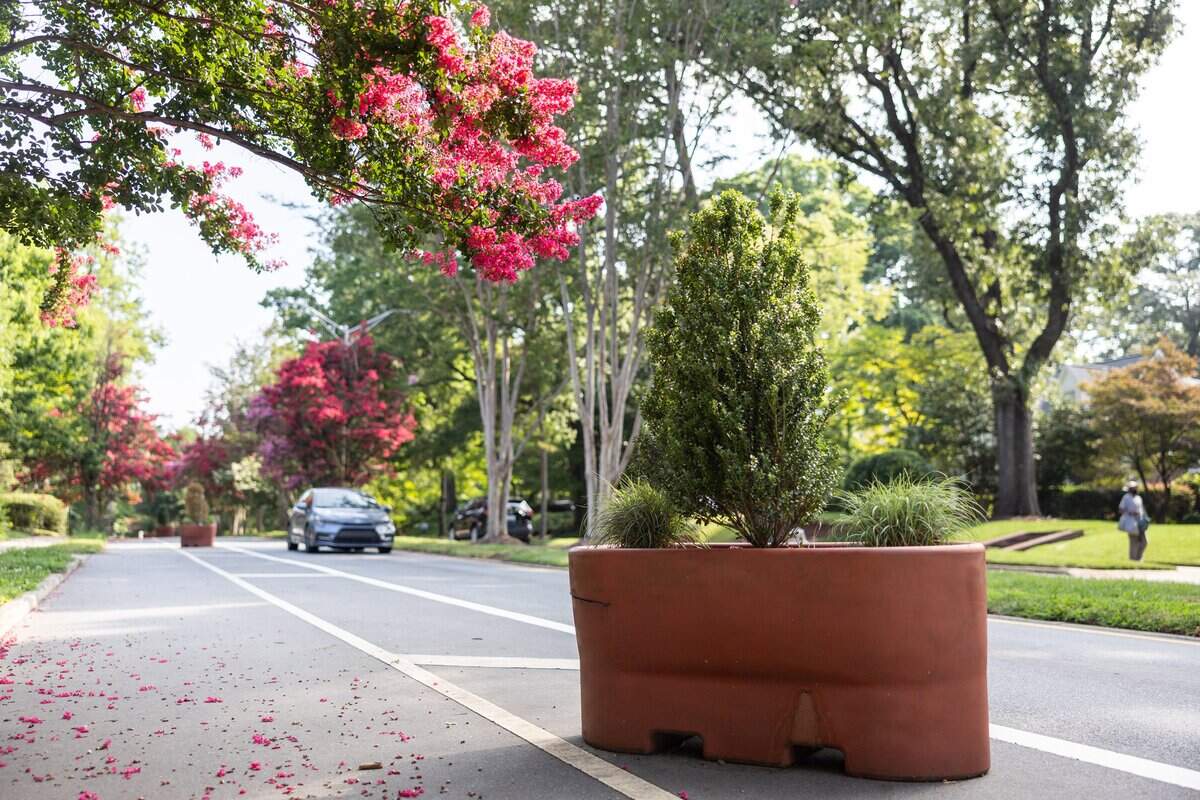
Charlotte took some convincing to use planters as a barrier for the bike lanes along The Plaza. The city had never done anything like it before.
Given the hurdles, Charlotte might never do anything like it again, either.
“Planters can offer a distinctive look that some communities value, but they come with tradeoffs: regular plant maintenance and, when damaged, replacement costs,” the city said in a written statement.
Other parts of town have inquired about planters. But none “have real interest in the requirements to maintain” them, according to the city.
Upkeep is the sole responsibility of the neighborhood. Although the planters are equipped with self-watering filters, their tanks still must be manually refilled. The Plaza Midwood Neighborhood Association budgets more than $13,000 every year just for watering, according to Tanya Wilson, the neighborhood association’s immediate past president.
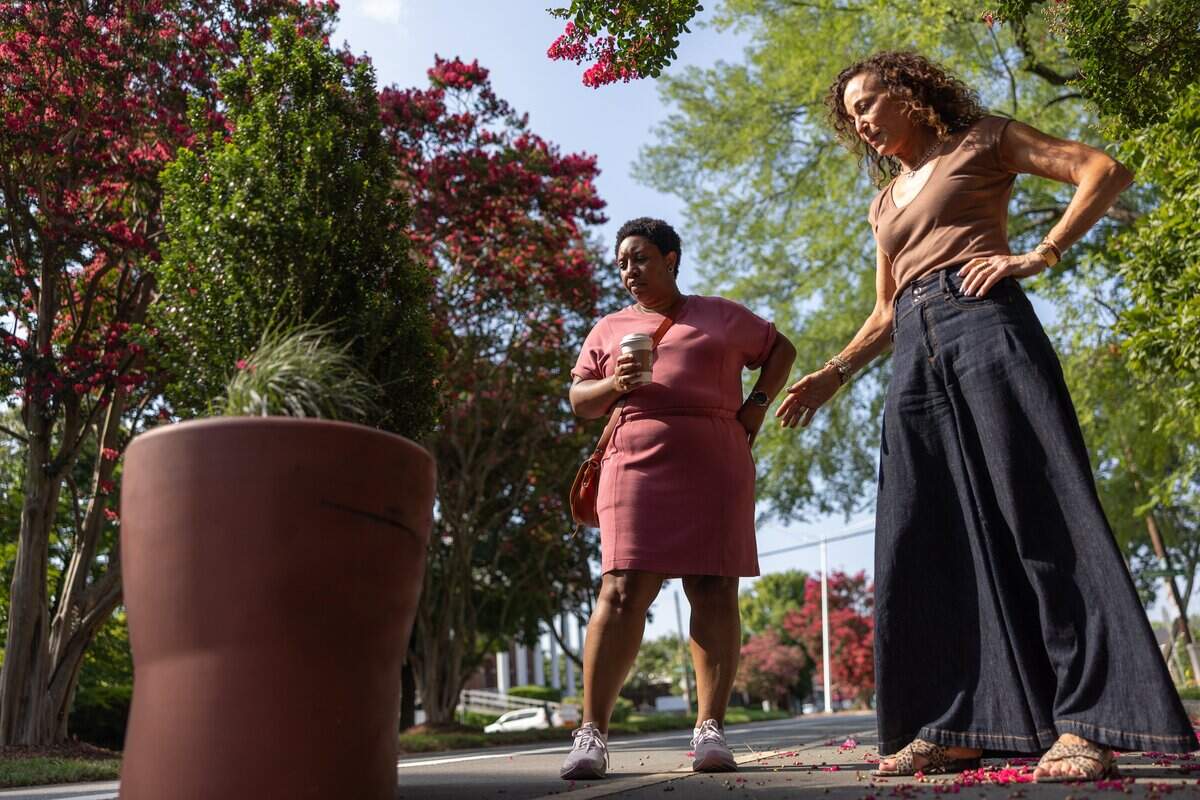
Then there are additional costs for potting mix, new filters and — the biggest challenge — replacement planters. Cars have destroyed one-third of the roughly 70 planters the city installed six years ago. The neighborhood would have to spend more than $10,000 to replace them all.
The planters were part of a safety improvement in which the city reduced The Plaza from two lanes in each direction down to one and added separated bike lanes in the extra space.
There was a question about how the separation would work. Charlotte traditionally used plastic poles that stick up from the ground, but residents pushed for the city to instead try a more aesthetic option.
“When we first started advocating for the City to build protected bike lanes, including those on The Plaza, we specifically asked them to use planters as the barrier. They were not interested because of the maintenance involved. So the Plaza Midwood Neighborhood Association agreed to maintain them at their own expense,” said Shannon Binns, the executive director of Sustain Charlotte, a nonprofit focused on sustainable growth and mobility issues.
Plaza Midwood signed an agreement dictating the city would purchase the planters and pay for their first year of maintenance if the neighborhood handled ongoing maintenance.
The neighborhood is now asking Charlotte to reconsider the terms of that agreement because the upkeep has been more than anybody could have anticipated, Wilson said.
“We always felt this was unfair since the City maintains planted medians and, of course, planting strips between the street and sidewalks on every street in the city that has one,” Binns said. “We argued that the City should maintain these like any other public infrastructure, and that cities that use them for bike lane protection do so.”
Sustain Charlotte also took issue from an equity perspective. Many neighborhoods across the city don’t have the same organizational strength as Plaza Midwood or a sense of collective identity. That would make maintenance “virtually impossible” for most neighborhoods, especially those with lower-income residents or fewer homeowners, Binns said.
“We are lucky enough to be somewhat of a popular neighborhood and have people living at a certain income level,” Wilson said. The median home sale price is just under $1 million, according to Redfin. Still, Wilson added, “We can’t assume all our budget to this one item.”
Replacing a planter is more expensive than replacing delineators, which are maintained entirely at the city’s expense.
“This was the first installation of its kind in Charlotte, chosen based on the neighborhood’s preference at the time, and the city welcomes that conversation with any community exploring a similar approach,” the city said in a statement provided by spokesperson Jack VanderToll.
City officials initially did not comment on whether they would consider Plaza Midwood’s request to revisit the terms of their original agreement. After The Charlotte Observer published a story about the planters, the city said it valued the neighborhood’s partnership and “is committed to continuing the conversation.”
“While the encroachment agreement remains legally in effect, city staff are scheduling a meeting with the association to explore what options may be available,” the city said in a new statement Wednesday.