
From murders to gun violence, DA announces new crackdown on Charlotte’s violent crime
Mecklenburg’s top prosecutor unveiled plans for a sweeping crackdown against violent crime Wednesday, from taking more murders and gun crimes to trial to calling on the legislature to revamp the state’s bail laws.
District Attorney Spencer Merriweather also said he wants to streamline the state’s largest local criminal-justice system by accelerating the hand-off of cases from police to prosecutors and by persuading District Court judges to handle more low-level felonies, a change the judges have resisted up to now.
Merriweather said the judges’ opposition amounts to “self-inflicted harm to an already under-resourced criminal justice system.”
The Democratic prosecutor also called on North Carolina’s Republican-controlled General Assembly to revamp how it pays for the courts in order to pump more money and personnel into urban centers where violent crime is highest.
“It’s important for the community to understand that the prosecutors and staff of the district attorney’s office are seeking to redouble our efforts to seek safety, peace and justice for the people of this county,” said Merriweather, a former homicide prosecutor who was appointed district attorney in 2017 and was elected to a full term the next year.
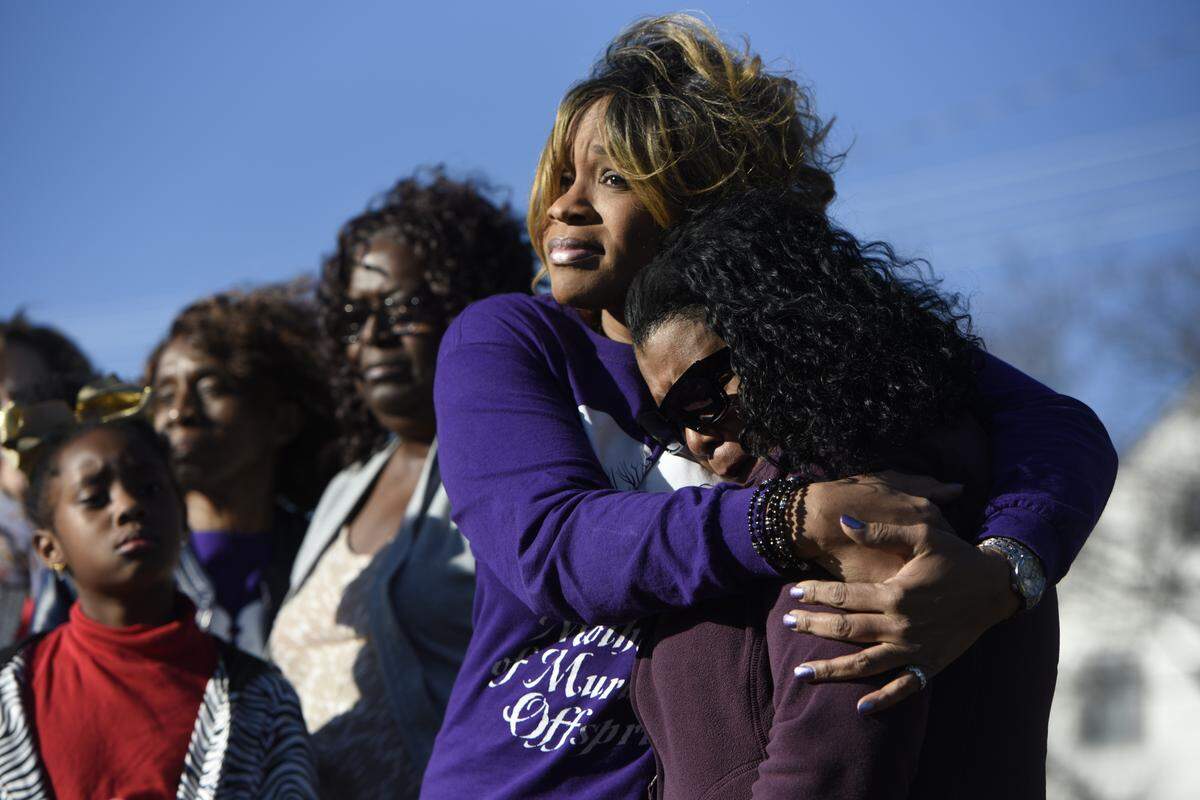
Merriweather’s remarks follow a year in which Charlotte was rocked by 107 murders, the most since 1993.
His office was also the subject of a Charlotte Observer investigation, which found that prosecutors in Mecklenburg have dismissed more than two-thirds of weapons charges — and that those whose charges are dropped often are rearrested for more serious crimes, including murder.
In announcing his office’s agenda for 2020, Merriweather said gun crimes — whether involving a burglary, drugs or a carjacking — will be “placed at the top” of the priority trial list for his prosecutors.
He said his office also will look to partner with federal prosecutors on violent crime. U.S. Attorney Andrew Murray was Merriweather’s former boss at the district attorney’s office.
Meanwhile, the office’s homicide prosecutors are scheduled to take 20 cases to trial in 2020, up from 13 in 2019.
That will begin to reduce the existing caseload of 75 cases in which accused killers have pleaded not guilty and are awaiting trial, the largest backlog in at least five years. It stands to worsen as more of the killings from 2019 enter the criminal-justice pipeline.
By taking more homicide cases to trial, Merriweather said, prosecutors will shorten the ordeal of the victims’ families.
“The kind of grief a family faces when they’ve lost a loved one is compounded as they wait for the person who has stolen a life to be brought to justice,” he said.
Merriweather said the emphasis on taking more accused killers to trial will also persuade other homicide defendants to accept plea bargains which offer lighter sentences.
Taking on bail reform
Merriweather also weighed into the dispute over granting bond to violent-crime defendants, including those accused of first-degree murder. In December, Charlotte-Mecklenburg Police Chief Kerr Putney announced that his officers will no longer offer electronic monitoring to first-degree murder defendants who are freed on bond before trial.
Superior Court Judge Bob Bell told the Observer last month that not all first-degree murder cases are the same, and that some homicide defendants are not threats to commit other crimes or flee if given bonds.
Merriweather called for a statewide solution based on the federal courts model. Known as “preventative detention,” judges would make decisions about pretrial release in all felony cases based not on an amount of money but on whether defendants pose a risk to public safety. If they do, they remain in custody. If they don’t, they are freed.
Under the current N.C. system, judges generally can hold defendants without bond only in first-degree murder cases. Merriweather says the current system of cash bonds gambles with public safety.
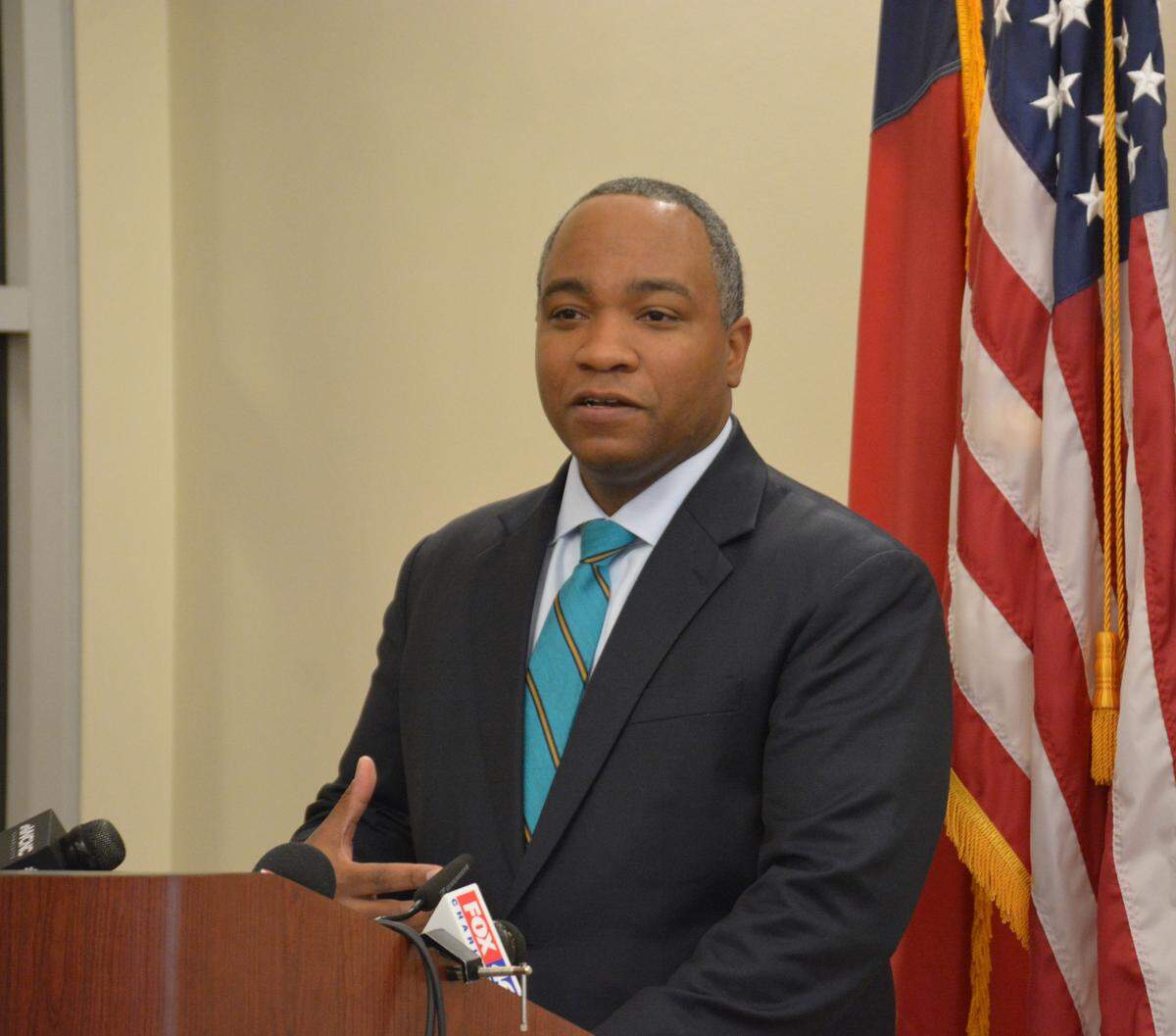
“If a person has repeatedly been violating the sanctity of home after home after home in a given neighborhood, a judge has no recourse to protect the community ... except to bet that a dollar amount is high enough to keep that person in custody,” he said.
In an era when the General Assembly has frequently been at war with its biggest cities, Merriweather also called for a revamping of what he described as “the outdated formula” used to staff courthouses with judges, prosecutors, public defenders and clerks.
The current system doesn’t reflect the modern demands placed on urban courthouses such as Charlotte’s, from the crush of cases and investigations to the strain of serving so many non-English speaking members of the public.
“Let me be clear. What is equal is not equitable,” Merriweather said.
“I am calling on our General Assembly … to wholly reconsider the way that large jurisdictions like this one are staffed and served in the name of justice. That is critical to the way we will develop as a state and as a county in the years to come.”
Community prosecution
Merriweather also sketched out a plan Wednesday for what he described as community prosecution, which he began discussing in 2019.
His plan would put more prosecutors in neighborhoods victimized by crime — to build better relationships, find more effective witnesses, and work with neighbors intent on making their streets safer.
Having a DA presence in those communities is “critical for confidence in our justice system,” Merriweather said.
What form it takes and how Merriweather will pay for it remains to be seen. But it’s an approach that has proven successful elsewhere.
In Milwaukee, District Attorney John Chisholm said his community prosecutors don’t simply handle criminal cases — they go to some of the city’s poorest neighborhoods to help solve community problems.
For instance, he said, prosecutors might work with neighborhood leaders to improve street lighting or tear down dilapidated buildings used by criminals.
“This is one way of changing the relationship between the DA’s office and the community we’re serving,” Chisholm told the Observer last year.
This story was originally published January 29, 2020 at 5:21 PM.
.JPG)